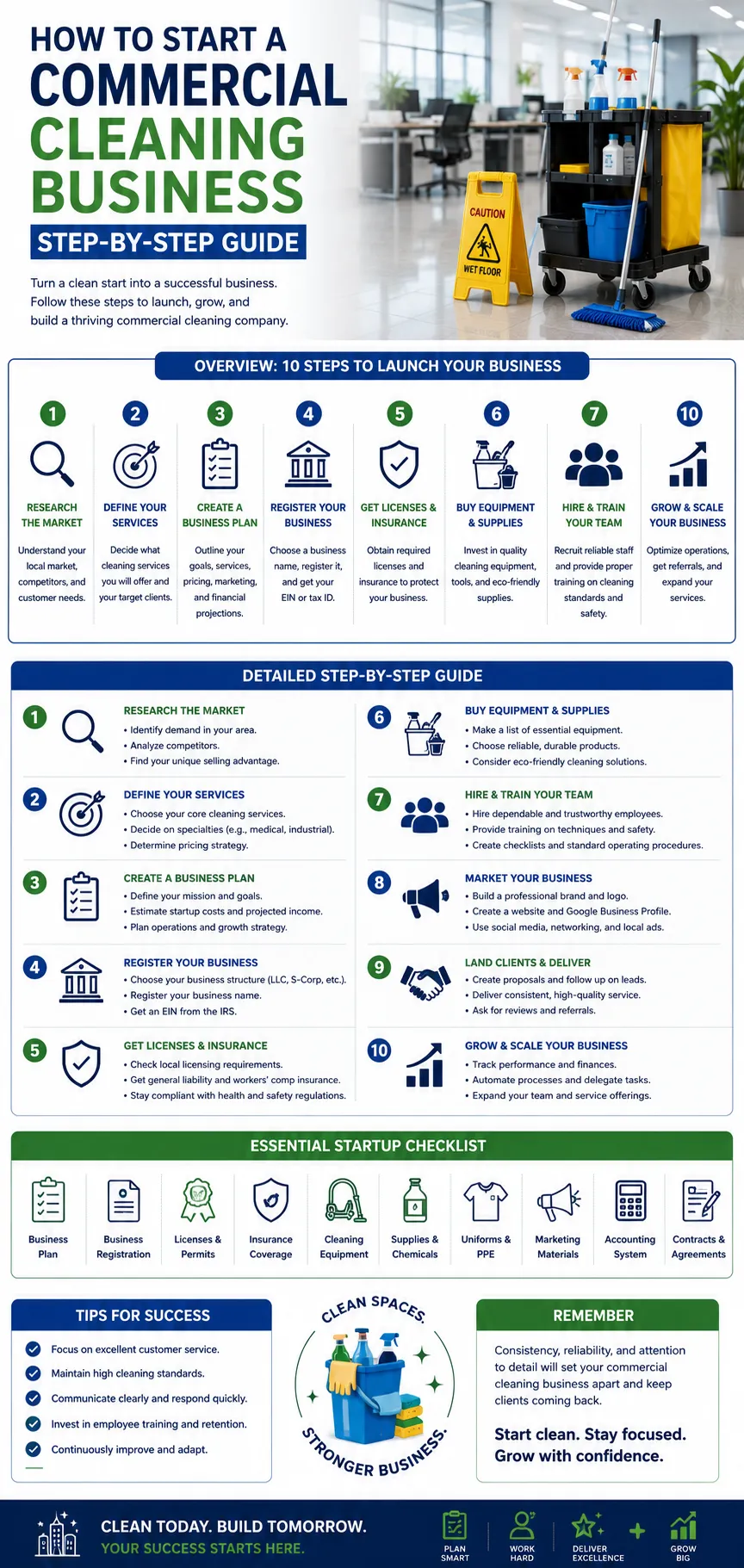
How to Start a Commercial Cleaning Business: Step-by-Step Guide
13th April 2026
Starting a commercial cleaning business can be an excellent opportunity for entrepreneurs looking for a business with relatively low startup costs, recurring revenue, and consistent demand. Every year, offices, retail stores, healthcare facilities, schools, warehouses, and industrial sites require professional cleaning services to maintain safe, hygienic, and welcoming environments.
However, building a successful cleaning company involves much more than purchasing equipment and finding your first customer. Careful planning, quality service, effective marketing, and efficient business systems are essential for long-term growth. Understanding how established providers of Commercial Cleaning Services operate can provide valuable insight into industry best practices and client expectations.
This step-by-step guide explains how to start a commercial cleaning business and build a profitable operation.
Why Start a Commercial Cleaning Business?
Commercial cleaning remains one of the most accessible service businesses because demand exists across almost every industry.
| Benefit | Why It Matters |
|---|---|
| Low startup costs | Many businesses can begin with a modest investment. |
| Recurring income | Ongoing cleaning contracts provide predictable revenue. |
| Flexible working hours | Services can be scheduled outside normal business hours. |
| Scalable business model | Start solo and expand by hiring staff. |
| Consistent market demand | Businesses require regular cleaning regardless of economic conditions. |
| Opportunities to specialise | Focus on office, healthcare, industrial, or specialist cleaning. |
With the right systems and customer service, many commercial cleaning businesses grow from sole operators into multi-team operations.
Step 1: Research Your Local Market
Understanding your local market helps identify opportunities before launching your business.
Research areas such as:
- Local demand
- Competitors
- Target industries
- Service gaps
- Pricing trends
Many businesses choose to specialise in:
- Office cleaning
- Medical cleaning
- Retail cleaning
- Industrial cleaning
- School cleaning
- Warehouse cleaning
- Strata and common area cleaning
Choosing a niche can help differentiate your business from competitors.
Step 2: Create a Business Plan
A detailed business plan provides direction and helps guide future business decisions.
Your business plan should include:
- Business goals
- Target market
- Services offered
- Pricing strategy
- Startup budget
- Marketing plan
- Financial projections
- Growth strategy
A business plan is also valuable when seeking finance or investment.
Step 3: Register Your Business
Before accepting clients, ensure your business is properly established.
Depending on your location, you may need to:
- Choose a business structure.
- Register your business name.
- Obtain relevant tax registrations.
- Open a dedicated business bank account.
- Understand local licensing and regulatory obligations.
Always check the requirements that apply in your state or territory before commencing operations.
Step 4: Arrange Business Insurance
Insurance protects your business against unexpected financial risks.
Common policies include:
- Public liability insurance
- Professional indemnity insurance
- Workers' compensation
- Commercial vehicle insurance
- Equipment insurance
Review your insurance requirements regularly as your business grows.
Step 5: Purchase Commercial Cleaning Equipment
Professional equipment helps deliver better cleaning results while improving productivity.
Essential equipment includes:
- Commercial vacuum cleaner
- Microfibre cloths and mops
- Mop buckets and wringers
- Cleaning chemicals
- Disinfectants
- Window cleaning equipment
- Floor scrubber
- Carpet extractor
- PPE
- Janitorial trolley
Investing in commercial-grade equipment improves efficiency and service quality. For a detailed overview of what to buy, see Commercial Cleaning Equipment: Essential Tools for Professional Cleaning.
Step 6: Set Your Pricing
Your pricing should cover operating costs while generating sustainable profit.
When calculating prices, consider:
- Labour
- Cleaning supplies
- Equipment maintenance
- Fuel and travel
- Insurance
- Administration
- Business overheads
Avoid underpricing simply to win work, as it often reduces long-term profitability.
Step 7: Define Your Services
Clearly outlining your services helps potential clients understand what you offer.
Common services include:
- Office cleaning
- Medical cleaning
- Retail cleaning
- Industrial cleaning
- Carpet cleaning
- Window cleaning
- Floor maintenance
- Pressure cleaning
- End-of-lease commercial cleaning
Offering customised service packages can increase your appeal across multiple industries.
Step 8: Hire and Train Staff
As your business expands, recruiting reliable staff becomes essential.
Training should include:
- Cleaning techniques
- Safe chemical handling
- Equipment operation
- Customer service
- Workplace Health and Safety (WHS)
- Infection prevention
Businesses can strengthen their onboarding programs by adopting the practices discussed in Commercial Cleaning Safety Standards: What Businesses Must Follow.
Step 9: Build a Professional Brand
Professional branding helps establish trust and credibility.
Consider investing in:
- Business logo
- Uniforms
- Vehicle signage
- Professional website
- Business cards
- Branded quotations and invoices
A polished image helps your business stand out in a competitive market.
Step 10: Market Your Business
Successful cleaning companies invest consistently in marketing.
Effective channels include:
- SEO
- Google Business Profile
- Social media
- Business networking
- Online directories
- Referral programs
- Email marketing
- Paid advertising
Collecting customer reviews and publishing helpful educational content are excellent ways to build trust and improve online visibility.
Step 11: Deliver Excellent Customer Service
Outstanding customer service helps secure repeat business and long-term contracts.
Best practices include:
- Respond quickly to enquiries.
- Arrive on time.
- Communicate clearly.
- Deliver consistent quality.
- Resolve issues promptly.
- Conduct regular quality inspections.
Strong client relationships are one of the biggest drivers of long-term business growth.
Step 12: Create Cleaning Systems and Checklists
Documented systems improve consistency as your business grows.
Examples include:
- Daily cleaning checklists
- Site-specific procedures
- Quality inspections
- Training manuals
- Equipment maintenance schedules
Developing structured processes similar to those outlined in Creating an Effective Commercial Office Cleaning Schedule can help improve service consistency and simplify staff training.
Step 13: Invest in Business Management Software
Cleaning management software simplifies scheduling, administration, invoicing, inspections, and customer management.
Automation allows cleaning businesses to spend more time servicing clients and less time on paperwork.
Step 14: Continue Growing Your Business
Long-term success comes from continually improving your services and expanding strategically.
Growth opportunities include:
- Expanding service areas
- Hiring additional staff
- Investing in advanced equipment
- Offering specialist cleaning
- Securing long-term contracts
- Partnering with property managers
Steady, sustainable growth is usually more successful than expanding too quickly.
Common Mistakes to Avoid
Avoid common mistakes such as:
- Underpricing services
- Buying low-quality equipment
- Inadequate insurance
- Ignoring WHS requirements
- Poor communication
- Overcommitting
- Neglecting marketing
- Inconsistent quality
Using documented procedures, ongoing staff training, and regular quality inspections helps maintain high service standards.
Final Thoughts
Starting a commercial cleaning business requires careful planning, quality equipment, effective marketing, and a commitment to delivering exceptional customer service. By researching your market, creating a strong business plan, investing in professional equipment, developing reliable systems, and building long-term client relationships, you can establish a business that generates recurring revenue and sustainable growth.
Successful cleaning companies continue learning, improving their systems, and adapting to changing client needs—allowing them to grow from small owner-operated businesses into trusted commercial cleaning providers.
Build Your Cleaning Business with Industry Expertise
Whether you're launching a new commercial cleaning company or expanding an existing business, learning from experienced professionals can help you build stronger systems and deliver consistently high standards.
Explore our Commercial Cleaning Services, browse practical advice in our News & Tips resource centre, or request a free quote to learn how Corporate Cleaning Services® has delivered trusted commercial cleaning solutions for Australian businesses for more than 35 years.
Frequently Asked Questions
How much does it cost to start a commercial cleaning business?
Startup costs vary depending on the services offered, equipment purchased, and the size of the business. Many owner-operated commercial cleaning businesses begin with a relatively modest investment and expand as they secure ongoing clients.
Do I need qualifications to start a commercial cleaning business?
Formal qualifications are not always required, but training in commercial cleaning techniques, WHS, infection prevention, and safe chemical handling can improve service quality and credibility.
How do commercial cleaning businesses find clients?
Successful businesses attract clients through SEO, Google Business Profile, referrals, networking, online directories, social media, email marketing, and direct outreach to local businesses and property managers.
Can I start a commercial cleaning business on my own?
Yes. Many successful commercial cleaning companies begin as sole operators before expanding by hiring staff, investing in additional equipment, and securing long-term commercial cleaning contracts.