Commercial Cleaning Safety Standards: What Businesses Must Follow
6th April 2026
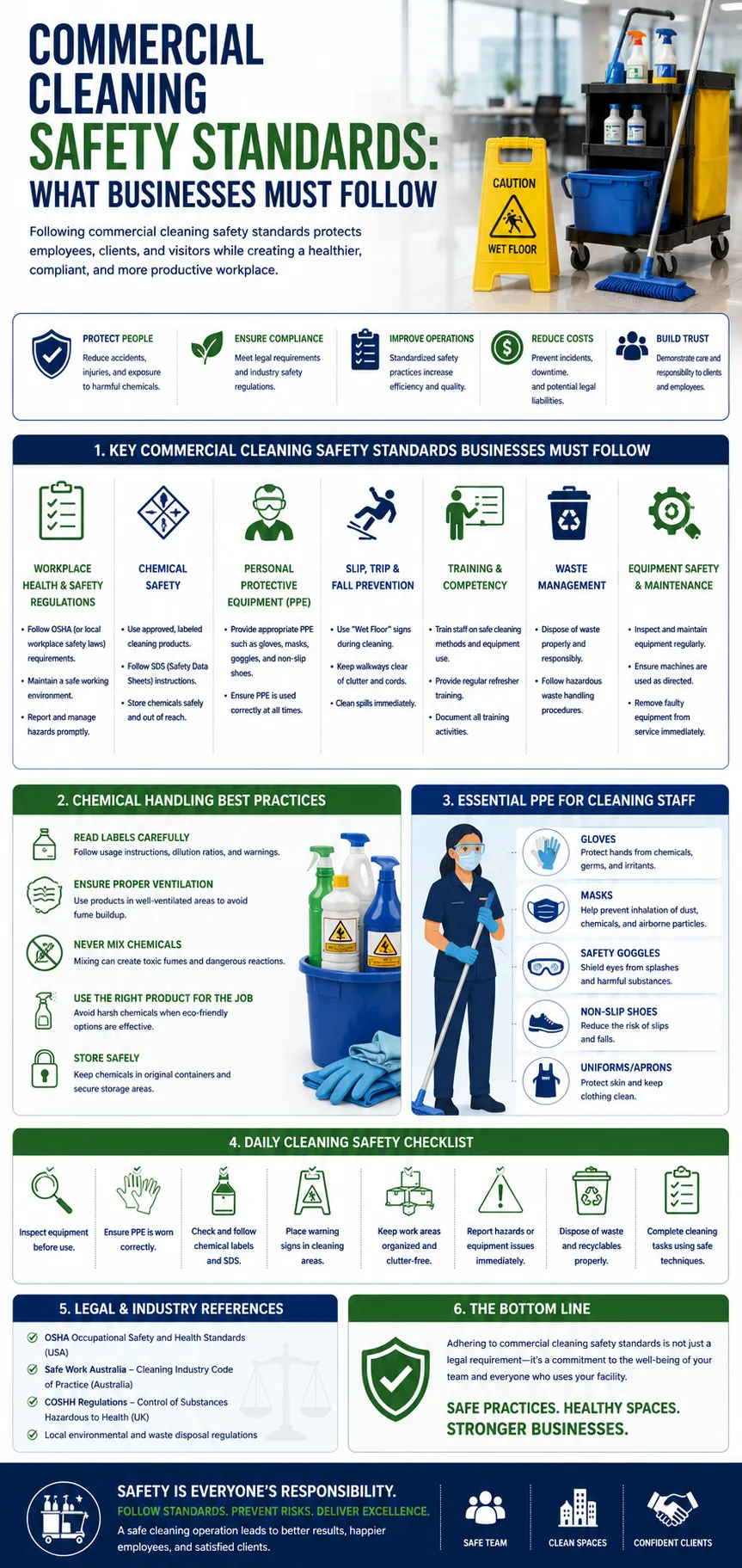
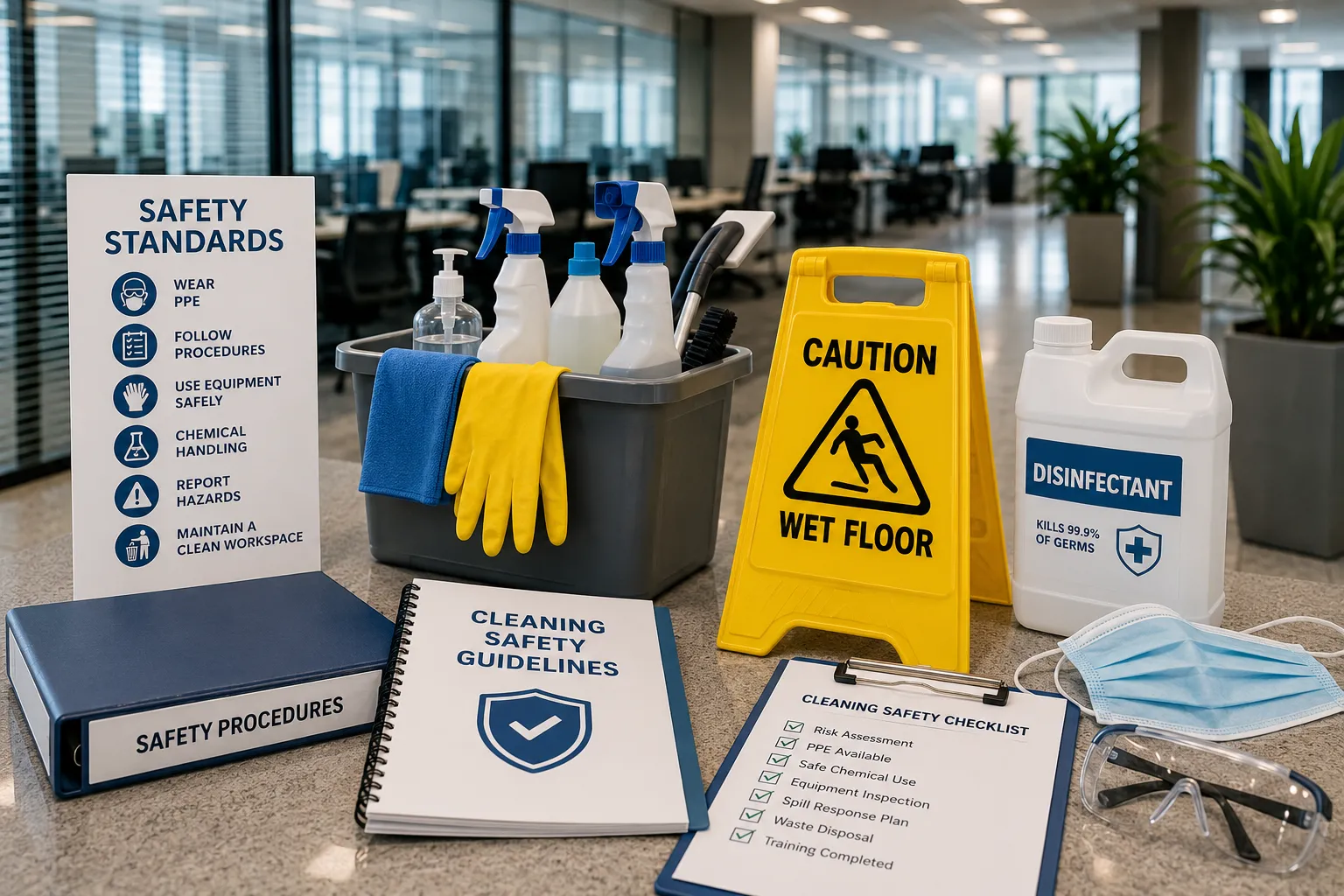
Maintaining a clean workplace is essential, but ensuring cleaning is carried out safely is equally important. Commercial cleaning involves handling chemicals, operating specialised equipment, working around employees and visitors, and complying with workplace health and safety (WHS) requirements.
Following recognised commercial cleaning safety standards helps businesses reduce workplace hazards, prevent injuries, maintain hygienic environments, and comply with Australian workplace safety obligations. Whether you manage an office, retail store, healthcare facility, school, or industrial workplace, implementing safe cleaning practices protects both your staff and your business. Working with experienced Commercial Cleaning Services can also help ensure recognised safety procedures are consistently followed.
Why Are Commercial Cleaning Safety Standards Important?
Commercial cleaning safety standards help businesses minimise risk while maintaining consistently high cleaning standards.
| Benefit | Why It Matters |
|---|---|
| Protects employees and visitors | Reduces the risk of workplace injuries and accidents. |
| Improves workplace hygiene | Supports healthier indoor environments. |
| Reduces chemical exposure | Helps prevent burns, respiratory irritation, and contamination. |
| Supports WHS compliance | Assists businesses in meeting workplace health and safety obligations. |
| Lowers liability | Reduces the likelihood of incidents and insurance claims. |
| Improves operational efficiency | Safe cleaning procedures reduce downtime and disruptions. |
A proactive approach to cleaning safety creates safer workplaces while improving cleaning quality and consistency. Businesses can strengthen their cleaning programs by following the recommendations in Office Hygiene Protocols for Employee Wellness, which highlights best practices for reducing the spread of illness in commercial environments.
Conduct Workplace Risk Assessments
Before beginning any commercial cleaning task, businesses should identify potential hazards and determine the safest way to complete the work.
Common Cleaning Hazards
| Hazard | Potential Risk |
| Wet floors | Slips and falls |
| Cleaning chemicals | Skin, eye, and respiratory irritation |
| Electrical equipment | Electric shock |
| Working at heights | Falls from ladders or platforms |
| Manual handling | Back, shoulder, and muscle injuries |
| Extension cords | Trip hazards |
| Biological contaminants | Exposure to bacteria and viruses |
Risk assessments help determine appropriate control measures before cleaning begins.
Use Appropriate Personal Protective Equipment (PPE)
Personal Protective Equipment (PPE) protects cleaning staff from workplace hazards associated with chemicals, contaminants, and cleaning equipment.
Common PPE for Commercial Cleaners
| PPE | Purpose |
| Chemical-resistant gloves | Protect hands from cleaning chemicals |
| Safety glasses or goggles | Prevent chemical splashes to the eyes |
| Protective aprons | Protect clothing and skin |
| Face masks or respirators | Reduce inhalation of airborne contaminants where required |
| Non-slip safety footwear | Reduce slip and fall risks |
| High-visibility clothing | Improve visibility in appropriate environments |
PPE should be properly fitted, regularly inspected, and replaced whenever damaged or worn.
Handle Cleaning Chemicals Safely
Commercial cleaning products are effective only when used correctly. Improper chemical handling can create serious health and safety risks.
Safe Chemical Handling Practices
| Best Practice | Why It's Important |
| Read product labels | Ensures correct application and dilution |
| Follow manufacturer instructions | Maximises cleaning effectiveness and safety |
| Never mix chemicals | Prevents dangerous chemical reactions |
| Store products in labelled containers | Reduces accidental misuse |
| Keep chemicals away from food preparation areas | Prevents contamination |
| Ensure adequate ventilation | Minimises exposure to fumes |
Correct chemical handling helps prevent burns, respiratory irritation, accidental exposure, and property damage. Choosing appropriate products is equally important, as outlined in our guide to Commercial Cleaning Supplies: The Ultimate Buying Guide.
Maintain Safety Data Sheets (SDS)
Safety Data Sheets (SDS) provide essential information about hazardous cleaning chemicals, including safe handling, storage, first aid measures, and emergency response procedures.
Businesses should ensure:
- SDS are available for hazardous chemicals.
- Staff know where SDS are stored.
- Employees understand SDS information.
- SDS remain current and up to date.
Keeping SDS readily accessible is an important part of workplace chemical safety.
Prevent Slips, Trips, and Falls
Slips, trips, and falls remain among the most common workplace incidents during commercial cleaning.
Ways to Reduce Slip and Trip Hazards
- Display wet floor signs.
- Clean spills immediately.
- Keep walkways clear.
- Manage power cords safely.
- Wear non-slip footwear.
- Allow floors to dry completely.
- Schedule cleaning during quieter periods.
Simple preventative measures significantly reduce workplace incidents. Regular High Pressure Cleaning of external walkways and entrances can also help minimise slip hazards caused by dirt, algae, and grime.
Operate Cleaning Equipment Safely
Commercial cleaning equipment should only be used by trained operators following manufacturer guidelines.
Safe equipment practices include:
- Inspect equipment before use.
- Follow operating instructions.
- Disconnect power before maintenance.
- Report damaged equipment immediately.
- Schedule routine servicing.
- Use equipment suitable for the surface being cleaned.
Well-maintained equipment is safer, more reliable, and more efficient. For more guidance, read Commercial Cleaning Equipment: Essential Tools for Professional Cleaning.
Practice Safe Manual Handling
Commercial cleaning often involves lifting, carrying, pushing, pulling, and repetitive movements.
To reduce manual handling injuries:
- Use correct lifting techniques.
- Avoid twisting while carrying loads.
- Use trolleys or janitorial carts for heavy items.
- Adjust equipment to comfortable working heights.
- Rotate repetitive cleaning tasks where practical.
- Provide regular manual handling training.
Safe manual handling helps reduce musculoskeletal injuries and improves long-term worker wellbeing.
Maintain Effective Infection Control
Many workplaces require enhanced infection prevention procedures to reduce the spread of bacteria and viruses.
Frequently disinfected high-touch surfaces include:
- Door handles
- Light switches
- Reception counters
- Lift buttons
- Shared office equipment
- Kitchen surfaces
- Bathroom fixtures
Always follow the disinfectant manufacturer's recommended contact time to ensure effective sanitisation. Businesses can also benefit from implementing the strategies discussed in Creating an Effective Commercial Office Cleaning Schedule.
Store Cleaning Supplies Correctly
Proper storage protects staff while maintaining product effectiveness.
Best practices include:
- Store chemicals securely.
- Keep storage areas well ventilated.
- Separate incompatible chemicals.
- Clearly label all containers.
- Follow manufacturer storage recommendations.
Proper storage also reduces the risk of spills, contamination, and product deterioration.
Provide Ongoing Staff Training
Training is essential to maintaining safe, consistent commercial cleaning practices.
Training should cover:
- Safe chemical handling
- PPE selection and use
- Equipment operation
- Manual handling
- Infection prevention
- Emergency procedures
- Hazard reporting
Regular refresher training helps staff stay informed about updated procedures and workplace safety requirements.
Develop Emergency Response Procedures
Businesses should establish clear procedures for responding to cleaning-related emergencies.
Emergency plans should address:
- Chemical spills
- Chemical exposure
- Equipment malfunctions
- Fire emergencies
- Medical incidents
- First aid procedures
- Emergency contact information
Prepared staff are better equipped to respond quickly and minimise workplace risks.
Monitor and Review Cleaning Safety Procedures
Cleaning safety should be reviewed regularly to ensure procedures remain effective.
Regular reviews should include:
- Incident reports
- Staff feedback
- Equipment inspections
- Workplace audits
- New cleaning products
- WHS updates
Continuous improvement helps businesses maintain safe and effective cleaning operations.
Consider Industry-Specific Cleaning Requirements
Some industries require stricter cleaning protocols than standard office environments.
Healthcare providers, aged care facilities, childcare centres, food preparation businesses, manufacturers, and laboratories often require specialised cleaning procedures. Businesses in these sectors can benefit from professional Medical Cleaning Services and industry-specific cleaning programs designed to meet higher hygiene standards.
Benefits of Hiring Professional Commercial Cleaners
Professional commercial cleaning companies are trained to follow recognised safety procedures while maintaining consistently high cleaning standards.
Benefits include:
- Trained cleaning professionals
- Safe chemical handling
- Commercial-grade equipment
- WHS-compliant procedures
- Documented cleaning systems
- Quality assurance inspections
- Reduced workplace incidents
Partnering with an experienced commercial cleaning provider helps businesses maintain both cleanliness and workplace safety.
Final Thoughts
Commercial cleaning safety is about much more than keeping a workplace clean. It involves protecting employees, visitors, and cleaning staff through proper risk assessments, safe chemical handling, appropriate PPE, well-maintained equipment, and ongoing staff training.
By following recognised commercial cleaning safety standards, businesses can reduce workplace risks, support WHS compliance, improve hygiene, and create safer, healthier environments for everyone who enters the workplace.
Build a Safer, Cleaner Workplace with Corporate Cleaning Services®
Maintaining workplace safety requires more than quality cleaning—it requires experienced professionals who understand best practices, safe chemical handling, and industry-specific cleaning requirements. Corporate Cleaning Services® delivers customised commercial cleaning solutions that prioritise cleanliness, workplace safety, and regulatory compliance for businesses across Australia.
Learn more about our Commercial Cleaning Services, explore expert advice in our News & Tips resource centre, or request a free quote to discuss a tailored cleaning solution for your workplace.
Frequently Asked Questions
What are commercial cleaning safety standards?
Commercial cleaning safety standards are recognised procedures and best practices designed to protect cleaning staff, employees, customers, and visitors during cleaning activities. They cover areas such as risk assessments, chemical handling, PPE, equipment safety, infection control, and workplace health and safety compliance.
Why are Safety Data Sheets (SDS) important?
Safety Data Sheets provide essential information about hazardous chemicals, including safe handling, storage, first aid measures, emergency procedures, and disposal requirements. They help businesses manage chemical risks safely and support WHS compliance.
What PPE should commercial cleaners wear?
The required PPE depends on the cleaning task but commonly includes chemical-resistant gloves, safety glasses, non-slip footwear, protective aprons, and face masks or respirators where appropriate.
How often should commercial cleaning safety procedures be reviewed?
Cleaning safety procedures should be reviewed regularly, especially after workplace incidents, when introducing new cleaning products or equipment, following changes to workplace operations, or when workplace health and safety requirements are updated.