Quick Answer: How Do You Safely Remove Oil and Grease from Factory Surfaces?
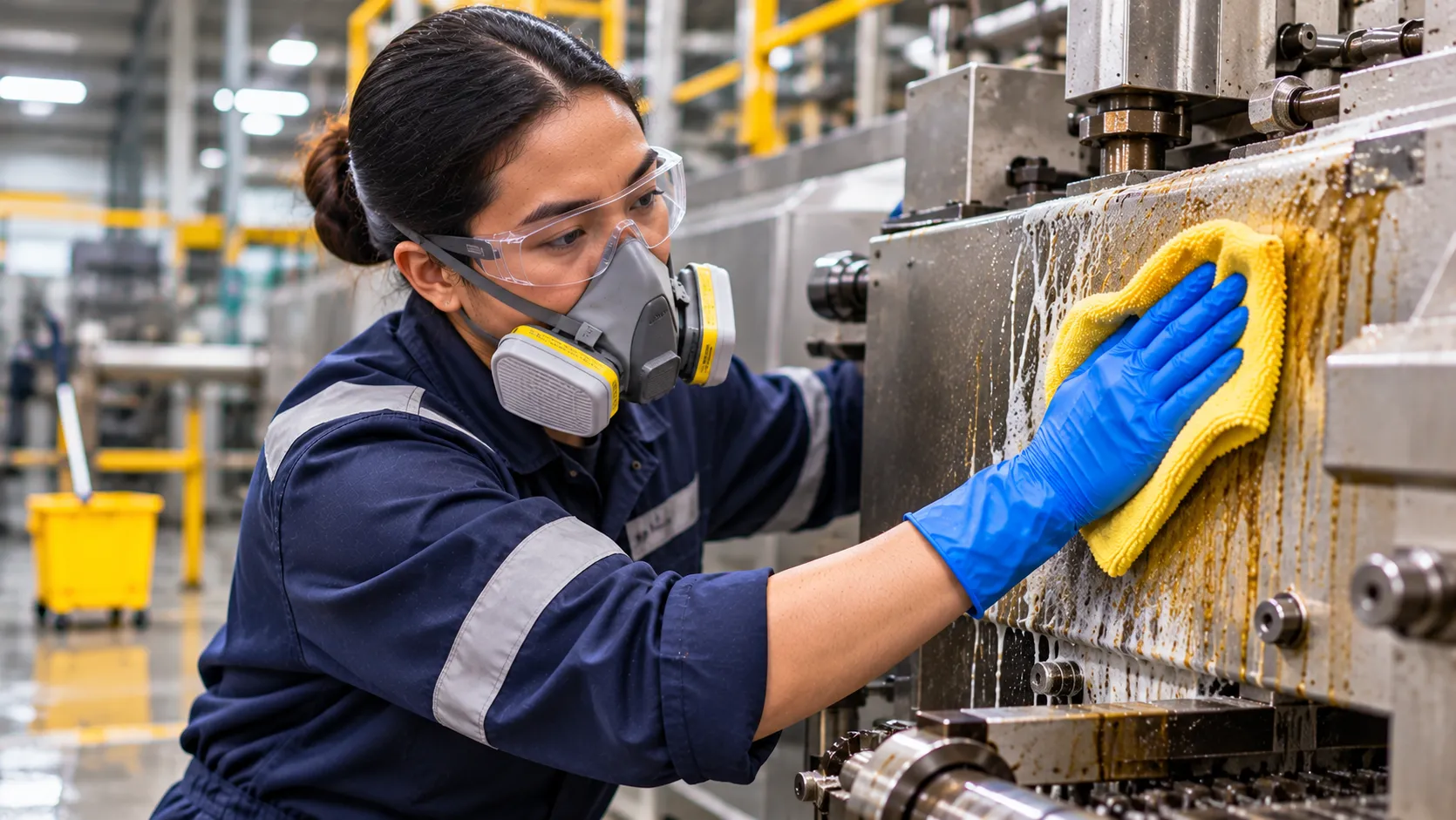
Factory degreasing involves removing accumulated oils, lubricants, grease and production residues from industrial floors, machinery and other approved surfaces using compatible cleaning chemicals, controlled cleaning methods and appropriate safety measures.
An effective industrial degreasing program includes:
- Identifying the type and source of contamination.
- Assessing chemical, machinery and environmental hazards.
- Selecting a surface-compatible industrial degreaser.
- Isolating machinery where required.
- Removing excess oil using approved recovery methods.
- Applying cleaning products according to manufacturer instructions.
- Using controlled mechanical agitation where appropriate.
- Recovering contaminated cleaning liquids.
- Drying and inspecting the affected area.
- Investigating recurring leaks and grease accumulation.
- Maintaining documented cleaning schedules.
Professional factory degreasing supports workplace safety, contamination control, equipment maintenance and operational efficiency. Cleaning must be coordinated with applicable Australian workplace safety requirements, environmental obligations and equipment manufacturer instructions.
Factories and manufacturing facilities rely on machinery, hydraulic systems, conveyors, lubricated components and production equipment that can gradually release oils, grease and other residues into the working environment.
When these substances accumulate, they can create slippery floors, contaminate production areas, obscure equipment defects and increase maintenance requirements.
Unlike ordinary commercial cleaning, industrial degreasing requires a careful understanding of the contamination, surface materials, machinery hazards, chemical compatibility and wastewater disposal requirements.
A structured approach to factory degreasing helps manufacturers maintain cleaner production environments without introducing unnecessary risks to workers, equipment or the surrounding environment.
1. What Is Factory Degreasing?
Factory degreasing is the controlled removal of oily and greasy contamination from industrial equipment, production areas, floors and other approved factory surfaces.
The process may involve chemical cleaning, mechanical agitation, absorbent materials, industrial floor-cleaning equipment or specialist parts-cleaning systems, depending on the contamination and operating environment.
As part of a broader industrial cleaning program for manufacturing facilities, degreasing should be matched to the specific risks and cleaning requirements of each production area.
| General Factory Cleaning | Industrial Degreasing |
|---|---|
| Removes routine dust, dirt and general debris. | Targets adhesives, oils, grease and compatible industrial residues. |
| Often involves conventional cleaning equipment. | May require specialised cleaning products and recovery equipment. |
| Focuses on routine housekeeping. | Addresses contamination associated with machinery and manufacturing. |
| Generally follows routine cleaning schedules. | May require planned shutdowns or restricted access. |
| ?? generates general cleaning waste. | May generate contaminated liquids and regulated waste. |
Not every industrial residue can be removed using the same product or procedure. Effective degreasing begins with identifying the contamination and assessing the affected surface.
2. Why Oil and Grease Build Up in Factories
Industrial environments contain numerous sources of oily contamination. Some result from normal manufacturing operations, while others indicate maintenance issues or equipment faults.
| Contamination Source | Common Location | Potential Impact |
|---|---|---|
| Hydraulic Oil | Presses, lifts and hydraulic equipment. | Slippery floors and recurring contamination. |
| Machine Lubricants | Bearings, gears and moving components. | Accumulated grease around machinery. |
| Cutting Fluids | Metalworking and machining areas. | Oily residues and contaminated surfaces. |
| Conveyor Lubricants | Production and material handling lines. | Residue accumulation beneath equipment. |
| Food Processing Fats | Food manufacturing equipment and floors. | Hygiene concerns and pest attraction. |
| Automotive Oils | Assembly and maintenance workshops. | Floor contamination and slip hazards. |
| Protective Manufacturing Oils | Metal components and storage areas. | Transfer of oily residues to surrounding surfaces. |
| Oil Mist | Machining areas and nearby structures. | Gradual contamination of elevated and adjacent surfaces. |
| Equipment Leaks | Machine bases, hoses and connections. | Repeated contamination requiring maintenance investigation. |
3. Why Industrial Grease Removal Is Essential for Factory Safety
Oil and grease accumulation can affect more than the visual appearance of a facility. Contamination may interfere with housekeeping, safe movement, equipment inspections and production hygiene.
| Industrial Risk | How Degreasing Can Help |
|---|---|
| Slips and Falls | Removes oily contamination from designated walking surfaces. |
| Combustible Residue Accumulation | Supports housekeeping controls for combustible materials. |
| Equipment Inspection Difficulties | Makes visible leaks and external defects easier to identify. |
| Product Contamination | Helps prevent unwanted residues transferring into production areas. |
| Equipment Overheating | Supports approved cleaning of accessible heat-dissipation surfaces. |
| Pest Activity | Removes certain organic residues attractive to pests. |
| Surface Deterioration | Helps manage contaminants that may affect compatible surface materials. |
| Production Interruptions | Supports preventive maintenance and organised housekeeping. |
| Environmental Contamination | Supports controlled recovery and disposal of oily waste. |
Degreasing should complement engineering controls, equipment maintenance, ventilation and workplace safety procedures. It should not be treated as a replacement for these measures.
4. Understanding Australian Workplace Safety Requirements
Factory operators have responsibilities under applicable Australian work health and safety or occupational health and safety legislation to manage workplace hazards.
Factory degreasing can involve hazardous chemicals, industrial machinery, electrical equipment, contaminated wastewater and manual handling activities.
Safe Work Australia identifies manufacturing hazards that include dangerous machinery, chemicals, manual tasks and workplace slips and falls.
| Safety Consideration | Application to Factory Degreasing |
|---|---|
| Hazard Identification | Assess contamination, chemicals and affected equipment before cleaning. |
| Chemical Risk Management | Review chemical hazards, compatibility and worker exposure. |
| Plant Safety | Prevent exposure to moving machinery and hazardous energy sources. |
| Safe Workplace Access | Control access to contaminated and active cleaning areas. |
| Training and Supervision | Ensure personnel understand approved cleaning procedures. |
| Environmental Management | Prevent inappropriate discharge of contaminated cleaning liquids. |
| Emergency Preparedness | Maintain suitable spill and chemical exposure response arrangements. |
| Contractor Coordination | Communicate cleaning activities and associated risks to relevant parties. |
Requirements may differ between Australian states and territories. Businesses should confirm applicable obligations with their relevant workplace safety and environmental regulators.
5. Identify the Type of Grease Before Cleaning
Different oils and industrial residues behave differently. A cleaning product suitable for vegetable fats may not be appropriate for synthetic lubricants or aged manufacturing residues.
| Contamination Type | Typical Characteristics | Cleaning Consideration |
|---|---|---|
| Mineral Oil | Petroleum-based oily residues. | Use an approved compatible cleaning formulation. |
| Synthetic Lubricants | Engineered fluids with varying chemical properties. | Confirm lubricant and cleaning product compatibility. |
| Hydraulic Fluid | Fluid associated with hydraulic equipment. | Identify the specific fluid and investigate leaks. |
| Animal Fats | Organic residues from food production. | Follow approved food manufacturing hygiene procedures. |
| Vegetable Oils | Organic oily residues. | Consider residue age and affected surface. |
| Cutting Fluids | Oil-based or water-miscible machining fluids. | Follow material-specific handling and disposal requirements. |
| Heavy Lubricating Grease | Thick, persistent and adhesive contamination. | May require specialist removal methods. |
| Aged or Hardened Residue | Accumulated contamination that has become difficult to remove. | Assess specialist cleaning options without damaging surfaces. |
Unidentified industrial residues should be assessed before selecting a chemical cleaning method.
6. Factory Areas That Commonly Require Degreasing
Industrial grease can travel beyond its original source through footwear, equipment wheels, airborne mist, material handling and routine production activities.
| Factory Area | Typical Contamination | Cleaning Priority |
|---|---|---|
| Production Floors | Oil, grease and process residues. | High where pedestrian exposure exists. |
| Machine Bases | Lubricants and hydraulic leaks. | High. |
| Maintenance Workshops | Mechanical grease and used oils. | High. |
| Conveyor Surroundings | Lubricant and product residue. | Production-dependent. |
| Loading Areas | Vehicle-related oily contamination. | Risk-dependent. |
| Assembly Stations | Protective oils and manufacturing residues. | Regular. |
| Equipment Guards | External oil mist and grease deposits. | Scheduled and approved. |
| Walls and Partitions | Oil splashes and airborne residues. | Periodic. |
| Drainage Surroundings | Contaminated liquids and residues. | Site-specific environmental controls. |
| Overhead Structures | Airborne oil mist accumulation. | Specialist assessment where required. |
7. Choosing the Right Industrial Degreaser
Industrial degreasers are available in several formulations. Product selection should account for chemical hazards, cleaning effectiveness, surface compatibility and environmental requirements.
| Degreaser Type | Typical Application | Key Consideration |
|---|---|---|
| Water-Based Degreasers | Compatible industrial surfaces and routine oily residues. | Check moisture sensitivity and wastewater requirements. |
| Alkaline Degreasers | Selected heavy grease and organic residues. | May damage incompatible metals or coatings. |
| Neutral-PH Degreasers | Compatible surfaces requiring less aggressive cleaning. | May be unsuitable for certain heavy deposits. |
| Solvent-Based Degreasers | Specialised industrial contamination. | Requires assessment of exposure, flammability and compatibility. |
| Low-Foaming Degreasers | Compatible industrial floor-cleaning equipment. | Verify suitability for the specific equipment. |
| Enzyme-Based Cleaners | Selected organic residues. | Performance depends on formulation and contamination type. |
| Emulsifying Degreasers | Selected oily contamination. | May affect oil-water separation and wastewater treatment. |
| Specialist Food Facility Cleaners | Approved food manufacturing applications. | Must meet site-specific food safety requirements. |
The strongest available degreaser is not necessarily the most appropriate. A suitable product should achieve the required cleaning result while minimising unnecessary chemical and material risks.
8. Check Chemical Compatibility with Factory Surfaces
Manufacturing facilities contain various metals, coatings, plastics, seals and specialist floor finishes.
Incompatible cleaning products can cause corrosion, discolouration, coating deterioration or damage to equipment components.
| Surface Material | Potential Cleaning Concern | Recommended Approach |
|---|---|---|
| Stainless Steel | Corrosion or damage from incompatible products. | Use manufacturer-approved formulations. |
| Aluminium | Damage from certain strongly alkaline cleaners. | Verify metal compatibility. |
| Painted Steel | Softening, discolouration or coating damage. | Confirm compatibility with the painted finish. |
| Sealed Concrete | Damage to protective sealers. | Select products approved for the coating. |
| Unsealed Concrete | Oil absorption and persistent staining. | Use site-approved recovery and cleaning methods. |
| Epoxy Flooring | Coating deterioration from incompatible chemicals. | Follow flooring manufacturer requirements. |
| Rubber Components | Swelling or deterioration. | Check compatibility with elastomers. |
| Plastic Components | Cracking, distortion or surface degradation. | Avoid unapproved solvents. |
| Electrical Equipment | Moisture or chemical ingress. | Use specialist manufacturer-approved procedures. |
Testing an approved product on a small, inconspicuous area may be appropriate before broader application, provided this is permitted by the equipment or surface manufacturer.
9. How Industrial Factory Degreasing Is Performed
A professional degreasing process should be planned around the site conditions rather than relying on an identical procedure for every factory.
Step 1: Assess the Cleaning Area
Identify the contamination, affected surfaces, machinery hazards, nearby products, drainage arrangements and required cleaning outcome.
Step 2: Establish Safety Controls
Coordinate access restrictions, equipment isolation, ventilation and worker protection according to the site's risk assessment.
Step 3: Recover Excess Oil
Where safe and authorised, collect free-standing oil and excess contamination using compatible recovery equipment or absorbent materials.
Step 4: Apply an Approved Cleaning Product
Select a compatible degreaser and follow its labelled application, dilution and handling instructions.
Step 5: Allow Appropriate Contact Time
Follow the product manufacturer's instructions rather than adopting a universal dwell time.
Step 6: Agitate Where Appropriate
Use approved cleaning tools or mechanical equipment where the surface and operating environment permit.
Step 7: Recover Contaminated Residue
Collect loosened contamination and cleaning liquids using the approved site recovery process.
Step 8: Rinse Where Required
Rinse only where the product instructions, surface materials and wastewater arrangements permit.
Step 9: Dry and Inspect
Check for residual contamination, standing liquid and remaining slip hazards before the area is released.
Step 10: Complete Service Documentation
Record completed work, unresolved contamination, suspected leaks and any conditions requiring maintenance attention.
10. Degreasing Methods Used in Manufacturing Facilities
| Cleaning Method | Suitable Application | Limitations |
|---|---|---|
| Manual Wiping | Accessible external machinery surfaces. | Not suitable for all hazardous or inaccessible locations. |
| Mechanical Floor Scrubbing | Approved industrial floors. | Requires compatible equipment, chemicals and recovery arrangements. |
| Absorbent Recovery | Free-standing oil and approved spills. | Contaminated materials require suitable disposal. |
| Controlled Foam Cleaning | Compatible vertical and production surfaces. | Requires assessment of moisture and chemical exposure. |
| Parts Washing | Approved removable industrial components. | Requires authorised component handling. |
| Hot Water Cleaning | Selected compatible greasy surfaces. | Introduces thermal and moisture-related risks. |
| Steam Cleaning | Selected specialist applications. | May be unsuitable near sensitive components. |
| Pressure Cleaning | Approved durable industrial surfaces. | Requires spray, electrical and wastewater controls. |
| Specialist Enclosed Cleaning | Controlled industrial component cleaning. | Requires suitable equipment and operating procedures. |
The choice of cleaning method should be determined through assessment rather than assuming a more aggressive method produces a better result.
11. Industrial Floor Degreasing
Factory floors are particularly vulnerable to oil and grease contamination because they are exposed to machinery, maintenance activities, pedestrian traffic and moving equipment.
Oil can also be transferred from contaminated production areas into walkways, staff amenities and adjacent storage zones.
Common Industrial Flooring Types
| Floor Type | Cleaning Challenge | Degreasing Consideration |
|---|---|---|
| Unsealed Concrete | Porous surface can absorb oil. | Deep staining may require specialist treatment. |
| Sealed Concrete | Surface residue and coating compatibility. | Use approved cleaning formulations. |
| Epoxy Flooring | Oil films and potential coating damage. | Check chemical and equipment compatibility. |
| Polyurethane Flooring | Production residues and material compatibility. | Follow flooring specifications. |
| Textured Safety Flooring | Grease trapped within surface texture. | Use suitable mechanical cleaning methods. |
| Industrial Tiles | Residue within joints and textured surfaces. | Address grout and surface compatibility. |
| Anti-Fatigue Mats | Oil accumulation above and underneath mats. | Follow approved mat-cleaning instructions. |
Removing visible oil does not automatically confirm that a floor has adequate slip resistance. Facilities may require additional assessment where slippery conditions persist.
12. Removing Built-Up Oil from Industrial Machinery
External machinery degreasing can help remove accumulated lubricants, oil mist and manufacturing residues from approved equipment surfaces.
However, cleaning machinery introduces hazards that do not normally exist during general floor cleaning.
| Machinery Component | Cleaning Consideration |
|---|---|
| External Machine Housing | Use approved surface-compatible methods. |
| Machine Bases | Recover accumulated oil without disturbing components. |
| External Guards | Clean without bypassing or removing safety systems. |
| Control Panels | Prevent liquid and chemical ingress. |
| Motors | Follow manufacturer-specific cleaning requirements. |
| Hydraulic Connections | Report suspected leaks without unauthorised adjustments. |
| Bearings and Lubricated Parts | Avoid removing essential lubricants. |
| Electrical Enclosures | Refer to approved specialist procedures. |
| Moving Components | Apply relevant isolation and maintenance controls. |
Important: Degreasing must not remove lubricants required for safe machinery operation. Internal components, electrical systems and protected moving parts should remain outside the general cleaning scope unless specifically authorised and managed by competent personnel.
13. Machinery Isolation and Lockout/Tagout Requirements
Industrial equipment may contain electrical, mechanical, hydraulic, pneumatic, thermal or other hazardous energy sources.
Turning a machine off at its ordinary operating switch does not necessarily make it safe to clean.
Where cleaning exposes personnel to hazardous energy, the facility must establish appropriate isolation procedures before work begins.
| Machinery Hazard | Cleaning Risk |
|---|---|
| Electrical Energy | Electric shock or unintended equipment activation. |
| Moving Mechanical Parts | Entanglement, trapping or crushing. |
| Hydraulic Pressure | Unexpected equipment movement or fluid release. |
| Pneumatic Systems | Sudden activation or pressure release. |
| Stored Mechanical Energy | Movement of components after shutdown. |
| Thermal Energy | Burns from hot equipment or substances. |
| Automated Controls | Unexpected restart or programmed movement. |
Equipment isolation, verification and return-to-service procedures should be managed by trained and authorised personnel under the facility's established plant safety arrangements.
14. Cleaning Around Electrical Equipment
Water, cleaning chemicals and conductive contamination can introduce serious hazards when used around industrial electrical equipment.
General cleaning personnel should not open electrical cabinets, remove electrical covers or apply liquids to unapproved electrical components.
| Electrical Area | Cleaning Precaution |
|---|---|
| Control Panels | Use approved external cleaning methods. |
| Switchboards | Observe restricted access requirements. |
| Electrical Motors | Follow equipment manufacturer specifications. |
| Sensors | Avoid contamination or interference with operation. |
| Electrical Connections | Do not apply unapproved cleaning liquids. |
| Cable Routes | Report visible damage without attempting repairs. |
| Emergency Stop Controls | Maintain access and avoid interference with safety functions. |
15. Managing Chemical Exposure During Factory Degreasing
Industrial degreasers can present skin, eye, respiratory, fire or other chemical hazards depending on their formulation and application.
Effective chemical management begins with selecting suitable products and preventing unnecessary exposure.
Businesses should consult the Model Code of Practice for Managing Risks of Hazardous Chemicals in the Workplace and confirm its application within their jurisdiction.
| Chemical Safety Control | Purpose |
|---|---|
| Approved Product Selection | Avoid unnecessary chemical hazards. |
| Safety Data Sheets | Provide information on hazards and safe handling. |
| Correct Chemical Labelling | Prevent identification and handling errors. |
| Controlled Application | Reduce unnecessary exposure and contamination. |
| Ventilation | Help manage airborne contaminants where required. |
| Restricted Access | Protect unrelated workers from cleaning activities. |
| Appropriate PPE | Help manage remaining exposure risks. |
| Compatible Chemical Storage | Reduce spill and incompatible-material risks. |
| Worker Training | Support correct use and emergency response. |
Cleaning chemicals should never be mixed unless the manufacturer specifically permits the combination and the site has approved the procedure.
16. Personal Protective Equipment for Industrial Degreasing
Personal protective equipment should be selected according to the contamination, cleaning product, equipment and assessed exposure risks.
| PPE Type | Potential Application |
|---|---|
| Chemical-Resistant Gloves | Protection from compatible chemical and oily contamination. |
| Safety Goggles | Eye protection where splash exposure may occur. |
| Face Shields | Additional protection for assessed splash hazards. |
| Protective Clothing | Help prevent skin contact with contamination. |
| Slip-Resistant Safety Footwear | Support safe movement through industrial environments. |
| Respiratory Protection | Where required by an appropriate exposure assessment. |
| Hearing Protection | Where industrial noise exposure requires protection. |
| High-Visibility Clothing | Where required by site traffic-management arrangements. |
PPE is not a substitute for effective hazard elimination, substitution, isolation and engineering controls.
17. Control Ventilation and Airborne Contamination
Certain cleaning methods can generate airborne droplets, chemical vapours or contaminated mist.
These risks may increase when cleaning takes place in enclosed workshops, poorly ventilated production rooms or areas containing sensitive equipment.
| Ventilation Consideration | Recommended Management Approach |
|---|---|
| Chemical Vapours | Assess exposure and ventilation requirements. |
| Oil Mist | Review existing production extraction systems. |
| Cleaning Aerosols | Select controlled application methods. |
| Enclosed Work Areas | Assess specialist access and ventilation needs. |
| Adjacent Production Areas | Prevent unnecessary migration of contaminants. |
| Flammable Atmospheres | Require specialist assessment and ignition controls. |
Confined-space cleaning, where applicable, requires separate assessment, authorisation and specialist safety arrangements. It should not be treated as routine factory degreasing.
18. Preventing Fire Hazards Associated with Oil and Grease
Certain oils, industrial residues, solvents and contaminated cleaning materials may contribute to fire risks.
Factory cleaning programs should address combustible material accumulation without interfering with equipment safety or fire-protection systems.
| Potential Fire Risk | Management Consideration |
|---|---|
| Oil Residue Near Hot Machinery | Coordinate cleaning with approved equipment shutdown arrangements. |
| Flammable Cleaning Products | Assess storage, ventilation and ignition risks. |
| Oil-Contaminated Cloths | Store and dispose of them according to material-specific requirements. |
| Accumulated Organic Grease | Include affected approved areas in cleaning schedules. |
| Contaminated Ventilation Components | Arrange specialist assessment and approved cleaning. |
| Combustible Waste | Maintain appropriate waste collection arrangements. |
Cleaning supports fire-risk management but cannot replace appropriate equipment maintenance, fire detection, suppression systems or facility-specific emergency procedures.
19. Managing Industrial Oil Spills
Unexpected oil spills should be addressed separately from scheduled degreasing activities because they may create immediate exposure, environmental or slip risks.
| Spill Situation | Response Consideration |
|---|---|
| Small Identified Oil Spill | Follow the approved site spill-response procedure. |
| Recurring Hydraulic Leak | Report the source for maintenance assessment. |
| Large Industrial Spill | Escalate to designated emergency or specialist personnel. |
| Unknown Liquid | Restrict access and arrange identification and assessment. |
| Spill Near Electrical Equipment | Keep clear and notify authorised personnel. |
| Spill Near Stormwater Drains | Activate approved environmental protection procedures. |
| Food Production Contamination | Notify relevant food safety and production personnel. |
Cleaning personnel should understand the limits of their spill-response responsibilities and escalate incidents outside their training or approved scope.
20. Managing Oily Wastewater and Environmental Compliance
Factory degreasing can generate contaminated wastewater containing oils, detergents, suspended solids and manufacturing residues.
Discharging these liquids without appropriate approval or treatment can create environmental and infrastructure problems.
| Waste Stream | Management Consideration |
|---|---|
| Recovered Industrial Oil | Collect and manage according to applicable waste requirements. |
| Oily Wastewater | Assess collection, treatment and authorised disposal requirements. |
| Contaminated Absorbents | Classify and dispose of according to applicable requirements. |
| Used Cleaning Chemicals | Follow product disposal information and environmental obligations. |
| Oil-Contaminated Sludge | Arrange appropriate classification and waste management. |
| Contaminated Packaging | Follow approved segregation and disposal procedures. |
| Used Cleaning Cloths | Use approved laundering, recovery or disposal arrangements. |
Stormwater and Trade Waste Considerations
Oily cleaning liquids should not be discharged into stormwater drains. Discharge to sewer systems may also require trade waste approval, pretreatment and compliance with local water authority conditions.
Environmental and waste requirements differ depending on the state, territory, local water authority and contamination involved.
21. Protect Oil-Water Separators and Wastewater Treatment Systems
Some manufacturing facilities use oil-water separators or other wastewater treatment equipment to manage industrial contamination.
Cleaning chemicals that create stable oil-water emulsions may interfere with certain separation systems.
| Cleaning Consideration | Potential Impact |
|---|---|
| Incompatible Degreasers | May interfere with existing oil separation processes. |
| Excessive Water Use | May increase wastewater treatment requirements. |
| High Contaminant Loads | May exceed the capacity of treatment equipment. |
| Uncontrolled Runoff | May contaminate unauthorised drainage systems. |
| Poor Waste Segregation | May complicate waste classification and treatment. |
Degreaser selection should be coordinated with the facility's environmental manager, wastewater system provider and applicable discharge conditions.
22. Factory Degreasing Requirements Across Different Industries
Industrial cleaning specifications should reflect the production processes and contamination risks of each manufacturing environment.
| Industry | Typical Contaminants | Cleaning Priority |
|---|---|---|
| Metal Fabrication | Cutting oils and machining fluids. | Industrial floor and equipment contamination. |
| Automotive Manufacturing | Lubricants, grease and hydraulic fluids. | Assembly areas and machinery surroundings. |
| Food Manufacturing | Animal fats, vegetable oils and product residues. | Documented hygiene and food safety controls. |
| Plastics Manufacturing | Process oils and machinery residues. | Material-compatible cleaning. |
| Engineering Workshops | Mechanical lubricants and cutting fluids. | Workshop floors and maintenance areas. |
| Packaging Manufacturing | Equipment lubricants and process residues. | Production contamination management. |
| Pharmaceutical Manufacturing | Approved equipment-related contamination. | Controlled cleaning and applicable quality procedures. |
| Heavy Manufacturing | Industrial grease and hydraulic oils. | Specialist cleaning and maintenance coordination. |
| Electronics Manufacturing | Process-specific oils and residues. | Protection of sensitive components. |
| Transport Maintenance | Vehicle oils, grease and workshop residues. | Slip prevention and contaminated waste recovery. |
23. Degreasing in Food Manufacturing Facilities
Food manufacturing facilities require additional consideration because fats, oils and greasy residues can contribute to product contamination, pest activity and hygiene problems.
Degreasing procedures should be integrated into the facility's food safety program and applicable HACCP-based controls where relevant.
| Food Manufacturing Area | Degreasing Requirement |
|---|---|
| Food Contact Equipment | Follow approved cleaning and sanitation procedures. |
| Production Floors | Remove oily residues without contaminating food. |
| Frying Equipment Surroundings | Manage fat accumulation using approved procedures. |
| Conveyor Systems | Distinguish food contact surfaces from lubricated components. |
| Drainage Areas | Control residues and potential contamination transfer. |
| Ingredient Storage Areas | Protect packaging and exposed ingredients. |
| Equipment Undersides | Address accessible residue during approved cleaning periods. |
Degreasing and sanitising are separate processes. Removing grease does not necessarily achieve the microbial reduction required by a food safety program.
24. Establish a Preventive Factory Degreasing Schedule
Waiting until grease accumulation becomes severe can increase cleaning effort and complicate production scheduling.
A preventive cleaning program should identify high-risk areas and establish task frequencies based on actual contamination levels.
| Frequency | Example Cleaning Task | Objective |
|---|---|---|
| Each Shift | Report leaks and manage approved immediate contamination. | Control emerging hazards. |
| Daily | Clean approved high-traffic floor areas. | Maintain safe housekeeping conditions. |
| Weekly | Degrease designated machine surroundings and workshop areas. | Prevent progressive accumulation. |
| Monthly | Perform detailed cleaning of designated accessible surfaces. | Address less visible contamination. |
| Quarterly | Review recurring grease accumulation and cleaning effectiveness. | Identify improvement opportunities. |
| Planned Shutdowns | Complete approved detailed equipment-area cleaning. | Access normally restricted areas safely. |
| As Required | Respond to abnormal leaks, spills and contamination. | Control immediate risks. |
These frequencies are illustrative rather than mandatory. Actual cleaning intervals should follow production risks, manufacturer instructions and site-specific requirements.
25. Coordinate Degreasing with Preventive Maintenance
Recurring grease accumulation may indicate equipment faults, damaged seals, deteriorated hoses or unsuitable lubrication practices.
Cleaning the same contamination repeatedly without investigating its source can increase ongoing labour, chemical consumption and waste generation.
| Observed Condition | Recommended Follow-Up |
|---|---|
| Oil Reappears Beneath Machinery | Request maintenance assessment of possible leaks. |
| Grease Around Bearings | Refer lubrication concerns to authorised personnel. |
| Hydraulic Fluid Near Connections | Report the location for technical assessment. |
| Widespread Oil Mist Residue | Review production and extraction controls. |
| Repeated Floor Contamination | Investigate equipment, traffic and contamination sources. |
| Persistent Grease in Hard-to-Reach Areas | Coordinate approved cleaning access during maintenance periods. |
| Damaged Floor Coatings | Arrange assessment of surface condition and chemical compatibility. |
Cleaning personnel should document observations and report them without performing unauthorised equipment repairs.
26. Reduce Cross-Contamination During Degreasing
Cleaning tools used in heavily contaminated industrial areas can transfer oil and grease to otherwise clean surfaces.
Factories should consider separating equipment according to contamination risks and cleaning zones.
| Cleaning Zone | Equipment Management Consideration |
|---|---|
| Heavy Industrial Areas | Use designated equipment for oily contamination. |
| Food Production Areas | Follow approved hygiene and equipment segregation procedures. |
| Low-Contamination Assembly Areas | Prevent transfer from workshops and maintenance zones. |
| Warehouse Areas | Manage contamination transferred by material handling equipment. |
| Staff Amenities | Separate general cleaning materials from industrial degreasing tools. |
| Administrative Offices | Use appropriate dedicated commercial cleaning equipment. |
27. Document and Verify Factory Degreasing Performance
Documented cleaning records help factory managers monitor service completion, identify recurring contamination and verify agreed cleaning outcomes.
| Record Field | Example Information |
|---|---|
| Cleaning Date | Date and time of completed work. |
| Cleaning Location | Production line, machine reference or floor area. |
| Contamination Type | Identified oil, grease or industrial residue. |
| Cleaning Method | Approved procedure used. |
| Cleaning Product | Product identification and relevant preparation details. |
| Isolation Confirmation | Applicable authorisation or site procedure reference. |
| Waste Recovery | Waste handling or disposal reference where required. |
| Cleaning Personnel | Responsible worker or contractor. |
| Maintenance Observations | Reported leaks or visible concerns. |
| Completion Inspection | Verification against agreed cleaning requirements. |
| Outstanding Actions | Unresolved contamination or required follow-up. |
How to Measure Industrial Degreasing Performance
| Performance Indicator | What It Measures |
|---|---|
| Cleaning Completion | Whether scheduled activities are performed. |
| Residual Contamination | Cleaning effectiveness against agreed requirements. |
| Recurring Oil Accumulation | Potential unresolved maintenance issues. |
| Slip Hazard Reports | Conditions requiring investigation. |
| Chemical Consumption | Product usage and cleaning resource requirements. |
| Wastewater Generation | Liquid recovery and waste management requirements. |
| Cleaning-Related Downtime | Operational scheduling and cleaning efficiency. |
| Corrective Action Completion | Resolution of identified service deficiencies. |
28. Factory Degreasing Safety Checklist
Factory managers can use this checklist when reviewing their industrial cleaning arrangements.
| Cleaning and Safety Requirement | Complete |
|---|---|
| Contaminated areas identified. | ? |
| Oil and grease types assessed. | ? |
| Cleaning task risk assessment completed. | ? |
| Machine manufacturer instructions reviewed. | ? |
| Approved cleaning products selected. | ? |
| Safety Data Sheets available. | ? |
| Surface compatibility confirmed. | ? |
| Cleaning personnel appropriately trained. | ? |
| Required equipment isolation confirmed. | ? |
| Electrical components protected. | ? |
| Essential machine lubricants protected. | ? |
| Appropriate ventilation established. | ? |
| Suitable PPE provided. | ? |
| Access to cleaning areas controlled. | ? |
| Excess oil recovered appropriately. | ? |
| Cleaning chemicals applied according to instructions. | ? |
| Contaminated cleaning liquids collected. | ? |
| Stormwater contamination prevented. | ? |
| Waste management arrangements confirmed. | ? |
| Residual contamination assessed. | ? |
| Remaining slip hazards addressed. | ? |
| Recurring leaks reported. | ? |
| Cleaning equipment cleaned and stored appropriately. | ? |
| Cleaning records completed. | ? |
| Area released according to site procedures. | ? |
This checklist is a cleaning management resource and does not replace site-specific risk assessments, technical isolation procedures or environmental compliance requirements.
29. Common Factory Degreasing Mistakes
| Common Mistake | Potential Consequence | Better Approach |
|---|---|---|
| Using the strongest available chemical. | Surface damage and unnecessary exposure. | Select an effective compatible formulation. |
| Cleaning moving machinery. | Entanglement, trapping or injury. | Follow applicable isolation requirements. |
| Ignoring Safety Data Sheets. | Unrecognised chemical hazards. | Review current product safety information. |
| Using excessive water. | Increased wastewater and moisture risks. | Use controlled application and recovery. |
| Mixing incompatible chemicals. | Potential hazardous reactions. | Use only approved products and procedures. |
| Cleaning electrical components indiscriminately. | Electrical damage or injury. | Follow specialist approved procedures. |
| Removing essential lubricants. | Potential machinery damage. | Distinguish contamination from functional lubrication. |
| Discharging oily wastewater into drains. | Environmental contamination or trade waste issues. | Use approved waste recovery arrangements. |
| Leaving chemical residue on floors. | Potential slip and material concerns. | Verify cleaning completion. |
| Ignoring recurring oil leaks. | Repeated contamination and increased cleaning costs. | Escalate maintenance concerns. |
| Using contaminated tools across different zones. | Cross-contamination. | Segregate equipment where required. |
| Waiting for severe grease accumulation. | Increased cleaning difficulty and disruption. | Establish preventive cleaning schedules. |
30. Signs Your Factory Needs Professional Degreasing
Routine housekeeping may no longer be sufficient when oily contamination becomes persistent, widespread or difficult to remove safely.
| Warning Sign | Recommended Action |
|---|---|
| Persistent oily floor films. | Review floor cleaning methods and contamination sources. |
| Repeated slip complaints. | Assess immediate safety controls and cleaning effectiveness. |
| Hardened grease around machinery. | Arrange assessment of specialist removal options. |
| Visible oil mist deposits. | Review cleaning coverage and extraction systems. |
| Greasy footprints outside production areas. | Improve contamination containment and floor cleaning. |
| Equipment inspections obstructed by residue. | Coordinate approved equipment-area cleaning. |
| Increasing cleaning chemical consumption. | Review cleaning methods and recurring contamination. |
| Excessive oily wastewater generation. | Assess recovery equipment and cleaning specifications. |
| Recurring contamination after cleaning. | Investigate equipment leaks and process-related sources. |
| Restricted areas with accumulated grease. | Arrange appropriately authorised specialist services. |
31. What Determines the Cost of Factory Degreasing?
Industrial degreasing costs depend on more than the total floor area. Contamination severity, machinery accessibility, operating conditions and waste management requirements can significantly affect the scope of work.
| Cost Factor | Impact on Service Requirements |
|---|---|
| Factory Size | Influences cleaning coverage and labour requirements. |
| Contamination Severity | Heavy deposits may require additional cleaning stages. |
| Oil or Grease Type | Determines product selection and cleaning methods. |
| Floor Material | Influences surface compatibility and cleaning equipment. |
| Machinery Complexity | May increase access and coordination requirements. |
| Equipment Isolation | Requires authorised operational planning. |
| Cleaning Frequency | Influences ongoing service resources. |
| Operating Hours | May require cleaning during scheduled shutdowns. |
| Specialist Equipment | May increase equipment and competency requirements. |
| Wastewater Recovery | Influences collection and disposal costs. |
| Hazardous Waste | May require specialist classification and management. |
| Documentation Requirements | Influences supervision, reporting and verification. |
A site-specific cleaning assessment provides a more reliable basis for pricing than a general industrial cleaning rate alone.
32. How to Choose a Professional Factory Degreasing Contractor
Manufacturers should select industrial cleaning contractors based on their ability to deliver the agreed cleaning outcomes safely and consistently.
| Selection Criteria | What to Verify |
|---|---|
| Industrial Cleaning Experience | Experience with comparable manufacturing environments. |
| Degreasing Capability | Ability to manage the identified contamination. |
| Safety Management | Documented risk assessment and safe work procedures. |
| Machinery Safety Awareness | Ability to work within established access and isolation controls. |
| Chemical Management | Approved products and current Safety Data Sheets. |
| Surface Compatibility | Procedures for protecting equipment and floor finishes. |
| Wastewater Management | Suitable recovery and approved disposal arrangements. |
| Environmental Awareness | Controls for preventing unauthorised discharges. |
| Flexible Scheduling | Ability to coordinate with production requirements. |
| Quality Verification | Documented cleaning inspections and corrective actions. |
| Insurance | Suitable coverage for the agreed scope of work. |
| Service Reporting | Clear completion records and maintenance observations. |
Cleaning contractors should work alongside facility managers, maintenance departments, safety representatives and environmental personnel to establish clear responsibilities.
Professional Factory Cleaning and Industrial Degreasing Solutions
Corporate Cleaning Services® helps Australian businesses maintain commercial and industrial environments through cleaning programs developed around site-specific operational requirements.
Manufacturing facilities may require a combination of routine housekeeping, industrial floor cleaning, machinery-area cleaning and planned periodic deep cleaning to manage accumulated oils and production residues.
Depending on the assessed cleaning requirements and agreed service scope, industrial cleaning programs may address:
- Factory and manufacturing floor cleaning.
- Approved industrial grease and oil removal.
- Accessible machinery surroundings.
- Production and assembly areas.
- Industrial workshop cleaning.
- Warehouse and distribution areas.
- Loading and dispatch zones.
- Periodic industrial deep cleaning.
- Scheduled cleaning during approved production shutdowns.
- Cleaning inspections and service documentation.
Specialist machinery cleaning, hazardous contamination removal and wastewater management requirements should be assessed before the service scope is confirmed.
Reduce Industrial Grease Build-Up and Maintain a Cleaner Factory
Do not allow accumulated oil, grease and manufacturing residues to become persistent workplace hazards.
Corporate Cleaning Services® can help assess your factory's cleaning requirements and develop a service program aligned with your production environment, cleaning priorities and operational needs.
Request an Industrial Cleaning QuoteContact our team on 1800 032 032 to discuss your factory cleaning requirements.
Frequently Asked Questions About Factory Degreasing
What is industrial factory degreasing?
Industrial factory degreasing is the controlled removal of grease, lubricants, oils and compatible production residues from factory floors, approved machinery surfaces, workshops and manufacturing environments.
Why is factory degreasing important?
Factory degreasing supports workplace housekeeping, slip hazard management, equipment inspections, contamination control and preventive maintenance. It also helps reduce the accumulation of unwanted industrial residues.
What is the best way to remove heavy industrial grease?
The appropriate method depends on the grease type, affected surface and operating environment. Heavy contamination may require an approved industrial degreaser, compatible mechanical cleaning and controlled residue recovery.
What is the difference between cleaning and degreasing?
General cleaning removes routine dust, dirt and debris. Degreasing specifically targets oily and greasy contamination that may not be effectively removed through ordinary cleaning methods.
How often should a factory be degreased?
Cleaning frequency depends on contamination levels, manufacturing processes, equipment condition and safety requirements. High-use production areas may require daily attention, while other areas may need weekly or periodic degreasing.
Can industrial degreasers damage machinery?
Yes. Incompatible products can damage coatings, seals, plastics, metals and essential lubricants. Cleaning products must be selected according to equipment manufacturer requirements and surface compatibility.
Can factory machinery be cleaned while operating?
Cleaning must not expose personnel to hazardous moving parts or energy sources. Whether any cleaning can occur during operation depends on the equipment design, approved procedures and assessed risks. Tasks requiring isolation must not proceed until the necessary controls are established.
What is the safest industrial degreaser?
There is no single safest degreaser for every factory. Product selection should consider chemical hazards, effectiveness, surface compatibility, ventilation, exposure controls and waste management requirements.
Are water-based degreasers better than solvent-based degreasers?
Water-based products may reduce certain solvent-related hazards, but their suitability depends on the contamination, cleaning task and equipment. Water-based products can still present chemical and environmental risks.
Can pressure washing remove industrial grease?
Pressure cleaning may be suitable for selected durable industrial surfaces. It should only be used where the facility has assessed spray hazards, surface compatibility, electrical risks and wastewater recovery requirements.
Can steam cleaning remove factory grease?
Steam cleaning may be appropriate for certain industrial applications. However, heat and moisture can damage sensitive components, and thermal hazards must be controlled.
How do you remove oil from concrete factory floors?
Suitable cleaning methods may involve recovering excess oil, applying a concrete-compatible degreaser and using approved mechanical cleaning and recovery equipment. Deeply absorbed oil may require specialist assessment.
Does degreasing restore floor slip resistance?
Removing oily contamination can help improve floor conditions, but it does not guarantee adequate slip resistance. Persistent slippery conditions may require further assessment of flooring, coatings and contamination sources.
Can degreasing reduce machine downtime?
Planned degreasing can complement preventive maintenance and make certain visible equipment issues easier to identify. Actual downtime improvements depend on maintenance practices, equipment condition and production operations.
Is industrial degreasing required under Australian WHS laws?
There is no universal degreasing interval prescribed for all factories. However, businesses must manage applicable workplace hazards, and appropriate cleaning may form part of controlling contamination, slips and other industrial risks.
What PPE is required for factory degreasing?
PPE requirements depend on the cleaning products, contamination and task risks. Suitable protection may include compatible gloves, eye protection, protective clothing and safety footwear, with additional equipment where assessed as necessary.
Can industrial cleaning products be mixed together?
Cleaning products should not be mixed unless the manufacturer expressly permits the combination and the procedure is approved by the facility. Incompatible chemicals may produce hazardous reactions.
Can oily wastewater be poured into a drain?
Oily wastewater should not be discharged into stormwater drains. Sewer discharge may require approval, treatment and compliance with the relevant water authority's trade waste conditions.
Are biodegradable degreasers safe for wastewater discharge?
Not automatically. Even when a product is described as biodegradable, the resulting wastewater may contain oils, chemicals and other contaminants requiring treatment or approved disposal.
Can degreasers interfere with oil-water separators?
Yes. Certain emulsifying formulations may interfere with oil separation. Product selection should account for the facility's wastewater treatment equipment and discharge requirements.
How is food factory degreasing different from general industrial degreasing?
Food factory degreasing must account for product contamination, approved cleaning chemicals, food contact surfaces, sanitation requirements and the facility's food safety program.
Does degreasing disinfect factory surfaces?
Not necessarily. Degreasing removes oily and greasy contamination. Disinfection or sanitisation is a separate process unless a product and approved procedure are specifically designed to achieve both outcomes.
What should cleaners do if grease repeatedly appears beneath a machine?
Recurring contamination should be reported to authorised maintenance personnel. Repeated cleaning alone may not resolve the underlying leak or lubrication issue.
How much does professional factory degreasing cost?
Costs depend on facility size, contamination severity, cleaning frequency, machinery accessibility, specialist equipment and waste management requirements. A site assessment provides a more accurate quotation.
Can factory degreasing be performed during production shutdowns?
Yes. Planned shutdowns may provide suitable opportunities for more detailed cleaning, provided equipment isolation, access authorisation and other required controls are established.
How do you know whether industrial degreasing has been effective?
Effectiveness can be assessed through agreed cleaning inspections, residual contamination checks, cleaning records and monitoring recurring oil accumulation. Additional technical assessment may be necessary for specific hygiene or safety requirements.
Make Industrial Degreasing Part of Your Factory Maintenance Strategy
Oil and grease accumulation should not be treated as an unavoidable feature of industrial manufacturing.
By identifying contamination sources, selecting appropriate cleaning methods, protecting machinery, managing chemical hazards and preventing inappropriate waste