
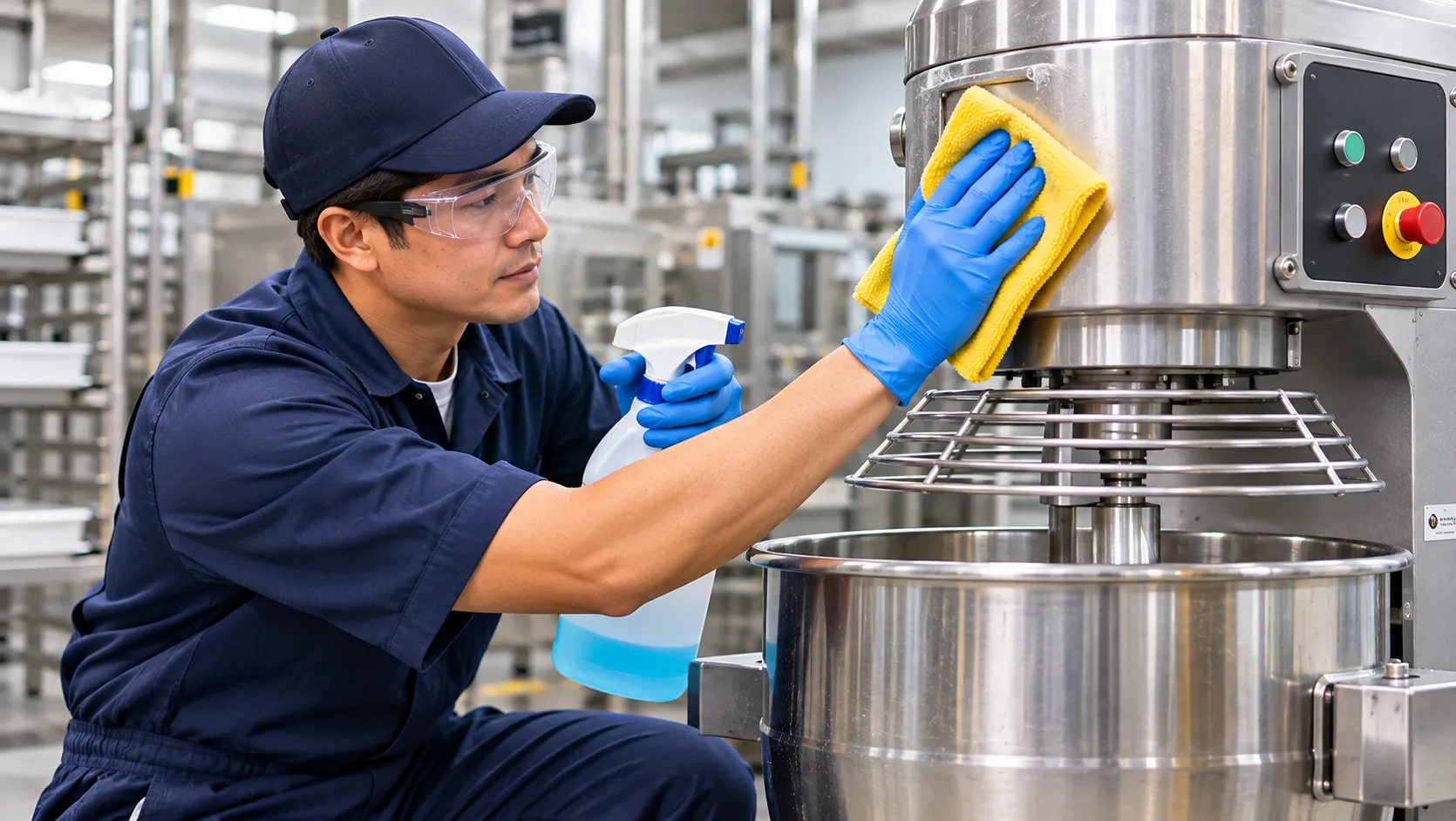
Quick Answer: How Does Regular Machinery Cleaning Extend Equipment Life?
Regular machinery cleaning helps extend equipment life by removing dust, grease, oil, metal particles and production residues that can contribute to overheating, corrosion, restricted airflow, abrasive wear and equipment deterioration.
Clean industrial machinery also allows maintenance teams to identify leaks, damaged components, worn parts and potential mechanical problems before they become more serious.
The main benefits of regular machinery cleaning include:
- Reduced contamination around moving components.
- Improved airflow and heat dissipation where buildup causes restrictions.
- Earlier identification of fluid leaks and mechanical damage.
- Reduced corrosion risks.
- Improved access to maintenance and lubrication points.
- Better protection of compatible sensors and controls.
- Reduced risk of contamination-related equipment failures.
- Safer production and maintenance environments.
- Improved preventive maintenance efficiency.
- Potentially lower long-term equipment ownership costs.
Machinery cleaning is most effective when combined with manufacturer-recommended servicing, lubrication, inspections, condition monitoring and timely repairs.
Industrial machinery represents a significant investment for manufacturing businesses, processing facilities, warehouses, workshops and logistics operations.
Although many businesses prioritise mechanical servicing and component replacement, routine equipment cleaning can sometimes receive less attention until heavy contamination begins affecting operations.
Dust, grease, oil, chemical residues and manufacturing debris gradually accumulate on machinery. Depending on the equipment and operating environment, this buildup can interfere with cooling systems, conceal developing defects and contribute to premature deterioration.
Professional industrial cleaning services can support equipment maintenance programs by helping businesses maintain cleaner production environments and coordinate approved cleaning activities with operational requirements.
1. What Happens When Industrial Machinery Is Not Cleaned Regularly?
Industrial equipment does not need to appear heavily contaminated before accumulated dirt begins creating maintenance concerns.
Fine particles and residues can gradually collect around equipment housings, ventilation openings, machinery bases, seals and accessible mechanical components.
| Contaminant | Potential Effect on Machinery | Long-Term Risk |
|---|---|---|
| Dust | Restricts ventilation and accumulates around components. | Overheating and contamination-related wear. |
| Grease Buildup | Attracts additional dirt and hides equipment defects. | Reduced inspection effectiveness. |
| Oil Residue | Conceals fresh leaks and contaminates surrounding surfaces. | Undetected fluid loss and workplace hazards. |
| Metal Particles | May enter sensitive mechanical areas. | Abrasive wear and component deterioration. |
| Production Residue | Collects around accessible machinery components. | Interference with equipment operation. |
| Moisture | Creates conditions that may encourage corrosion. | Material deterioration. |
| Chemical Residue | May react with incompatible materials or coatings. | Surface and component damage. |
| Fibres and Lint | Accumulate around cooling and ventilation systems. | Restricted airflow and increased fire risks in some environments. |
| Mineral Deposits | May accumulate on compatible process or cooling surfaces. | Reduced heat transfer or restricted flow. |
The severity of contamination-related problems depends on the machinery design, operating conditions, contamination type and existing maintenance controls.
2. How Machinery Cleaning Supports Preventive Maintenance
Industrial machinery cleaning should not be treated solely as an appearance-related task. It is an important supporting activity within a broader preventive maintenance strategy.
| Cleaning Activity | Related Maintenance Activity | Operational Benefit |
|---|---|---|
| Removing accumulated contamination | Inspecting equipment condition. | Improved visibility of developing problems. |
| Cleaning accessible equipment surfaces | Checking for cracks, damage and corrosion. | Earlier detection of deterioration. |
| Clearing approved ventilation areas | Inspecting cooling systems. | Supports intended heat dissipation. |
| Removing old oil residue | Investigating fresh fluid leaks. | Improved identification of potential faults. |
| Cleaning around lubrication points | Applying specified lubricants. | Reduced risk of introducing contamination. |
| Cleaning machinery bases | Inspecting mounting points and supports. | Improved equipment condition assessment. |
| Maintaining clear equipment access | Performing scheduled servicing. | More efficient maintenance preparation. |
When cleaning and maintenance teams work together, businesses can establish a more comprehensive understanding of equipment condition and respond to developing issues earlier.
3. Regular Machinery Cleaning Can Reduce Abrasive Wear
Dust, metal particles, powders and other fine contaminants may contribute to abrasive wear when they enter sensitive mechanical areas.
Contaminants can become trapped between moving surfaces or mix with lubricants, potentially accelerating component deterioration.
| Machinery Component | Contamination Concern | Potential Consequence |
|---|---|---|
| Bearings | Fine particles entering bearing assemblies. | Premature bearing wear. |
| Chains | Dust and residue mixing with lubricant. | Increased wear and reduced operating efficiency. |
| Gears | Contaminated lubricants or abrasive particles. | Gear surface deterioration. |
| Shafts | Accumulated particles around contact surfaces. | Surface damage. |
| Guide Rails | Dust and production debris. | Restricted or irregular movement. |
| Seals | Abrasive contamination around sealing surfaces. | Potential seal deterioration. |
| Sliding Components | Particles collecting around movement paths. | Increased friction or wear. |
Regular cleaning of approved external and accessible areas can help reduce contamination surrounding these components. However, internal mechanical contamination requires appropriate inspection, sealing, filtration and maintenance controls.
4. Clean Machinery Supports Better Cooling and Airflow
Many industrial machines generate heat during operation. Cooling systems help equipment remain within manufacturer-specified operating temperatures.
Accumulated dust, lint, grease and production debris can interfere with heat dissipation when they obstruct cooling surfaces or ventilation pathways.
| Cooling Component | Contamination Problem | Potential Impact |
|---|---|---|
| Ventilation Openings | Dust and debris buildup. | Restricted airflow. |
| Cooling Fans | Accumulated contamination around accessible areas. | Reduced cooling effectiveness. |
| Air Filters | Clogging caused by airborne contaminants. | Increased airflow resistance. |
| Cooling Fins | Dust or insulating residue. | Reduced heat transfer. |
| Heat Exchangers | Surface contamination or deposits. | Reduced thermal performance. |
| Motor Housings | Accumulated surface contamination. | Potential interference with heat dissipation. |
| Electrical Enclosure Ventilation | Restricted or contaminated ventilation pathways. | Potential temperature-related reliability concerns. |
Cleaning cooling components according to approved equipment procedures can help restore intended airflow where contamination has caused restrictions.
Unusual operating temperatures should still be investigated by maintenance personnel because they may also indicate mechanical, electrical or cooling system faults.
5. Cleaning Makes Fluid Leaks Easier to Detect
A machine covered in old oil and grease can make it difficult to distinguish between historic contamination and a newly developing leak.
Once approved surfaces have been cleaned, fresh fluid trails become easier to identify during routine inspections.
| Fluid or Component | Possible Warning Sign | Maintenance Consideration |
|---|---|---|
| Hydraulic Fluid | Fresh fluid accumulation. | Inspect hydraulic systems and associated components. |
| Lubricating Oil | New oil trails or deposits. | Investigate the source and lubricant condition. |
| Coolant | Unexpected moisture or coolant residue. | Assess cooling system integrity. |
| Process Fluids | Residue outside designated containment areas. | Investigate process equipment condition. |
| Hoses | Visible fluid near hose connections. | Refer to authorised maintenance personnel. |
| Seals and Gaskets | Recurring residue around sealing points. | Assess component condition. |
| Pipework and Fittings | New deposits around joints. | Inspect connections and associated systems. |
Cleaning personnel should report suspected leaks rather than treating recurring fluid contamination solely as a housekeeping problem.
Suspected high-pressure hydraulic leaks must not be touched or investigated by untrained workers because escaping fluid can cause serious injuries.
6. Regular Cleaning Helps Identify Wear and Mechanical Damage
Cleaning provides an opportunity to observe the visible condition of industrial machinery.
Removing accumulated contamination can reveal warning signs that might otherwise remain hidden beneath dust, grease or production residue.
| Visible Warning Sign | Potential Concern | Recommended Response |
|---|---|---|
| Cracks | Possible structural or material deterioration. | Report for technical assessment. |
| Corrosion | Material degradation. | Investigate the source and equipment condition. |
| Damaged Guards | Reduced protection from machinery hazards. | Escalate under site safety procedures. |
| Frayed Hoses | Possible hose deterioration. | Refer to maintenance personnel. |
| Worn Belts | Potential drive system deterioration. | Arrange authorised inspection. |
| Loose Fasteners | Potential movement or equipment instability. | Report for maintenance review. |
| Damaged Seals | Potential contamination entry or leakage. | Assess through approved maintenance procedures. |
| Discolouration | Possible heat exposure or chemical damage. | Investigate the underlying cause. |
| Unusual Residue | Possible leakage or component deterioration. | Document and investigate. |
Cleaning observations should complement formal machinery inspections rather than replace technical condition assessments.
7. Cleaning Helps Control Corrosion and Surface Deterioration
Corrosion can affect machinery frames, equipment housings, fasteners, panels and other metallic components.
Moisture, salts, chemical residues and accumulated production contaminants may contribute to corrosion, particularly when they remain trapped against susceptible surfaces.
| Equipment Area | Common Corrosion Concern | Cleaning Consideration |
|---|---|---|
| Machinery Frames | Accumulated moisture and residues. | Use material-compatible cleaning methods. |
| Equipment Bases | Standing water and contaminated deposits. | Address contamination and recurring moisture sources. |
| Fasteners | Exposure to moisture or chemicals. | Maintain accessibility for inspection. |
| Metal Panels | Chemical residue and damaged coatings. | Use suitable products and report coating damage. |
| Guards | Accumulated debris and environmental contamination. | Clean without compromising protective functions. |
| Joints and Supports | Trapped contamination. | Inspect approved accessible areas. |
Cleaning procedures should avoid introducing excessive moisture or removing protective coatings. Incompatible cleaning chemicals may accelerate corrosion rather than prevent it.
8. Clean Machinery Supports Effective Lubrication
Lubrication helps protect many industrial components from excessive friction and wear. However, contaminated lubricants and dirty lubrication points can undermine maintenance effectiveness.
| Poor Maintenance Practice | Better Approach |
|---|---|
| Applying lubricant over accumulated dirt. | Prepare designated lubrication areas according to approved procedures. |
| Allowing grease fittings to become contaminated. | Maintain clean, accessible fittings. |
| Ignoring contaminated lubricant. | Inspect lubricant condition according to the maintenance program. |
| Using excessive lubricant. | Follow manufacturer-specified quantities. |
| Using incompatible cleaning chemicals. | Protect seals, coatings and required lubrication. |
| Removing lubricant without replacement. | Coordinate cleaning and authorised lubrication activities. |
| Using an incorrect lubricant. | Use manufacturer-specified products. |
Cleaning and lubrication responsibilities should be coordinated so that cleaning personnel do not unintentionally remove essential lubricants from operational components.
9. Regular Cleaning Supports Sensor and Control Reliability
Modern industrial equipment increasingly relies on sensors, switches, cameras and electronic controls to support automation, monitoring and safety functions.
Depending on the technology, contamination may interfere with visibility, detection or operating performance.
| Component | Contamination Concern | Cleaning Requirement |
|---|---|---|
| Optical Sensors | Dust or residue obstructing optical surfaces. | Manufacturer-approved cleaning methods. |
| Machine Vision Cameras | Contaminated lenses or protective windows. | Compatible cleaning materials and procedures. |
| Proximity Sensors | Debris affecting certain sensing applications. | Equipment-specific inspection and cleaning. |
| Control Panels | Dust, dirt and surface residue. | Suitable external cleaning methods. |
| Display Screens | Reduced visibility. | Non-damaging, approved cleaning products. |
| Safety Sensors | Contamination potentially affecting safety functions. | Authorised cleaning and functional checks. |
| Emergency Controls | Accumulated grime or obstructed identification. | Maintain visibility and access without impairing operation. |
Electrical and electronic components should never be exposed to unapproved water, chemicals or cleaning methods. Safety-related components may require functional verification by authorised personnel after cleaning.
10. Clean Machinery Improves Maintenance Access
Maintenance technicians may need to remove thick grease, dust or production debris before inspecting or servicing heavily contaminated equipment.
A structured machinery cleaning program can reduce unnecessary maintenance preparation by keeping approved service areas accessible.
Cleaner machinery may make it easier to:
- Locate equipment components.
- Identify part numbers and equipment labels.
- Read gauges and indicators.
- Locate service and lubrication points.
- Inspect hoses and fittings.
- Identify mounting points and fasteners.
- Observe fresh contamination or leaks.
- Complete scheduled servicing.
- Prepare equipment for technical inspections.
Improved maintenance access can help businesses use scheduled servicing windows more effectively, particularly where production downtime is limited.
11. Regular Machinery Cleaning Can Help Reduce Unplanned Downtime
Unexpected equipment breakdowns can disrupt manufacturing schedules, delay orders and increase maintenance costs.
Although not every mechanical failure can be prevented through cleaning, improved equipment visibility can help maintenance teams identify certain developing problems before they lead to operational interruptions.
| Without Regular Cleaning | With Structured Cleaning |
|---|---|
| Contamination gradually accumulates. | Contamination is addressed at defined intervals. |
| Fluid leaks may remain concealed. | Fresh leakage may become easier to identify. |
| Ventilation restrictions may go unnoticed. | Accessible ventilation areas receive scheduled attention. |
| Equipment damage may remain hidden. | Visible defects can be reported earlier. |
| Maintenance preparation takes longer. | Approved service areas remain more accessible. |
| Developing problems may worsen unnoticed. | Maintenance teams have more opportunities to investigate. |
| Repairs may require unexpected production stoppages. | Some repairs may be coordinated with planned maintenance. |
The primary advantage is earlier recognition of potential problems. Actual downtime reductions depend on equipment condition, maintenance practices, operating conditions and corrective action effectiveness.
12. Can Machinery Cleaning Improve Energy Efficiency?
Contamination may affect energy efficiency in certain industrial systems, particularly where dust, residue or deposits interfere with airflow, heat transfer or mechanical movement.
| Equipment System | Potential Contamination Effect | Possible Cleaning Benefit |
|---|---|---|
| Ventilation Systems | Restricted airflow. | Restoration of intended ventilation performance. |
| Heat Exchangers | Reduced heat transfer due to deposits. | Improved thermal performance where cleaning is effective. |
| Cooling Systems | Contamination obstructing cooling surfaces. | Support for intended cooling performance. |
| Filtration Systems | Increased resistance from accumulated contamination. | Reduced restriction following approved maintenance. |
| Mechanical Assemblies | Contamination contributing to friction. | Reduced contamination around accessible components. |
Energy savings are equipment-specific and should be assessed using actual operating data. Cleaning alone does not guarantee lower electricity consumption.
13. Clean Machinery Supports Safer Industrial Workplaces
Oil, grease, debris and accumulated production residues can create hazards for employees, maintenance technicians and cleaning personnel.
| Workplace Hazard | Potential Cause | Cleaning Contribution |
|---|---|---|
| Slips | Oil, grease or liquid contamination. | Controlled removal of spills and residues. |
| Trips | Accumulated debris and obstructed access routes. | Maintain clear designated walkways. |
| Restricted Maintenance Access | Contamination around machinery bases. | Keep approved access areas clear. |
| Obscured Safety Information | Dust or grime covering labels. | Maintain readable safety information. |
| Fire Hazards | Accumulation of combustible materials in certain environments. | Support approved combustible material management. |
| Chemical Exposure | Uncontrolled chemical residues or spills. | Follow site-specific chemical and spill procedures. |
| Equipment Hazards | Damage concealed by contamination. | Report visible defects to authorised personnel. |
Cleaning should form part of the facility's overall workplace risk management program and should never introduce additional machinery hazards.
14. Machinery Cleaning Requirements Across Different Industries
Industrial facilities generate different types of contamination depending on their production processes, equipment and operating environments.
| Industry | Common Contaminants | Cleaning Priority |
|---|---|---|
| Metal Fabrication | Metal particles, cutting fluids and lubricants. | Contamination control and approved residue removal. |
| Automotive Manufacturing | Oil, grease and production debris. | Equipment access and leak visibility. |
| Food Manufacturing | Food residues, fats, proteins and allergens. | Documented food safety and sanitation controls. |
| Woodworking | Sawdust and fine wood particles. | Dust control and approved ventilation maintenance. |
| Textile Manufacturing | Fibres, lint and production residues. | Contamination and airflow management. |
| Warehousing and Logistics | Packaging debris, dust and equipment residues. | Conveyor and workplace cleanliness. |
| Mining and Resources | Mineral dust, mud and heavy residues. | Site-specific contamination management. |
| Plastics Manufacturing | Polymer fragments and production deposits. | Removal of approved manufacturing residues. |
| Printing and Packaging | Paper dust, inks and adhesive residues. | Compatible equipment and surface cleaning. |
| Pharmaceutical Manufacturing | Product powders and process residues. | Applicable validated cleaning and contamination controls. |
Specialist manufacturing environments may require additional regulatory, product hygiene, chemical safety and contamination control procedures beyond general industrial cleaning.
15. How to Clean Different Types of Industrial Machinery
Cleaning methods should be selected according to the machinery design, manufacturer instructions, operating environment and authorised cleaning scope.
| Machinery Type | Common Cleaning Priority | Important Precaution |
|---|---|---|
| Conveyor Systems | Approved belt, frame and surrounding surface cleaning. | Control movement and drawing-in hazards. |
| CNC Machines | Metal particles and cutting fluid residue. | Follow equipment-specific isolation and cleaning procedures. |
| Industrial Motors | Approved housing and ventilation cleaning. | Prevent unapproved moisture entering electrical components. |
| Hydraulic Equipment | External oil and fluid contamination. | Do not disturb pressurised hydraulic systems. |
| Industrial Pumps | External residue around approved accessible surfaces. | Protect sealing and electrical components. |
| Air Compressors | Approved external and ventilation cleaning. | Account for pressure, heat and electrical hazards. |
| Packaging Machinery | Paper dust, packaging fragments and residue. | Protect sensors and moving components. |
| Robotic Equipment | Approved external surface cleaning. | Follow robot-specific isolation and access procedures. |
| Food Processing Equipment | Product residue and food-contact contamination. | Follow facility-approved sanitation procedures. |
| Industrial Fans | Dust accumulation around approved accessible surfaces. | Control unexpected movement and electrical hazards. |
Internal cleaning, equipment dismantling, electrical servicing and other technical activities should only be completed by appropriately trained and authorised personnel.
16. How Often Should Industrial Machinery Be Cleaned?
There is no universal cleaning frequency suitable for all industrial machinery.
Equipment operating continuously in a dusty manufacturing facility may require more frequent attention than machinery used occasionally in a controlled environment.
| Cleaning Frequency Factor | Why It Matters |
|---|---|
| Manufacturer Requirements | Define equipment-specific cleaning and maintenance recommendations. |
| Operating Hours | Higher usage may increase contamination exposure. |
| Production Processes | Different processes generate different contaminants. |
| Equipment Design | Influences contamination accumulation and accessibility. |
| Operating Environment | Dust, humidity and airborne residues affect cleaning needs. |
| Maintenance History | Recurring contamination-related problems may justify additional cleaning. |
| Hygiene Requirements | Regulated production environments may require specific cleaning frequencies. |
| Safety Risks | Hazard severity influences required environmental controls. |
| Production Scheduling | Determines suitable opportunities for approved cleaning. |
| Inspection Findings | Help determine whether existing cleaning frequencies are adequate. |
Cleaning frequencies should be based on actual equipment requirements rather than simply following the same schedule throughout the facility.
17. Example Industrial Machinery Cleaning Schedule
A documented cleaning schedule helps ensure that routine and periodic cleaning activities are completed consistently.
| Frequency | Example Cleaning Activity | Primary Objective |
|---|---|---|
| Each Shift | Check approved accessible areas for debris, spills and visible leakage. | Early identification of contamination. |
| Daily | Clean designated external surfaces and surrounding work areas. | Control routine contamination buildup. |
| Weekly | Clean approved guards, housings and designated ventilation areas. | Maintain equipment cleanliness and accessibility. |
| Monthly | Complete scheduled detailed cleaning of approved accessible components. | Address gradual contamination accumulation. |
| Quarterly | Review cleaning effectiveness and recurring contamination concerns. | Improve cleaning and maintenance coordination. |
| Scheduled Shutdown | Perform approved deep cleaning alongside maintenance activities. | Improve equipment access and condition assessment. |
| Following Spills | Manage contamination using approved spill procedures. | Reduce immediate safety and equipment risks. |
| Following Maintenance | Remove approved maintenance-related residues and debris. | Support authorised equipment return to service. |
Important: This schedule is illustrative. Actual cleaning frequencies and methods must follow manufacturer recommendations, risk assessments, operating conditions and applicable site procedures.
18. The Benefits of Machinery Cleaning During Planned Shutdowns
Planned production shutdowns provide an opportunity to coordinate industrial cleaning with inspections, repairs and scheduled maintenance.
Once equipment has been placed in a safe condition through applicable isolation procedures, authorised workers may be able to access areas that are unavailable during normal operation.
| Shutdown Cleaning Activity | Potential Maintenance Benefit |
|---|---|
| Removing accumulated external residues. | Improved equipment condition visibility. |
| Cleaning approved machinery housings. | Easier inspection of accessible surfaces. |
| Cleaning authorised areas beneath equipment. | Identification of accumulated leakage and debris. |
| Cleaning designated ventilation areas. | Supports inspection of cooling components. |
| Preparing approved surfaces for maintenance. | Reduces unnecessary servicing preparation. |
| Cleaning following approved component replacement. | Supports orderly equipment return to service. |
| Addressing accumulated production contamination. | Reduces residue carried into subsequent operations. |
| Cleaning surrounding production floors. | Supports safer maintenance access. |
Shutdown cleaning plans should establish clear responsibilities, access restrictions, equipment isolation arrangements and production restart requirements before work begins.
19. Australian Workplace Safety Requirements for Machinery Cleaning
Machinery cleaning can expose workers to moving parts, electrical energy, stored pressure, hot surfaces, hazardous chemicals and unexpected equipment movement.
The applicable workplace health and safety requirements depend on the jurisdiction, machinery, work activities and identified risks.
Safe Work Australia's Model Code of Practice: Managing Risks of Plant in the Workplace provides guidance on managing machinery-related risks throughout equipment operation, inspection, maintenance and cleaning.
| Safety Requirement | Purpose |
|---|---|
| Task Risk Assessment | Identify machinery and cleaning-related hazards. |
| Equipment Isolation | Control unexpected movement and hazardous energy. |
| Authorised Access | Restrict hazardous machinery activities to competent personnel. |
| Chemical Risk Management | Control exposure and material compatibility hazards. |
| Personal Protective Equipment | Provide task-specific protection as part of broader risk controls. |
| Guarding | Maintain required protection from machinery hazards. |
| Communication | Coordinate cleaning, maintenance and production activities. |
| Restart Authorisation | Ensure applicable return-to-service requirements are satisfied. |
Businesses should consult their relevant state or territory safety regulator to determine the legal requirements and codes of practice applicable to their operations.
20. Why Lockout and Tagout Procedures Matter
Turning a machine off does not necessarily eliminate every hazardous energy source.
Depending on the machinery, energy may remain stored within electrical, hydraulic, pneumatic, mechanical or thermal systems.
| Energy Source | Potential Hazard |
|---|---|
| Electrical Energy | Electric shock or unexpected equipment energisation. |
| Hydraulic Energy | Pressurised fluid and unexpected component movement. |
| Pneumatic Energy | Stored compressed air and unexpected movement. |
| Mechanical Energy | Movement of gears, mechanisms or stored springs. |
| Thermal Energy | Hot surfaces and process materials. |
| Gravitational Energy | Movement or falling of unsupported components. |
Where machinery cleaning exposes workers to these hazards, the facility must establish appropriate controls. Isolation and verification activities should be performed by authorised personnel using equipment-specific procedures.
Cleaning contractors should never independently remove another worker's isolation device, bypass protective systems or restart machinery without the required authorisation.
21. Choosing the Right Industrial Machinery Cleaning Method
Different machinery surfaces and contaminants require different cleaning methods. The most aggressive method is not necessarily the most effective or appropriate.
| Cleaning Method | Typical Application | Important Consideration |
|---|---|---|
| Manual Wiping | Approved external equipment surfaces. | Use compatible materials and safe access arrangements. |
| Industrial Vacuuming | Loose dust and dry production debris. | Equipment must be suitable for the collected material and associated hazards. |
| Controlled Degreasing | Compatible oily or greasy surfaces. | Protect essential lubrication and equipment finishes. |
| Damp Cleaning | Approved moisture-tolerant surfaces. | Prevent moisture entry into sensitive components. |
| Low-Pressure Washing | Compatible equipment designed for wet cleaning. | Control water exposure and runoff. |
| Pressure Cleaning | Approved industrial applications. | Confirm equipment compatibility and task authorisation. |
| Steam Cleaning | Selected compatible industrial surfaces. | Assess heat, moisture and material compatibility. |
| Specialist Cleaning | Complex or unusual contamination. | Requires specialist assessment and appropriate competency. |
The selected cleaning method should remove the relevant contamination without compromising machinery condition, safety systems or operational reliability.
22. Why High-Pressure Cleaning Is Not Suitable for Every Machine
High-pressure washing may appear to offer a fast solution for heavily contaminated industrial equipment. However, it can damage machinery that is not specifically designed for that cleaning method.
| Machinery Component | Potential Pressure Cleaning Risk |
|---|---|
| Electrical Enclosures | Water ingress and electrical damage. |
| Bearings | Contamination or moisture entry. |
| Seals | Damage or penetration by pressurised water. |
| Sensors | Component damage or impaired performance. |
| Control Panels | Electrical or electronic damage. |
| Lubricated Components | Removal or contamination of necessary lubricant. |
| Painted Surfaces | Coating deterioration where unsuitable pressures are used. |
| Electrical Connections | Moisture ingress and reliability concerns. |
Always confirm the machinery manufacturer's instructions and site-specific procedures before selecting pressure cleaning or other wet cleaning methods.
23. Selecting Machinery-Compatible Cleaning Chemicals
Cleaning chemicals must be compatible with the equipment materials, contamination type and workplace conditions.
A powerful degreaser is not automatically suitable for sensitive electronics, painted equipment, seals or lubricated mechanical components.
| Cleaning Product Category | Typical Application | Compatibility Concern |
|---|---|---|
| Neutral Detergents | Routine compatible surface cleaning. | Check intended use and moisture restrictions. |
| Industrial Degreasers | Removal of compatible grease and oil residues. | May affect essential lubrication, seals or finishes. |
| Alkaline Cleaners | Selected heavy organic contamination. | May damage incompatible metals and coatings. |
| Acidic Cleaners | Selected mineral deposits. | Potential material deterioration if used incorrectly. |
| Solvent-Based Products | Specific approved industrial residue removal. | Flammability, exposure and material compatibility risks. |
| Specialist Electronics Cleaners | Authorised electronic component cleaning. | Equipment-specific technical approval required. |
Cleaning personnel should follow product labels, Safety Data Sheets, equipment instructions and approved chemical management procedures.
Cleaning chemicals should never be mixed or used in unapproved concentrations.
24. Manage Industrial Dust and Combustible Residues
Facilities handling wood, food powders, plastics, textiles, metals or other combustible materials may face additional risks associated with accumulated dust.
Uncontrolled cleaning methods can disperse fine particles into the air or introduce ignition risks.
| Dust Management Consideration | Recommended Approach |
|---|---|
| Dust Classification | Identify the material and relevant hazards. |
| Cleaning Equipment | Select equipment appropriate to the assessed dust hazards. |
| Cleaning Frequency | Prevent accumulation according to the facility's risk controls. |
| Airborne Dust | Avoid unapproved methods that disperse contamination. |
| Ignition Sources | Follow applicable fire and explosion prevention measures. |
| High-Level Surfaces | Include accessible accumulation areas in approved housekeeping programs. |
| Waste Collection | Use appropriate containment and disposal arrangements. |
Ordinary industrial vacuum cleaners are not suitable for every dust hazard. Facilities handling combustible dust should obtain appropriate specialist advice and use equipment suitable for the assessed environment.
25. Manage Industrial Cleaning Waste and Wastewater
Machinery cleaning can generate waste containing oil, grease, metal particles, detergents or other industrial contaminants.
These materials may require controlled collection and disposal rather than discharge into ordinary drainage systems.
| Waste Type | Management Consideration |
|---|---|
| Waste Oil | Collect and manage under applicable waste procedures. |
| Contaminated Absorbents | Determine appropriate waste classification and disposal. |
| Metal Particles | Manage according to material type and contamination. |
| Cleaning Chemical Residue | Follow product-specific and site disposal requirements. |
| Oily Wastewater | Assess applicable containment and trade waste requirements. |
| Production Debris | Segregate according to facility waste management procedures. |
| Contaminated Cleaning Materials | Manage reusable or disposable materials appropriately. |
Industrial cleaning programs should account for applicable environmental legislation, trade waste approvals and local disposal requirements.
26. Integrate Cleaning With Condition-Based Maintenance
Condition-based maintenance uses equipment condition information to help determine when maintenance investigation or intervention is needed.
Regular cleaning can support these activities by making inspection locations and equipment surfaces more accessible.
| Condition Monitoring Activity | How Cleaning Can Support It |
|---|---|
| Visual Inspection | Improves visibility of cracks, corrosion and leakage. |
| Thermal Imaging | Maintains access to designated measurement locations. |
| Vibration Monitoring | Supports access to approved measurement points. |
| Lubricant Analysis | Supports cleanliness around authorised sampling points. |
| Filter Inspection | Helps identify recurring external contamination concerns. |
| Corrosion Monitoring | Improves visibility of exposed material condition. |
| Leak Monitoring | Helps distinguish fresh leakage from historical residues. |
Technical measurements must be performed and interpreted by appropriately trained personnel. Cleaning observations alone cannot establish equipment condition or predict remaining component life.
27. Who Should Be Responsible for Industrial Machinery Cleaning?
Clear responsibilities help prevent confusion between routine cleaning, technical servicing and specialist machinery maintenance.
| Cleaning or Maintenance Task | Typical Responsible Party |
|---|---|
| Approved External Surface Cleaning | Trained cleaning personnel. |
| Production Floor Cleaning | Industrial cleaning team. |
| Routine Visual Observations | Trained employees or cleaning personnel within their assigned scope. |
| Internal Machinery Cleaning | Appropriately authorised personnel. |
| Electrical Component Cleaning | Qualified or authorised technical personnel, as applicable. |
| Lubrication | Maintenance personnel or authorised operators. |
| Equipment Dismantling | Trained and authorised technicians. |
| Equipment Isolation | Personnel authorised under site procedures. |
| Specialist Decontamination | Appropriately trained specialists. |
| Equipment Restart | Authorised production or maintenance personnel. |
Industrial cleaning contractors should work within their approved scope and cooperate with the facility's maintenance, engineering and workplace safety teams.
28. Signs Your Machinery Needs More Frequent Cleaning
Cleaning schedules should be reviewed when the existing program is no longer controlling contamination effectively.
| Warning Sign | Potential Action |
|---|---|
| Heavy dust buildup between scheduled services. | Review cleaning frequency and dust control measures. |
| Recurring clogged ventilation areas. | Investigate contamination sources and maintenance requirements. |
| Persistent grease accumulation. | Review cleaning methods and residue sources. |
| Repeated oil contamination. | Investigate potential leakage. |
| Difficulty inspecting machinery. | Improve approved equipment cleaning and access. |
| Obscured equipment labels. | Increase attention to designated identification surfaces. |
| Frequent debris around machinery bases. | Review production housekeeping arrangements. |
| Recurring contamination around sensors. | Assess equipment-specific cleaning requirements. |
| Repeated contamination-related maintenance findings. | Coordinate a review with maintenance personnel. |
| Unusual equipment operating temperatures. | Arrange technical investigation and assess cooling cleanliness. |
Increasing cleaning frequency is not always the complete solution. Recurring contamination may indicate leaking equipment, inadequate extraction, ineffective containment or other underlying operational problems.
29. Industrial Machinery Cleaning Checklist
Facility managers can use the following checklist as a starting point when reviewing machinery cleaning arrangements.
| Machinery Cleaning Requirement | Complete |
|---|---|
| Manufacturer cleaning instructions available. | ? |
| Machinery cleaning scope documented. | ? |
| Task-specific risks assessed. | ? |
| Cleaning responsibilities assigned. | ? |
| Required equipment isolation completed by authorised personnel. | ? |
| Applicable energy controls verified. | ? |
| Required PPE available. | ? |
| Approved cleaning equipment selected. | ? |
| Compatible cleaning chemicals selected. | ? |
| Loose debris removed from approved areas. | ? |
| External equipment surfaces cleaned. | ? |
| Approved oil and grease residues addressed. | ? |
| Designated ventilation areas checked. | ? |
| Approved guard surfaces cleaned. | ? |
| Machinery bases cleaned where accessible and authorised. | ? |
| Surrounding floors and access routes cleaned. | ? |
| Visible leakage reported. | ? |
| Visible corrosion or damage reported. | ? |
| Safety labels remain visible. | ? |
| Cleaning materials removed from the work area. | ? |
| Industrial waste managed according to procedures. | ? |
| Required guards restored by authorised personnel. | ? |
| Applicable pre-start inspections completed. | ? |
| Cleaning activities documented. | ? |
| Equipment released through authorised procedures. | ? |
This checklist is a planning aid and does not replace machinery-specific safety, isolation, inspection or maintenance procedures.
30. Measure the Effectiveness of Your Machinery Cleaning Program
Industrial cleaning programs should be assessed using relevant operational and maintenance information rather than relying solely on visual appearance.
| Performance Indicator | What It Measures |
|---|---|
| Cleaning Schedule Completion | Whether agreed cleaning activities are completed. |
| Cleaning Inspection Results | Performance against documented cleanliness requirements. |
| Recurring Contamination | Whether particular areas repeatedly accumulate unwanted residue. |
| Equipment Defects Reported | Visible concerns identified during cleaning activities. |
| Maintenance Preparation Time | Time required to prepare equipment for scheduled servicing. |
| Contamination-Related Maintenance Findings | Equipment problems potentially associated with contamination. |
| Unplanned Downtime | Equipment interruptions requiring further investigation. |
| Corrective Action Completion | Whether cleaning deficiencies are addressed. |
| Spill and Housekeeping Incidents | Relevant workplace cleanliness and contamination concerns. |
Performance data should be reviewed alongside production volumes, operating hours, machinery age and maintenance activities. Changes in reliability or downtime cannot automatically be attributed to cleaning alone.
31. How Regular Cleaning Can Influence Equipment Lifecycle Costs
The cost of owning industrial machinery extends beyond its initial purchase price.
Businesses must also consider maintenance labour, replacement components, operating costs, production interruptions and eventual equipment replacement.
| Equipment Ownership Cost | Potential Contribution of Regular Cleaning |
|---|---|
| Maintenance Labour | May reduce unnecessary equipment preparation time. |
| Replacement Components | May help control some contamination-related wear. |
| Emergency Repairs | Can support earlier identification of developing problems. |
| Production Downtime | May support better coordination of planned maintenance. |
| Energy Consumption | May improve performance where contamination restricts airflow or heat transfer. |
| Equipment Refurbishment | Can help manage certain forms of avoidable surface deterioration. |
| Equipment Replacement | May contribute to a longer useful service life when combined with effective maintenance. |
Illustrative Example: The Cost of Unplanned Equipment Downtime
Even a relatively short equipment interruption can have significant financial consequences in a production environment.
| Illustrative Cost Factor | Example Amount (AUD) |
|---|---|
| Lost contribution margin: 4 hours at $1,000 per hour | $4,000 |
| Emergency maintenance labour | $800 |
| Replacement components | $1,500 |
| Additional restart expenses | $500 |
| Total Illustrative Cost | $6,800 |
These figures are hypothetical and are not an industry average or a prediction of savings. Actual equipment failure costs depend on the facility, machinery, financial assumptions and production circumstances.
The example demonstrates why businesses should assess cleaning as part of their overall asset management strategy rather than viewing it only as a housekeeping expense.
32. Common Industrial Machinery Cleaning Mistakes
| Common Mistake | Potential Consequence | Better Approach |
|---|---|---|
| Cleaning machinery without appropriate isolation. | Serious machinery-related injury risks. | Follow authorised energy control procedures. |
| Using excessive water. | Electrical damage, corrosion or moisture contamination. | Use equipment-compatible cleaning methods. |
| Using aggressive chemicals indiscriminately. | Damage to seals, coatings or sensitive materials. | Confirm chemical compatibility. |
| Pressure washing unsuitable machinery. | Water ingress and component damage. | Follow manufacturer requirements. |
| Removing essential lubrication. | Increased friction or mechanical wear. | Coordinate cleaning with maintenance activities. |
| Ignoring recurring oil leakage. | Potentially worsening equipment faults. | Report and investigate the source. |
| Cleaning only visible surfaces. | Neglected contamination in other approved areas. | Develop equipment-specific cleaning schedules. |
| Using unsuitable dust collection equipment. | Additional contamination or fire hazards. | Assess dust characteristics and equipment suitability. |
| Failing to document cleaning. | Reduced accountability and maintenance coordination. | Maintain appropriate cleaning records. |
| Allowing unauthorised equipment dismantling. | Safety risks and potential machinery damage. | Restrict technical work to authorised personnel. |
| Treating cleaning as a substitute for servicing. | Mechanical problems may remain undetected or unresolved. | Integrate cleaning with preventive maintenance. |
33. What Determines the Cost of Industrial Machinery Cleaning?
Industrial machinery cleaning costs vary according to equipment complexity, contamination levels, accessibility and the approved scope of activities.
| Cost Factor | Impact on Cleaning Requirements |
|---|---|
| Equipment Size | Influences cleaning surface area and labour requirements. |
| Number of Machines | Determines the overall service scope. |
| Contamination Severity | Heavy residues may require additional cleaning time. |
| Contamination Type | Influences cleaning methods, chemicals and waste handling. |
| Equipment Accessibility | May require additional access arrangements or supervision. |
| Cleaning Frequency | Influences ongoing labour and consumable requirements. |
| Machinery Safety Requirements | Affects work preparation and coordination. |
| Shutdown Scheduling | May require flexible staffing arrangements. |
| Specialist Cleaning Methods | May require additional equipment or personnel competencies. |
| Waste Management | Influences collection, containment and disposal requirements. |
| Documentation Requirements | Determines inspection and reporting responsibilities. |
A site-specific cleaning assessment allows businesses to establish a service specification and quotation that reflects actual operational requirements.
34. How to Choose an Industrial Machinery Cleaning Provider
Industrial machinery cleaning requires more than general workplace cleaning experience. Providers should understand the operational environment, approved cleaning responsibilities and applicable safety controls.
| Selection Criteria | What to Verify |
|---|---|
| Industrial Cleaning Experience | Experience working in comparable industrial environments. |
| Safety Management | Documented risk management and workplace safety processes. |
| Machinery Cleaning Scope | Clear boundaries between cleaning and technical maintenance. |
| Staff Training | Competency appropriate to the assigned activities. |
| Equipment Compatibility | Ability to follow manufacturer-approved cleaning methods. |
| Chemical Management | Appropriate selection, use and storage of cleaning products. |
| Shutdown Coordination | Ability to work within agreed production and maintenance schedules. |
| Quality Management | Documented inspection and corrective action processes. |
| Waste Management | Appropriate handling arrangements within the contracted scope. |
| Cleaning Documentation | Accurate reporting of completed work and observed concerns. |
| Insurance | Suitable coverage for contracted cleaning activities. |
| Communication | Effective coordination with facility, production and maintenance teams. |
A reliable industrial cleaning provider should work alongside the facility's maintenance and safety teams, following approved procedures rather than independently deciding how restricted machinery components should be cleaned.
Professional Industrial Cleaning Solutions Across Australia
Corporate Cleaning Services® provides professional industrial cleaning solutions for factories, manufacturing plants, warehouses, logistics centres, workshops and processing facilities across Australia.
Our approach focuses on understanding each facility's operational requirements, production activities, workplace risks and cleaning priorities.
Depending on the agreed service specification, industrial cleaning programs may include:
- Factory and manufacturing environment cleaning.
- Approved external machinery surface cleaning.
- Industrial floor scrubbing and degreasing.
- Production area housekeeping.
- Warehouse and storage area cleaning.
- Removal of approved industrial dust and residues.
- Periodic industrial deep cleaning.
- Cleaning coordinated with planned production shutdowns.
- Cleaning of designated equipment surroundings.
- Workplace amenities cleaning.
- Site-specific cleaning schedules.
- Cleaning inspections and quality monitoring.
Corporate Cleaning Services® operates an ISO 9001 quality management system supporting structured service delivery, workplace risk assessment and continual improvement.
Machinery-specific cleaning activities are subject to site assessment, agreed service specifications, equipment compatibility and appropriate authorisation.
Protect Your Equipment With Professional Industrial Cleaning
Support preventive maintenance, maintain cleaner production environments and reduce avoidable contamination with an industrial cleaning program tailored to your facility.
Corporate Cleaning Services® can work with your facility management team to establish cleaning arrangements that support equipment accessibility, workplace safety and operational continuity.
Request an Industrial Cleaning QuoteSpeak with our team on 1800 032 032.
Frequently Asked Questions About Industrial Machinery Cleaning
Does regular machinery cleaning really extend equipment life?
Regular machinery cleaning can contribute to longer equipment life by removing contaminants associated with abrasive wear, corrosion, restricted airflow and other operating concerns. It is most effective when combined with appropriate servicing, lubrication, inspection and timely repairs.
How often should industrial machinery be cleaned?
Cleaning frequency depends on manufacturer requirements, equipment design, operating hours, contamination levels, production activities and workplace risks. Some machinery requires daily attention, while other equipment may require periodic cleaning or scheduled shutdown cleaning.
Can dust damage industrial machinery?
Yes. Dust can restrict ventilation, contaminate lubricants and accumulate around sensitive components. Depending on the material and equipment, fine particles may also contribute to abrasive wear or interfere with certain sensors.
Can dirty machinery cause overheating?
Accumulated contamination may contribute to overheating when it obstructs ventilation openings, cooling fins, filters or other heat dissipation systems. However, overheating may also indicate underlying electrical, mechanical or cooling system problems.
Why is machinery cleaning important for preventive maintenance?
Cleaning improves equipment visibility and accessibility, allowing maintenance personnel to identify certain leaks, corrosion, cracks and other visible warning signs more readily.
Can industrial machinery cleaning reduce downtime?
Cleaning can help reduce some avoidable downtime by supporting earlier identification of defects, improved maintenance access and control of contamination-related problems. Actual downtime reductions depend on the broader maintenance program.