
Why Green Cleaning Certifications Matter for Your Business
6th December 2025
In Australia, there's a palpable and growing desire among the public and corporations alike for genuine sustainability. However, this heightened awareness has also brought with it the challenge of "greenwashing"—the deceptive practice of making misleading environmental claims that often lack substance. As businesses, including those offering commercial cleaning services, strive to demonstrate their commitment to the planet, distinguishing genuine eco-friendly practices from mere marketing spin has become increasingly difficult.
This is where green cleaning certifications emerge as the robust solution. These certifications provide independent, third-party verification of environmental claims, cutting through the noise of greenwashing. They are not merely decorative badges; rather, they demonstrate a genuine commitment and adherence to rigorous, scientifically-backed standards. For Australian businesses, green cleaning certifications are indispensable, offering profound benefits in reputation, health, compliance, and competitive differentiation in an increasingly environmentally conscious market.
H2: What Are Green Cleaning Certifications in the Australian Context?
Green cleaning certifications are independent, third-party validations that a cleaning product, service, or an entire cleaning company adheres to specific, predetermined environmental and health standards. They serve as a trusted assurance that the "green" claims are legitimate and verifiable.
Key Australian Certifications & Standards:
-
GECA (Good Environmental Choice Australia):
- GECA is Australia's leading not-for-profit ecolabelling program and a respected member of the Global Ecolabelling Network.
- It employs a rigorous lifecycle assessment approach, evaluating cleaning products and services from raw material extraction through to disposal. This comprehensive assessment covers environmental, health, social, and fitness-for-purpose criteria. Learn more about what GECA certification verifies for cleaning services.
- GECA certification is widely recognised by Australian green building schemes, such as Green Star and WELL, making it a valuable asset for businesses aiming for broader sustainability ratings.
-
ISO 14001 (Environmental Management System):
- ISO 14001 is an internationally recognised standard for environmental management systems.
- While not specific to cleaning products, it signifies a cleaning company's overarching commitment to systematically managing and continuously improving its environmental performance across all operations. See how ISO 14001 applies to cleaning companies in Australia.
- Achieving ISO 14001 demonstrates a structured and proactive approach to sustainability, showing that the company has established policies, processes, and procedures to identify, control, and monitor its environmental impacts.
-
Other Relevant Standards (briefly):
- While GECA and ISO 14001 are prominent, other industry-specific or emerging certifications may gain traction in Australia. For instance, some companies may pursue certifications like ISSA's Cleaning Industry Management Standard (CIMS) Green Building certification or proprietary "Clean & Green" programs offered by chemical suppliers. It's advisable for businesses to stay informed about any new or niche certifications relevant to their specific sector or cleaning needs.
What Certification Verifies:
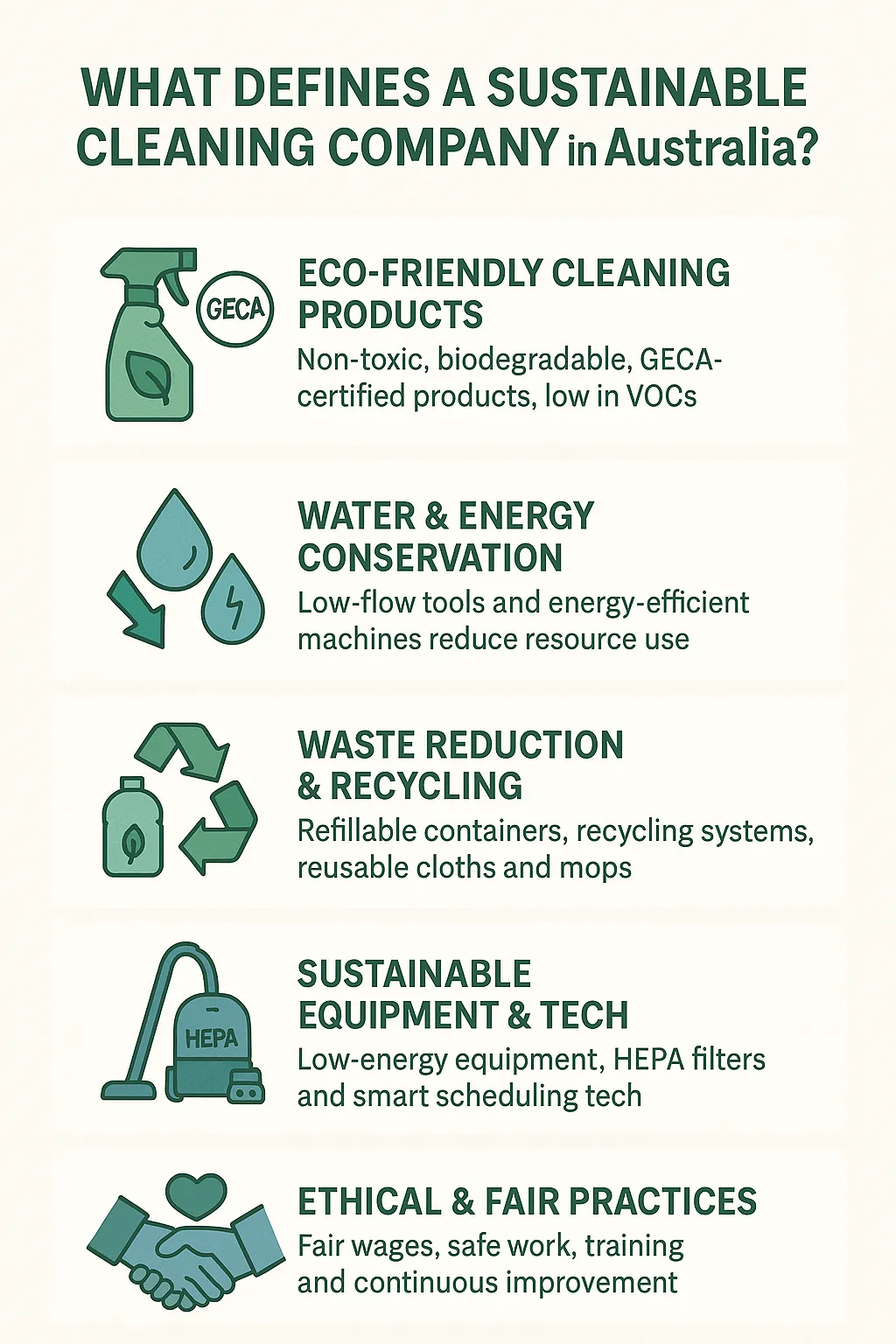
Green cleaning certifications provide verification across several critical areas, ensuring that a holistic approach to environmental responsibility is maintained:
- Use of non-toxic, biodegradable, low-VOC products: Certified companies commit to using cleaning agents that are safe for human health and the environment, free from harmful chemicals.
- Efficient use of water and energy: This includes practices and equipment designed to minimise water consumption and reduce energy usage during cleaning operations.
- Effective waste reduction and recycling practices: Certification verifies a commitment to minimising waste generation, promoting reuse, and implementing robust recycling programmes for cleaning materials and office waste.
- Training of staff in sustainable methods: Certified companies ensure their cleaning staff are properly educated and trained on eco-friendly cleaning techniques, correct product dilution, and responsible waste management.
The Compelling Reasons Green Cleaning Certifications Matter for Your Business
Green cleaning certifications are more than a symbolic badge—they provide tangible business, operational, and environmental advantages. For Australian businesses, where sustainability, workplace health, and regulatory compliance are increasingly scrutinised, these certifications signal credibility and a genuine commitment to responsible practices.
1. Combatting Greenwashing & Building Trust
- Independent verification: Certifications such as GECA (Good Environmental Choice Australia) or ISO 14001 offer third-party validation of green practices, cutting through vague marketing claims.
- Transparent accountability: Clients, employees, and stakeholders can clearly see that your business follows verifiable environmental standards, reducing skepticism and building confidence.
- Enhanced credibility: In an era where "greenwashing" is common, certifications reassure Australian consumers and corporate clients that your sustainability claims are authentic.
Example: A certified office cleaning provider demonstrates measurable reductions in chemical use and waste, differentiating them from competitors who make unverified eco-claims.
2. Enhanced Business Reputation & Brand Image
- Corporate Responsibility: Certifications demonstrate alignment with Corporate Social Responsibility (CSR) and Environmental, Social, and Governance (ESG) initiatives, increasingly valued by investors and partners.
- Marketing leverage: Displaying certification logos on websites, promotional materials, and tender submissions signals your commitment to sustainability.
- Public perception: Australian clients and stakeholders view certified businesses as responsible, ethical, and forward-thinking, which can improve client retention and attract new partnerships.
Example: Businesses with certified green cleaning programs often feature this as a unique selling point when bidding for government contracts or corporate partnerships.
3. Improved Employee Health & Well-being
- Reduced chemical exposure: Certified cleaning products are non-toxic, low-VOC, and biodegradable, improving indoor air quality and reducing allergens.
- Health benefits: Less exposure to harsh chemicals decreases respiratory issues, skin irritations, and other health risks.
- Workplace morale: A cleaner, safer, and healthier environment contributes to higher productivity, lower absenteeism, and greater employee satisfaction.
Example: Employees in certified green offices report fewer sick days and greater comfort, fostering a more engaged and motivated workforce.
4. Regulatory Compliance & Risk Mitigation
- Stay ahead of regulations: Certifications help ensure compliance with Australian environmental laws, WHS obligations, and emerging standards.
- Minimise liability: Reduces the risk of legal action, fines, or reputational damage from unsafe or environmentally harmful cleaning practices.
- Proactive governance: Demonstrates your business is actively managing environmental and health risks.
Example: A certified provider will follow strict chemical handling procedures and waste disposal methods, reducing both environmental and workplace hazards.
5. Competitive Advantage & Market Differentiation
- Tender eligibility: Many Australian government agencies and large corporations require green-certified service providers for contracts.
- Client preference: Eco-conscious clients increasingly choose partners with verified sustainability credentials.
- Distinct positioning: Certification communicates leadership in environmental responsibility, setting your business apart from competitors.
Example: A certified cleaning company may be prioritised over non-certified providers in procurement processes, giving your business a strategic advantage.
6. Attracting & Retaining Top Talent
- Employee values alignment: Millennials and Gen Z in Australia increasingly seek employers with strong sustainability practices.
- Workplace pride: Certifications signal that your company shares their environmental values, boosting morale and engagement.
- Lower turnover: A clear commitment to sustainability fosters loyalty and a sense of purpose among staff.
Example: A certified green office attracts environmentally conscious job applicants, helping secure skilled and motivated employees.
7. Potential Cost Savings (Long-Term)
- Efficient product use: Concentrated green cleaning solutions reduce chemical consumption and packaging waste.
- Resource savings: Energy-efficient equipment and water-saving cleaning methods lower utility costs.
- Health-related savings: Fewer sick days and reduced absenteeism translate into improved operational productivity.
- Waste management efficiency: Reusable tools and responsible disposal practices can reduce landfill fees.
Example: Over time, investing in certified green cleaning services can result in both measurable cost savings and a more sustainable operational footprint.
Implementing a Certified Green Cleaning Strategy in Your Australian Office
Adopting a certified green cleaning strategy is more than a one-off decision—it’s a structured process that requires planning, monitoring, and continuous improvement. Australian businesses can follow these steps to implement an effective and credible approach:
1. Identify Your Sustainability Goals
- Define clear objectives: Determine what your office hopes to achieve with a green cleaning strategy. Goals might include:
- Reducing employee exposure to harmful chemicals
- Minimising water and energy usage
- Reducing waste sent to landfill
- Improving indoor air quality and overall hygiene
- Prioritise outcomes: Rank your objectives based on business needs, regulatory obligations, and employee well-being considerations.
- Set measurable targets: For example, aim to reduce chemical use by 50% over 12 months or achieve full compliance with Australian WHS and environmental standards.
Example: An Australian office might set a goal to switch entirely to biodegradable cleaning products within six months while reducing energy consumption by optimising vacuum and floor scrubber usage.
2. Partner with Certified Providers
- Seek verified companies: Look for cleaning service providers with recognised certifications such as GECA or ISO 14001, which demonstrate a documented commitment to sustainable practices.
- Evaluate track record: Review their portfolio and previous projects to ensure they have experience implementing certified green cleaning in similar workplaces.
- Align services with goals: Choose a provider whose expertise matches your objectives, whether that’s chemical reduction, energy efficiency, or comprehensive waste management.
Example: Companies like CorpClean maintain certified green practices, including eco-friendly product use, staff training, and water-efficient cleaning methods tailored to Australian offices.
3. Request Proof of Certification
- Verify authenticity: Always ask for current certificates and confirm the issuing body and scope of accreditation.
- Understand the standard: Clarify what the certification covers—products, equipment, training, and operational procedures.
- Check renewal and compliance: Ensure the provider maintains ongoing certification and regularly updates practices according to the latest environmental standards.
Tip: Avoid providers offering “green” claims without verifiable documentation; independent certification is your assurance of credibility.
4. Communicate Your Commitment
- Internal communication: Share your green cleaning initiative with employees through emails, intranet posts, or staff meetings, highlighting the health and environmental benefits.
- External communication: Inform clients, partners, and visitors about your certified green cleaning strategy to reinforce your business’s sustainability values.
- Encourage participation: Motivate staff to support the initiative by adopting complementary habits, such as proper waste segregation or wiping down shared surfaces.
Example: Place signage in break rooms or common areas explaining the use of certified cleaning products and encouraging staff to participate in sustainability practices.
5. Monitor and Review
- Regular audits: Schedule periodic inspections to ensure cleaning practices meet certified standards and are being consistently applied.
- Performance evaluation: Discuss with your provider any new techniques, products, or tools that could further improve sustainability outcomes.
- Continuous improvement: Adapt the strategy over time by integrating feedback from employees, observing workplace results, and keeping up with evolving green cleaning technologies.
Example: Conduct quarterly reviews with your provider to assess chemical usage, energy and water efficiency, and overall adherence to environmental goals, making adjustments as needed.
Conclusion
Green cleaning certifications are of critical importance for Australian businesses, reinforcing their value far beyond simple environmental claims. They are your robust assurance of genuine commitment to sustainability.
By prioritising these certifications, you gain multifaceted benefits: building invaluable trust with your stakeholders, enhancing your brand's reputation as a responsible leader, improving the health and well-being of your employees, ensuring seamless regulatory compliance, and securing a distinct competitive edge in the market. Companies like CorpClean exemplify this commitment by pursuing and maintaining relevant certifications, offering Australian businesses a reliable path to a greener future.
Make informed decisions and take the decisive step towards a healthier, more sustainable, and more reputable future for your Australian office by choosing cleaning partners with verifiable green cleaning certifications today.