
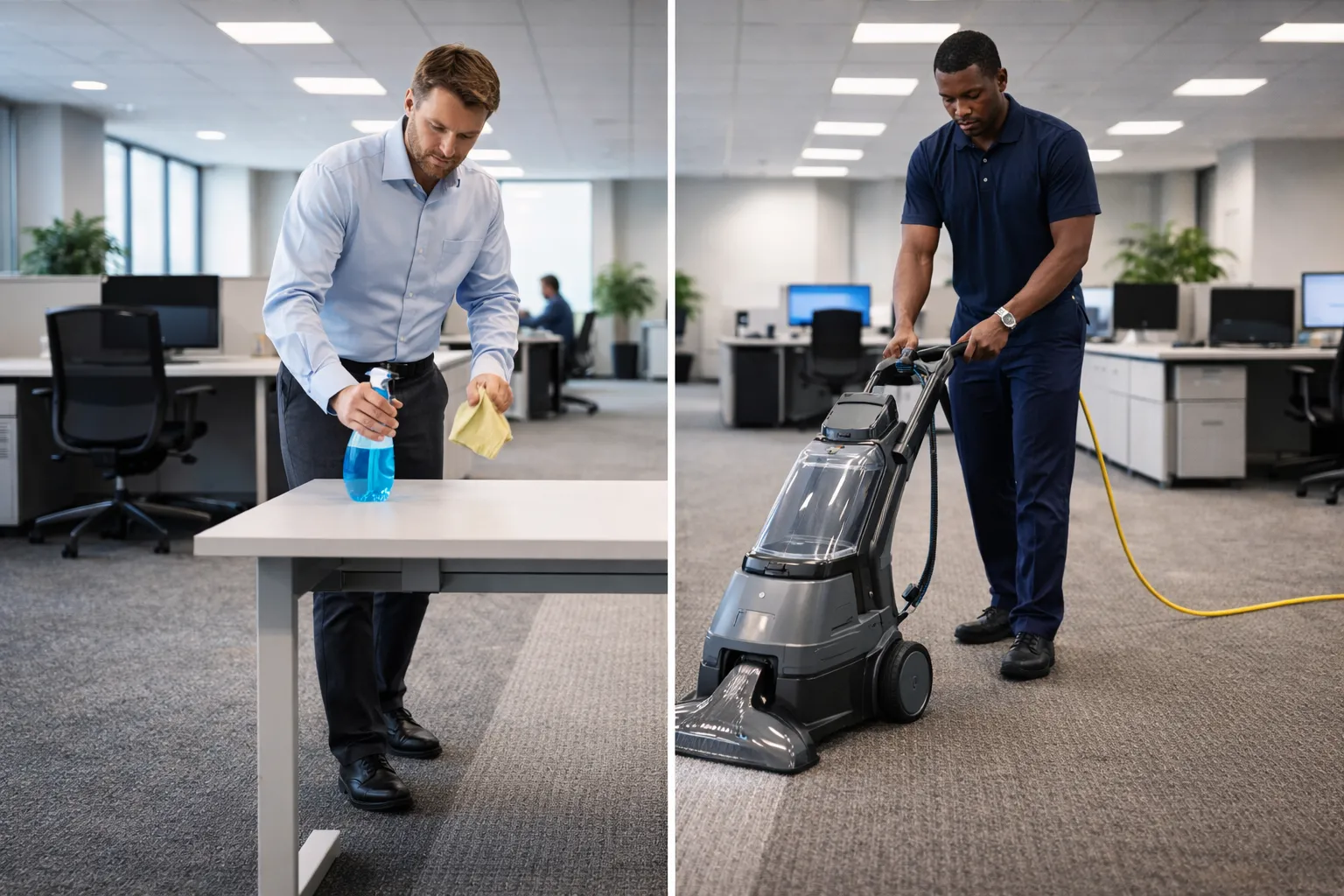
The Real Pros and Cons of Outsourcing Office Cleaning
8th December 2025
Keeping an office clean isn’t just about looks—it affects employee health, productivity, safety, and your brand’s credibility. But once a business grows beyond a small team, cleaning becomes a real operational decision: do you hire and manage cleaners internally, or outsource office cleaning to a professional service?
Outsourcing can be a smart move, especially for offices with high foot traffic, multiple restrooms, shared kitchens, and carpets that trap dust and allergens. Still, it’s not automatically the “best” option for every workplace. The real value depends on your office layout, your standards, your schedule, and how much time your team can realistically spend managing cleaning.
Below is a practical breakdown of what outsourcing really involves—plus the biggest advantages and tradeoffs you should consider before signing a contract.
What Does Outsourcing Office Cleaning Mean?
Outsourcing office cleaning means hiring a third-party commercial cleaning company to handle routine and/or specialized cleaning tasks. Instead of employing in-house janitorial staff, you rely on a provider that supplies trained cleaners, equipment, and cleaning products as part of a service agreement.
Typical outsourced cleaning services include:
- Daily, weekly, or nightly office cleaning
- Restroom sanitation and restocking
- Trash and recycling removal
- Disinfection of high-touch surfaces (door handles, desks, elevators, break rooms)
- Carpet cleaning and floor care (vacuuming, spot cleaning, deep extraction, polishing)
- Periodic deep cleaning (quarterly or seasonal)
In many modern offices, outsourcing also means building a cleaning plan around real workplace needs—like cleaning after peak use, maintaining high-traffic carpet zones, and reducing allergens in shared areas.
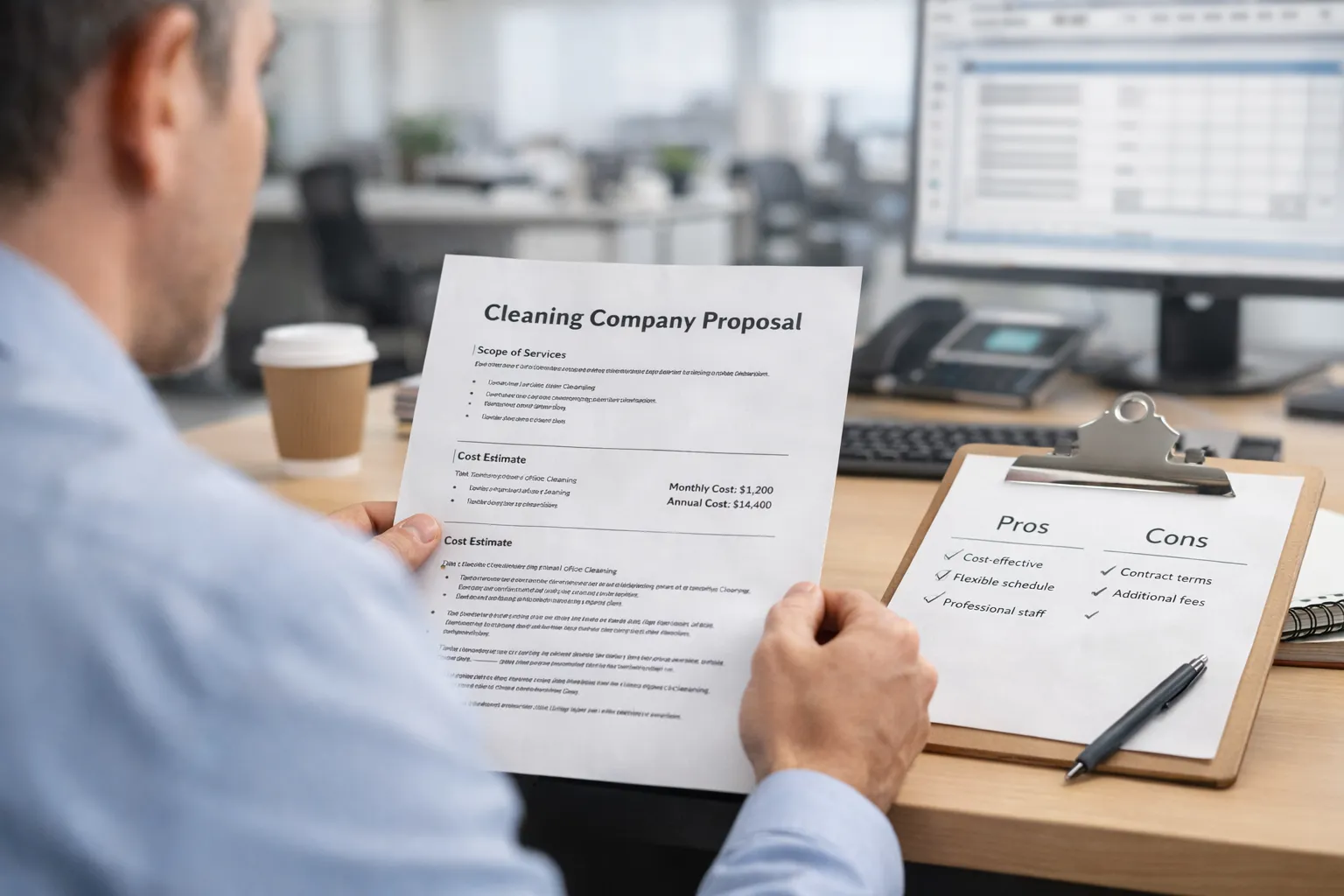
The Pros of Outsourcing Office Cleaning
1. Professional Expertise and Better Results
Commercial cleaning companies specialize in offices—meaning they’ve seen every kind of mess and every type of flooring, from low-pile carpet tiles to mixed hard surface areas.
Their cleaners are typically trained in:
- Proper use of commercial-grade equipment
- Safe handling and dilution of chemicals
- Cross-contamination prevention (especially restroom-to-office procedures)
- Efficient cleaning workflows that keep results consistent
Why it matters: Many in-house setups rely on “basic upkeep” rather than true sanitation. Outsourced teams often deliver a cleaner office more consistently, especially in high-use areas.
2. Cost Efficiency and Predictable Expenses
On paper, in-house cleaning can look cheaper—until you account for everything that comes with employing staff and managing cleaning operations.
Outsourcing can reduce or eliminate costs like:
- Recruiting, onboarding, and training
- Payroll taxes and employee benefits
- Scheduling coverage (vacations, sick days)
- Equipment purchase, repairs, and replacement
- Supplies restocking and inventory tracking
With outsourcing, you’re often paying a monthly or per-visit service fee, which makes costs more predictable—especially for budgeting and scaling.
Reality check: Outsourcing is most cost-effective when you need regular cleaning at a professional standard. For very small offices with minimal needs, in-house can sometimes be simpler.
3. Access to Advanced Equipment and Supplies
Professional providers use tools that many businesses don’t want to purchase, store, maintain, or train staff on.
Common examples include:
- HEPA-filter vacuums (better dust and allergen capture)
- Low-moisture carpet systems (faster drying in busy zones)
- Hot water extraction equipment for deep carpet cleaning
- Electrostatic sprayers for targeted disinfecting
- Commercial-grade floor machines for scrubbing and polishing
Why it matters: High-traffic carpet and entryway zones need more than standard vacuuming. Outsourced providers can rotate between maintenance and deep cleaning methods as part of an ongoing plan.
4. Improved Employee Health, Morale, and Productivity
Clean offices tend to feel better to work in—and they reduce health triggers that quietly hurt performance.
A well-cleaned workplace can help reduce:
- Allergens trapped in carpets and upholstery
- Germ spread in break rooms and restrooms
- Odors and clutter that create distraction and discomfort
This may translate into fewer sick days, improved morale, and less friction around shared spaces.
Practical takeaway: Outsourcing becomes especially valuable if your office has shared kitchens, frequent visitors, dense seating, or carpeted work areas where dust accumulates.
5. Flexibility and Scalability as Your Office Changes
Outsourcing makes it easier to adapt cleaning intensity and frequency as your business grows—or as you reconfigure space.
A provider can usually scale quickly for:
- Increased headcount
- New rooms and floor areas
- Seasonal needs (flu season, rainy season, post-event cleaning)
- After-hours service to avoid disrupting meetings and workdays
This flexibility is a major advantage over managing an internal team, where changes often mean hiring, scheduling, training, and supervision.
The Cons of Outsourcing Office Cleaning
1. Less Direct Control Over Cleaning Staff
When cleaners aren’t your employees, you may have less day-to-day control over:
- Exact cleaning routines
- Timing and staff consistency
- On-site supervision and performance habits
Even good providers can have staffing turnover, and consistency may drop if expectations aren’t documented and reinforced.
How to reduce this risk: Use a detailed checklist, require inspections, and include service standards in the agreement.
2. Security and Confidentiality Concerns
Outsourced cleaners often work after hours or early mornings, sometimes with access to sensitive areas.
That can raise concerns around:
- Confidential documents on desks
- Equipment and inventory
- Restricted offices, server rooms, or records storage
How to reduce this risk: Choose providers that offer background checks, insurance coverage, clear access protocols, and locked-zone procedures.
3. Variable Quality Between Providers
Not all cleaning companies operate at the same standard. Some prioritize speed over detail, or rotate staff too frequently, causing missed tasks.
If you choose the wrong provider, you may experience:
- Incomplete cleaning
- Poor attention to corners, edges, high-touch zones
- Communication gaps (“we thought that wasn’t included”)
- Rushed cleaning in high-traffic areas
Best protection: Verify what’s included, ask for references, review processes, and consider starting with a trial period.
4. Less Immediate Response to Small Issues
A key advantage of in-house staff is immediate response. If coffee spills in a hallway, in-house staff can handle it right away.
With outsourced cleaning, small problems might wait until the next scheduled service unless:
- The contract includes on-demand callouts
- You maintain basic in-house supplies for quick cleanup
Practical workaround: Many offices use a hybrid approach—outsourced cleaning for routine and deep cleaning, plus simple spill kits for staff.
5. Long-Term Contracts Can Limit Flexibility
Some providers require fixed terms (6–24 months) with penalties for early cancellation or major scope changes.
That can be frustrating if:
- Your office downsizes or relocates
- You need to change frequency quickly
- Service quality doesn’t match expectations
Tip: Look for contracts with performance clauses, flexible scope terms, and clear exit language.
Outsourcing vs. In-House Cleaning: A Quick Comparison
|
Factor |
Outsourced Cleaning |
In-House Cleaning |
|
Upfront costs |
Low |
High (hiring + equipment) |
|
Expertise |
High |
Variable |
|
Equipment |
Provided |
Business-funded |
|
Control |
Moderate |
High |
|
Scalability |
Easy |
Limited |
|
Coverage continuity |
Provider-managed |
Your responsibility |
How to Decide If Outsourcing Is Right for Your Office
Outsourcing is often a strong choice if your business:
- Has a medium to large office footprint
- Needs specialized cleaning (carpets, disinfection, floor care)
- Wants predictable monthly costs
- Doesn’t have time/resources to manage cleaning staff
- Needs after-hours cleaning to avoid disruptions
In-house cleaning may work better if:
- Your office is small and low-traffic
- Cleaning needs are minimal and occasional
- You require highly controlled access and constant on-site availability
- You already have a facilities team that can absorb cleaning tasks
Final Thoughts: Is Outsourcing Office Cleaning Worth It?
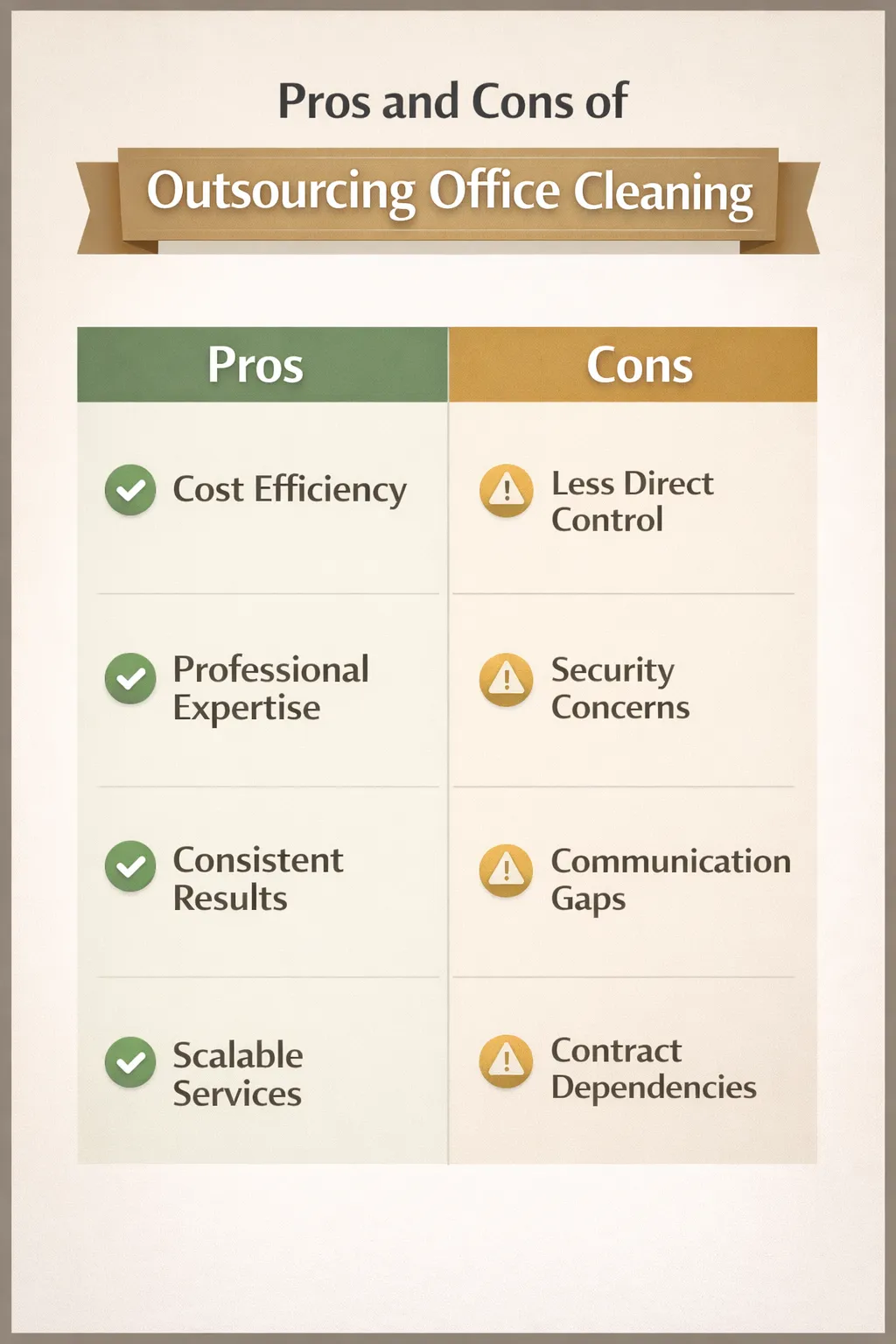
The real pros and cons of outsourcing office cleaning come down to tradeoffs: you gain professional results, scalable service, and predictable costs, but you give up some direct control and must manage security and quality through a strong provider relationship.
When done right—clear scope, defined standards, and a reputable company—outsourcing can deliver a cleaner, healthier, more professional office without the operational burden of hiring and managing cleaning staff internally.
Frequently Asked Questions About Outsourcing Office Cleaning
Is outsourcing office cleaning more expensive than in-house cleaning?
Not always. While outsourcing may appear more expensive upfront, it often costs less long term. Businesses save on hiring, training, benefits, equipment purchases, and supply management. For medium to large offices, outsourcing typically offers more predictable and scalable costs.
How often should an outsourced cleaning company clean an office?
This depends on office size, foot traffic, and industry.
- High-traffic offices: Daily or nightly cleaning
- Standard office environments: 2–3 times per week
- Deep carpet cleaning: Every 3–6 months
A reputable provider will customize a schedule based on usage patterns.
Can outsourced cleaners work outside business hours?
Yes. Most professional cleaning companies specialize in after-hours or overnight cleaning to avoid disrupting employees, meetings, and clients. This is one of the biggest advantages of outsourcing.
Are outsourced office cleaners background-checked?
Reputable cleaning companies conduct background checks, provide insured services, and train staff on security protocols. Always confirm screening practices and access controls before signing a contract.
What happens if cleaning quality drops?
Most providers include service-level agreements (SLAs) that define expectations, inspection processes, and issue resolution timelines. Regular walkthroughs, checklists, and clear communication help maintain consistent quality.
Can outsourced cleaning include carpet deep cleaning?
Yes. Many office cleaning providers offer deep carpet cleaning, stain removal, and low-moisture maintenance as part of their service packages or as scheduled add-ons—ideal for busy, high-traffic areas.
Is it possible to combine outsourcing with in-house cleaning?
Absolutely. Many offices use a hybrid approach—outsourcing routine and deep cleaning while handling small spills and day-to-day tidying internally. This offers flexibility without sacrificing professional results.
What should be included in an office cleaning contract?
A strong contract should outline:
- Cleaning frequency and scope
- Areas covered (offices, restrooms, carpets, break rooms)
- Supplies and equipment provided
- Security procedures
- Quality assurance and termination terms
How long does it take to switch from in-house to outsourced cleaning?
Most transitions take 1–3 weeks, including site assessments, scheduling, and onboarding. Experienced providers can ensure a smooth handoff with minimal disruption.