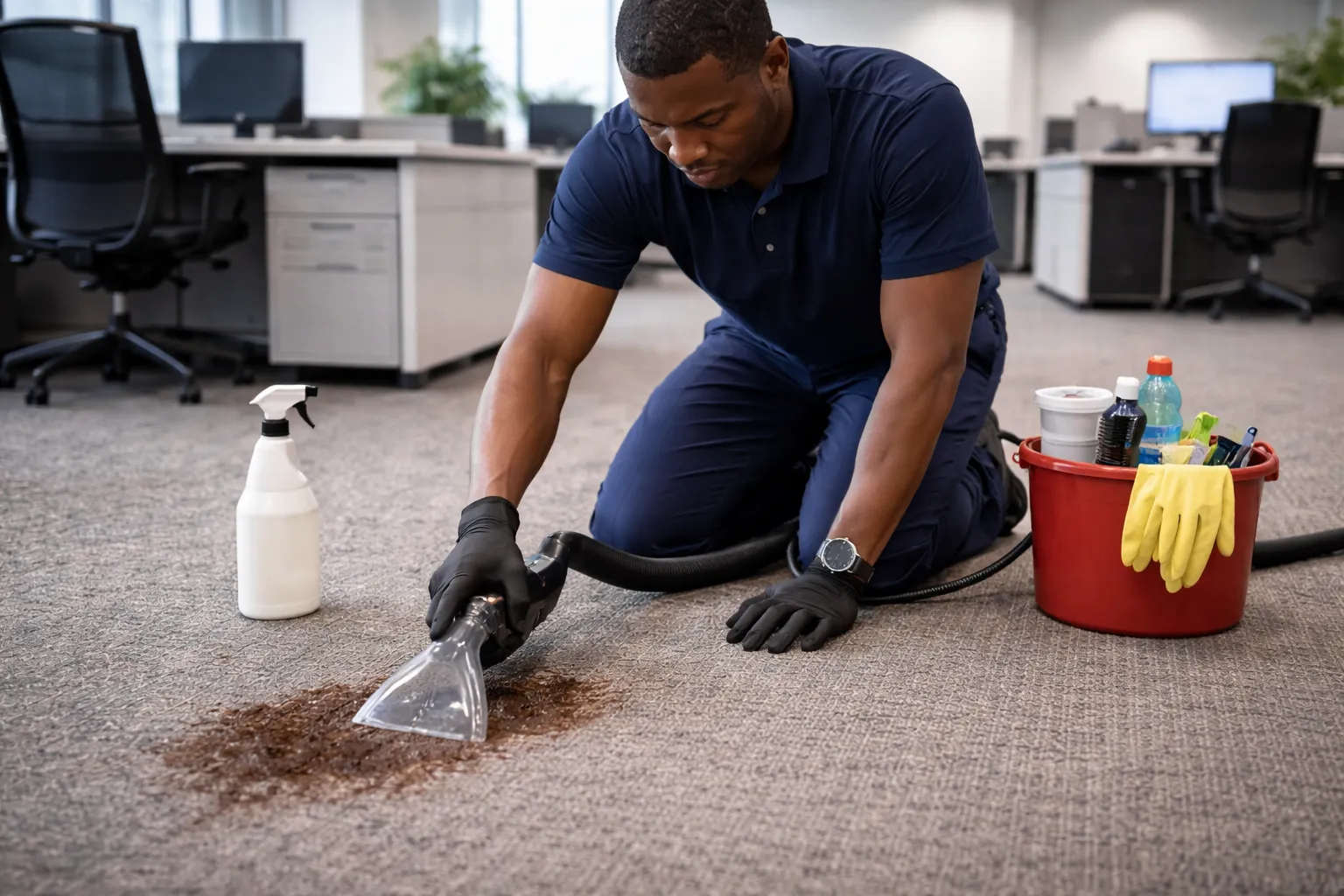
Office carpets take daily abuse—from coffee spills and printer toner to muddy shoes and lunch accidents. Unlike residential carpets, office carpets deal with constant foot traffic, repeated staining, and (often) delayed cleanup. That combination doesn’t just make stains more common—it makes them more stubborn, because soils get pushed deeper into the pile and bind to fibers over time.
This guide shares proven, real-world stain removal methods that facility managers, office admins, and professional cleaners actually use—not “viral hacks” that can set stains permanently, weaken carpet backing, or leave behind sticky residue that attracts even more dirt.
Why Office Carpet Stains Are Harder to Remove
Office carpets differ from home carpets in a few critical ways, and those differences change how you should treat stains:
-
Commercial-grade fibers and construction. Many offices use low-pile carpet tiles or dense commercial broadloom, often made from nylon or polypropylene (olefin). These materials are durable—but the tight, low pile can make spills spread fast and sit closer to the backing, where they’re harder to flush out.
-
High foot traffic grinds stains in. In a busy hallway, a spill isn’t just a spill—it becomes a stain + soil combo within minutes. Shoes press liquids and particles downward, and friction “polishes” the stain into the fiber.
-
Delayed treatment is common. A Friday afternoon coffee spill that doesn’t get handled until Monday has time to oxidize, dry, and bond. Add HVAC airflow and you get faster drying and stronger setting.
-
Multiple stain types stack in the same area. Break rooms and printer stations are repeat-offenders. Oils, sugars, dyes, and dry particulate soils layer up, which means one cleaner rarely fixes everything in one pass.
Understanding those factors helps you pick a method that actually works—rather than guessing and making the stain harder to remove.
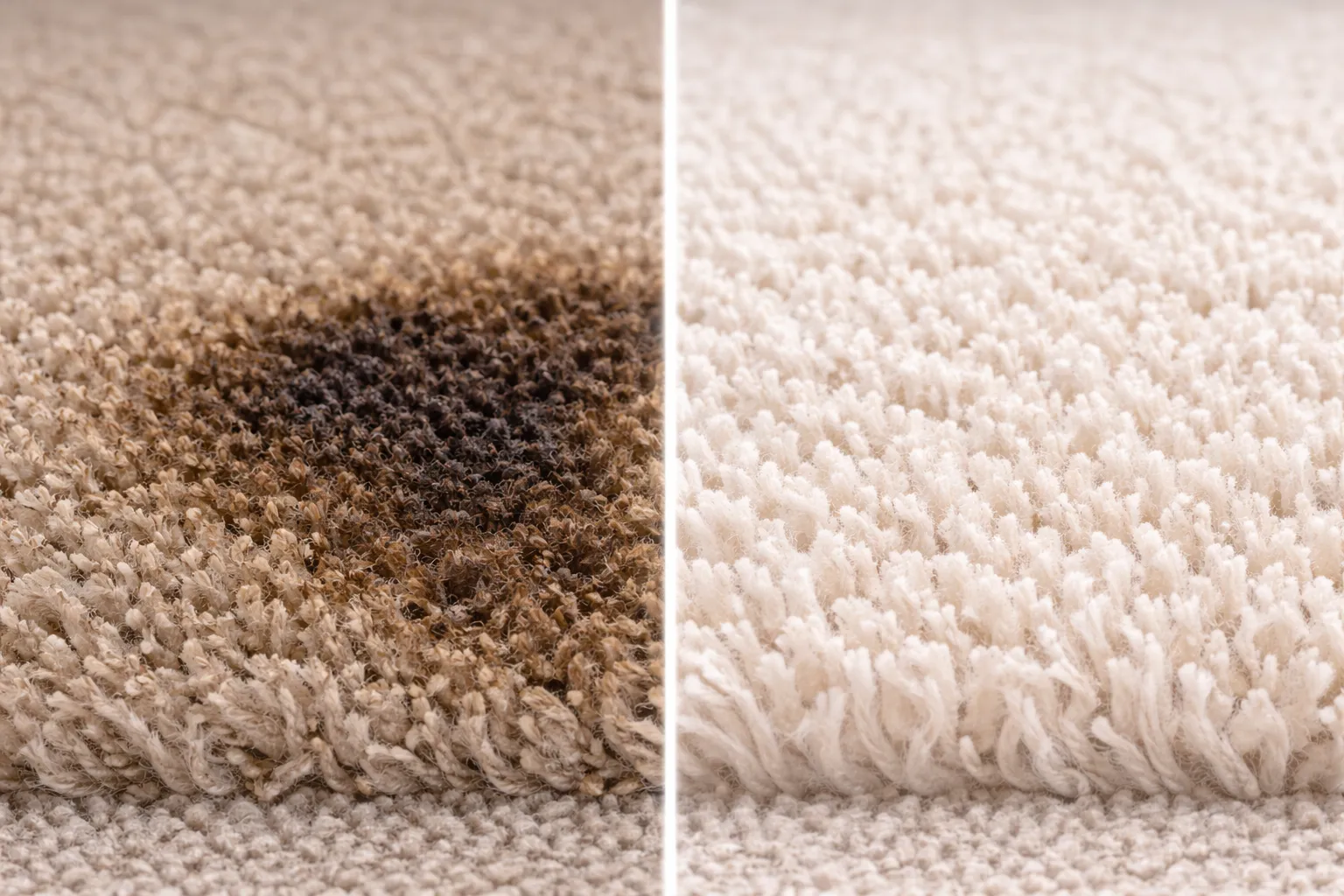
What “Actually Works” in Real Offices
1) Act fast—but don’t over-wet the carpet
Speed matters, but so does restraint. The biggest mistake in offices is pouring on too much cleaner or water.
-
Blot, don’t scrub. Scrubbing can fray commercial loop pile and spread the stain outward.
-
Work from the outside in. This prevents the “ring” effect where stain edges expand.
-
Use controlled moisture. Over-wetting can seep into the backing, cause odor, wick stains back up later, or loosen adhesive under carpet tiles.
Rule of thumb: Use the least liquid needed to lift the stain, then remove as much moisture as possible (clean towels + vacuum).
2) Match the stain to the chemistry (instead of using one “??” spray)
Pros don’t rely on one product—they choose based on stain type:
-
Protein stains (milk, yogurt, gravy, blood): use an enzyme or neutral cleaner.
-
Tannin stains (coffee, tea, red wine): use a mild acidic treatment.
-
Oily/greasy stains (salad dressing, butter, cosmetics): use a solvent-based spotter or a degreasing carpet spotter.
-
Dye-based stains (ink, some juices, marker): use an ink/dye remover (carefully—test first).
-
Dry particulate soils (toner, dirt, drywall dust): dry removal first, then wet-clean.
If you treat grease with a water-only approach, you’ll smear it. If you treat coffee with a high-pH degreaser, you may set a yellow/brown shadow.
3) Use a “two-step” method for set-in stains
In offices, stains are often partially set by the time someone notices. A simple approach works better than brute force:
-
Break the bond: Apply the correct spotter and give it dwell time (usually a few minutes).
-
Extract and rinse: Blot and then lightly rinse with clean water (or a neutral rinse) to remove residue.
-
Dry thoroughly: Put weight on clean towels, then vacuum once dry.
This is how you avoid the classic office problem: the stain seems gone, then reappears as it dries (wicking).
4) Always remove the residue—or stains come back faster
A lot of “carpet stain removers” clean initially but leave behind sticky surfactants. In a high-traffic office, that residue grabs dirt like a magnet and you get a dark “re-soil” patch.
Best practice: After spot treating, do a small clear-water rinse (minimal moisture) and blot dry. This one step is why professional results last longer.
5) Don’t skip dry soil removal (it’s half the battle)
Professional cleaners will tell you: dry soil is the #1 enemy of commercial carpet.
Before you treat a stain, do this:
When you wet-clean over dust or toner, you can turn it into paste and push it deeper.
Quick “Do This, Not That” for Common Office Stains
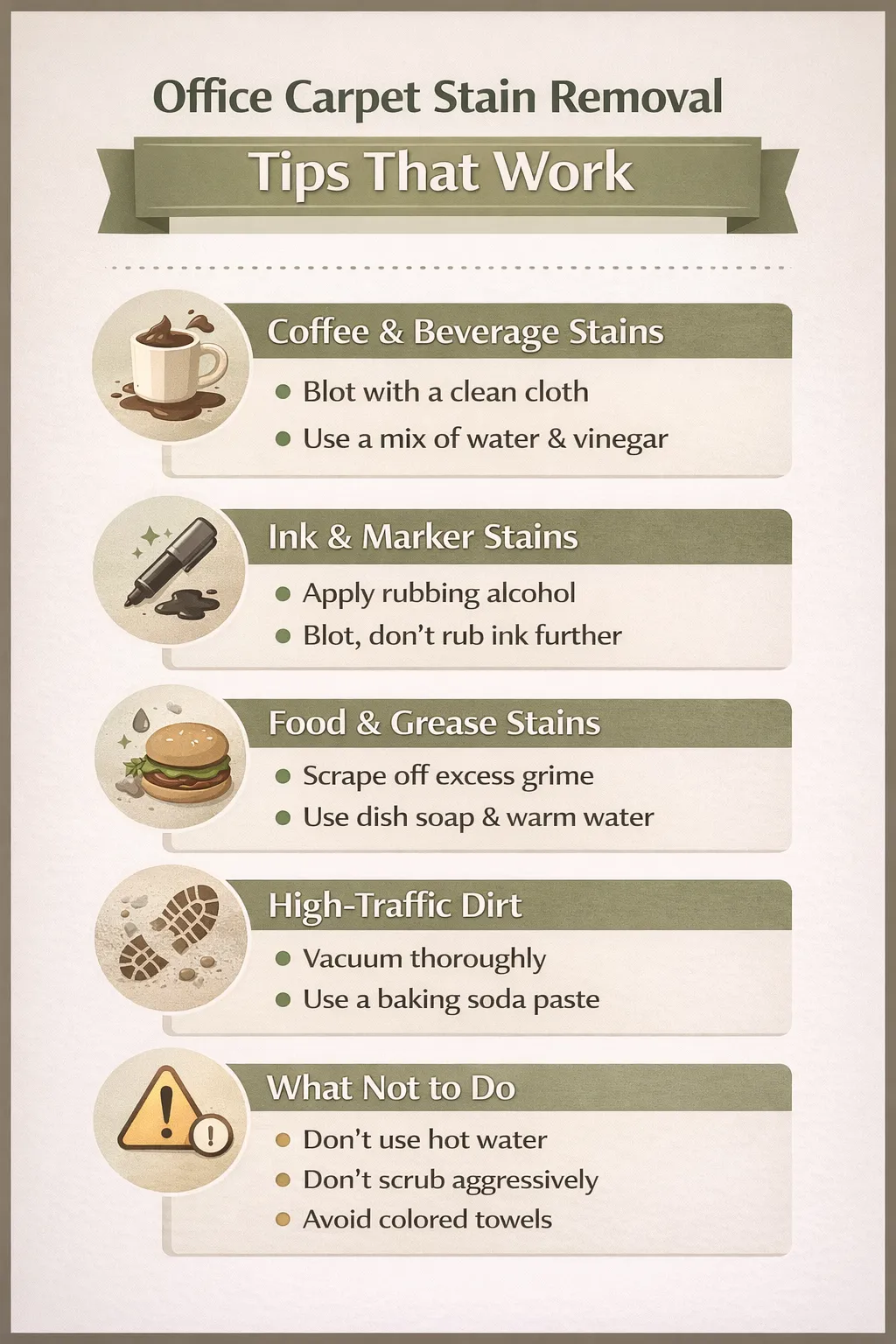
Coffee / Tea
Toner (printer/copier)
Mud / tracked-in dirt
Grease / salad dressing / oily food
Ink / marker
When DIY Cleaning Stops Working
There’s a point where even correct spot-cleaning stops delivering results—and it’s important to recognize that moment instead of repeatedly re-treating the same area.
If stains:
-
Keep reappearing after drying
-
Produce odors even after cleaning
-
Look darker or larger once dry
…it usually means the contamination has moved below the visible carpet fibers and into the backing or padding.
This is common in offices because:
-
Spills sit longer before being noticed
-
Repeated foot traffic pushes liquids downward
-
Over-wetting during DIY cleaning accelerates wicking
At this stage, surface-level spot treatments can actually make things worse by reactivating what’s underneath.
What works instead:
-
Professional hot water extraction flushes contaminants from deep within the carpet system and removes them through high-powered vacuum.
-
Low-moisture encapsulation cleaning traps remaining soils in a crystallized polymer that’s removed during vacuuming—ideal for offices that need fast dry times.
Knowing when to escalate from DIY to professional cleaning prevents permanent staining, odor buildup, and premature carpet replacement.
Preventing Future Carpet Stains in Offices
Prevention is always cheaper than correction—and in commercial spaces, small policy changes make a big difference.
Effective office carpet prevention strategies include:
-
Walk-off mats at all entrances
These capture up to 80% of tracked-in dirt and moisture before it ever reaches the carpet.
-
No-food or limited-food zones near workstations
Most recurring stains originate at desks, not break rooms.
-
Quarterly professional carpet cleaning
High-traffic offices may need more frequent service to prevent soil buildup from becoming permanent.
-
Immediate spot-cleaning with a basic office stain kit
Fast response dramatically improves success rates and reduces the need for aggressive chemicals later.
A simple spill-response policy—who cleans, what to use, and when to escalate—can extend carpet life by years, not months.
Mistakes to Avoid (That Ruin Office Carpets)
Some well-intended cleaning habits do more harm than good:
- Using bleach or ammonia
These can permanently discolor fibers, weaken backing, and release harmful fumes—especially in enclosed offices.
- Over-wetting the carpet
Excess moisture leads to wicking, odors, adhesive failure under carpet tiles, and even mold growth.
- Mixing cleaning chemicals
This can create toxic reactions or neutralize cleaners, making stains harder to remove.
- Scrubbing aggressively
Harsh scrubbing frays fibers, distorts pile, and makes cleaned areas stand out from surrounding carpet.
Most irreversible carpet damage happens during cleaning—not from the original spill.
Final Thoughts
Effective office carpet stain removal isn’t about viral hacks or household shortcuts. It’s about understanding commercial carpet construction, matching the cleaner to the stain, and knowing when DIY has reached its limit.
With proper spot-cleaning techniques, realistic expectations, and preventative maintenance, most office carpet stains can be removed—or at least significantly improved—without costly replacements.
For heavily trafficked offices, the best long-term results come from combining in-house spill response with scheduled professional maintenance. That approach protects both appearance and budget—and keeps carpets looking professional long after installation.
Need Professional Help With Office Carpet Cleaning?
When stains keep coming back, odors won’t go away, or high-traffic areas start looking permanently worn, it’s time to bring in the professionals. CorpClean provides expert commercial carpet cleaning services designed for busy offices—using proven methods like hot water extraction and low-moisture encapsulation to deliver real results with minimal disruption. If you want cleaner carpets, longer carpet life, and a more professional workspace, CorpClean can help you get there.