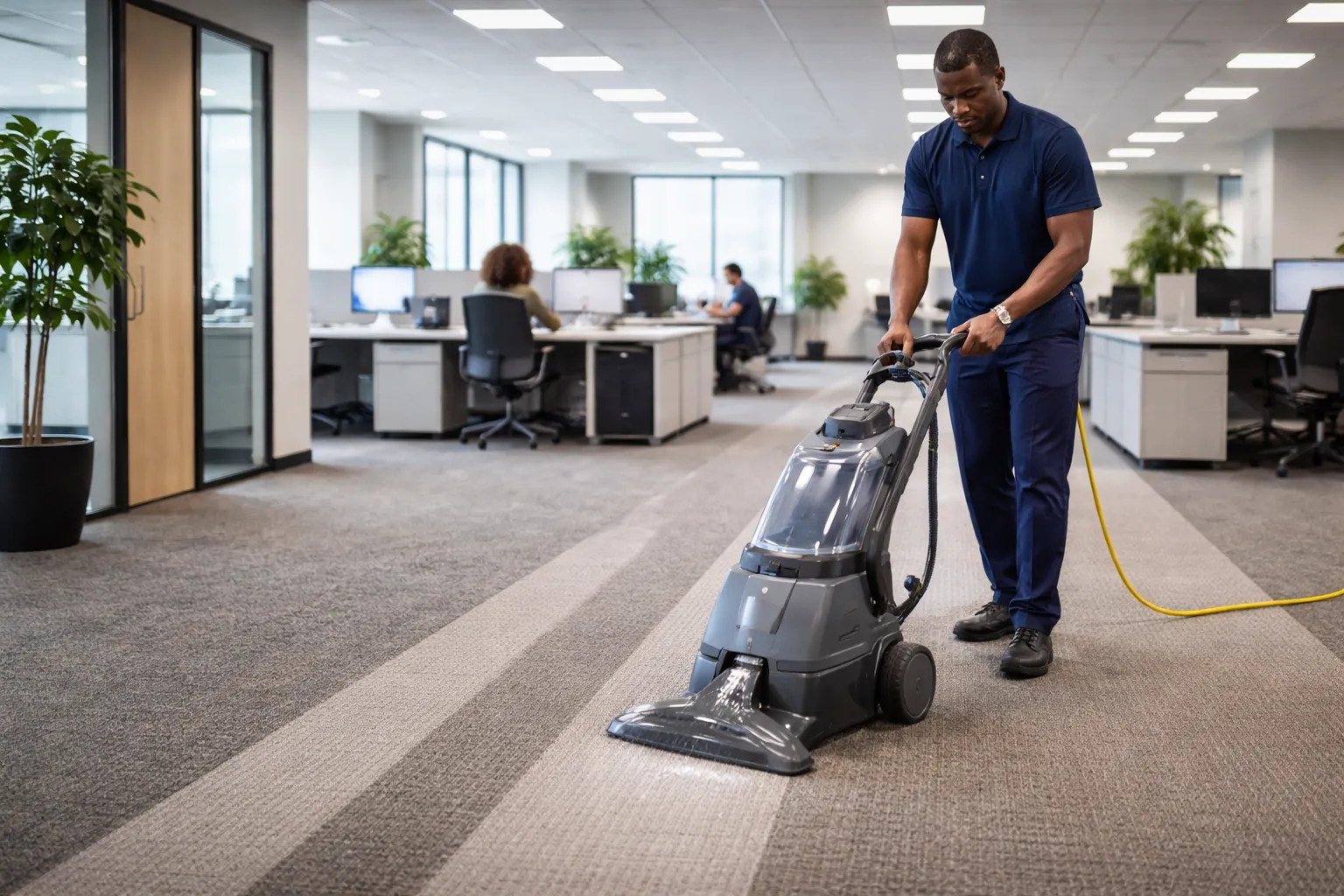
Get Deep Carpet Cleaning for Busy Office Areas
5th December 2025
In high-traffic office environments, carpets do more than look nice—they act like giant filters. They catch dust, pollen, skin cells, crumbs, moisture, and whatever gets tracked in from outside. That can quietly affect indoor air quality and, over time, make a space feel dingy even if everything else is spotless.
Daily vacuuming helps, but it mostly removes what’s sitting on the surface. Deep carpet cleaning tackles what’s embedded in the fibers—especially in the places where people walk, roll chairs, and gather all day.
Why Deep Carpet Cleaning Matters for Offices
1) High-traffic areas accumulate more dirt (faster than you think)
Reception areas, main walkways, break rooms, open-plan aisles, and meeting room entrances take constant wear. The problem isn’t just the amount of dirt—it’s what happens to it:
- Foot traffic pushes grit deeper into fibers
- Oils from shoes and spills create sticky buildup that holds more soil
- Rolling chairs and constant pressure mat down the pile, making carpets look older
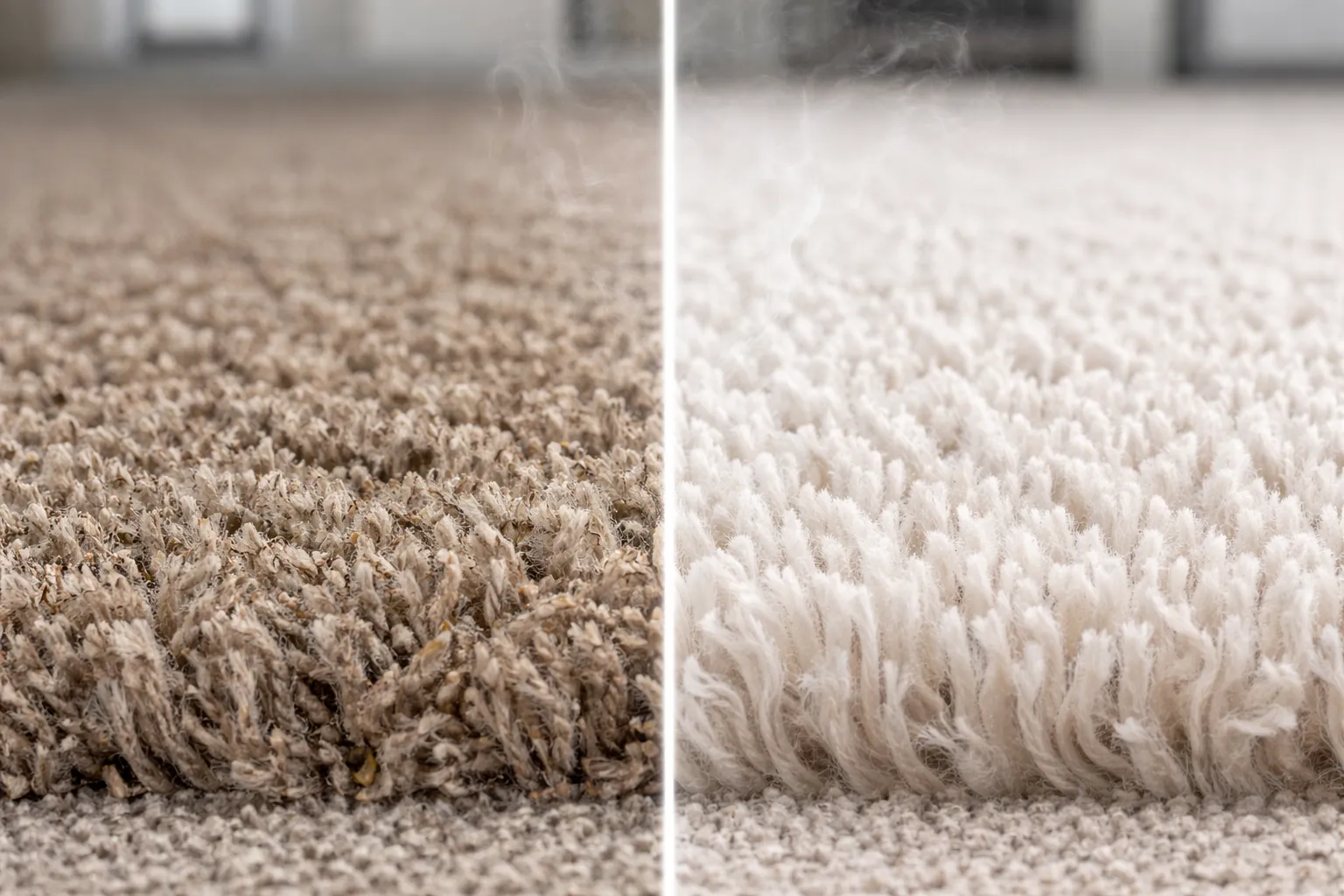
That’s why a carpet can look “clean” after vacuuming but still appear dull or gray in traffic lanes. Deep cleaning lifts out the embedded grit that vacuums can’t fully reach.
Tip: If you can see darker “paths” where people walk, that’s a strong sign it’s time for a deep clean—not just more vacuuming.
2) Improves office hygiene (and comfort)
Carpets can harbor allergens and irritants that get kicked back into the air when people walk across them. In a shared office, that can matter more than you’d expect—especially for employees with allergies or asthma.
Deep carpet cleaning helps by removing:
- fine dust and allergens trapped below the surface
- residues from spills (which can cause odors)
- moisture-related risks in problem areas (like near entrances)
It’s not just about “germs”—it’s about making the office feel fresher and less irritating day to day.
Tip: If a space smells stale even after trash is taken out and surfaces are wiped down, the carpet may be holding odor-causing residue.
3) Extends carpet life (protects a big investment)
Dirt and grit act like tiny abrasives. Every step grinds that grit against fibers, which can lead to:
- fraying and texture breakdown
- permanent matting in traffic lanes
- faster fading and discoloration
Regular deep cleaning removes that abrasive soil so the carpet holds up longer—and looks better longer. In many offices, extending carpet life by even 1–2 years can be a meaningful budget win.
Tip: Deep cleaning is especially valuable before the carpet looks “bad.” It’s preventive maintenance, not a last resort.
4) Enhances professional appearance (first impressions count)
Carpets are one of the largest visible surfaces in an office—so when they look worn, the whole space can feel less polished. Deep cleaning helps with:
- brightening traffic lanes
- removing stains and spot shadows
- reducing odors
- restoring a more even look across open areas
Clients notice reception areas. Candidates notice meeting rooms. Employees notice break rooms. A clean carpet supports the message that the workplace is cared for and well-managed.
Tip: If you’re preparing for an office tour, audit, VIP visit, or recruiting push, deep cleaning high-visibility areas delivers outsized impact.
What Is Involved in Deep Carpet Cleaning
Professional deep carpet cleaning is more than “a stronger vacuum.” It’s a structured process designed to break up embedded soil, lift stains, and remove residues without damaging fibers—especially important in offices where appearance and fast turnaround matter.
1) Pre-treatment (spot + stain treatment)
Before any machine work starts, technicians usually:
- Inspect traffic lanes and problem areas
- Apply pre-spray or spot treatments to stains (coffee, ink, food, tracked-in grime)
- Use different solutions depending on stain type (oil-based vs water-based)
Why it matters: Pre-treatment loosens soil and helps prevent stains from “setting” deeper during extraction.
2) Hot Water Extraction (often called “steam cleaning”)
This is one of the most common deep-cleaning methods for commercial carpet:
- Hot water and cleaning solution are injected into the carpet
- Powerful suction pulls out loosened dirt, allergens, and residue
- Many pros focus on traffic lanes first, then do full coverage
Best for: Heavily soiled carpets, restorative cleaning, periodic “reset” cleans.
Watch-out: Drying time can be longer—so planning (after hours/weekends) helps.
3) Encapsulation cleaning (low-moisture option)
Encapsulation uses a low-moisture detergent that:
- Surrounds (encapsulates) soil particles
- Dries into crystals that are later vacuumed up
- Minimizes wetness and downtime
Best for: Offices that need faster drying and minimal disruption, maintenance cleans between extractions.
Trade-off: It’s excellent for appearance and light-to-moderate soil, but may not replace extraction for deep restorative work.
4) Agitation and rinse (the “make it actually work” step)
Pros often use brushes or counter-rotating equipment to:
- Work the pre-spray/encap solution into fibers
- Lift matted pile in traffic lanes
- Improve stain removal consistency
With extraction, a rinse step helps remove detergent residue—important because leftover residue can attract more dirt later (“re-soiling”).
5) Deodorizing and drying
Finishing steps often include:
- Deodorizer (especially for food areas, moisture issues, or stale odors)
- Air movers/fans to speed drying
- Grooming (resetting carpet fibers so it dries evenly and looks uniform)
Office-friendly tip: Ask about expected dry time and whether they’ll place “wet floor” signs or block off zones.
Green cleaning options
Many providers offer eco-friendly programs using:
- Low-VOC, non-toxic solutions
- Fragrance-free options for sensitive workplaces
- Methods designed to reduce water and chemical use
If your office has allergy concerns or strict sustainability standards, ask for the product list and whether the solutions are certified by a recognized ecolabel (and confirm compatibility with your carpet warranty).
? How Often Should Offices Get Carpets Deep Cleaned?
The right frequency depends on foot traffic, carpet type, and how “public-facing” the space is. Here are practical guidelines that work for most offices:
High-traffic zones: every 3–6 months
Examples:
- Reception and lobby areas
- Hallways and main walkways
- Break rooms and coffee stations
- Open-plan aisles and near printers/copiers
- Conference rooms used daily
Why so often: These areas accumulate embedded grit quickly and show traffic lanes first.
Moderate/low-traffic areas: every 6–12 months
Examples:
- Private offices
- Low-use meeting rooms
- Back corridors or restricted-access areas
Tip: Even low-traffic spaces benefit from periodic cleaning to remove fine dust and prevent dullness.
Immediately (as needed)
Deep clean ASAP after:
- Spills that soak into padding (coffee, soda, food grease)
- Water leaks, flooding, or repeated dampness
- Known contamination (mold concerns, odors, pest issues)
Quick action can prevent permanent staining, odors, and padding damage.
? Signs Your Office Carpet Needs Deep Cleaning
Even with consistent vacuuming, carpets can quietly collect grime that starts to affect how the space looks, smells, and feels. Here are the most common “it’s time” signals—especially in busy office zones.
1) Persistent odors (even after routine cleaning)
If the office still smells musty, stale, or “dirty” after trash is emptied and surfaces are wiped down, the carpet may be holding:
- food residue (break rooms, near desks)
- moisture near entrances
- buildup from spills that didn’t fully lift
Tip: Odors that get worse in humidity or after rain are often tied to moisture and trapped soil at entryways.
2) Visible traffic lanes or discoloration
Those darker pathways in hallways and around workstations are a classic sign that soil is embedded deep in the fibers. Vacuuming can’t fully remove it once it’s ground in.
Tip: If the carpet looks different depending on the angle of light, it’s often matting + embedded grit.
3) More allergies or sneezing among employees
You can’t diagnose health issues from carpets alone, but if people are suddenly sneezier or irritated—especially in carpet-heavy areas—it’s worth considering a deep clean to remove trapped dust and allergens.
Tip: If symptoms spike after weekends or after high-occupancy days, it may point to buildup in shared spaces (conference rooms, open-plan aisles).
4) Matted, sticky, or rough carpet texture
A healthy carpet has “lift” and softness. When it feels:
- matted (flattened and dull)
- sticky (often from residue or spill cleanup products)
- rough/gritty (embedded dirt)
…it usually needs more than vacuuming. That gritty feel is often the abrasive soil that wears fibers down faster.
5) Recent spill of food, coffee, or chemicals
If a spill soaked in—especially into padding—deep cleaning should happen quickly. Waiting can lead to:
- permanent staining
- odor development
- microbial growth risk (if moisture remains)
Tip: Even if the top looks clean, a “shadow stain” or odor can develop days later if residue remains below the surface.
? Tips to Maintain Clean Carpets Between Deep Cleans
Deep cleaning works best when day-to-day maintenance keeps soil from building up again too quickly.
1) Use entry mats at doorways to trap dirt
This is one of the highest-impact, lowest-cost moves. For best results:
- Place a mat outside and inside the entrance
- Choose mats long enough for a few steps (more steps = more dirt captured)
- Clean mats regularly—dirty mats stop working
2) Schedule regular vacuuming (daily in high-traffic areas)
Frequency matters more than perfection. A strong plan:
- Daily: lobbies, hallways, open-plan walkways, break rooms
- 2–3x/week: conference rooms, moderate-use areas
- Weekly: private offices, low-traffic zones
Tip: If possible, use a commercial-grade vacuum with good filtration to reduce dust recirculation.
3) Clean spills immediately to prevent staining
The faster you act, the less likely it becomes a permanent mark. A simple office-safe approach:
- Blot (don’t rub)
- Use minimal moisture
- Rinse lightly if needed
- Blot dry again
- Place a fan if it’s damp
Tip: Keep a small spill kit in break rooms and near coffee stations (paper towels, microfiber cloths, gentle carpet spot cleaner, disposable gloves).
4) Consider a no-shoes policy (or indoor footwear) in sensitive areas
This can drastically reduce tracked-in soil—especially during rainy season or in cities. If a full no-shoes policy isn’t realistic, try:
- “No outdoor shoes” in specific zones (wellness rooms, training rooms)
- Indoor shoe covers for certain spaces
- Stronger matting + more frequent vacuuming as a compromise
Tip: Pair this with clear signage and a practical setup (shoe rack, disposable covers) so it doesn’t feel inconvenient.
Conclusion
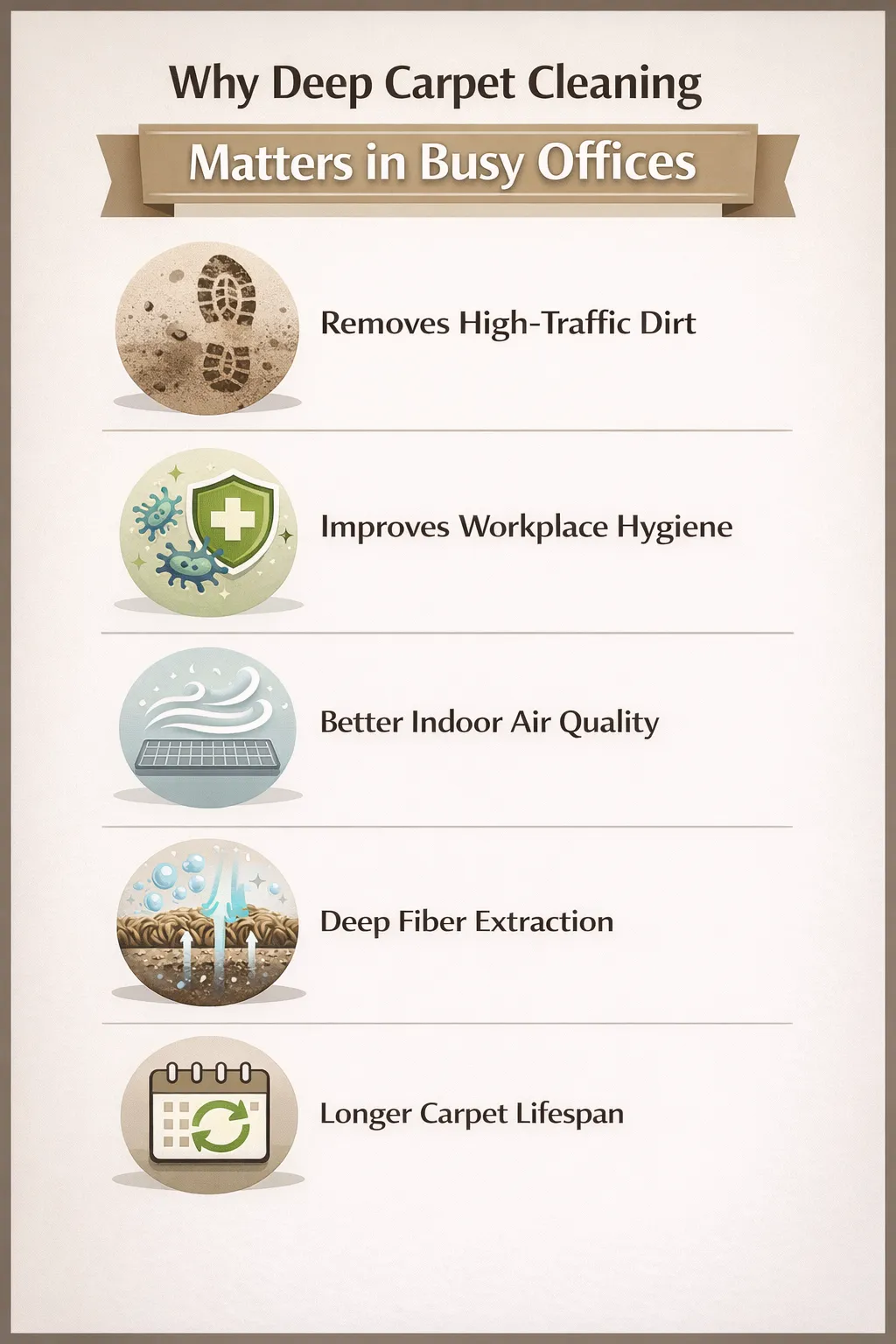
Deep carpet cleaning is an essential part of maintaining a healthy, professional office environment—especially in high-traffic areas where dirt, allergens, and wear build up quickly. By recognizing the signs that carpets need attention, scheduling deep cleaning at the right intervals, and maintaining them properly between services, offices can protect their flooring investment, improve indoor air quality, and create a cleaner, more welcoming space for employees and visitors alike.
Get Professional Carpet Cleaning with CorpClean
If you're managing a busy workplace, don’t let dirty carpets drag down your image or air quality. At CorpClean, we specialize in deep carpet cleaning for high-traffic office spaces, using advanced equipment and eco-friendly methods. Whether it's routine maintenance or an emergency clean-up, we tailor our services to suit your office schedule with minimal disruption. Book your service today and enjoy fresher, cleaner office carpets tomorrow.