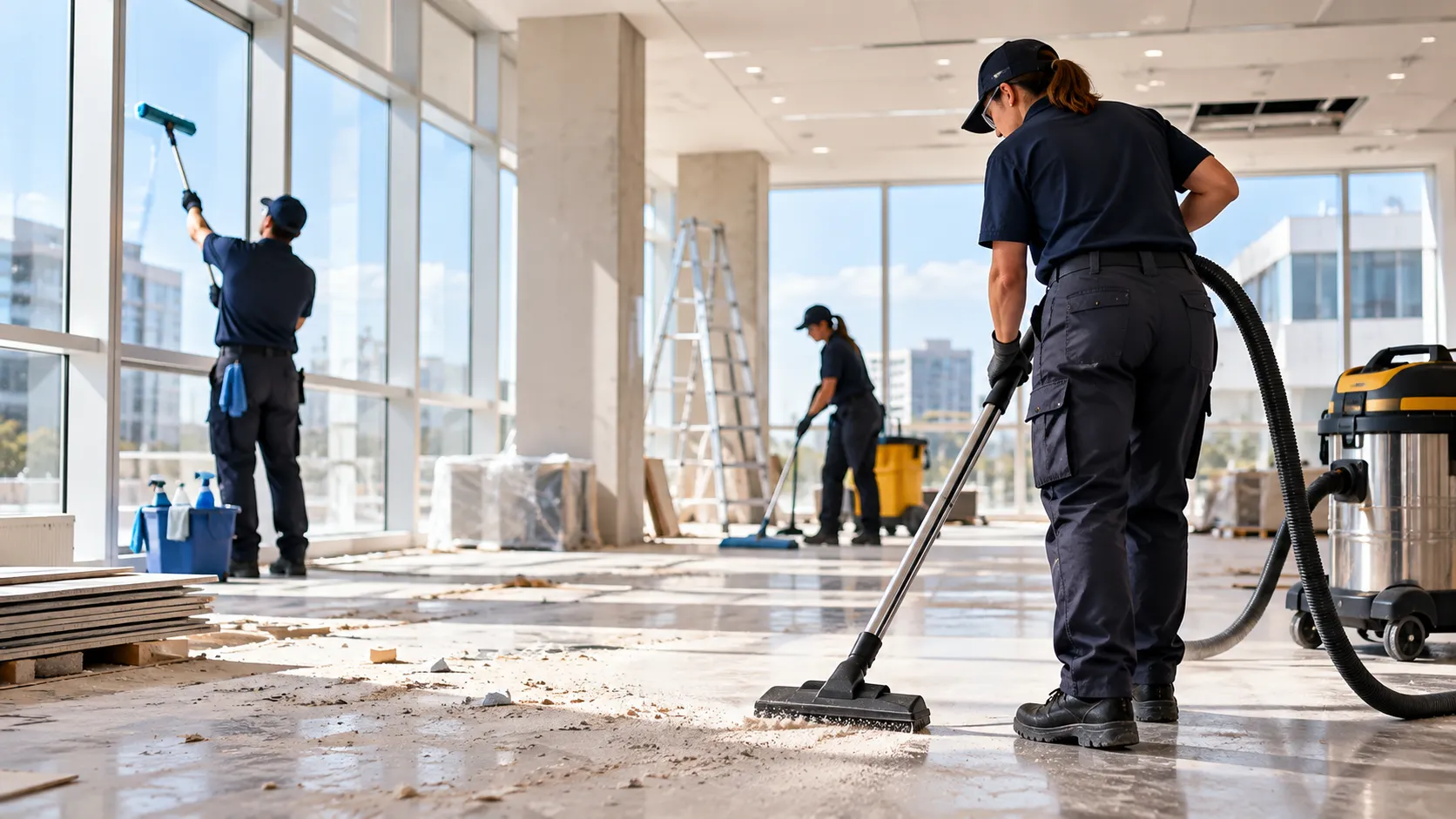
What to Expect from a Professional Renovation Clean
6th August 2026
Finishing a renovation is exciting, but the space is rarely ready to use as soon as the builders pack up. Fine construction dust can settle across floors, walls, windows and fixtures, while stickers, packaging, adhesive residue and building debris may still need to be removed.
A professional renovation clean is designed to take the property from post-construction condition to a cleaner, more presentable space ready for handover, occupation or normal use. The exact service varies according to the property and renovation, but it typically involves much more detailed work than a standard maintenance clean.
Quick Answer: What Does a Professional Renovation Clean Include?
A professional renovation typically includes removing construction dust and loose debris, cleaning floors, wiping surfaces, cleaning windows and glass, removing stickers and suitable adhesive residue, detailing kitchens and bathrooms, and cleaning newly installed fixtures and fittings.
The exact scope depends on the renovation work completed, the condition of the property and whether the clean is taking place before handover, before occupants move in or as a final clean after trades have finished.
What Is a Renovation Clean?
A renovation clean is a detailed cleaning service carried out after building, refurbishment or improvement work.
Unlike regular cleaning, which deals mainly with everyday dirt and general upkeep, renovation cleaning focuses on residue created by construction activities.
Common examples include:
- Fine construction dust
- Plaster and drywall dust
- Packaging materials
- Stickers and labels
- Protective film
- Adhesive residue
- Paint spots
- Sawdust
- Footprints and trade marks
- General building debris
Even relatively small renovations can spread dust well beyond the immediate work area, which is why adjacent rooms may also require cleaning.
Professional construction cleaning services can help businesses prepare renovated commercial spaces for inspection, handover and occupation. The cleaning scope should reflect the type of building work completed and the condition of the property.
Renovation Cleaning vs Regular Cleaning
The two services have different objectives.
|
Regular Cleaning |
Renovation Cleaning |
|
Removes everyday dirt and dust |
Removes construction-related contamination |
|
Usually follows a recurring schedule |
Usually completed after building work |
|
Focuses on occupied spaces |
Prepares renovated spaces for use |
|
Includes routine floor cleaning |
May require intensive floor cleaning |
|
General surface wiping |
Detailed removal of fine construction dust |
|
Basic bathroom and kitchen cleaning |
Cleaning of newly installed fixtures and cabinetry |
|
Usually minimal residue removal |
May include labels, film and suitable adhesive removal |
Because renovation cleaning is generally more detailed, the time, equipment and labour required can be greater than for a routine clean of the same property.
What Happens Before Cleaning Starts?
A professional cleaner may first inspect the property or review the scope of the renovation.
This helps determine:
- Size of the area
- Amount of construction dust
- Types of flooring
- Number of windows
- Condition of kitchens and bathrooms
- Whether high-level cleaning is required
- Amount of loose debris
- Accessibility
- Whether specialist equipment is needed
- Which areas are included or excluded
This stage is particularly important for larger commercial renovations where different areas may require different cleaning methods.
Construction Dust Removal
Fine dust is one of the main reasons professional cleaning is needed after renovation work.
Dust generated by sanding, drilling, cutting and other building activities can travel through doorways and settle on surfaces far from the work itself.
Common dust collection points include:
|
Area |
What May Need Cleaning |
|
Floors |
Fine dust, footprints and debris |
|
Window ledges |
Construction dust and residue |
|
Skirting boards |
Fine settled dust |
|
Doors and frames |
Dust from nearby building work |
|
Cabinets |
Internal and external surfaces |
|
Light fittings |
Surface dust |
|
Shelving |
Dust across horizontal surfaces |
|
Fixtures |
Installation and construction residue |
|
Walls |
Surface dust and marks where suitable |
|
High ledges |
Dust that may be missed during basic cleaning |
Dust removal may require several passes rather than one quick wipe. Appropriate vacuuming and controlled dust-removal methods may be necessary to avoid redistributing fine particles. Potentially hazardous construction dust requires suitable risk controls and specialist handling where applicable.
Floor Cleaning
Floors often receive some of the heaviest contamination during a renovation because tradespeople, tools and materials continually move through the property.
A professional clean may address:
- Fine dust
- Footprints
- Dirt
- Tape
- Labels
- Minor construction residue
- Packaging fragments
- Suitable adhesive residue
- General marks
The correct cleaning method depends on the flooring material.
|
Floor Type |
Cleaning Considerations |
|
Timber |
Avoid excessive moisture and unsuitable chemicals |
|
Tiles |
Remove surface dust and inspect grout residue |
|
Vinyl |
Use products appropriate for the finish |
|
Concrete |
Remove loose dust and construction residue |
|
Epoxy |
Avoid methods that may damage the coating |
|
Carpet |
Thorough vacuuming and spot cleaning where required |
|
Natural stone |
Use products suitable for the specific stone |
New flooring should always be cleaned according to manufacturer recommendations.
Windows and Glass
Windows can collect fingerprints, dust, stickers and marks during renovation work.
A renovation clean may include:
- Internal glass cleaning
- Window frame cleaning
- Window ledges
- Glass doors
- Mirrors
- Glass partitions
- Removal of appropriate stickers
- Removal of protective film where included
Exterior windows may not automatically be part of the service, particularly on multi-storey buildings or where specialised access equipment is required.
Professional commercial window cleaning services can help prepare internal and external glazing for a cleaner handover. Glass type, access requirements and any adhesive removal should be considered when defining the scope.
It is worth confirming whether internal glass, external glass or both are included in the quote.
Kitchen Cleaning After Renovations
New or renovated kitchens can look finished while still containing a surprising amount of construction dust.
Dust can settle inside cabinets, on benchtops and around newly installed fixtures.
Typical kitchen cleaning may cover:
|
Kitchen Area |
Typical Cleaning Task |
|
Benchtops |
Remove dust and installation marks |
|
Cabinets |
Wipe external surfaces and interiors where included |
|
Splashbacks |
Clean dust and suitable residue |
|
Sinks |
Clean and polish where appropriate |
|
Taps |
Remove marks and wipe fixtures |
|
Floors |
Vacuum and clean according to material |
|
Appliances |
Clean external surfaces where included |
|
Handles |
Remove fingerprints and installation dust |
Cabinet interiors should be specifically included in the cleaning scope if they need to be ready for immediate storage.
Bathroom Cleaning
Bathrooms may also require detailed attention after renovation.
A professional post-renovation bathroom clean may include:
- Toilets
- Basins
- Taps
- Mirrors
- Shower screens
- Baths
- Vanities
- Cabinetry
- Tiles
- Floors
- Doors
- Fixtures and fittings
Construction residue on tiles, grout or newly installed surfaces may require particular care to avoid scratching or damaging finishes.
Removing Stickers and Protective Film
New fixtures, windows, cabinetry and appliances often arrive with labels or protective coverings.
Depending on the agreed service, cleaners may remove:
- Product stickers
- Protective plastic film
- Installation labels
- Tape
- Adhesive residue
Not every type of adhesive should be treated in the same way. Harsh solvents or aggressive scraping can damage glass, coatings, cabinetry and other finishes.
The cleaning method should therefore suit the underlying material.
Paint, Silicone and Construction Residue
Small amounts of paint, silicone, grout, plaster or adhesive may remain after trades finish.
Some light residue can potentially be removed during cleaning, but heavy or hardened building material may need to be addressed by the responsible trade.
|
Residue |
May Be Part of Cleaning? |
Consideration |
|
Fine dust |
Usually |
Core renovation-cleaning task |
|
Loose debris |
Usually |
Depends on size and volume |
|
Stickers |
Often |
Confirm in scope |
|
Adhesive residue |
Sometimes |
Surface compatibility matters |
|
Small paint spots |
Sometimes |
Depends on surface and severity |
|
Heavy paint spills |
May require specialist work |
Risk of surface damage |
|
Excess silicone |
Often better handled by trade |
May be considered a finishing defect |
|
Heavy grout/cement residue |
May require specialist treatment |
Incorrect removal can damage surfaces |
A cleaner should not be expected to correct incomplete or defective construction work.
High-Level Cleaning
Dust does not only settle on surfaces at eye level.
Renovation work can leave dust on:
- Tops of cabinets
- Beams
- Pipes
- High ledges
- Light fittings
- Ceiling fans
- Exposed ductwork
- Tops of partitions
- Accessible ventilation grilles
High-level cleaning may require ladders, elevated platforms or other access equipment.
For commercial properties with high ceilings, confirm these requirements before work begins rather than assuming they are included in a standard quote.
A Typical Renovation Cleaning Checklist
The scope should always be tailored to the property, but a typical checklist may look like this:
|
Area |
Typical Task |
Check |
|
Floors |
Vacuum and clean |
? |
|
Walls |
Remove suitable surface dust and marks |
? |
|
Skirting boards |
Dust and wipe |
? |
|
Doors and frames |
Remove dust and fingerprints |
? |
|
Windows |
Clean included glass and frames |
? |
|
Cabinets |
Clean agreed internal/external surfaces |
? |
|
Kitchen |
Detail surfaces and fixtures |
? |
|
Bathrooms |
Clean fixtures, glass and floors |
? |
|
Light fittings |
Dust accessible surfaces |
? |
|
High-level areas |
Remove dust where included |
? |
|
Stickers |
Remove suitable labels and film |
? |
|
Debris |
Remove agreed loose waste |
? |
|
Final inspection |
Check for remaining dust and marks |
? |
Builders Clean, Renovation Clean and Final Clean
These terms are sometimes used interchangeably, but they can describe different stages of cleaning.
|
Cleaning Stage |
Main Purpose |
|
Initial/builders clean |
Removes heavier construction waste and contamination |
|
Detailed renovation clean |
Removes dust and residue throughout the renovated area |
|
Final or sparkle clean |
Addresses remaining marks and prepares the property for presentation or occupation |
|
Ongoing cleaning |
Maintains the property after normal use begins |
For larger renovation projects, more than one cleaning stage may be necessary.
If cleaners complete a detailed clean while trades are still drilling, sanding or cutting, dust can quickly return.
Corporate Cleaning Services® offers builders cleans and final handover cleaning that can be planned around different stages of a commercial construction or refurbishment project.
When Should You Book a Renovation Clean?
Timing is one of the most important considerations.
Ideally, the main renovation clean should take place after:
- Major construction work is complete
- Sanding and cutting have finished
- Painting is substantially complete
- Electrical and plumbing work is finished
- Flooring has been installed
- Major defects have been addressed
- Contractors have removed their tools and equipment
The clean should generally happen before furniture, stock, employees or occupants fully move into the renovated area.
Should You Clean Before or After Furniture Arrives?
Where possible, clean before furniture and other contents are moved in.
|
Before Furniture Arrives |
After Furniture Arrives |
|
Easier access to floors |
Furniture restricts access |
|
Easier to clean corners |
Some areas become difficult to reach |
|
Faster dust removal |
Dust can settle on new furniture |
|
Better access to walls and skirting |
More objects need protection |
|
Easier final inspection |
Defects may be hidden |
For commercial premises, the same principle applies to desks, shelving, inventory and equipment.
How Long Does a Professional Renovation Clean Take?
There is no standard duration because renovation projects vary considerably.
The time required depends on:
- Property size
- Amount of construction dust
- Number of rooms
- Number and size of windows
- Flooring materials
- Volume of debris
- High-level cleaning requirements
- Accessibility
- Number of cleaners
- Required handover standard
A small renovated area may be completed relatively quickly, while a large office, retail property or extensively renovated building may require a team and multiple cleaning stages.
What Should Be Completed Before the Cleaners Arrive?
Preparing the site can make professional cleaning more efficient.
Ideally:
- Trades have finished dust-generating work
- Tools have been removed
- Large construction waste has been cleared
- Building defects have been identified
- Electricity and water are available if required
- Cleaners have appropriate access
- Areas requiring special attention have been identified
- The cleaning scope has been agreed
If contractors return after the final clean, touch-up cleaning may be required before handover.
How Is Renovation Cleaning Priced?
Professional renovation cleaning is often priced according to the work involved rather than simply the property's floor area.
Factors that may influence a quote include:
|
Pricing Factor |
Why It Matters |
|
Property size |
Larger areas generally require more labour |
|
Dust level |
Heavy construction dust takes longer to remove |
|
Windows |
Large amounts of glazing increase cleaning time |
|
Floor condition |
Residue or heavy dirt may require additional work |
|
High-level areas |
Specialised access may be necessary |
|
Debris |
Waste volume can affect labour and disposal |
|
Property type |
Commercial and residential requirements can differ |
|
Cleaning standard |
Detailed handover cleaning requires more time |
Providing accurate information about the renovation helps cleaners prepare a more appropriate scope and quote.
What May Not Be Included in a Standard Renovation Clean?
Before accepting a quote, check the exclusions.
Depending on the cleaning provider, the following may cost extra or require separate services:
- Exterior high-rise windows
- Hazardous material removal
- Large construction waste
- Heavy paint removal
- Cement or hardened grout removal
- Carpet extraction
- Pressure cleaning
- High-level access work
- Specialist floor restoration
- Mould remediation
- Cleaning inside HVAC systems
Confirming inclusions and exclusions before work begins helps avoid misunderstandings on handover day.
How to Prepare for the Final Walkthrough
Once cleaning is complete, inspect the property in good lighting.
Check:
- Floors for remaining dust
- Window ledges and skirting
- Cabinet interiors where included
- Glass for streaks and stickers
- Corners and edges
- Doors and frames
- Kitchen and bathroom fixtures
- High surfaces included in the scope
- Newly installed finishes
- Areas where trades recently worked
If possible, compare the finished property with the agreed cleaning checklist rather than relying only on a quick visual impression.
What to Look for When Hiring a Renovation Cleaning Company
Before choosing a cleaning provider, ask about their experience with post-construction or renovation work.
Useful questions include:
|
Question |
Why Ask It? |
|
What is included in the quote? |
Prevents uncertainty over the scope |
|
Are windows included? |
Glass cleaning may be priced separately |
|
Do you clean inside cabinets? |
This may not be included automatically |
|
Is high-level cleaning available? |
Important for commercial and high-ceiling properties |
|
Do you remove stickers and adhesive? |
Clarifies detailed finishing work |
|
What waste will you remove? |
Construction waste may be excluded |
|
What happens if trades return afterward? |
Helps plan possible touch-up cleaning |
|
Do you provide a final inspection? |
Helps establish the expected handover process |
A clearly defined scope is usually more useful than simply choosing a service based on the lowest quoted price.
For businesses reopening renovated premises, it is also worth discussing ongoing commercial cleaning services once normal operations resume. A regular cleaning program can help maintain the renovated space after the initial construction-related cleaning is complete.
For renovated workplaces with desks, meeting rooms, kitchens and shared amenities, scheduled office cleaning services can provide ongoing maintenance tailored to the workplace's layout, occupancy and operating hours.
Get the Renovated Space Ready for Use
A renovation is not completely finished just because the building work has stopped.
Fine dust, marks, packaging and installation residue can remain throughout the property and may prevent the space from being ready for immediate occupation.
Professional renovation cleaning bridges the gap between completed construction work and normal use. With the right scope and timing, it can prepare floors, windows, fixtures, kitchens, bathrooms and other surfaces for a cleaner handover and a smoother move into the renovated space.
Corporate Cleaning Services® provides construction and commercial cleaning solutions for businesses across Australia. Whether you're preparing an office refurbishment, retail fit-out or other commercial renovation for handover, you can request a free renovation cleaning quote to discuss the required cleaning scope and project schedule.
Frequently Asked Questions
What does a professional renovation clean include?
It commonly includes construction dust removal, floor cleaning, surface wiping, window and glass cleaning, kitchen and bathroom detailing, and removal of suitable stickers and residue. Exact inclusions vary between cleaning providers.
Is renovation cleaning different from regular cleaning?
Yes. Renovation cleaning deals with fine construction dust, installation residue and other contamination created by building work. It is generally more detailed and labour-intensive than routine cleaning.
When should renovation cleaning be done?
Ideally, the main clean should take place after dust-generating construction work and major trade activity have finished but before occupants, furniture, stock or equipment are fully moved into the space.
How long does a renovation clean take?
It depends on the size and condition of the property, amount of construction dust, number of windows, flooring types and required cleaning standard. Larger or heavily renovated properties may require multiple cleaners or more than one cleaning stage.
Does renovation cleaning include window cleaning?
Internal window and glass cleaning is often included, but this should be confirmed. Exterior windows, particularly those requiring specialised access, may be quoted separately.
Will cleaners remove paint and building residue?
Minor residue may be removable depending on the surface and cleaning scope. Heavy paint, silicone, cement, grout or other hardened construction materials may require specialist treatment or correction by the relevant trade.
Do I need a professional clean after a small renovation?
It depends on how much dust and debris the work produced. Even relatively small renovations involving drilling, sanding or cutting can spread fine dust into surrounding areas.
Should renovation cleaning happen before moving furniture in?
Where practical, yes. Cleaning an empty space provides better access to floors, walls, corners and cabinetry and prevents construction dust from settling on newly moved furniture.
What should I ask for when getting a renovation cleaning quote?
Provide details about the property size, renovation work, floor types, windows, dust levels and any specialist requirements. Ask for a clear list of inclusions and exclusions so you know exactly what will be cleaned.