As we move into 2026, the cleaning industry is evolving faster than ever. Driven by technological innovation, sustainability concerns, and shifting consumer expectations, the future of cleaning is smarter, greener, and more personalized. Whether you're a facility manager, office cleaning services provider, cleaning business owner, or simply someone interested in maintaining a cleaner, healthier environment, understanding these trends will help you stay ahead.
1. Smart Cleaning Technology Is Becoming the Norm
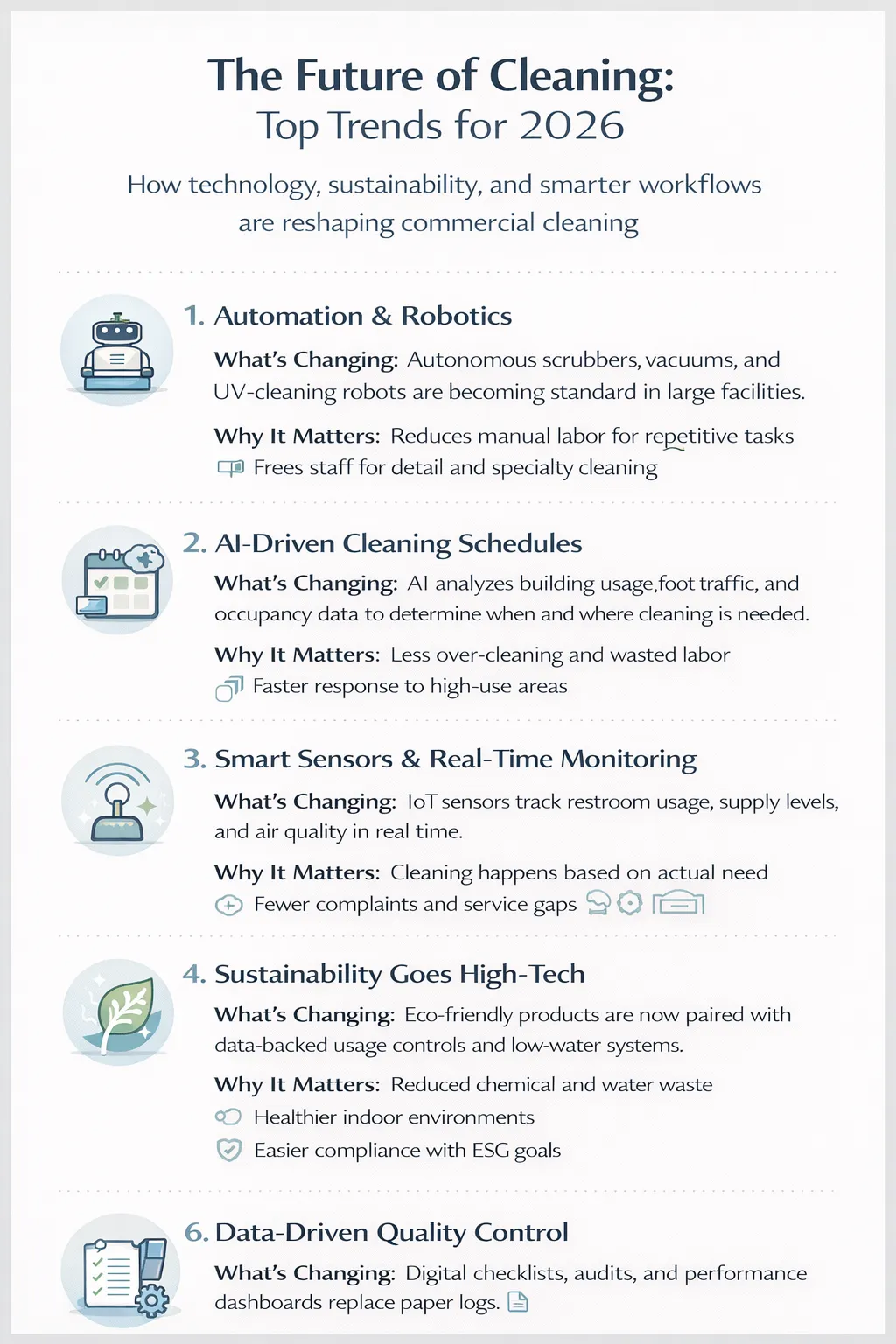
Smart cleaning isn’t “future talk” anymore—it’s quickly becoming the baseline for commercial cleaning programs because it solves three real problems at once: labor shortages, consistency, and proof of performance. Industry leaders are increasingly pointing to robotics, data analytics, and connected equipment as the direction the sector is moving.
More commercial equipment is being built with connectivity and telemetry so facility teams and contractors can monitor:
Usage hours and run time (so maintenance isn’t guesswork)
Battery health, pad/brush wear, and performance issues
Service alerts and diagnostics that reduce downtime
This is part of a broader push toward “responsive cleaning”—moving away from static routines and using data to keep equipment and staffing aligned with real-world demand.
Autonomous floor scrubbers and robotics (especially in large commercial facilities)
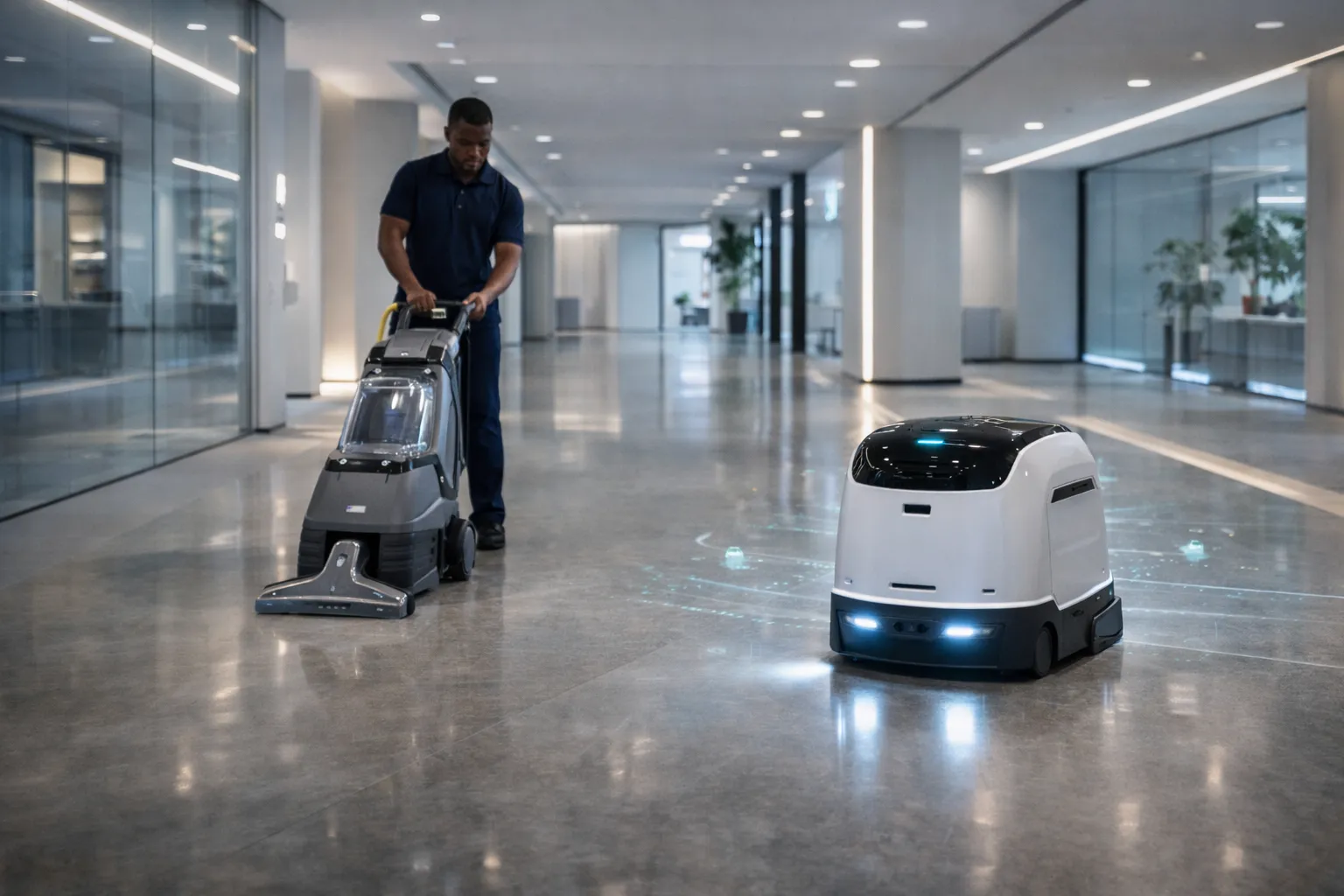
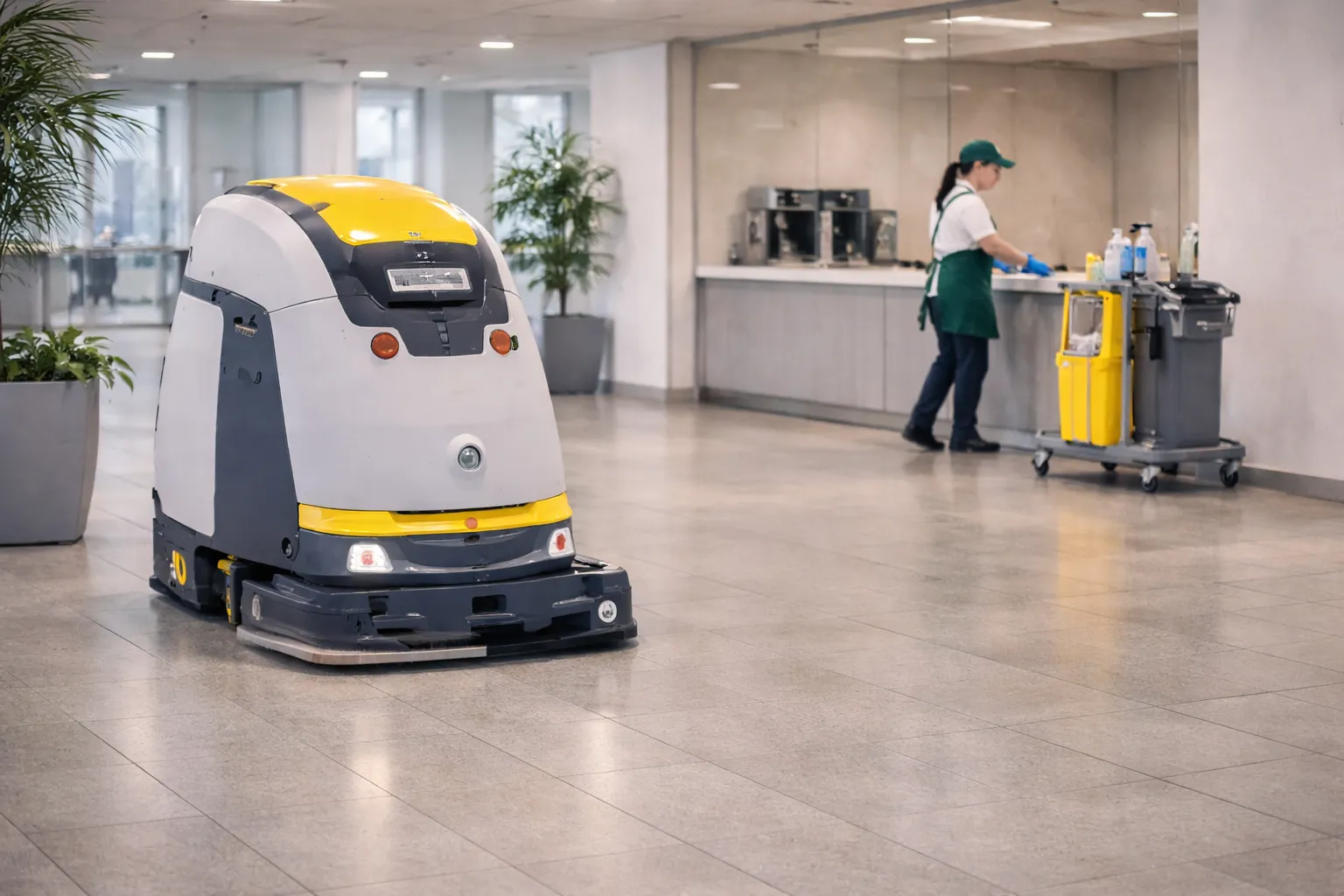
Autonomous equipment is expanding beyond novelty and into practical deployment—especially for large, repeatable floor areas like retail, warehouses, healthcare corridors, and big office lobbies.
For example, commercial autonomous scrubbers like Tennant’s robotic floor scrubber are designed to operate safely around people and obstacles, handling routine floor work so staff can focus on detail tasks and high-touch areas.
Sustainability has shifted from a “nice-to-have” to a business expectation. In 2026, eco-friendly cleaning isn’t just about brand image—it’s about regulatory pressure, employee expectations, and long-term cost control.
Biodegradable and plant-based products become standard
Traditional chemical-heavy cleaners are steadily being replaced by plant-based, biodegradable formulations that reduce environmental impact without sacrificing performance. Many of these products now meet the same disinfecting standards as conventional cleaners, making the switch easier for commercial environments.
Organizations increasingly seek third-party certifications to validate sustainability claims and meet ESG reporting requirements. Common certifications include:
Green Seal
ISO 14001 (Environmental Management Systems)
LEED credits tied to green cleaning practices
These certifications help businesses demonstrate accountability to stakeholders, employees, and clients.
3. Data-Driven Cleaning Strategies
Cleaning is no longer guided solely by checklists and fixed schedules. In 2026, data is shaping how, when, and where cleaning happens—leading to better hygiene outcomes and reduced waste.
Real-time cleanliness monitoring
Sensors and connected systems now help measure:
Occupancy levels
Touchpoint usage
Supply consumption
This allows cleaning teams to respond dynamically instead of relying on assumptions.
Modern smart buildings increasingly integrate HVAC, access control, occupancy sensors, and cleaning systems into a single ecosystem. The result:
Less wasted labor
Reduced chemical and water use
More consistent hygiene standards
Cleaning becomes part of a broader facility optimization strategy, not a standalone service.
4. Increased Focus on Health & Hygiene
Even years after the height of the pandemic, health and hygiene remain central to how workplaces, facilities, and service providers operate. In 2026, “visibly clean” is no longer enough—clean must also mean hygienic and verifiable.
Touchless and antimicrobial technologies become standard
To reduce cross-contamination, many facilities now expect:
Touchless soap, sanitizer, and towel dispensers
UV-C sterilization for high-risk areas and equipment
Antimicrobial surface coatings on frequently touched materials
These technologies reduce reliance on constant manual intervention while supporting stronger infection control outcomes.
Organizations are increasingly aligning cleaning procedures with global health and safety standards, especially in offices, healthcare-adjacent facilities, and high-density environments.
Indoor air quality (IAQ) becomes part of cleaning routines
Cleaning is expanding beyond surfaces. In 2026, indoor air quality monitoring is increasingly integrated into hygiene strategies to support employee health and productivity.
Standard cleaning packages are giving way to flexible, needs-based service models. In 2026, both businesses and consumers expect cleaning services to adapt to how spaces are actually used.
AI-driven service matching
AI-based platforms are increasingly used to:
Match clients with cleaners trained for specific environments
Adjust service scope based on space type, risk level, or occupancy
Improve consistency and satisfaction through better alignment
This personalization improves outcomes without increasing overhead.
Subscription-based and modular cleaning models
Subscription-style services are gaining popularity because they offer:
Predictable costs
Flexible frequency adjustments
Easier scaling during busy or quiet periods
Rather than fixed contracts, clients can add or remove services as needs change.
Growth of niche cleaning markets
Demand is rising for specialized services such as:
Post-construction cleaning
Eco-conscious residential and commercial cleaning
High-risk or compliance-driven cleaning environments
These niches reward expertise and specialization rather than generic offerings.
6. Training and Upskilling for Cleaning Staff
As cleaning becomes more technical and outcome-driven, the skills required are evolving rapidly. In 2026, professional cleaning is increasingly viewed as a trained, credentialed discipline, not just manual labor.
Expanded training requirements
Modern training programs now cover:
Operation of smart and autonomous equipment
Eco-friendly chemical handling and standards
Health, safety, and infection control protocols
Well-trained staff are essential to realizing the benefits of advanced tools and systems.
Industry-recognized certifications gain importance
Certifications help validate competence, improve safety, and build client trust. Common examples include:
ISSA Cleaning Management Institute (CMI) certifications
Digital tools support collaboration and accountability
Mobile apps and digital platforms are increasingly used to:
Assign and track tasks
Log completed work
Standardize procedures across teams
These tools improve transparency, reduce missed tasks, and support consistent service delivery across sites.
Partner With CorpClean for the Future of Cleaning
Staying ahead of cleaning trends requires more than good intentions—it takes experience, innovation, and a commitment to doing things better. CorpCleandelivers forward-thinking commercial cleaning solutions that align with the future of the industry, from sustainable practices and smart technologies to tailored service programs. If you’re ready to improve efficiency, reduce environmental impact, and maintain healthier spaces in 2026 and beyond, CorpClean is the partner to trust.