The Best Non-Toxic Cleaning Methods for Offices
26th November 2025
Across Australia, businesses and their employees are becoming increasingly aware of the hidden costs associated with traditional, chemical-laden cleaning products. The strong, lingering scents and potential for skin and respiratory irritation are clear indicators that "clean" doesn't always equate to "healthy." There's a significant shift occurring, moving beyond just visible cleanliness to truly prioritise healthy indoor environments.
This growing consciousness has propelled non-toxic cleaning methods to the forefront as the superior alternative. By eliminating harsh chemicals, these methods offer profound benefits for both human health and the unique Australian environment. Implementing the best non-toxic cleaning methods for offices, often delivered by specialised commercial cleaning services Australia, is a crucial step for Australian businesses to safeguard employee health, significantly reduce environmental impact, and demonstrate genuine corporate social responsibility.
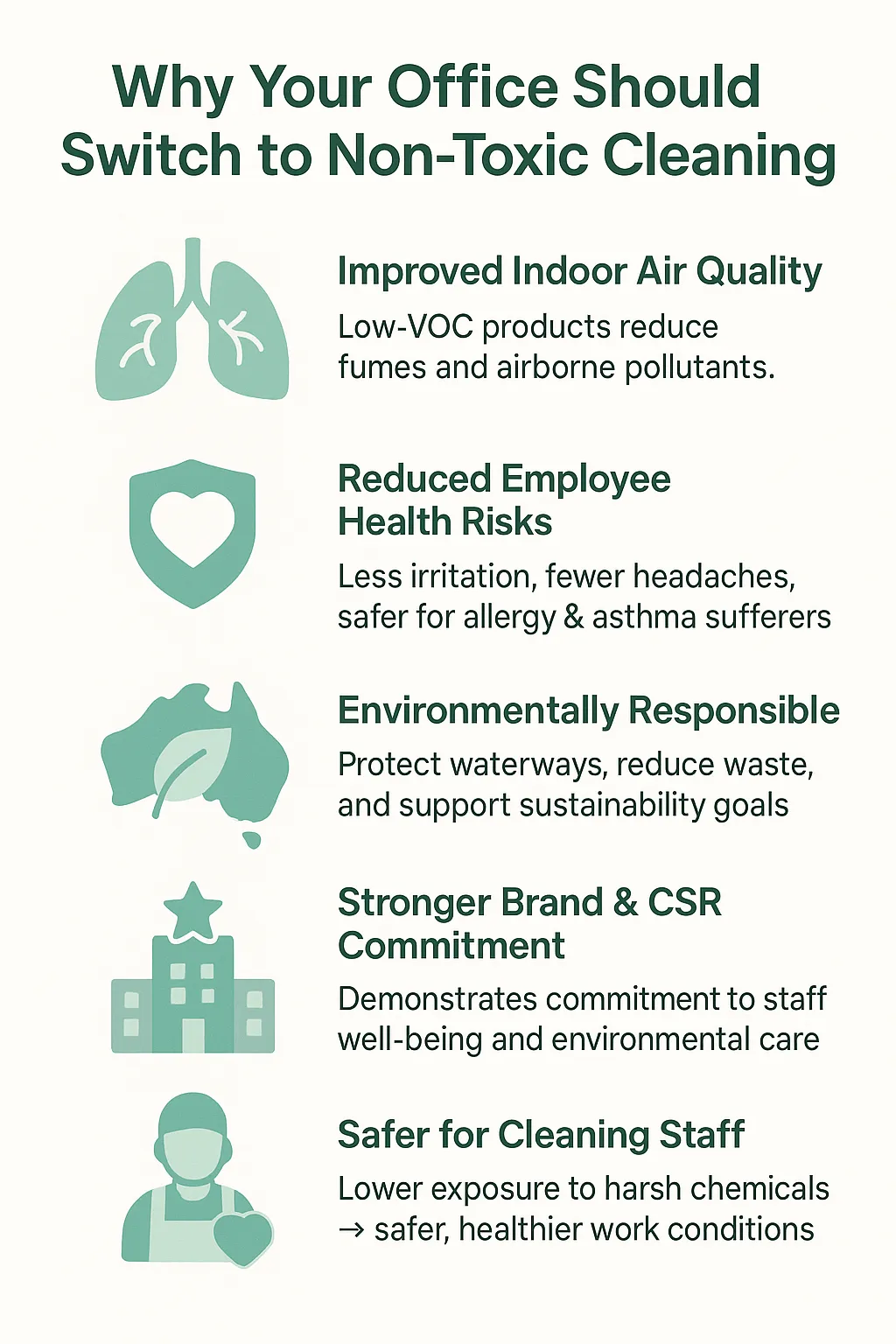
Why Choose Non-Toxic Cleaning for Your Australian Office?
Opting for non-toxic cleaning methods in your Australian office isn't just a trend; it's a strategic decision that offers substantial benefits for your people, your planet, and your business.
Improved Indoor Air Quality (IAQ):
- Traditional cleaning products often release Volatile Organic Compounds (VOCs) and other hazardous fumes into the air. These airborne pollutants contribute to "sick building syndrome" and respiratory issues.
- Non-toxic methods significantly reduce these airborne pollutants, leading to fresher, healthier air for Australian workers. This is crucial as Australians spend a significant amount of their time indoors. Learn more about the impact of VOCs on indoor air quality in Australia.
Reduced Health Risks for Employees:
- Direct exposure to harsh chemicals from conventional cleaners can cause immediate issues like skin and eye irritation, headaches, and dizziness, as well as contribute to long-term respiratory problems. Healthdirect provides information on irritation from inhaled substances.
- Non-toxic cleaning drastically reduces these risks, creating a safer working environment for everyone, particularly those with allergies, asthma, or chemical sensitivities, which are prevalent in Australia.
Environmental Stewardship:
- Non-toxic products minimise harmful runoff into Australian waterways, protecting our unique aquatic ecosystems. The Department of Climate Change, Energy, the Environment and Water provides information on chemicals management in Australia.
- These methods often involve less waste (e.g., concentrated formulas, reusable materials) and contribute to a lower overall environmental footprint, aligning with Australia's broader environmental goals.
Enhanced Professional Image:
- A commitment to non-toxic cleaning aligns with modern Australian business values of sustainability and employee well-being.
- This commitment enhances your brand's reputation, making your business more appealing to environmentally and socially conscious clients, partners, and the public. Discover more about Corporate Social Responsibility (CSR) in Australian businesses.
Safety for Cleaning Staff:
- Cleaning professionals are most consistently exposed to cleaning chemicals. Transitioning to non-toxic methods drastically improves their immediate safety and long-term health outcomes, demonstrating your business's care for all its workers. WorkSafe Queensland offers insights into safe cleaning practices.
The Best Non-Toxic Cleaning Methods and Products for Australian Offices
Creating a truly healthy and environmentally responsible office environment in Australia requires a combination of smart product choices and effective cleaning techniques. By adopting non-toxic cleaning methods, businesses can reduce chemical exposure, improve indoor air quality, protect employees with sensitivities, and demonstrate real commitment to sustainability.
Natural & DIY Solutions (for Minor, In-House Cleaning)
For small, everyday cleaning tasks, simple natural ingredients can be surprisingly effective while eliminating the harshness of synthetic chemicals:
- White Vinegar:
Acts as a disinfectant, deodoriser, and descaler. Perfect for office kitchens, microwave interiors, stainless steel, and glass partitions.
Tip: Mix with water in a 1:1 spray bottle for an easy surface cleaner.
Caution: Avoid natural stone like marble and granite due to potential etching. - Baking Soda:
A gentle abrasive for scrubbing sinks, tea-stained mugs, grout, and soap scum. Excellent for deodorising carpets, fridges, and rubbish bins.
Tip: Pair with vinegar for a foaming deep-cleaning effect. - Lemon Juice:
Naturally antibacterial and excellent for cutting through grease. Leaves a clean, citrus scent ideal for shared spaces like lunchrooms.
Tip: Use to freshen microwaves—heat a bowl of lemon water for 1 minute, then wipe clean. - Castile Soap (Plant-Based):
A versatile, biodegradable soap for cleaning surfaces, tiles, and floors. Gentle but effective for daily maintenance. - Hydrogen Peroxide (3%):
A safe, non-toxic disinfectant that breaks down into water and oxygen. Ideal for sanitising desks, handles, switches, and shared equipment. - Essential Oils (Tea Tree, Eucalyptus, Lemon):
Offer natural antibacterial, antifungal, and deodorising properties. Commonly used in Australia due to eucalyptus’ effectiveness.
Important: Always dilute properly and avoid direct contact with sensitive surfaces.
These DIY solutions are perfect for light-touch cleaning but work best as part of a broader routine supported by professional-grade methods for thorough sanitation.
Certified Eco-Friendly Commercial Products
For busy offices that require consistent, high-performance cleaning, certified commercial products provide a reliable, environmentally responsible alternative to harsh chemicals:
- Choose trusted Australian brands such as:
- Koala Eco – plant-based, biodegradable formulas with essential oils
- SimplyClean – low-tox, fragrance-sensitive options
- Koh – minimalist, multipurpose system with refillable packs
- Look for independent certifications such as GECA (Good Environmental Choice Australia), which ensures products meet strict safety, health, and environmental criteria. GECA-certified products reduce exposure to harmful chemicals and protect office air quality.
- Prioritise non-toxic attributes including:
- Biodegradable formulas
- Phosphate-free and chlorine-free
- Low-VOC (Volatile Organic Compounds) to reduce respiratory irritation
- Refillable or concentrated packaging to minimise waste
Using these products ensures your office remains both clean and safe—especially important for employees with allergies, asthma, or chemical sensitivities.
Tip: Pair certified eco-friendly products with a structured daily cleaning checklist to ensure consistency and transparency.
Advanced Non-Chemical Technologies
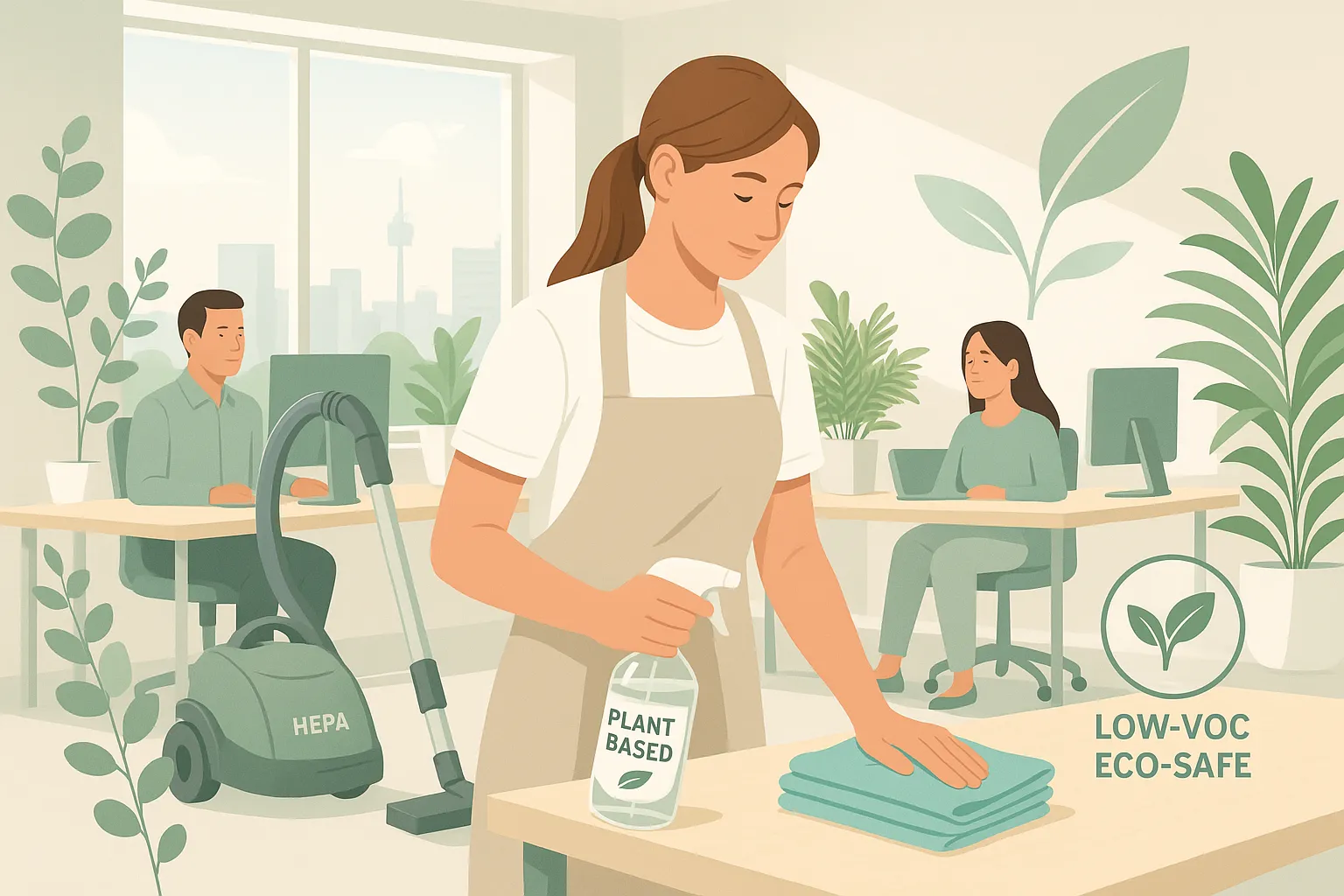
Modern cleaning technology allows Australian offices to achieve high levels of hygiene without relying on harsh chemicals:
- Microfibre Cloths: Trap dirt, dust, and microbes using only water, reducing or eliminating the need for chemical cleaners. Microscopic fibres make them far more effective than standard cloths.
- Steam Cleaning: Uses high-temperature steam to sanitise floors, upholstery, tiles, and other surfaces. Eliminates germs and grime without chemicals, ideal for high-traffic areas.
- Electrolysed Water (eWater): On-site generation systems convert water and salt into a powerful, non-toxic disinfectant. eWater is effective against bacteria and viruses, providing a chemical-free sanitisation option.
- HEPA Filter Vacuums: Essential for trapping microscopic dust, allergens, and airborne particles. HEPA vacuums improve indoor air quality by preventing recirculation of harmful particles.
These technologies are particularly valuable in larger offices or spaces with high occupancy, where reducing chemical exposure is a priority.
Waste Reduction Practices
- Use concentrated formulas and refillable dispensers to minimise plastic waste and reduce the overall environmental footprint of your cleaning program.
- Encourage reusable items, such as durable microfibre cloths, mop heads, and pads, over disposable alternatives. This approach reduces landfill waste and aligns with sustainability initiatives.
- Choose cleaning companies that actively demonstrate circular economy practices, such as returning used containers for refilling or recycling equipment at end-of-life.
Tip: Pairing non-toxic cleaning products with waste reduction practices ensures your office cleaning is both health-conscious and environmentally responsible.
By combining these natural solutions, certified commercial products, advanced technologies, and waste-conscious practices, Australian offices can create a safer, healthier, and more sustainable workplace.
Implementing Non-Toxic Cleaning in Your Australian Office
Transitioning to a non-toxic cleaning regimen requires a systematic, well-planned approach to ensure long-term effectiveness, health benefits, and consistency. By taking intentional steps, Australian businesses can create a cleaner, safer, and more environmentally responsible workplace.
Assess Current Practices
Begin by conducting a comprehensive audit of your office’s current cleaning products, tools, and processes.
- Identify products containing harsh chemicals, artificial fragrances, high-VOC content, chlorine, or ammonia.
- Evaluate where chemical exposure is most concentrated—common hotspots include bathrooms, kitchens, carpet cleaning, and sanitisation of high-touch surfaces.
- Determine which tasks can easily transition to non-toxic alternatives (e.g., switching to microfibre cloths, using low-VOC sprays).
This baseline assessment allows you to implement changes strategically rather than all at once, reducing disruption and costs.
Partner with a Sustainable Cleaning Company
Collaborating with a professional cleaning service that specialises in green, non-toxic, and certified eco-friendly cleaning methods is crucial for consistent results.
- Look for Australian companies with proven credentials, relevant experience, and third-party certifications (e.g., GECA, ISO 14001).
- Providers like CorpClean, if they hold appropriate qualifications in non-toxic cleaning, can offer:
- Expert staff trained in chemical-free cleaning methods
- Access to certified non-toxic products
- HEPA filter vacuums, steam cleaners, and low-VOC equipment
- Compliance with WHS requirements and environmental standards
A professional partner ensures the transition is thorough, seamless, and aligned with your sustainability goals.
Educate Employees
Staff education is essential to maintaining the effectiveness of your non-toxic cleaning strategy.
- Explain the benefits: fewer irritants, better indoor air quality, reduced chemical exposure, and overall health improvements.
- Train employees on appropriate use of any in-house products—such as how to dilute natural cleaners, when to use microfibre cloths, or how to dispose of waste responsibly.
- Encourage simple daily habits like clearing desks, wiping spills immediately, and minimising clutter.
When employees understand the “why” and the “how,” they actively contribute to a cleaner and healthier workplace.
Provide Accessible Supplies
Make non-toxic cleaning effortless by ensuring eco-friendly supplies are easily accessible:
- Place non-toxic sprays, refillable dispensers, microfibre cloths, and natural wipes in communal areas.
- Keep natural solutions (like vinegar sprays or plant-based cleaners) available for quick spill management.
- Use labelled cleaning stations so staff know exactly where to find products and how to return them.
Convenience empowers employees to take immediate action, reducing dirt, bacteria, and odours before they escalate.
Maintain Equipment
To sustain the benefits of non-toxic cleaning, regular maintenance of eco-friendly cleaning tools is essential:
- Wash microfibre cloths properly to retain their dirt-trapping fibres.
- Replace mop heads frequently to prevent bacteria buildup.
- Change HEPA filters in vacuums as recommended to maintain air filtration performance.
- Keep steam cleaners descaled and serviced for consistent sanitisation.
Well-maintained equipment ensures maximum cleaning efficiency and supports indoor air quality.
HVAC System Maintenance
Air quality plays a major role in overall office health—especially in Australia’s diverse climates, where humidity, heat, and dust levels vary.
- Schedule regular inspection and cleaning of air conditioning units, ducts, and ventilation systems.
- Address any mould, moisture, or dust issues promptly, as these can undermine non-toxic cleaning efforts.
- Ensure filters are replaced or cleaned regularly to maintain healthy air circulation.
Proper HVAC maintenance works hand-in-hand with non-toxic cleaning by reducing airborne pollutants and improving indoor air quality.
(For more guidance, NCH Australia offers resources on HVAC upkeep and IAQ improvement.)
Conclusion: A Clean Office, Without Compromise, for Australia's Future
Adopting non-toxic cleaning methods is a powerful statement of commitment to the health of your employees and the well-being of the planet. It's about achieving a truly clean office, without compromise.
By embracing these methods, Australian businesses can enjoy the multifaceted benefits: healthier employees, a safer environment, a stronger brand image, and a demonstrable commitment to sustainability. "Clean" doesn't have to mean "chemical-laden." The best non-toxic methods are not only highly effective but also superior for long-term health and environmental responsibility.
It's time for Australian businesses to proactively transition to non-toxic cleaning. By investing in the health of their people and the planet, they are building a more sustainable and responsible future for workplaces across the nation.