Create Smart Cleaning Routines for Shared Workspaces
17th December 2025
Shared workspaces—such as hot-desking offices, coworking spaces, and hybrid workplaces—present unique hygiene challenges. With multiple people using the same desks, chairs, meeting rooms, and equipment throughout the day, traditional “once-a-day” cleaning schedules are often not enough to maintain consistent hygiene standards.
Smart cleaning routines move beyond rigid timetables. They focus on risk-based frequency, targeted cleaning, and accountability, ensuring shared spaces stay hygienic without unnecessary effort or cost. Instead of cleaning everything the same way, every day, smart routines prioritize the most-used and highest-risk areas while aligning cleaning schedules with actual workspace usage.
Why Shared Workspaces Need Smarter Cleaning
Unlike fixed desks, shared workspaces experience:
-
Higher surface contact per day: A single desk, chair, keyboard, or meeting table may be used by multiple people within hours. This multiplies the number of hand-to-surface contacts, increasing contamination risk.
-
Increased germ transfer between users: Without proper disinfection between users or peak periods, bacteria and viruses can easily transfer from one person to the next—especially through touchpoints like armrests, desk edges, keyboards, light switches, and shared equipment.
-
Faster wear on furniture and equipment: Frequent use accelerates wear and tear, which can make surfaces harder to clean effectively. Cracks, peeling surfaces, and worn upholstery trap dirt and microbes, reducing hygiene performance over time.
-
Greater expectations for visible cleanliness: In coworking and hybrid environments, cleanliness is part of the user experience. Employees, clients, and visitors expect desks, meeting rooms, and common areas to look freshly cleaned—especially in a post-pandemic workplace culture.
The Risks of Traditional Cleaning Schedules
Relying on a single daily cleaning cycle creates gaps in protection:
-
High-touch areas can become re-contaminated within minutes of cleaning
-
Peak usage periods (e.g., mornings, lunch hours, late afternoons) go unsupported
-
Cleaning teams spend time on low-risk areas while missing critical touchpoints
-
Accountability becomes unclear when no one owns between-use hygiene
Without structured routines, shared workspaces can quickly become hygiene weak points—undermining employee confidence, increasing illness-related absences, and damaging the professional image of the workspace.
What Makes a “Smart” Cleaning Routine?
A “smart” cleaning routine isn’t about cleaning more—it’s about cleaning where, when, and how it matters most. Instead of treating every area the same, smart routines are designed around real usage patterns, risk levels, and human behavior, not just square footage or floor plans.
In modern offices, this approach improves hygiene, reduces wasted labor, and delivers visibly better results without increasing cleaning hours.
Risk-Based Cleaning Frequency
Not all areas pose the same hygiene risk, and cleaning schedules should reflect that reality.
Smart cleaning routines prioritize high-contact, high-traffic surfaces:
-
High-risk, high-touch items such as desks, chairs, keyboards, door handles, and meeting tables are cleaned multiple times per day, especially in shared or hot-desking environments.
-
Moderate-risk zones like break rooms, printer stations, lockers, and copy areas are cleaned on structured, scheduled intervals to prevent buildup without over-servicing.
-
Low-risk or low-use spaces—storage rooms, rarely used offices, or archive areas—are cleaned less frequently, freeing time and budget for higher-impact work.
This risk-based approach ensures cleaning resources are focused where they reduce exposure and complaints the most.
Targeted Touchpoint Cleaning
Rather than performing full-room cleans every time, smart routines zero in on critical contact points—the surfaces people touch repeatedly throughout the day.
Typical focus areas include:
-
Desk surfaces, edges, and drawer handles
-
Chair armrests and backs
-
Keyboards, mice, and phone handsets
-
Light switches, elevator buttons, and door handles
By targeting these touchpoints, cleaning teams deliver measurable hygiene improvements in a fraction of the time required for full-area cleaning—without sacrificing effectiveness.
Cleaning Aligned With Occupancy Patterns
Timing matters just as much as frequency.
Smart cleaning schedules align with how and when spaces are actually used:
-
Midday touchpoint cleaning after peak desk usage reduces contamination buildup without disrupting work.
-
Rapid-response cleaning between meetings keeps shared rooms ready for the next group.
-
Additional cleaning support during high-attendance days, training sessions, or events prevents hygiene lapses before they occur.
This adaptive approach keeps spaces consistently clean during busy periods instead of only looking clean first thing in the morning.
Clear Accountability and Ownership
Even the best cleaning plan fails without clarity around responsibility.
Smart routines define:
-
Who cleans what (cleaning contractors vs. facilities teams vs. users)
-
When tasks are completed using simple checklists or digital logs
-
Visual confirmation, such as “cleaned at” tags for desks or meeting rooms
Clear accountability reduces missed tasks, improves consistency, and gives staff confidence that spaces are being maintained properly—not just occasionally refreshed.
Why Smart Cleaning Works Better
Smart cleaning routines deliver:
-
Better hygiene outcomes
-
More efficient use of cleaning labor
-
Fewer complaints and re-cleans
-
Higher confidence in shared workspaces
By focusing on risk, touchpoints, timing, and accountability, smart cleaning turns routine maintenance into a strategic operational advantage rather than a reactive chore.
Core Principles of Smart Cleaning Routines
Smart cleaning routines are built on practical, usage-driven principles. Instead of applying the same cleaning standard to every area, they focus resources where hygiene risk and user impact are highest.
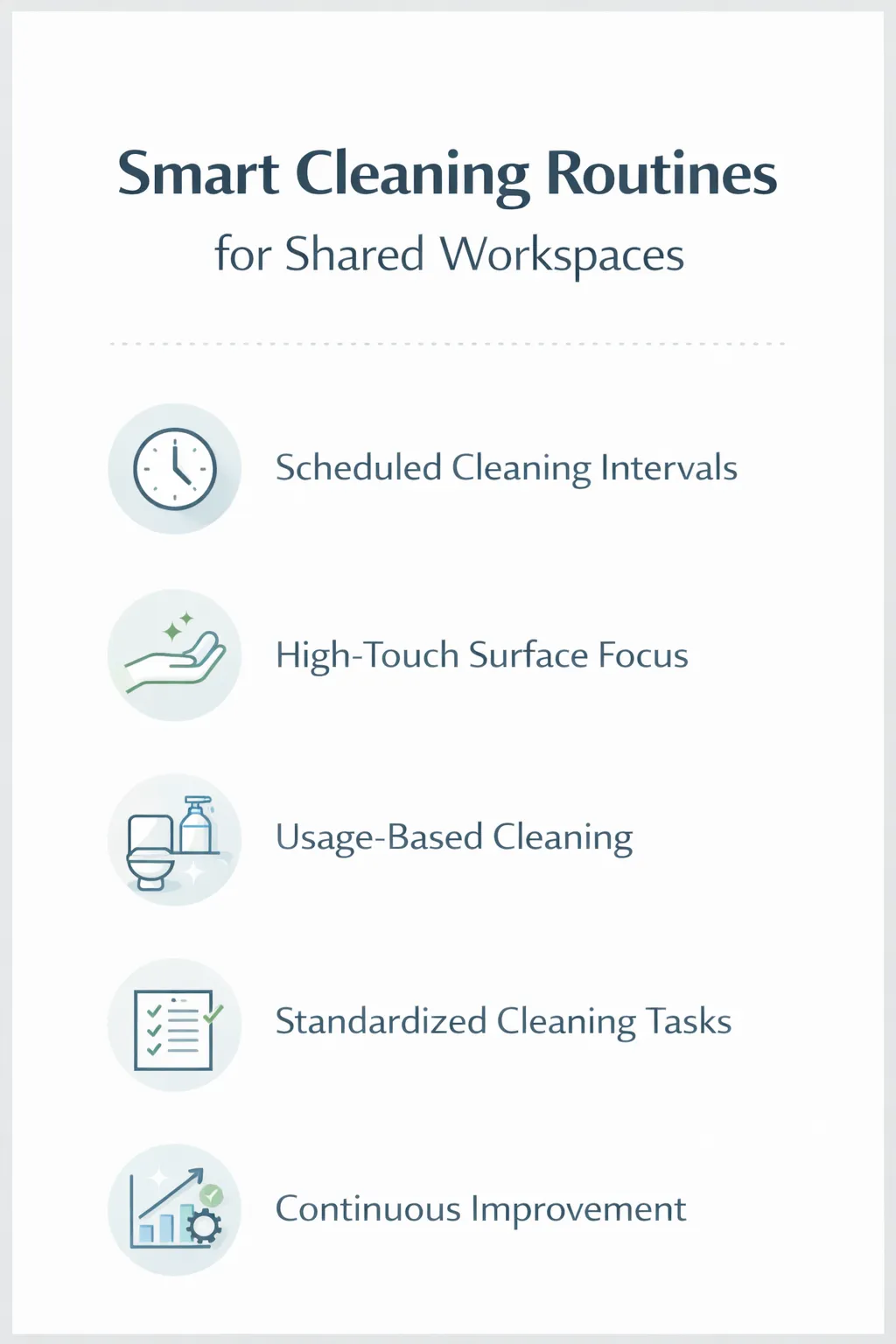
1. Prioritize High-Touch Surfaces
Not every surface needs the same level of attention. In shared workspaces, the greatest hygiene risks come from surfaces that are touched frequently by multiple people throughout the day.
Smart routines focus on:
-
Desk surfaces and edges
-
Chair arms and backs
-
Keyboards and mice
-
Phones and touchscreens
-
Drawer handles
-
Light switches and door handles
-
Shared equipment (printers, scanners, AV controls)
These touchpoints act as “germ highways,” quickly transferring bacteria and viruses between users. If they are not cleaned regularly, even a spotless-looking office can be hygienically unsafe.
Best practice:
High-touch surfaces should be disinfected at least daily and more often in high-occupancy offices, hot-desking environments, or peak usage periods. In busy shared spaces, multiple touchpoint cleanings per day may be necessary.
Why it matters:
Targeting high-touch surfaces delivers the biggest hygiene impact with the least effort. Instead of wasting time on low-risk areas, cleaning teams focus on the places that actually affect health and user confidence.
2. Match Cleaning Frequency to Usage
A fixed, one-size-fits-all schedule doesn’t reflect how shared workspaces are really used. Smart cleaning routines adjust frequency based on actual activity levels.
Cleaning schedules should reflect:
-
Number of users per desk or space
-
Length of occupancy per user
-
Shift patterns (day, evening, rotating teams)
-
Peak usage times (mornings, lunch hours, late afternoons)
-
Special events or high-attendance days
For example:
-
Hot desks used by multiple employees per day
→ Clean between uses or multiple times daily, especially touchpoints like desks, chairs, keyboards, and phones. -
Meeting rooms with frequent turnover
→ Quick touchpoint cleaning after each meeting, with a deeper clean once daily. -
Occasional shared spaces (e.g., training rooms)
→ Daily cleaning may be sufficient, with extra support on high-use days. -
Low-use areas or overflow desks
→ Reduced frequency to avoid wasted labor.
Why it matters:
Aligning cleaning frequency with usage prevents both over-cleaning and under-cleaning. It ensures hygiene standards stay high in busy areas without inflating costs by cleaning rarely used spaces too often.
3. Use Zone-Based Cleaning
Zone-based cleaning brings structure and efficiency to shared workspace hygiene. Instead of treating the entire office as one uniform area, spaces are divided into functional zones based on how they’re used.
Typical zones include:
-
Desk zones
Hot desks, workstations, and fixed desks -
Meeting zones
Conference rooms, huddle spaces, training rooms -
Collaboration zones
Breakout areas, lounges, informal seating areas -
Support zones
Printers, lockers, mail areas, pantries, storage rooms
Each zone receives a customized cleaning frequency and method based on its risk level and usage intensity.
How zone-based cleaning improves results:
-
High-risk zones (hot desks, meeting rooms) get more frequent touchpoint cleaning
-
Moderate-risk zones (collaboration areas, pantries) follow scheduled daily or twice-daily routines
-
Low-risk zones (storage rooms, rarely used areas) are cleaned less often
Why it matters:
Zone-based cleaning creates consistency and accountability. Cleaning teams know exactly what needs to be cleaned, how often, and to what standard in each area—reducing missed touchpoints and uneven hygiene levels.
Smart Daily Cleaning Routine (Shared Workspaces)
A smart daily routine focuses on high-impact tasks that control germ buildup and maintain visible cleanliness in shared areas.
Daily touchpoint and hygiene tasks:
-
Disinfect desk surfaces and chair arms
-
Wipe phones, keyboards, and mice
-
Clean shared equipment (printers, scanners, AV controls)
-
Empty waste and recycling bins
-
Spot-clean visible spills or stains
-
Wipe door handles, light switches, and elevator buttons
-
Tidy and reset hot desks and meeting tables
Outcome:
This routine reduces daily germ buildup, prevents cross-contamination between users, and reassures employees that shared spaces are being actively maintained.
Weekly Deep Cleaning Routine
Weekly routines go beyond touchpoints and address areas that accumulate dirt, dust, and bacteria over time.
Weekly deep-clean tasks:
-
Deep clean desks, storage units, and desk dividers
-
Vacuum or mop floors thoroughly, including under desks and chairs
-
Clean partition panels, screens, and whiteboards
-
Sanitize shared lockers and coat racks
-
Dust horizontal surfaces (shelves, window sills, ledges)
-
Clean break areas and kitchenette surfaces
Outcome:
Weekly deep cleaning addresses buildup that daily cleaning may miss, helping maintain overall hygiene standards and prolong the life of furniture and flooring.
Monthly and Quarterly Smart Cleaning Tasks
Longer-term routines keep the workspace hygienic, functional, and compliant with health and safety standards.
Monthly Tasks
-
Upholstery spot cleaning (chairs, sofas, meeting room seating)
-
Air vent and diffuser dusting
-
High-level dusting (tops of cabinets, light fittings)
-
Cleaning supply review (stock levels, product effectiveness, safety compliance)
-
Inspection of high-touch surfaces for wear or damage
Outcome:
Monthly tasks prevent hidden dust and grime buildup and ensure cleaning resources remain adequate and effective.
Quarterly Tasks
-
Deep carpet cleaning (steam or extraction)
-
Upholstery deep cleaning
-
Hard-floor stripping and resealing (where applicable)
-
Hygiene protocol review and updates
-
Training refreshers for cleaning staff
-
Audit of cleaning logs and compliance records
Outcome:
Quarterly tasks restore deep hygiene, extend asset life, and ensure routines stay aligned with changing workspace usage and regulatory requirements.
Employee Involvement: A Smart Hygiene Multiplier
Smart routines work best when employees actively support hygiene between professional cleaning cycles.
Simple employee hygiene support measures:
-
Provide disinfectant wipes at desks and shared stations
-
Encourage quick wipe-downs after use
-
Post clear hygiene signage in hot-desking and meeting areas
-
Promote clean desk policies
-
Offer hand-sanitizer stations throughout the workspace
Why it works:
This approach supports shared responsibility without shifting cleaning duties entirely to staff. It closes the hygiene gaps between scheduled cleans and reinforces a culture of cleanliness.
Using Technology for Smarter Cleaning
Facilities teams can dramatically improve efficiency by aligning cleaning activity with real-time workspace usage.
Technology-enabled smart cleaning tools:
-
Usage-based cleaning schedules linked to desk bookings or meeting room reservations
-
Cleaning logs or QR-code checklists to confirm completed tasks
-
Occupancy sensors in shared spaces to trigger cleaning after peak use
-
Digital dashboards for cleaning performance tracking
-
Automated alerts for high-use zones
Why it matters:
Technology ensures cleaning happens when and where it’s needed most—reducing wasted labor, improving accountability, and maintaining consistent hygiene standards.
Aligning Smart Routines with Health & Safety Standards
Smart cleaning routines directly support workplace health, safety, and compliance requirements.
They align with:
-
ISO 45001 (risk control and worker health protection)
-
Indoor Air Quality guidelines
-
Workplace hygiene regulations
-
Occupational health and safety standards
Compliance benefits:
-
Documented routines demonstrate due diligence
-
Cleaning logs provide audit trails
-
Regular reviews show continuous improvement
-
Risk-based cleaning supports hazard control plans
Why it matters:
Well-documented smart routines don’t just improve cleanliness—they also strengthen regulatory compliance and protect organizations in the event of inspections, audits, or workplace health incidents.
Smarter Cleaning Routine With CorpClean
A smart cleaning routine works best when it’s designed and supported by professionals who understand how modern workplaces actually function. CorpClean partners with businesses to create flexible, risk-based cleaning programs tailored to real occupancy patterns—not fixed timetables. The result is cleaner shared spaces, healthier employees, and more efficient operations. If you’re ready to move beyond rigid schedules and get more value from your cleaning program, CorpClean can help.