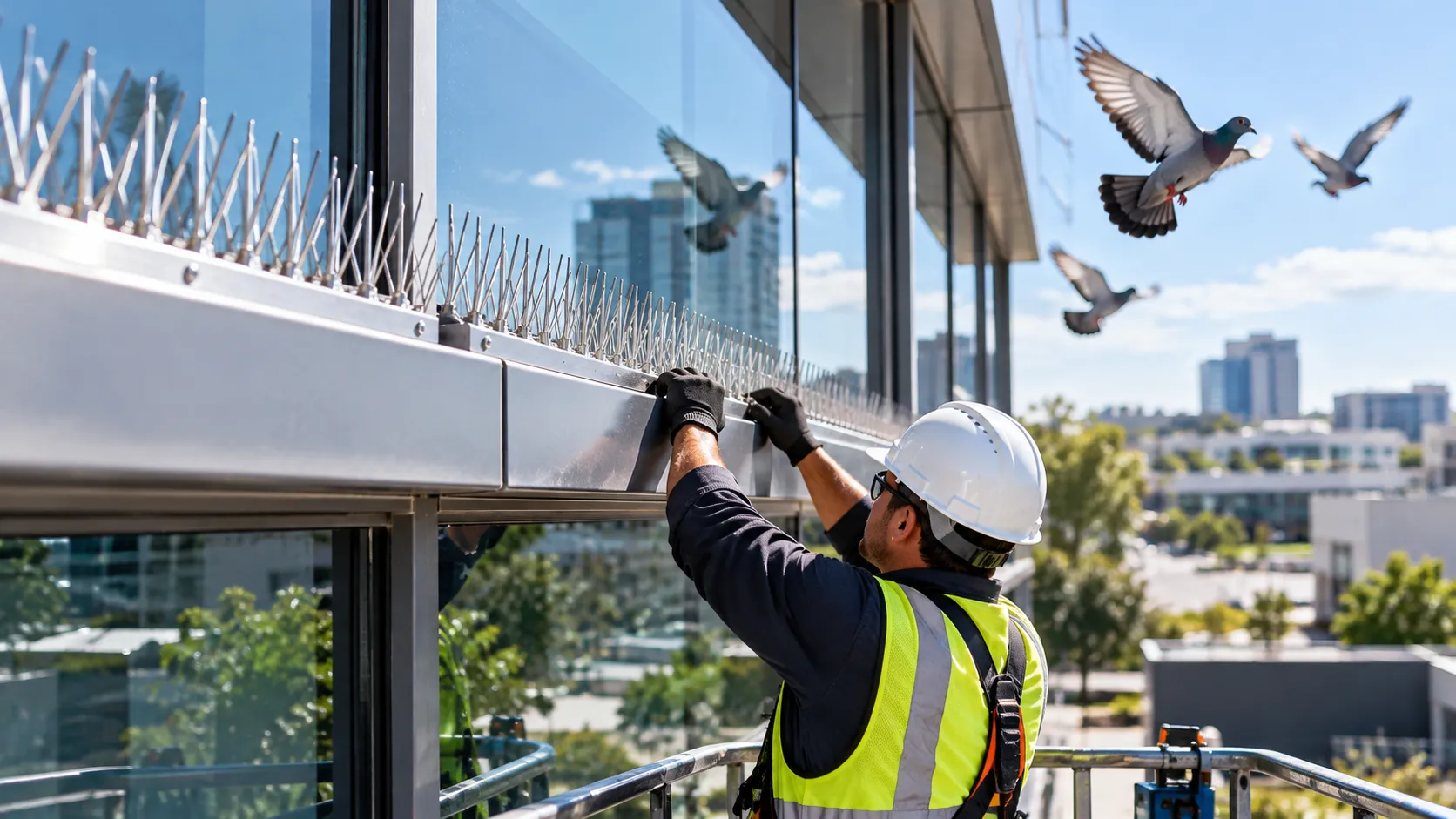
Preventing Bird Damage to Commercial Windows and Building Facades
30th July 2026
Birds are a common sight around commercial buildings, but repeated nesting, roosting and perching can create ongoing maintenance problems. Droppings can stain windows and facade materials, nests can block gutters and drainage points, and persistent bird activity can make entrances and outdoor areas difficult to keep clean.
For offices, retail centres, warehouses, hotels and other commercial properties, prevention is usually more effective than repeatedly cleaning up after birds. A combination of building maintenance, cleaning and appropriate bird deterrents can help reduce damage while keeping the property presentable.
Quick Answer: How Can Businesses Prevent Bird Damage?
Businesses can reduce bird damage by removing food and nesting opportunities, maintaining clean windows and facades, blocking access to common roosting areas and installing suitable bird deterrents where recurring activity occurs.
The right approach depends on the bird species, building design and location of the problem. Ledges, signage, rooflines, awnings, loading areas and recessed sections of the facade are particularly worth monitoring.
Any bird management method should also comply with relevant wildlife protection requirements and avoid harming protected species.
How Birds Can Affect Commercial Buildings
Not every bird visiting a property creates a problem. Issues generally develop when birds repeatedly perch, roost or nest in the same areas.
Common problem areas include:
|
Area |
Common Bird-Related Problem |
|
Windows |
Droppings, streaks and repeated cleaning |
|
Window ledges |
Roosting and accumulation of droppings |
|
Building facades |
Staining and contamination |
|
Signs |
Perching and nesting behind structures |
|
Awnings |
Droppings and nesting material |
|
Gutters |
Nesting material and potential blockages |
|
Rooflines |
Regular roosting activity |
|
Entrances |
Droppings above high-traffic areas |
|
Loading areas |
Birds attracted by food waste and shelter |
|
HVAC areas |
Nesting or roosting around protected equipment spaces |
Identifying where birds spend the most time is an important first step because it allows prevention measures to target the source rather than simply dealing with the mess left behind.
Why Bird Droppings Are a Problem for Commercial Facades
Bird droppings can quickly affect the appearance of windows, cladding, signs, awnings, pathways and other exterior surfaces.
When contamination is left in place, businesses may experience:
- Persistent staining
- Dirty windows and glass
- Increased exterior cleaning requirements
- Unpleasant conditions around entrances
- Contamination of outdoor furniture or equipment
- Slippery areas on some walking surfaces
- Poor presentation for customers and visitors
The longer deposits remain on exterior surfaces, the more difficult some staining may become to remove.
Routine cleaning is therefore an important part of bird management, particularly around high-visibility areas. Scheduled commercial window cleaning services can help businesses maintain glass surfaces affected by environmental residue, including bird droppings, while supporting a cleaner appearance for customers and visitors.
Common Signs of a Bird Problem
Bird activity often becomes noticeable before significant cleaning or maintenance issues develop.
Businesses should watch for:
|
Warning Sign |
What It May Indicate |
|
Birds repeatedly gathering on ledges |
Established perching or roosting location |
|
Droppings beneath one section of the building |
Regular activity directly above |
|
Nesting material |
Birds attempting to establish a nest |
|
Feathers accumulating around an area |
Frequent roosting |
|
Birds entering roof or facade openings |
Potential access to sheltered spaces |
|
Debris in gutters |
Possible nesting activity |
|
Frequent window contamination |
Perching above or close to glazing |
|
Increased bird numbers around bins |
Accessible food sources |
Early intervention can make bird management easier than waiting until a large population regularly uses the building.
Why Commercial Buildings Attract Birds
Commercial buildings can unintentionally provide many of the features birds look for: food, shelter and elevated places to rest.
Ledges and Architectural Features
Window ledges, parapets, signs, beams and decorative facade features can create convenient places for birds to perch.
Deep or sheltered ledges may be particularly attractive because they offer protection from weather and predators.
Food and Waste
Open rubbish bins, food scraps and poorly managed waste areas can encourage birds to remain around a commercial property.
Restaurants, shopping centres, food courts, hotels and hospitality venues may experience increased activity where food is readily available.
Protected Nesting Locations
Roof cavities, awnings, loading docks and gaps around exterior structures can provide sheltered nesting locations.
Once birds establish a successful nesting or roosting site, they may continue returning to the same area.
Water Sources
Standing water, leaking equipment, fountains and poorly draining areas may also attract birds.
Reducing these attractants can be an important part of a broader prevention strategy.
Ways to Prevent Bird Damage to Commercial Buildings
Effective bird management usually involves several measures rather than relying on one solution.
|
Prevention Method |
Primary Purpose |
Suitable Areas |
|
Routine exterior cleaning |
Removes droppings and nesting residue |
Windows, facades and entrances |
|
Waste management |
Reduces food sources |
Bins, loading areas and hospitality sites |
|
Bird spikes |
Discourages landing |
Ledges, signs and rooflines |
|
Bird netting |
Prevents access |
Recesses, courtyards and sheltered areas |
|
Physical barriers |
Blocks entry points |
Roof gaps and facade openings |
|
Bird wire systems |
Discourages perching |
Ledges and architectural features |
|
Building repairs |
Removes potential access |
Gaps, damaged panels and openings |
|
Vegetation management |
Reduces nearby shelter |
Trees and landscaping close to buildings |
The appropriate method should be selected according to the building and the birds involved.
Keep Windows and Facades Clean
Cleaning alone will not prevent birds from returning, but it remains an important part of commercial bird management.
Removing droppings and nesting residue helps keep windows and facades presentable while making it easier for property managers to identify where recurring activity is concentrated.
Regular cleaning can be especially important for:
- Office buildings with large glass facades
- Hotels
- Shopping centres
- Retail storefronts
- Restaurants and cafés
- Healthcare facilities
- Schools
- Warehouses
- Strata and multi-storey properties
Cleaning frequency should reflect the severity and location of the bird activity.
For taller properties, high-rise window cleaning requires specialist access planning, trained personnel and suitable safety equipment. A structured cleaning program can help building managers address contaminated glazing without placing general maintenance staff at unnecessary risk.
Reduce Available Food Sources
Food is one of the strongest reasons birds remain around commercial properties.
Businesses can reduce attractants by:
- Keeping rubbish bins closed
- Cleaning waste storage areas regularly
- Removing food scraps from outdoor areas
- Cleaning outdoor dining spaces promptly
- Avoiding overflowing bins
- Managing spills around loading areas
- Reviewing waste collection frequency where required
These measures are particularly important for food service and hospitality properties.
For offices and shared commercial premises, regular office cleaning services can also support waste management and the cleanliness of kitchens, breakout spaces and other communal areas. This helps reduce accessible food residue as part of routine workplace maintenance.
Block Access to Nesting Areas
Gaps, cavities and sheltered spaces should be inspected if birds repeatedly enter the same part of the building.
Potential entry areas can include:
- Roof openings
- Damaged facade panels
- Spaces behind signs
- Openings beneath awnings
- Service penetrations
- Loading dock structures
- Roof plant areas
Suitable barriers may prevent birds from accessing these locations.
However, businesses should check for active nests, eggs or young birds before closing an opening. Wildlife regulations may restrict when and how certain nests or species can be disturbed.
Use Bird Deterrents Where Appropriate
Physical deterrents can make preferred perching and roosting areas less accessible or attractive.
Common commercial options include bird spikes, netting and wire systems.
The appropriate system depends on the architecture of the building and the type of bird activity.
A deterrent should solve the specific problem without simply shifting birds from one ledge to another nearby location.
Professional assessment can therefore be useful for properties experiencing persistent or widespread bird activity. Where installation or nest management is required, businesses should consult an appropriately qualified bird control specialist.
Protect Commercial Windows From Bird Strikes
Bird damage around commercial buildings is not limited to droppings and nesting.
Large areas of glass can sometimes reflect the sky, vegetation or surrounding buildings. Birds may not recognise the glass as a solid barrier, creating a collision risk.
Depending on the building and severity of the problem, businesses can investigate window treatments or visual markers designed to make glazing more apparent to birds.
The appropriate solution depends on factors including glass type, reflections, surrounding vegetation and building design.
Clean Bird Droppings Safely
Large accumulations of bird droppings should not simply be brushed or swept away without appropriate precautions.
Cleaning methods should account for:
- Amount of contamination
- Location and accessibility
- Surface material
- Required personal protective equipment
- Potential exposure to contaminated dust
- Safe disposal
- Protection of people using nearby areas
For significant contamination or difficult-to-access areas, professional cleaning may be more appropriate than assigning the work to general staff.
Warehouses, factories and loading facilities may also need cleaning procedures that account for machinery, vehicle movements and operational risks. Professional industrial cleaning services can support general site hygiene, dust control and waste management, while substantial bird contamination may require additional specialist assessment and precautions.
Create a Preventive Bird Management Plan
Properties with recurring problems can benefit from a structured approach.
|
Step |
Action |
|
1. Inspect |
Identify where birds perch, nest and enter the building |
|
2. Identify attractants |
Check food, water, shelter and waste sources |
|
3. Clean |
Remove existing droppings and contamination safely |
|
4. Repair |
Close unnecessary openings and repair damaged areas |
|
5. Deter |
Install appropriate non-harmful deterrents where needed |
|
6. Monitor |
Check whether birds relocate to another part of the building |
|
7. Maintain |
Continue cleaning, waste management and building inspections |
Monitoring is particularly important after deterrents are installed. Birds displaced from one location may attempt to establish another nearby roosting area.
Which Commercial Properties May Need Bird Control?
Bird problems can occur across many types of commercial and institutional properties.
|
Property Type |
Common Concerns |
|
Office buildings |
Window ledges, entrances and glass facades |
|
Shopping centres |
Food waste, signs and sheltered areas |
|
Restaurants |
Food sources, bins and outdoor dining |
|
Hotels |
Balconies, facades and guest areas |
|
Warehouses |
Rooflines, loading docks and structural ledges |
|
Factories |
Large roof areas and sheltered structures |
|
Schools |
Roofs, eating areas and covered walkways |
|
Healthcare facilities |
Hygiene and high-traffic entrance areas |
|
Multi-storey buildings |
Facades, balconies and inaccessible ledges |
Properties with recurring bird activity should consider prevention as part of normal exterior building maintenance.
Cleaning vs Bird Prevention
Cleaning and bird deterrence serve different purposes, and businesses experiencing persistent problems may require both.
|
Exterior Cleaning |
Bird Prevention |
|
Removes existing droppings |
Reduces future perching or nesting |
|
Restores the appearance of surfaces |
Targets recurring bird behaviour |
|
Helps identify high-activity areas |
Blocks or modifies preferred locations |
|
May need to be repeated regularly |
Can reduce ongoing cleaning requirements |
|
Deals with existing contamination |
Addresses the source of recurring contamination |
Combining both approaches can be more effective than repeatedly cleaning a building without addressing why birds keep returning.
When Should You Call a Professional?
Professional assistance may be appropriate when:
- Bird activity occurs at height
- Large amounts of droppings have accumulated
- Birds repeatedly return after cleaning
- Nests are located inside or around building structures
- Access requires specialised equipment
- Large sections of the facade are affected
- Deterrent systems need to be installed
- There may be protected species or active nests
- Window collisions occur regularly
Commercial buildings can present significant access and safety challenges, particularly on multi-storey facades and roofs. Professional assessment can help determine a suitable cleaning and prevention strategy.
For general property hygiene, scheduled commercial cleaning services can help maintain entrances, shared areas, waste facilities and other high-use spaces. Specialist bird management should be arranged separately where required.
Protect Your Building Before Bird Problems Get Worse
Bird activity is easier to manage when businesses address the causes rather than continually cleaning the results.
Regular facade and window cleaning, good waste management, building repairs and appropriately selected bird deterrents can help reduce contamination and protect the appearance of a commercial property.
For buildings with persistent activity, inspecting where birds are feeding, entering, nesting and roosting provides a practical starting point for developing a longer-term prevention plan.
Corporate Cleaning Services® provides commercial cleaning solutions for offices, retail properties, industrial facilities and other business premises. If your property needs ongoing window cleaning or a broader cleaning program, request a free commercial cleaning quote to discuss your building's requirements.
Frequently Asked Questions
How do I stop birds from damaging a commercial building?
Start by identifying where birds are feeding, nesting and roosting. Removing food sources, blocking appropriate access points and installing suitable deterrents can help reduce recurring activity. The solution should be matched to the building and bird species involved.
Can bird droppings damage commercial windows?
Bird droppings can leave visible deposits and staining on windows, frames and surrounding facade materials. Regular cleaning helps maintain appearance and prevents contamination from remaining on surfaces for extended periods.
What is the best bird deterrent for commercial buildings?
There is no single deterrent that works for every property. Bird spikes, netting, wire systems and physical barriers can be appropriate depending on where birds are landing or nesting. A site assessment can help determine which method suits the problem.
How often should bird droppings be cleaned from a commercial building?
Cleaning frequency depends on the amount of bird activity and where contamination occurs. High-traffic entrances, storefronts and customer-facing areas may require more frequent attention than less visible parts of a building.
Why do birds keep returning to the same building?
Buildings may provide reliable food, water, shelter or suitable nesting and roosting locations. If these conditions remain available, birds may continue returning even after the area has been cleaned.
Can businesses remove bird nests?
This depends on the species, whether the nest is active and applicable wildlife regulations. Businesses should check relevant requirements before disturbing or removing nests, eggs or young birds.
How can businesses prevent birds from hitting commercial windows?
Making reflective or transparent glazing more visible to birds can help reduce collision risks. Appropriate treatments depend on the building's glass, reflections and surrounding environment, so properties with recurring collisions may benefit from specialist assessment.
Is professional bird control worth it for commercial properties?
Professional assistance can be useful when bird activity is persistent, widespread, difficult to access or creating substantial cleaning and maintenance requirements. It can also help ensure deterrents are positioned to address the actual roosting or nesting behaviour rather than simply moving the problem elsewhere.