The Best Office Hygiene Protocols for Employee Wellness
12th December 2025
A clean office isn’t just about appearances—it directly impacts employee wellness, productivity, morale, and absenteeism. In shared workspaces, germs spread quickly through high-touch surfaces, communal areas, and poor air circulation. Without clear hygiene protocols, even modern offices can become hotspots for illness.
In 2026, leading organizations treat hygiene as an ongoing system, not a reactive task. This guide outlines the best office hygiene protocols to support employee wellness, reduce sick days, and create a healthier workplace year-round.
Why Office Hygiene Matters for Employee Wellness
Office hygiene plays a critical role in protecting employee health, supporting productivity, and maintaining a professional work environment. When hygiene standards slip, the effects are often felt quickly—through increased sick days, reduced morale, and lower overall performance.
Poor office hygiene can contribute to:
Increased Spread of Colds, Flu, and Viruses
High-touch surfaces such as door handles, shared desks, keyboards, and break room appliances can harbor bacteria and viruses for hours—or even days. Without regular disinfection, germs spread rapidly through shared spaces, increasing the likelihood of workplace outbreaks and seasonal illnesses.
Allergy and Asthma Flare-Ups from Dust and Allergens
Dust, pollen, mold spores, and pet dander can accumulate in carpets, upholstery, air vents, and neglected corners. For employees with allergies or asthma, poor indoor hygiene and air quality can trigger symptoms such as coughing, headaches, congestion, and breathing difficulties, directly affecting comfort and focus.
Lower Morale Due to Odors, Clutter, or Unclean Shared Spaces
Employees are more likely to feel undervalued and disengaged when restrooms, break rooms, or common areas are consistently dirty or unpleasant. Unclean environments can create frustration, reduce pride in the workplace, and negatively impact team morale and collaboration.
Productivity Loss from Illness-Related Absences
When employees get sick, productivity suffers—not only from absenteeism but also from presenteeism, where individuals work while unwell and perform below their normal capacity. Poor hygiene standards can amplify this cycle, leading to higher turnover and operational disruption.
The Bigger Impact of Strong Hygiene Protocols
Effective office hygiene does more than reduce illness. It:
-
Demonstrates a genuine commitment to employee well-being
-
Supports mental comfort and workplace satisfaction
-
Reinforces a culture of care, safety, and professionalism
-
Enhances your organization’s reputation with employees, clients, and visitors
In today’s work environment, maintaining strong hygiene protocols is not optional—it is a fundamental component of a healthy, productive, and resilient workplace.
Core Office Hygiene Protocols Every Workplace Needs
1. Daily Cleaning of High-Touch Surfaces
High-touch areas are the fastest way germs spread in offices.
Key surfaces to clean and disinfect daily include:
- Door handles and push plates
- Elevator buttons and handrails
- Light switches
- Shared desks and hot-desking stations
- Printer and copier controls
- Break room appliances
Using EPA-approved or equivalent disinfectants reduces cross-contamination and illness transmission.
-
Structured Restroom Sanitation Protocols
Restrooms require consistent, documented cleaning schedules.
Best practices include:
- Multiple cleanings per day in high-traffic offices
- Disinfection of faucets, flush handles, and stall doors
- Regular restocking of soap, paper towels, and toilet paper
- Odor control and ventilation checks
Well-maintained restrooms signal overall hygiene standards across the office.
-
Carpet and Floor Hygiene Management
Carpets trap dust, allergens, bacteria, and pollutants—especially in busy areas.
Effective protocols include:
- Daily vacuuming with HEPA-filter vacuums
- Immediate spot cleaning for spills
- Scheduled deep carpet cleaning every 3–6 months
- Entryway mat systems to reduce tracked-in dirt
Clean flooring improves air quality and reduces allergy-related symptoms.
-
Break Room and Kitchen Hygiene Standards
Shared kitchens are among the highest-risk areas for bacteria growth.
Recommended protocols:
- Daily cleaning of counters, tables, and appliances
- Weekly refrigerator cleanouts
- Clear food storage guidelines for employees
- Trash removal at least once per day
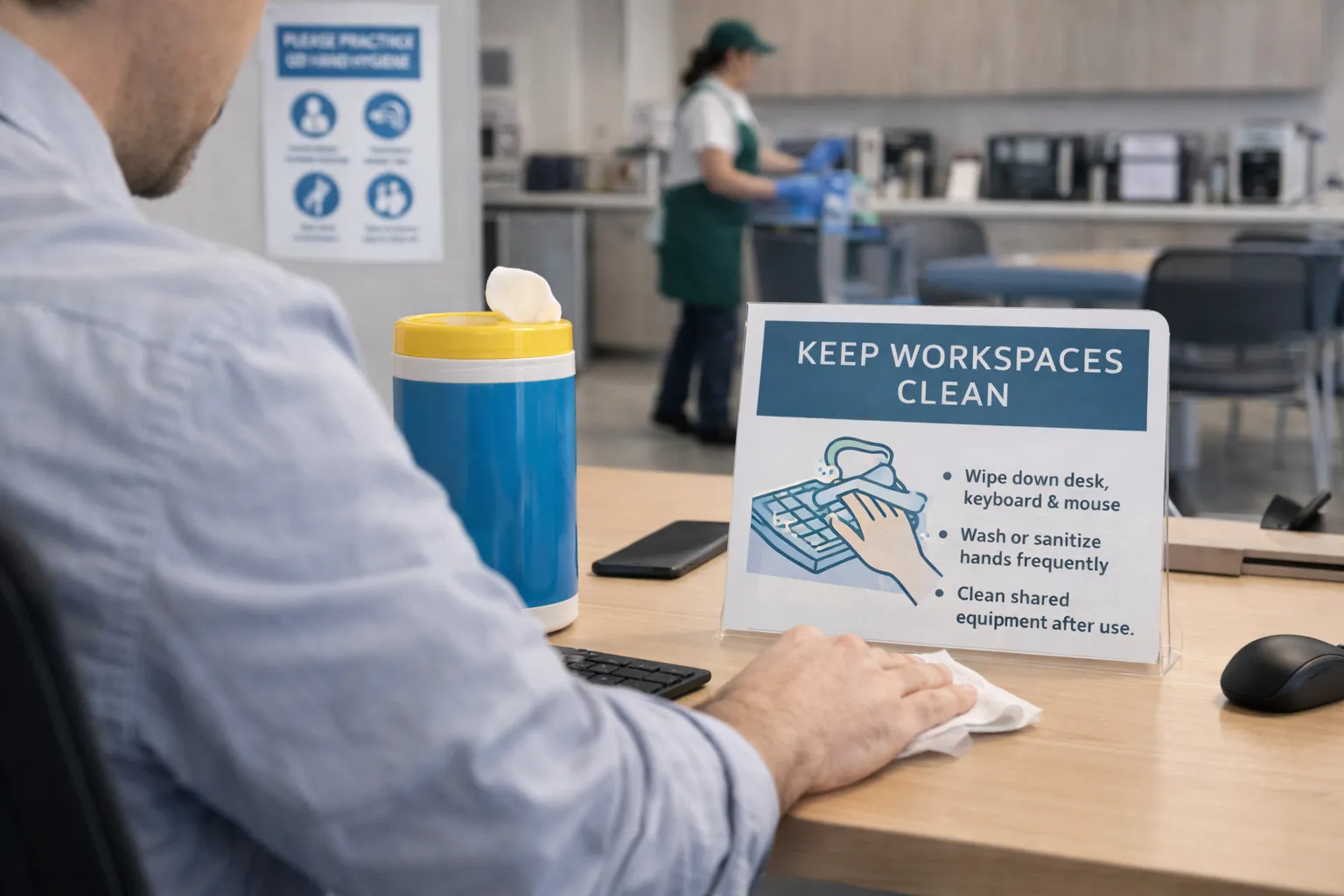
Posting simple hygiene rules encourages shared responsibility.
-
Hand Hygiene Accessibility
Hand hygiene is one of the most effective illness-prevention tools.
Offices should provide:
- Touch-free soap dispensers in restrooms
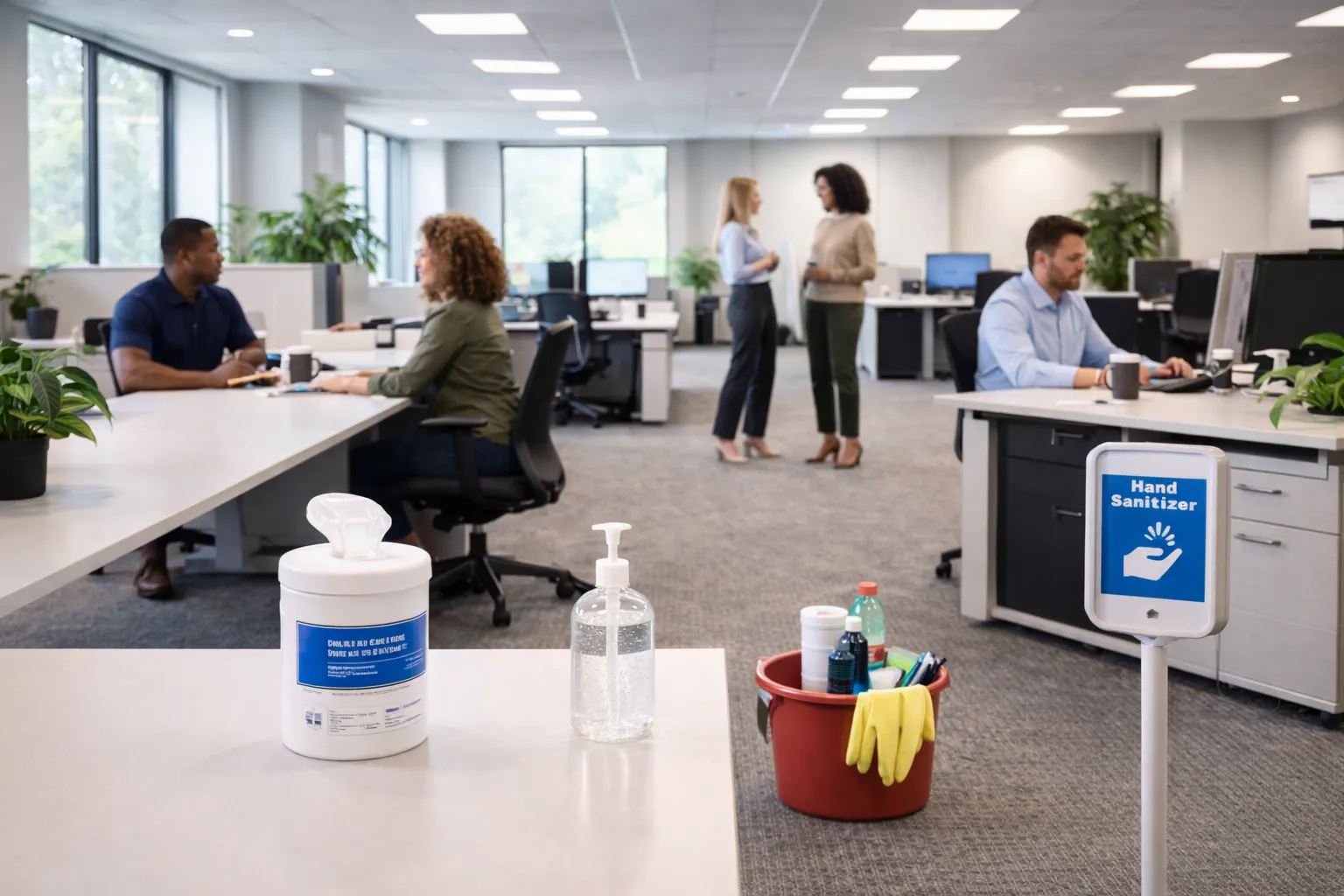
- Alcohol-based hand sanitizer stations throughout the office
- Visible placement near entrances, elevators, and meeting rooms
Easy access increases compliance without disrupting workflows.
-
Air Quality and Ventilation Controls
Indoor air quality is often overlooked but directly affects wellness.
Best practices include:
- Regular HVAC maintenance and filter replacement
- Use of HEPA air purifiers in enclosed spaces
- Monitoring humidity levels to prevent mold growth
- Increasing outdoor air circulation when possible
Cleaner air reduces respiratory issues and improves overall comfort.
-
Illness Prevention and Sick-Leave Support
Hygiene protocols work best when paired with supportive workplace policies.
Key strategies:
- Encourage employees to stay home when sick
- Offer flexible or hybrid work options
- Normalize health-first messaging from leadership
No cleaning protocol can compensate for presenteeism.
-
Clear Hygiene Communication and Training
Protocols only work if employees understand and follow them.
Effective communication includes:
- Posted cleaning schedules in common areas
- Short hygiene guidelines in onboarding materials
- Regular reminders during peak illness seasons
Clarity builds trust and accountability.
Office Hygiene Checklist for Facilities Managers
Use this checklist to maintain consistent hygiene standards, support employee health, and ensure compliance with workplace cleanliness expectations. This checklist is designed for commercial office environments, not residential cleaning.
? Daily Hygiene Tasks
? Disinfect High-Touch Surfaces
Focus on areas touched frequently throughout the day:
-
Door handles and push plates
-
Light switches
-
Elevator buttons
-
Handrails
-
Shared desks and countertops
Best practice: Use EPA-approved disinfectants and follow dwell-time instructions to ensure effectiveness.
? Clean Restrooms and Restock Supplies
Tasks include:
-
Disinfect toilet seats, flush handles, faucets, and sinks
-
Clean mirrors and partitions
-
Refill soap, paper towels, and toilet paper
-
Empty sanitary bins
Goal: Maintain odor-free, visibly clean restrooms at all times.
? Empty Trash and Recycling Bins
-
Remove waste from all workstations, common areas, and restrooms
-
Replace liners
-
Ensure proper separation of recyclables
Tip: Overflowing bins are a leading cause of odor and pest issues.
? Vacuum High-Traffic Areas
Target:
-
Entrances and lobbies
-
Hallways
-
Break rooms
-
Near printers and shared equipment
Why it matters: Daily vacuuming prevents dirt from embedding into carpet fibers, extending carpet life.
? Clean Break Room Surfaces
-
Wipe countertops, tables, and appliance handles
-
Clean microwave interiors (spot cleaning)
-
Disinfect refrigerator handles
Note: Food-contact areas should be cleaned with non-toxic, food-safe products.
? Weekly Hygiene Tasks
? Deep Clean Restrooms
-
Machine-scrub floors
-
Descale toilets and urinals
-
Clean grout and drain areas
Outcome: Prevents buildup of bacteria, stains, and odors.
? Wipe Shared Electronics and Office Equipment
Includes:
-
Phones
-
Keyboards and mice
-
Printers and copiers
-
Touchscreens
Caution: Use electronics-safe disinfectant wipes to avoid damage.
? Mop Hard Floors
-
Use appropriate cleaners for tile, vinyl, or sealed wood
-
Pay attention to corners and baseboards
Standard: Floors should be clean, streak-free, and slip-resistant.
? Inspect Entryway Mats
-
Shake out or vacuum mats
-
Replace worn or curled mats
Impact: Effective mats can trap up to 80% of incoming dirt and moisture.
? Monthly Hygiene Tasks
? Inspect HVAC Filters and Air Quality Systems
-
Check for dust buildup
-
Ensure vents are unobstructed
-
Report unusual odors or airflow issues
Why it matters: Poor air quality impacts employee health and productivity.
? Review Cleaning Supply Inventory
-
Check stock levels of disinfectants, paper goods, and PPE
-
Replace expired products
-
Standardize approved cleaning chemicals
Benefit: Prevents missed cleanings due to supply shortages.
? Assess Cleaning Performance and Adjust Schedules
-
Review complaint logs
-
Conduct spot inspections
-
Adjust cleaning frequency for high-use areas
Tip: Cleaning plans should evolve with office occupancy and usage patterns.
? Quarterly / Semi-Annual Hygiene Tasks
? Deep Carpet Cleaning
-
Hot water extraction or low-moisture encapsulation
-
Focus on high-traffic zones
Result: Improves appearance, indoor air quality, and carpet lifespan.
? Upholstery Cleaning
-
Clean chairs, sofas, and fabric partitions
-
Remove stains and odors
Often overlooked: Upholstery harbors dust, allergens, and bacteria.
? HVAC Filter Replacement
-
Replace filters per manufacturer guidelines
-
Document replacement dates
Standard: Typically every 3–6 months depending on usage.
? Review and Update Hygiene Protocols
-
Incorporate new health guidelines
-
Train staff on updated procedures
-
Review emergency sanitation plans
Outcome: Ensures compliance and preparedness for health-related events.
Best Practices for Facilities Managers
-
Maintain cleaning logs and inspection records
-
Use checklists for accountability
-
Partner with professional commercial cleaning providers
-
Conduct quarterly hygiene audits
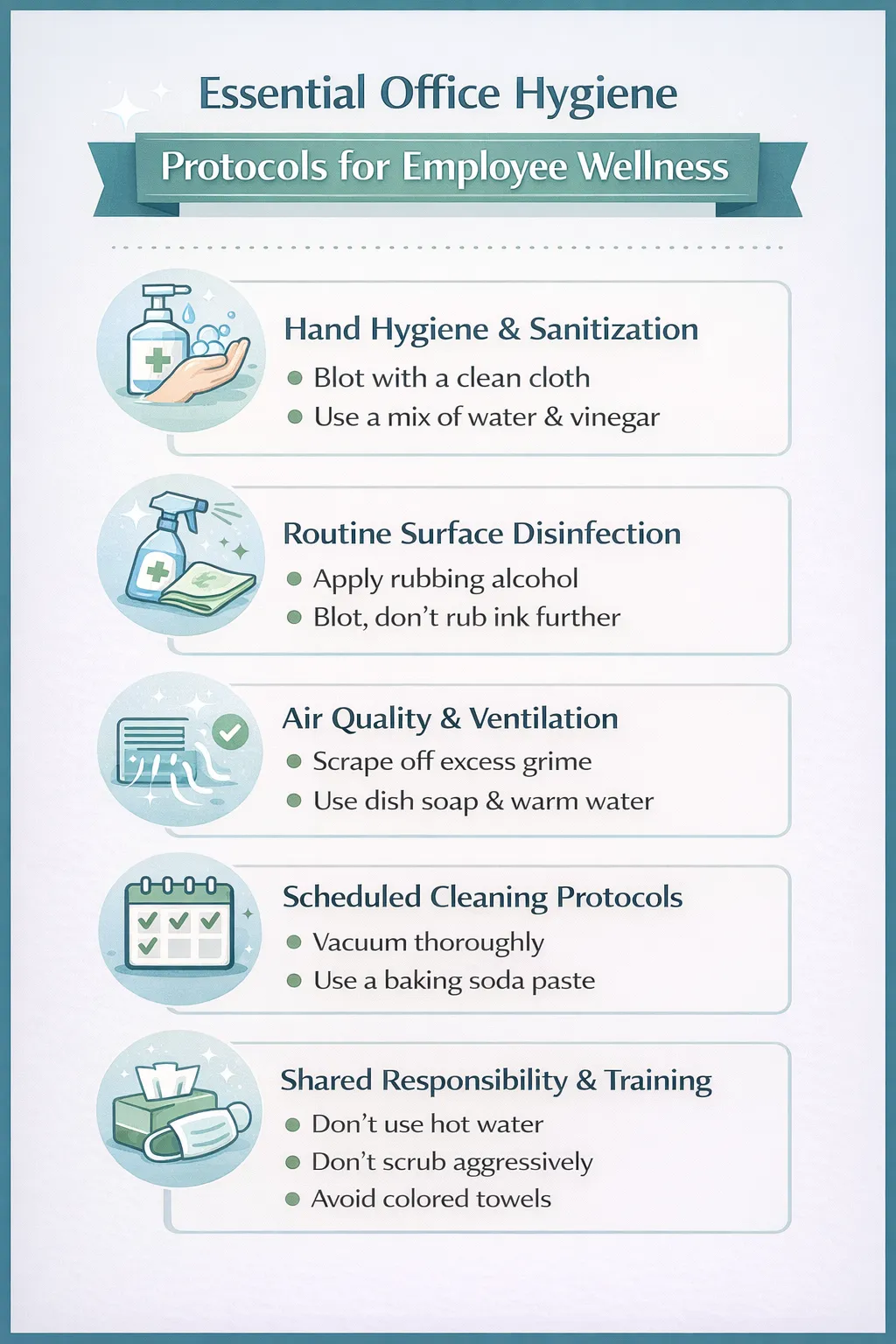
Frequently Asked Questions About Office Hygiene Protocols
What are office hygiene protocols?
Office hygiene protocols are structured procedures that define how frequently and thoroughly workplace areas are cleaned, disinfected, and maintained to protect employee health and safety.
How often should office carpets be cleaned?
High-traffic areas should be vacuumed daily. Deep carpet cleaning is typically recommended every 3–6 months, depending on foot traffic and environmental factors.
Do hygiene protocols really reduce sick days?
Yes. Consistent disinfection, improved air quality, and proper hand hygiene reduce germ transmission, leading to fewer illness-related absences.
Should offices use professional cleaning services?
Many workplaces benefit from professional cleaners who provide commercial-grade equipment, trained staff, and scheduled deep cleaning. A hybrid approach—daily maintenance plus professional services—is often the most effective.
What areas are most commonly overlooked in office hygiene?
Frequently missed areas include:
- Elevator buttons
- Light switches
- Chair arms
- Shared electronics
- Air vents and filters
How can facilities managers ensure employees follow hygiene guidelines?
Clear communication, visible hygiene stations, posted guidelines, and leadership reinforcement help encourage compliance without micromanagement.
How often should office hygiene protocols be reviewed?
Protocols should be reviewed at least annually, or whenever office usage, headcount, or health guidelines change.
Final Thoughts: Prioritizing Wellness Through Office Hygiene
The best office hygiene protocols for employee wellness focus on prevention, consistency, and communication. When hygiene is treated as a system—not a reaction—offices become healthier, more productive, and more resilient.
Investing in proper hygiene isn’t just maintenance—it’s a long-term strategy for protecting people and performance.
Ready to Improve Workplace Hygiene?
A healthier office starts with consistent, professional cleaning standards. CorpClean helps businesses maintain cleaner, safer, and more hygienic workplaces through tailored office cleaning and hygiene solutions.
From daily maintenance to deep carpet cleaning and high-touch surface disinfection, CorpClean works around your schedule to support employee wellness—without disrupting operations.
? Learn more about CorpClean’s office cleaning services at
https://www.corpclean.com.au/