Office Desk Sanitation: Reducing Germs in the Workplace
18th March 2026
Office desks are one of the most frequently used surfaces in any workplace—and one of the most underestimated when it comes to hygiene risk. From keyboards and phones to shared equipment and personal items, desks can quickly accumulate bacteria, dust, and contaminants throughout the day.
In modern offices—especially open-plan environments—poor desk hygiene can contribute to illness outbreaks, reduced productivity, and lower employee satisfaction.
This guide provides a complete, practical, and professional approach to desk sanitation, helping businesses create a cleaner, safer, and more efficient workplace.
Why Desk Sanitation Is More Critical Than You Think
Desks act as micro-environments where bacteria, allergens, and contaminants build up over time. Unlike restrooms—which are cleaned frequently—desks are often neglected or cleaned inconsistently.
Where Germs Commonly Accumulate
| Area | Risk Level | Why It’s High Risk |
|---|---|---|
| Keyboard | Very High | Constant hand contact + trapped debris |
| Mouse | High | Frequent use and minimal cleaning |
| Phone | Very High | Face + hand contact |
| Desk surface | Medium–High | Food, spills, and daily contact |
| Chair armrests | High | Repeated skin contact |
| Drawer handles | Medium | Often touched but rarely cleaned |
Business Impact of Poor Desk Hygiene
- Increased sick leave and absenteeism
- Lower employee productivity and focus
- Higher risk of cross-contamination
- Negative perception of workplace standards
- Reduced employee wellbeing and morale
? Insight: Workplace hygiene directly influences employee performance, not just health.
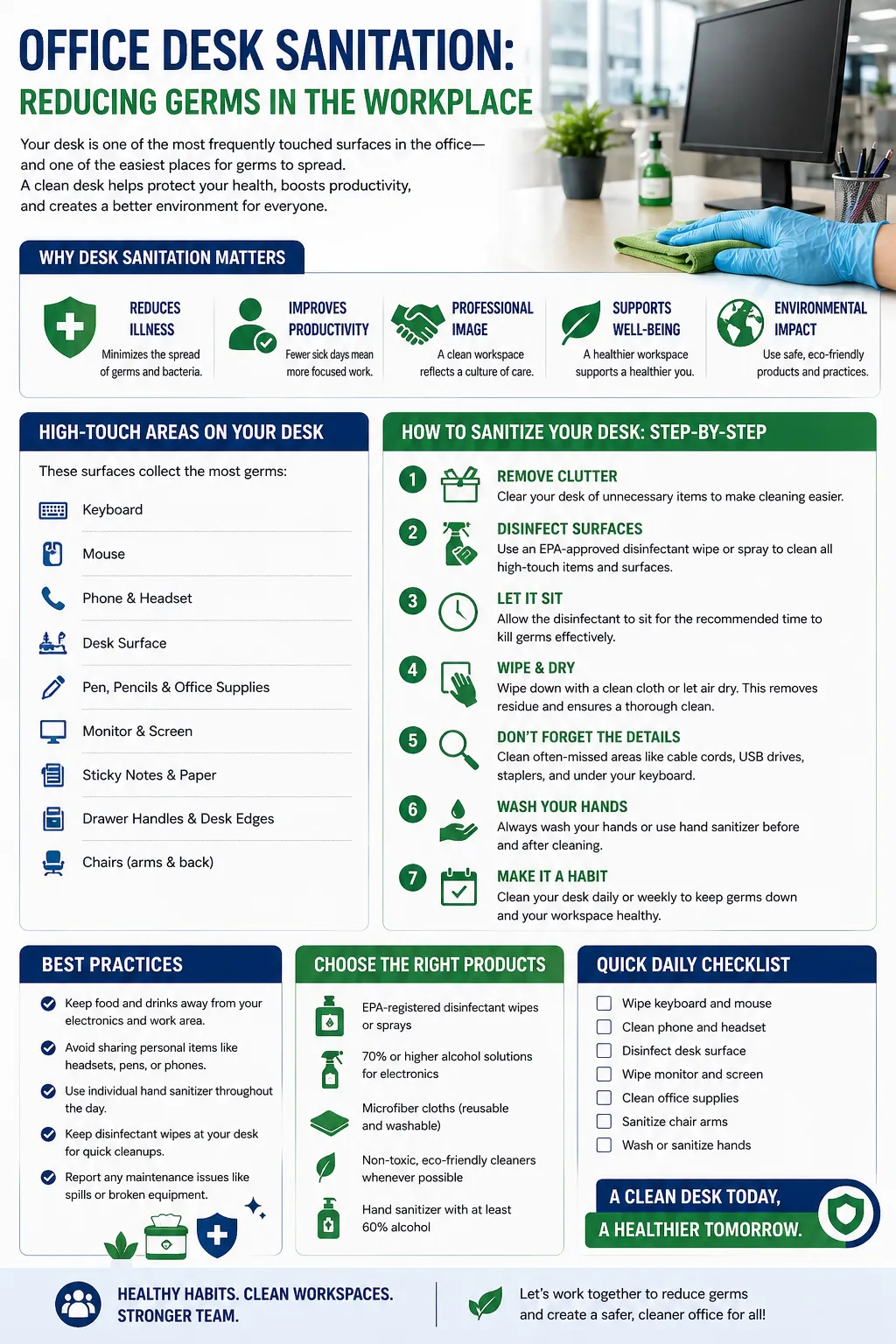
Daily Office Desk Cleaning Checklist
Daily cleaning should be simple, fast, and easy to follow—either by employees or cleaning staff.
Step-by-Step Daily Routine
| Step | Task | Best Practice |
|---|---|---|
| 1 | Clear desk clutter | Remove unnecessary items |
| 2 | Wipe desk surface | Use disinfectant wipes |
| 3 | Clean keyboard & mouse | Use wipes or alcohol-based cleaner |
| 4 | Sanitize phone | Focus on keypad and receiver |
| 5 | Empty trash bin | Prevent odor and bacteria buildup |
| 6 | Organize items | Reduces dust accumulation |
Time-Saving Tip
A proper daily desk clean can take under 2–3 minutes per workstation when done consistently.
Weekly Deep Desk Cleaning
Weekly cleaning targets areas that are often missed during daily routines.
Deep Cleaning Checklist
| Area | Task | Method |
|---|---|---|
| Keyboard | Remove debris | Use compressed air |
| Monitor/screens | Clean safely | Use screen-safe cleaner |
| Desk edges & underside | Remove dust | Wipe thoroughly |
| Cables & power areas | Dust and organize | Use dry microfiber cloth |
| Chairs | Clean armrests & backs | Disinfect surfaces |
| Drawers | Empty and sanitize | Wipe inside and handles |
Hidden Areas Often Missed
- Under keyboards and monitors
- Cable clusters and power boards
- Chair bases and wheels
- Desk corners and edges
- Behind monitors
? Pro Insight: These hidden areas often collect the most dust and bacteria over time.
Best Cleaning Products for Desk Sanitation
Choosing the right products ensures effective cleaning without damaging equipment.
Recommended Products
| Product | Use | Key Advantage |
|---|---|---|
| Disinfectant wipes | Surfaces and equipment | Quick and effective |
| Microfiber cloths | Dusting and wiping | Reusable and lint-free |
| Isopropyl alcohol (70%) | Electronics cleaning | Safe for most devices |
| Compressed air | Keyboards and vents | Removes hidden debris |
| Screen-safe cleaner | Monitors and laptops | Prevents damage |
Important Product Tips
- Avoid spraying liquid directly onto electronics
- Always apply cleaner to cloth first
- Use non-abrasive materials to prevent scratches
- Follow manufacturer guidelines for devices
Employee Hygiene & Desk Responsibility
Cleaning is most effective when employees take ownership of their workspace.
Clean Desk Policy
Encourage employees to:
- Keep desks clutter-free
- Store items properly
- Clean surfaces at the end of each day
Shared Equipment Protocol
- Sanitize before and after use
- Avoid sharing personal devices
- Provide disinfectant wipes nearby
Personal Hygiene Practices
- Wash hands regularly
- Use hand sanitizer frequently
- Avoid touching face while working
- Cover coughs and sneezes properly
Advanced Strategies to Reduce Workplace Germs
Beyond desk cleaning, companies can implement broader hygiene strategies.
1. Improve Air Quality
- Install air purifiers
- Maintain HVAC systems
- Increase natural ventilation
2. Use Touchless Technology
- Automatic doors
- Sensor-based lighting
- Touchless soap dispensers
3. Schedule Professional Cleaning
- Daily cleaning for high-traffic offices
- Weekly deep sanitation
- Periodic disinfection services
4. Provide Hygiene Stations
- Hand sanitizer stations
- Cleaning supply stations
- Wipe dispensers at shared areas
Common Desk Cleaning Mistakes
Avoiding mistakes is key to maintaining proper hygiene standards.
| Mistake | Why It’s Risky | Better Approach |
|---|---|---|
| Using harsh chemicals on electronics | Can damage devices | Use approved cleaners |
| Skipping daily cleaning | Allows bacteria buildup | Clean consistently |
| Ignoring shared devices | Spreads germs quickly | Sanitize frequently |
| Cleaning only visible areas | Leaves hidden contamination | Include under and behind items |
| Overlooking chair surfaces | High-contact areas | Disinfect regularly |
Final Thoughts
Office desk sanitation is one of the simplest yet most effective ways to improve workplace health. With minimal time and the right approach, businesses can significantly reduce germs, improve employee wellbeing, and maintain a professional environment.
A clean desk isn’t just about appearance—it’s about creating a healthier, safer, and more productive workplace culture.
Frequently Asked Questions
How often should office desks be sanitized?
Desks should be cleaned daily, with deeper cleaning performed weekly to maintain proper hygiene.
What is the dirtiest item on an office desk?
Keyboards and phones are typically the dirtiest due to constant contact and infrequent cleaning.
What disinfectant is safe for office desks?
Alcohol-based disinfectant wipes or sprays (around 70% alcohol) are safe for most surfaces and electronics when used correctly.
Can desk cleanliness reduce sick days?
Yes, regular desk sanitation reduces the spread of germs, helping lower illness rates and absenteeism.
Professional Office Cleaning Services
Maintaining consistent hygiene across all workstations can be challenging—especially in busy offices. Professional cleaning services ensure thorough sanitation, improved air quality, and compliance with workplace standards.
For expert support, explore motel cleaning and accommodation maintenance services, click here!