Office Cleaning on the Gold Coast: What Businesses Should Expect
29th April 2026
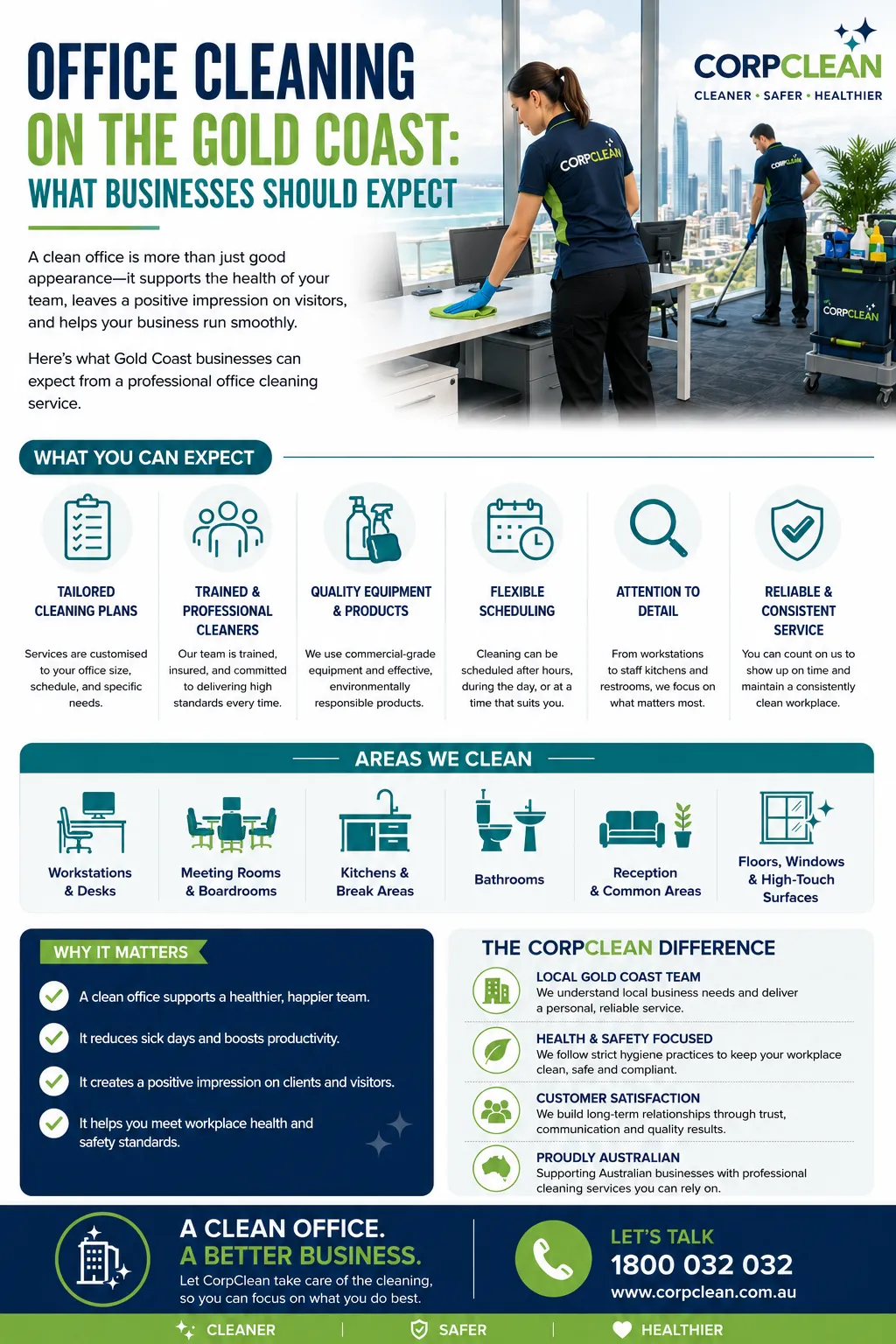
A clean office does more than create a positive first impression. It supports employee wellbeing, workplace hygiene and day-to-day productivity while reflecting the professionalism of your organisation.
Businesses across the Gold Coast have different cleaning requirements depending on their industry, workforce size, visitor numbers, operating hours and shared facilities. Understanding what professional office cleaning includes can help you compare providers and establish a cleaning schedule that suits your workplace.
This guide explains what businesses should expect from professional office cleaning on the Gold Coast, how service schedules are determined and what to consider when choosing a commercial cleaning company.
Quick Answer
Professional office cleaning on the Gold Coast generally includes vacuuming, floor cleaning, dusting, rubbish removal, amenity sanitisation, kitchen cleaning and high-touch surface disinfection. Services can be scheduled daily, weekly or after hours and may include carpet, window and hard floor cleaning. A tailored cleaning plan ensures the tasks, frequency and service times reflect your workplace, industry and level of foot traffic.
Why Professional Office Cleaning Matters
Offices experience constant daily use. Employees and visitors share desks, meeting rooms, kitchens, bathrooms, reception areas and other common spaces, allowing dust, dirt and germs to accumulate quickly.
Professional office cleaning services can help businesses:
- Maintain a cleaner and healthier workplace
- Improve office hygiene
- Reduce the transfer of germs across shared surfaces
- Create a welcoming environment for employees and visitors
- Support employee comfort and morale
- Present a professional image to clients
- Extend the usable life of carpets, flooring and office furniture
- Support workplace health and safety procedures
Regular cleaning also reduces the need for reactive deep cleaning by preventing excessive dirt, dust and grime from building up over time.
What Does Professional Office Cleaning Include?
Office cleaning programs can be tailored to suit workplaces of different sizes, from small professional offices to multi-level corporate buildings.
General Office Cleaning
Routine office cleaning commonly includes:
- Vacuuming carpets and entry mats
- Sweeping and mopping hard floors
- Dusting accessible desks, shelving and office furniture
- Emptying rubbish bins and replacing liners
- Cleaning reception and waiting areas
- Tidying meeting rooms
- Spot-cleaning internal glass surfaces
- Removing fingerprints from doors and partitions
- Cleaning accessible skirting boards and ledges
These tasks help maintain a clean, organised and professional workspace throughout the working week.
Restroom Cleaning and Sanitisation
Office bathrooms require consistent attention because they are used frequently throughout the day.
Typical restroom cleaning tasks include:
- Cleaning and sanitising toilets and urinals
- Cleaning sinks, taps and benchtops
- Polishing mirrors
- Mopping floors
- Disinfecting door handles and other touchpoints
- Emptying sanitary and general waste bins
- Restocking soap, toilet paper and paper towels where included
Clean and well-stocked amenities contribute to employee comfort and influence how visitors perceive a workplace.
Kitchen and Staff Break Room Cleaning
Shared kitchens and lunchrooms can quickly become some of the busiest areas in an office.
Professional kitchen cleaning may include:
- Wiping benches and tables
- Cleaning sinks and taps
- Sanitising cupboard fronts and handles
- Cleaning appliance exteriors
- Emptying rubbish and recycling bins
- Cleaning splashbacks
- Mopping floors
- Spot-cleaning refrigerators and microwaves where agreed
Maintaining these areas helps control food residue, spills, odours and general mess.
High-Touch Surface Cleaning
Frequently handled surfaces may require more regular cleaning than other areas of the office.
Common high-touch points include:
- Door handles
- Lift buttons
- Light switches
- Handrails
- Reception counters
- Meeting room tables
- Shared desks
- Kitchen appliance handles
- Shared keyboards and telephones where agreed
These surfaces should be clearly identified in the cleaning scope so they are attended to consistently.
Typical Office Cleaning Tasks and Frequencies
| Office Area | Typical Tasks | Suggested Frequency |
|---|---|---|
| Reception | Vacuuming, dusting, glass spot-cleaning and rubbish removal | Daily or each scheduled visit |
| Workstations | Accessible surface dusting, bin emptying and floor cleaning | Several times per week |
| Meeting rooms | Table cleaning, chair arrangement and touchpoint disinfection | Daily or according to use |
| Kitchen | Benches, sinks, cupboard fronts, bins and floors | Daily |
| Restrooms | Toilets, sinks, mirrors, dispensers, bins and floors | Daily or multiple times per day |
| High-touch surfaces | Handles, switches, handrails and shared touchpoints | Each scheduled visit |
Flexible Office Cleaning Schedules
Every workplace operates differently, so cleaning schedules should be based on business activity rather than a standard package.
Professional office cleaning may be arranged:
- Daily
- Several times per week
- Weekly
- Fortnightly
- Before business hours
- After business hours
- On weekends
- On public holidays where arranged
Flexible scheduling allows cleaners to work with minimal disruption to employees, customers and normal business operations.
How Often Should a Gold Coast Office Be Cleaned?
The ideal frequency depends on the size and use of the workplace. An office with a small team and limited visitors may need cleaning only once or twice per week, while a large or customer-facing office may require daily service.
Factors that influence cleaning frequency include:
- Number of employees
- Daily visitor traffic
- Office size
- Operating hours
- Industry requirements
- Number of shared facilities
- Workplace layout
- Flooring materials
- Seasonal weather and illness trends
- Proximity to beaches, construction areas or busy roads
| Workplace Type | Recommended Cleaning Frequency | Additional Considerations |
|---|---|---|
| Small office | One to two times per week | Increase service if kitchens or amenities are used heavily |
| Medium office | Two to five times per week | Prioritise reception, kitchens, meeting rooms and bathrooms |
| Large office | Daily | Day cleaning may be required for amenities and high-traffic areas |
| Medical or allied health office | Daily or multiple times per day | Additional hygiene and infection-control procedures may apply |
| High-traffic workplace | Daily with periodic deep cleaning | Entrances and shared areas may require attention throughout the day |
A commercial cleaning provider should inspect the premises before recommending a schedule. This allows the cleaning plan to reflect actual traffic levels, priorities and operating conditions.
Gold Coast Conditions That Affect Office Cleaning
Gold Coast workplaces can experience cleaning challenges associated with coastal weather, humidity, sand and frequent customer traffic.
Local conditions may contribute to:
- Sand and grit being carried through entrances
- Salt residue forming on external windows
- Higher moisture levels in bathrooms and kitchens
- More frequent floor marking during wet weather
- Dust and pollen entering through doors and ventilation
- Increased demand in tourism and customer-facing workplaces
Using entrance matting, scheduling regular floor care and adjusting the cleaning frequency during busy or wet periods can help manage these issues. Businesses can also work with a local provider experienced in commercial cleaning on the Gold Coast.
Office Cleaning for Different Industries
Cleaning requirements vary according to the nature of the business, its facilities and the people using the premises.
Corporate and Professional Offices
Corporate workplaces often prioritise reception areas, meeting rooms, workstations, executive offices and staff kitchens. Cleaning is commonly completed after hours to avoid disrupting employees and clients.
Medical and Allied Health Practices
Medical practices may require more frequent cleaning, carefully managed equipment and additional procedures for waiting rooms, treatment spaces and high-touch surfaces. These premises may benefit from specialist medical cleaning.
Government and Administrative Offices
Government workplaces may require structured reporting, security procedures, approved staff and consistent quality assurance across multiple areas or locations.
Education and Training Offices
Administrative areas within schools and training facilities can experience high foot traffic and frequent use of shared desks, meeting rooms and amenities.
Retail and Property Management Offices
Real estate agencies, strata offices and retail administration areas often receive regular visitors. Reception areas, windows and floors should therefore remain presentable throughout operating hours.
Eco-Friendly Office Cleaning Options
Many Gold Coast organisations are incorporating sustainability into their operational and purchasing decisions.
Environmentally responsible cleaning practices may include:
- Biodegradable cleaning products where suitable
- Low-toxicity or low-VOC chemicals
- Microfibre cleaning systems
- Accurate chemical dilution
- Water-efficient cleaning methods
- Refillable chemical systems
- Reduced single-use plastic
- Waste separation and recycling support
Businesses should discuss their environmental objectives with the cleaning provider and confirm that selected products remain suitable for the surfaces, hygiene requirements and activities within the workplace.
What to Look for in an Office Cleaning Company
Choosing a commercial cleaning company involves more than comparing the lowest prices. The provider should be capable of delivering consistent service, communicating clearly and adapting the cleaning plan as the workplace changes.
Consider the following factors:
- Experience with office and commercial cleaning services
- Trained and supervised cleaning staff
- Public liability and workers compensation insurance
- Police-checked personnel where appropriate
- Clear scopes of work
- Flexible service agreements
- Quality assurance and inspection procedures
- Reliable communication
- Processes for managing complaints or missed tasks
- Ability to provide specialist cleaning services
- Positive and relevant customer feedback
Corporate Cleaning Services® operates an ISO 9001-accredited quality management system, supporting structured processes and consistent service delivery.
Questions to Ask Before Choosing a Cleaner
- Will you inspect the office before preparing the quote?
- Which tasks are included in the regular cleaning scope?
- Which services cost extra?
- Will the same cleaners attend the property consistently?
- How are cleaning staff trained and supervised?
- How do you monitor service quality?
- What happens if a scheduled clean is missed?
- Can the cleaning frequency be changed when our needs change?
- Can you provide specialist carpet, floor and window cleaning?
- How will keys, alarms and building access be managed?
Answers to these questions can help businesses compare service quality, not just the quoted cost.
Why Consistent Office Cleaning Is Important
Office cleaning should be treated as ongoing preventative maintenance rather than an occasional response to visible dirt.
A consistent schedule helps prevent:
- Dust accumulation
- Germ build-up on shared surfaces
- Unpleasant odours
- Carpet staining
- Pest attraction
- Grimy kitchens and amenities
- Premature wear of floors and furniture
- Inconsistent presentation between cleaning visits
Regular cleaning also makes it easier to identify maintenance issues, persistent stains, water leaks or damaged surfaces before they become more difficult to manage.
Additional Commercial Cleaning Services
Routine office cleaning may need to be supported by periodic specialist services.
| Specialist Service | When It May Be Needed | Main Benefit |
|---|---|---|
| Carpet cleaning | Traffic lanes, stains, odours or embedded soil become noticeable | Removes deeper soil that routine vacuuming cannot reach |
| Window cleaning | Glass develops fingerprints, salt residue, water marks or external dirt | Improves natural light and workplace presentation |
| Hard floor maintenance | Floors become dull, marked or difficult to maintain | Protects floor finishes and restores appearance |
| Upholstery cleaning | Office chairs and reception seating show stains or general soiling | Refreshes fabric furniture and removes embedded soil |
| Pressure cleaning | Entrances, paths or external surfaces develop heavy grime | Improves exterior presentation and removes built-up dirt |
| Post-construction cleaning | Following an office fit-out, renovation or repair project | Prepares the premises for safe and professional occupancy |
Scheduling these services throughout the year can help preserve commercial finishes and prevent routine cleaners from having to manage tasks that require specialist equipment.
Benefits of Professional Office Cleaning
Improved Workplace Presentation
A well-maintained office creates a positive impression for employees, clients, suppliers and prospective staff. Reception areas, meeting rooms, bathrooms and kitchens all influence how a business is perceived.
Support for Employee Wellbeing
Routine cleaning reduces dust, dirt and contaminants across shared workspaces. It also gives employees a more comfortable and organised environment in which to work.
More Time for Core Responsibilities
Professional cleaners allow employees to focus on their normal roles rather than taking responsibility for kitchens, floors, bathrooms or communal areas.
Long-Term Maintenance Savings
Preventative cleaning helps reduce abrasive soil, staining and residue that can contribute to premature wear of carpets, flooring, furniture and fixtures.
Consistent Cleaning Standards
A documented cleaning plan gives cleaners clear instructions and provides the business with a standard against which service quality can be assessed.
Maintaining the Office Between Cleaning Visits
Employees can support the professional cleaning program by following simple workplace habits.
- Keep workstations organised and accessible
- Place rubbish in the correct bins
- Wipe shared kitchen surfaces after use
- Report spills promptly
- Remove expired food from shared refrigerators
- Avoid leaving crockery in sinks
- Use entrance mats to reduce tracked-in dirt
- Report empty soap and paper dispensers
- Maintain ventilation and replace HVAC filters as recommended
- Schedule periodic deep cleaning before visible deterioration occurs
These habits complement professional cleaning without shifting major cleaning responsibilities onto office employees.
Common Office Cleaning Mistakes to Avoid
Choosing a Cleaning Company Based on Price Alone
Why it happens: Businesses want to minimise operating expenses.
Potential consequence: An unusually low quote may exclude essential tasks, allow insufficient labour time or result in inconsistent service.
How to avoid it: Compare the cleaning scope, service frequency, staff supervision, communication and quality assurance process as well as the price.
Using the Same Cleaning Schedule All Year
Why it happens: Cleaning requirements are not reviewed after the original agreement is signed.
Potential consequence: The schedule may no longer be sufficient if employee numbers, visitor traffic or operating hours increase.
How to avoid it: Review the cleaning plan regularly and after any major workplace change.
Ignoring High-Touch Areas
Why it happens: Attention is focused on visible floors and surfaces.
Potential consequence: Frequently handled surfaces may remain dirty even when the office appears presentable.
How to avoid it: List high-touch points clearly in the cleaning specification and confirm how often they will be cleaned.
Delaying Deep Cleaning
Why it happens: Businesses rely entirely on routine vacuuming and mopping.
Potential consequence: Embedded dirt and wear become more difficult and expensive to address.
How to avoid it: Establish a preventative maintenance schedule for carpets, upholstery, hard floors and windows.
Using a Generic Cleaning Package
Why it happens: Standard packages appear quicker and easier to arrange.
Potential consequence: Important areas may be overlooked while unnecessary tasks are completed too frequently.
How to avoid it: Request a tailored cleaning program based on the workplace layout, occupancy and operating requirements.
What Should Be Included in a Cleaning Agreement?
A written cleaning agreement should clearly explain what the provider will deliver.
It should include:
- Areas included in the service
- Tasks completed in each area
- Cleaning frequency
- Service days and times
- Consumables supplied or restocked
- Specialist services included
- Access and security arrangements
- Quality assurance procedures
- Communication and reporting processes
- Pricing and additional service charges
- Notice and agreement terms
A clear scope reduces misunderstandings and makes it easier to evaluate whether the service is being delivered consistently.
Final Thoughts
Professional office cleaning is an investment in workplace presentation, hygiene and day-to-day operations. A well-maintained office creates a more welcoming environment for employees, clients and visitors while helping protect flooring, furniture and shared facilities.
The right cleaning program should reflect your office size, operating hours, industry and foot traffic. It should also be reviewed regularly so the service can adapt as your organisation changes.
Corporate Cleaning Services® provides tailored office cleaning for small workplaces, corporate offices and commercial facilities throughout the Gold Coast. To discuss your requirements, arrange a site inspection or request a customised cleaning quote.
Frequently Asked Questions
How often should an office be professionally cleaned?
Cleaning frequency depends on the office size, number of employees, visitor traffic, operating hours and shared facilities. A small office may need cleaning once or twice per week, while a large or high-traffic workplace may require daily cleaning. Bathrooms, kitchens and reception areas may need more frequent attention than low-use spaces.
What is normally included in office cleaning?
Most office cleaning programs include vacuuming, hard floor cleaning, dusting, rubbish removal, bathroom sanitisation, kitchen cleaning and high-touch surface cleaning. The exact tasks should be documented in a tailored service agreement so the cleaner and the business understand what is included during each visit.
Do office cleaners work after business hours?
Yes. Many commercial cleaning companies provide early morning, evening and weekend services to reduce disruption. The most suitable time depends on the workplace's operating hours, building access requirements, alarm procedures and whether any areas require cleaning during the day.
Is professional office cleaning suitable for small businesses?
Yes. Office cleaning can be tailored to businesses of every size. A small office may only need a short weekly or twice-weekly service covering floors, rubbish, bathrooms and the kitchen. A site inspection can help identify the most practical frequency without including unnecessary tasks.
Can office cleaning support workplace hygiene?
Regular cleaning removes dust, dirt, food residue and contaminants from shared workplace areas. Cleaning frequently handled surfaces, bathrooms and kitchens can also reduce the transfer of germs. The cleaning program should be supported by suitable hand hygiene, waste management and employee housekeeping practices.
Do office cleaning companies provide carpet cleaning?
Many commercial cleaning providers offer periodic carpet cleaning in addition to routine vacuuming. Deep cleaning may be scheduled every few months or according to traffic levels, staining and the carpet manufacturer's recommendations. Reception areas, corridors and shared workspaces generally require more frequent attention.
Are environmentally responsible cleaning products available?
Many providers can offer biodegradable, low-toxicity or low-VOC products where suitable. They may also use microfibre systems, accurate chemical dilution and water-efficient methods. Product selection should still consider surface compatibility, workplace hygiene requirements and manufacturer directions.
How do I choose an office cleaning company?
Look for relevant commercial cleaning experience, trained staff, suitable insurance, clear service agreements and reliable quality assurance. Ask how cleaners are supervised, how service issues are handled and whether the company can adjust the cleaning schedule as your workplace changes.
Can an office cleaning plan be customised?
Yes. A professional provider should tailor the cleaning plan to the premises, operating hours, foot traffic and priorities. Customisation may involve changing the frequency for individual areas, arranging after-hours service and adding periodic carpet, window or floor maintenance.
What other cleaning services may be useful for an office?
Offices may also benefit from carpet cleaning, window cleaning, upholstery cleaning, hard floor maintenance, pressure cleaning and post-construction cleaning. These specialist services can be scheduled periodically to support routine cleaning and protect the condition of the property.