
Motel Room Cleaning Checklist: Fast & Efficient Turnover Guide
28th January 2026
In the motel industry, speed and consistency are essential. Guests expect every room to be clean, fresh, and ready on time, and even small delays in housekeeping can affect check-ins, guest satisfaction, and overall revenue. A well-organised motel room cleaning checklist helps housekeeping teams work faster without compromising on quality.
By following a clear, repeatable process, staff can complete room turnovers more efficiently, reduce missed tasks, and maintain the professional standards guests expect.
Here is a practical step-by-step guide to help ensure fast, thorough, and reliable motel room turnover.
Why a Structured Cleaning Checklist Matters
A structured cleaning checklist is more than just a task list. It creates a consistent system that helps housekeeping staff stay organised, work efficiently, and deliver the same standard in every room.
A clear process helps:
- reduce turnaround time between guests
- maintain consistent cleaning quality
- minimise missed items or forgotten tasks
- improve housekeeping efficiency
- support better guest satisfaction and reviews
- make staff training easier and more reliable
In busy motels where rooms need to be turned over quickly, a checklist helps teams move with confidence and avoid mistakes that can lead to complaints or delays.
Pre-Clean Preparation (2–3 Minutes)
Before cleaning begins, it is important to prepare the room properly. A few minutes of preparation can make the rest of the turnover faster, safer, and more effective.
Before Entering the Room
Knock and announce housekeeping
Always follow proper entry procedures to ensure guest privacy and safety, even if the room is expected to be vacant.
Open windows or doors for ventilation
Fresh airflow helps remove stale odours, improves comfort, and creates a better cleaning environment.
Turn on the lights
Good visibility makes it easier to spot dirt, damage, forgotten items, and areas that need extra attention.
Check for maintenance issues
Before starting the clean, quickly inspect the room for:
- broken fixtures
- leaking taps or toilets
- damaged furniture
- faulty lights or power points
- stains, tears, or signs of wear
Reporting maintenance problems early helps prevent future guest complaints and allows repairs to be scheduled promptly.
Gather cleaning supplies and fresh linen
Make sure everything needed for the room turnover is ready before you begin. This may include:
- fresh sheets and pillowcases
- towels and bath mats
- bathroom cleaning products
- disinfectant sprays
- bin liners
- vacuum or mop
- replacement guest amenities
Having all supplies on hand reduces unnecessary trips back and forth and helps speed up the process.
Why Pre-Clean Preparation Improves Turnover Speed
Starting with a quick and consistent preparation routine helps housekeeping staff work more efficiently from the moment they enter the room. It reduces interruptions, helps identify problems early, and creates a smoother workflow for the rest of the clean.
This is especially important during busy periods when multiple rooms must be turned over within a limited timeframe.
Best Practice Tip
Train staff to follow the same entry and preparation sequence for every room. A standard routine builds speed through repetition and reduces the chance of missing important first-step checks.
Step 1: Strip and Reset the Bed
The bed is usually the focal point of the room, so it should be one of the first areas housekeeping staff tackle. Starting here also allows the room to feel immediately reset while the rest of the cleaning process continues.
What to Do
- remove all used sheets, pillowcases, blankets, and bed runners
- inspect the mattress protector, mattress, and pillows for stains, odours, or damage
- replace with fresh, clean linen
- make the bed neatly with a smooth, hotel-standard finish
- ensure pillows are fluffed and evenly placed
Why It Matters
A freshly made bed instantly improves the look of the room and gives guests confidence that the space has been properly cleaned. It also helps housekeeping staff identify any maintenance or linen issues early in the turnover process.
Tip: Start with the bed so it is fully reset while the rest of the room is being cleaned.
Step 2: Remove Trash and Used Items
Clearing out rubbish and forgotten items early helps create a clean workspace and reduces the chance of missing something later in the process.
What to Remove
- empty all bins in both the room and bathroom
- replace bin liners if needed
- remove leftover food, drink containers, and disposable items
- collect used towels, bath mats, and other dirty linen
- check for guest belongings left behind
Areas to Check Carefully
- drawers and bedside tables
- wardrobes and closets
- under the bed
- behind curtains
- bathroom shelves and hooks
- power points and charging areas
Why It Matters
A fast room turnover should never come at the expense of guest property handling. Thoroughly checking for left-behind items helps prevent complaints and improves service standards.
Step 3: Bathroom Deep Clean
Bathrooms require the highest level of hygiene and attention to detail. Even if the rest of the room looks tidy, a poorly cleaned bathroom will leave a negative impression on guests.
Clean and Disinfect
- toilet, including inside bowl, seat, lid, base, and flush controls
- sink and vanity area
- taps and fixtures
- shower, bathtub, glass screens, and tiles
- mirrors
- shelves, counters, and splashback areas
Replace and Restock
- fresh towels and bath mats
- soap, shampoo, conditioner, and other toiletries
- toilet paper and tissues
- sanitary disposal liners, if applicable
Final Bathroom Touches
- wipe all surfaces dry to remove streaks and water spots
- check for hair in the sink, shower, floor, and corners
- ensure drains are clear
- leave the bathroom looking dry, polished, and hygienic
Why It Matters
Bathrooms are one of the first places guests inspect. A spotless bathroom strongly influences the guest’s perception of the entire room.
Step 4: Dust and Wipe All Surfaces
Dusting and surface wiping should be done methodically from top to bottom so that dirt is not spread onto already cleaned areas.
Areas to Clean
- tables, desks, and bedside units
- shelves and headboards
- lamps and light fittings within reach
- wardrobe surfaces and hangers
- television stands and counters
- skirting boards if needed
High-Touch Points to Disinfect
- light switches
- door handles
- remote controls
- telephones
- power switches and appliance handles
- air-conditioning controls
Why It Matters
Guests notice visible dust, smudges, and fingerprints quickly. Proper surface cleaning improves presentation while also supporting hygiene standards.
Tip: Use disinfectant on all high-touch areas, especially in rooms with frequent guest turnover.
Step 5: Refresh Amenities
Guest amenities play a big role in comfort and convenience. Replenishing them properly helps create a professional and welcoming experience.
What to Check and Replace
- tea, coffee, sugar, milk, and stirrers
- cups, glasses, mugs, and spoons
- bottled water, if provided
- minibar items, if applicable
- stationery, brochures, or guest information cards
- laundry bags or other guest-use items
Appliance Check
- ensure the kettle is clean and functioning
- wipe down coffee machines or toasters if provided
- check that the fridge is clean and operating properly
- make sure all appliances are present and tidy
Why It Matters
Missing or poorly presented amenities can create frustration for guests and generate avoidable complaints.
Step 6: Clean Floors
Floor cleaning should be left until later in the process so any dust or debris from previous steps can be removed at the end.
What to Do
- vacuum carpets thoroughly, including edges and under furniture where possible
- mop hard floors using the correct cleaning solution
- spot-clean visible marks or stains
- check corners, along skirting boards, and under the bed
- ensure the floor is dry and presentable before leaving the room
Why It Matters
Clean floors help complete the overall impression of freshness and care. Dust, crumbs, or hair on the floor can quickly undermine an otherwise well-cleaned room.
Step 7: Air and Deodorise
Once the room is clean, the final atmosphere matters. A room should smell fresh and feel inviting without being overpowering.
Final Freshening Steps
- ensure windows or doors have allowed enough airflow during the clean
- use a light, neutral deodoriser if needed
- avoid strong perfumes or heavy artificial scents
- check for lingering smells from food, smoke, dampness, or drains
Why It Matters
Guests often notice smell before anything else. A fresh, neutral scent supports the impression of cleanliness and comfort.
Step 8: Final Inspection (Quality Check)
Before marking the room as ready, carry out a final inspection to ensure nothing has been missed. This last check is essential for maintaining consistent standards across every turnover.
Final Room Checklist
- bed is neatly presented and properly made
- all surfaces are clean, dry, and streak-free
- bins are emptied and relined
- bathroom is fully sanitised and stocked
- towels and toiletries are neatly arranged
- amenities are replenished
- floors are clean and free of debris
- lighting is working and the room feels welcoming
- no guest items have been left behind
- furniture and décor are correctly positioned
Why It Matters
A final inspection helps catch small oversights before the next guest arrives. It is one of the easiest ways to improve quality control and reduce complaints.
Fast Turnover Tips for Housekeeping Teams
To improve efficiency without sacrificing quality, housekeeping teams can benefit from a few practical habits:
- follow the same cleaning sequence in every room
- stock trolleys fully before starting shifts
- use colour-coded cloths to reduce cross-contamination
- report maintenance issues immediately instead of delaying them
- divide deep-cleaning tasks and turnover tasks clearly if possible
- use checklists consistently for training and accountability
A repeatable system is what turns a good clean into a fast and reliable one.
Time-Saving Tips for Faster Turnover
Speed is critical in motel operations, but efficiency should never compromise cleaning quality. The key is to use a structured system that allows housekeeping staff to move quickly while maintaining consistency.
Proven Ways to Speed Up Room Turnover
- Follow a consistent cleaning route
Always clean in the same sequence to build speed and reduce missed steps - Use a fully stocked cleaning caddy
Keep all essential supplies within reach to avoid unnecessary trips - Work in teams for larger properties
Divide tasks (e.g., one handles bathroom, another handles bedroom) to reduce turnaround time - Use a parallel workflow
Strip beds first, then clean the bathroom while fresh linens are prepared - Use colour-coded cloths
Prevent cross-contamination and improve hygiene efficiency
Why It Matters
A repeatable system helps staff work faster through habit and reduces errors—especially during busy check-out periods.
Common Mistakes to Avoid
Even experienced housekeeping teams can overlook small details when working quickly. Avoiding these common mistakes helps maintain high standards and prevent guest complaints.
Watch Out For:
- Skipping high-touch areas
Light switches, remotes, and door handles must always be disinfected - Overlooking hidden spots
Check under beds, behind doors, and inside drawers - Using overly strong cleaning scents
Strong fragrances can feel unpleasant—aim for a clean, neutral smell - Forgetting maintenance checks
Small issues like leaks or broken fixtures should be reported immediately - Rushing without a final inspection
Skipping the last check often leads to missed details
Why It Matters
Most guest complaints come from small oversights—not major cleaning failures. Attention to detail is what sets a good clean apart from a great one.
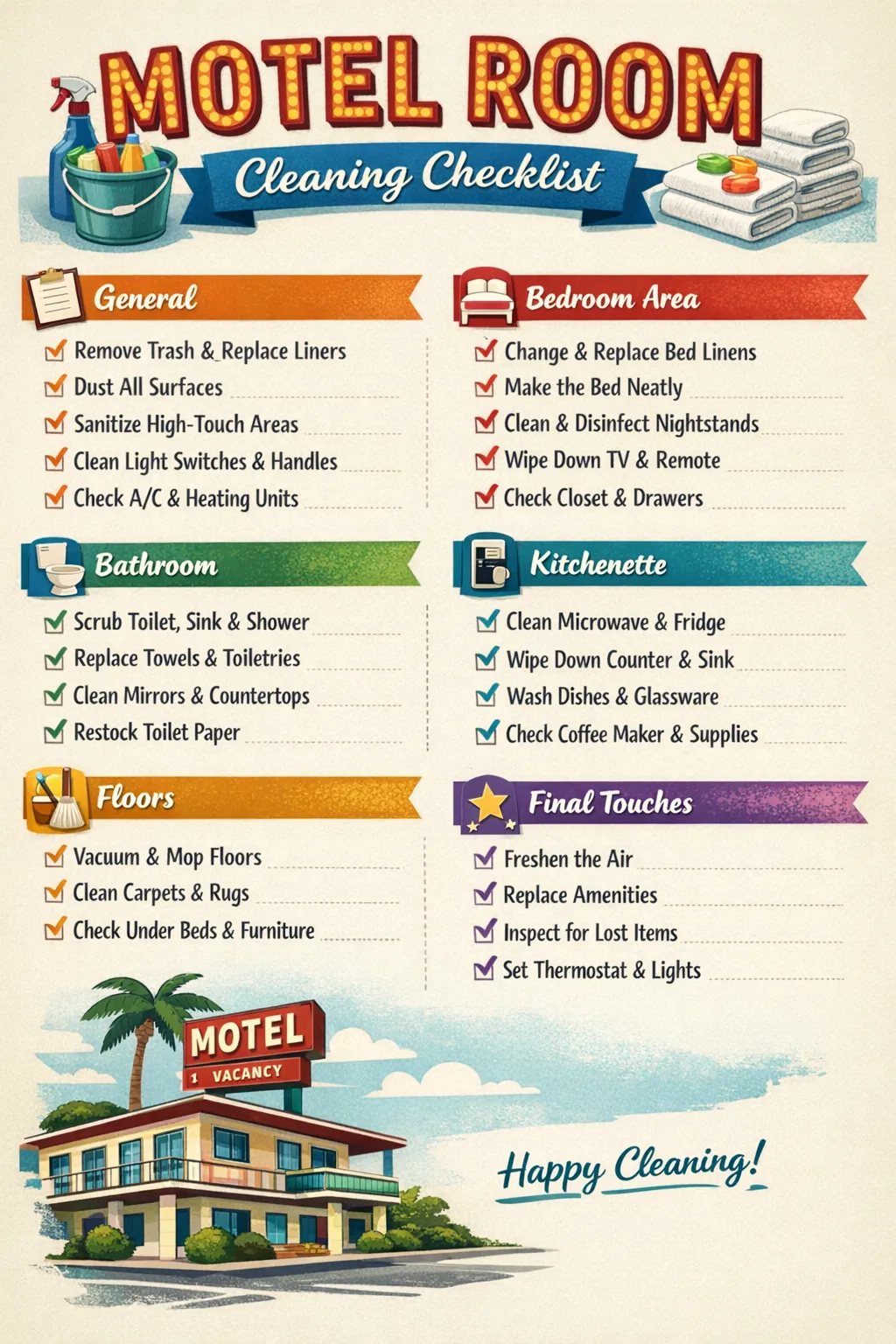
Sample Quick Checklist (At-a-Glance)
Use this quick-reference checklist to ensure nothing is missed during room turnover.
Room
- ? Bed stripped and remade
- ? Trash removed
- ? Surfaces dusted and sanitised
- ? Amenities restocked
- ? Floors vacuumed or mopped
Bathroom
- ? Toilet cleaned and disinfected
- ? Shower or bath scrubbed
- ? Sink and mirror cleaned
- ? Towels replaced
- ? Toiletries restocked
Final Check
- ? No odours present
- ? All items correctly placed
- ? Room presentation is guest-ready
Final Thoughts
Efficient motel room turnover comes down to three key factors: structure, speed, and attention to detail. A well-trained housekeeping team using a consistent checklist can clean rooms faster while maintaining high standards across every turnover.
By standardising your process, you not only improve operational efficiency but also deliver a reliable guest experience. This leads to better reviews, stronger reputation, and increased repeat bookings—key drivers of long-term success in the hospitality industry.
Keep Your Rooms Guest-Ready with Professional Cleaning Support
Looking to improve your cleaning efficiency and maintain consistently high standards? Partnering with a professional cleaning provider can help streamline operations and ensure every room meets guest expectations.
Visit CorpClean to learn more about tailored commercial cleaning solutions designed for hospitality businesses.