Motel Housekeeping Procedures: Best Practices for Small Properties
2nd February 2026
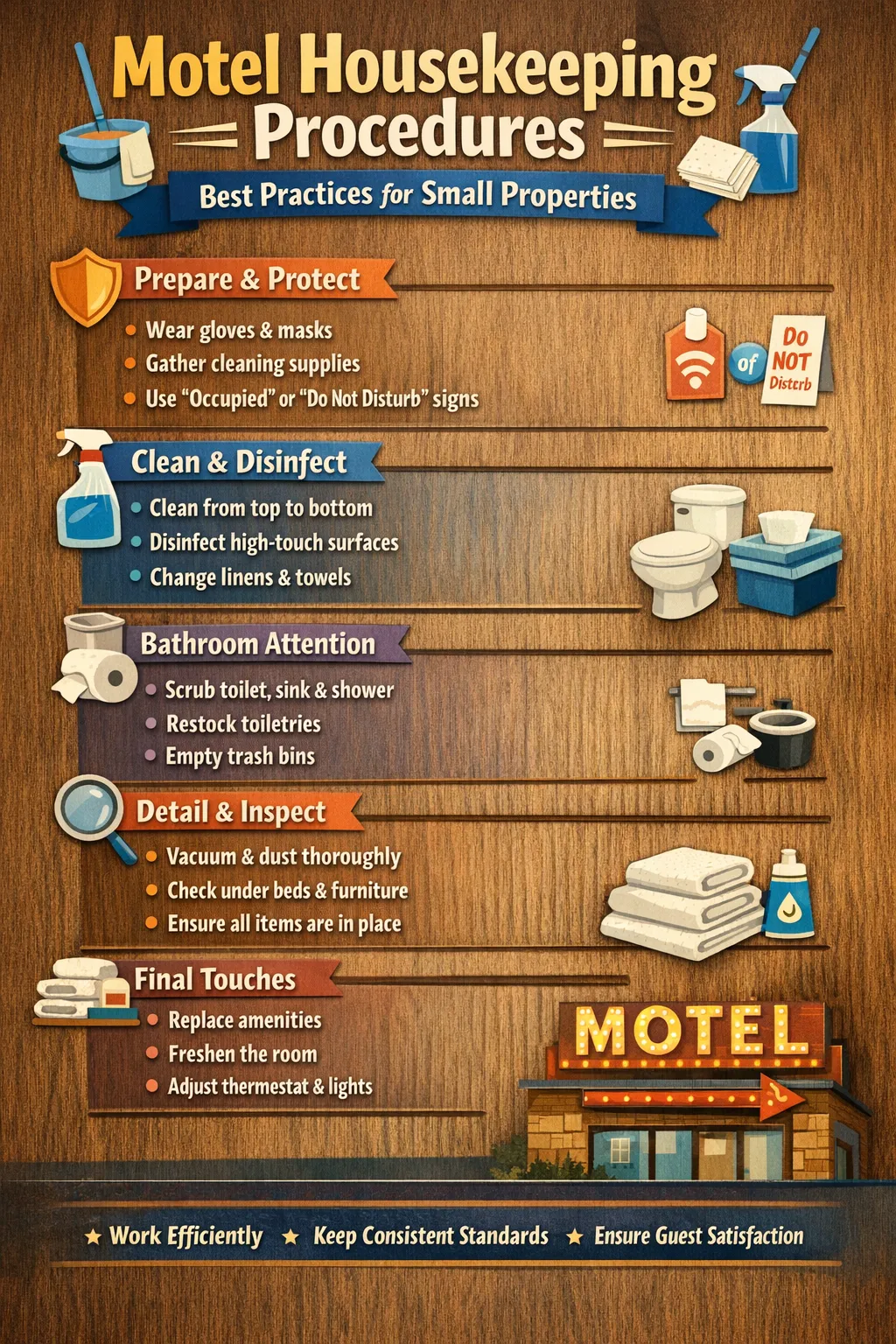
Running housekeeping efficiently in a small motel comes with unique challenges. With limited staff, tight turnaround times, and high guest expectations, every process needs to be simple, efficient, and repeatable.
The key to success isn’t working harder—it’s working smarter. By implementing clear procedures and consistent systems, small properties can maintain high cleaning standards while improving speed and reducing operational stress.
This guide outlines practical housekeeping best practices designed specifically for small motels.
Why Standardised Housekeeping Matters
Even with a small team, structured procedures can make a significant difference in performance and results.
Standardised housekeeping helps:
- maintain consistent cleaning quality across all rooms
- reduce room turnaround time
- improve guest satisfaction and reviews
- minimise training time for new staff
- reduce errors and missed tasks
A clear system ensures every room meets the same standard—no matter who is cleaning it.
1. Create a Clear Cleaning System
Consistency is the foundation of efficient housekeeping. Every room should be cleaned in the same sequence to build speed and reduce mistakes.
Recommended Cleaning Workflow
- ventilate the room (open windows, turn on lights)
- strip beds and remove rubbish
- clean the bathroom first
- dust and wipe all surfaces
- replace linens and make beds
- vacuum or mop floors
- complete a final inspection
Why It Works
A fixed routine reduces decision-making, improves efficiency, and ensures no steps are skipped—even during busy periods.
2. Use a Room Checklist
A checklist acts as a safety net, especially when staff are under pressure or multitasking.
What to Include
- bed and linen replacement
- bathroom cleaning and sanitisation
- amenities restocking
- high-touch surface disinfection
- floor cleaning
- final inspection
Pro Tip
Use laminated checklists or digital versions so they can be reused daily. This helps reinforce consistency and accountability.
3. Train Staff for Multi-Tasking
In small motels, staff often need to handle multiple responsibilities efficiently.
Focus Areas
- time management
- task prioritisation
- smooth movement between tasks
- identifying maintenance issues
Example
While letting bathroom cleaner sit, staff can:
- start dusting surfaces
- restock amenities
- prepare fresh linens
Why It Matters
Smart multitasking reduces downtime and speeds up overall room turnover without cutting corners.
4. Prioritise High-Touch Areas
Guests are most likely to notice cleanliness in areas they frequently touch.
Key High-Touch Points
- door handles
- light switches
- remote controls
- taps and fixtures
- toilet flush buttons
Best Practice
Always disinfect these areas during every clean—no exceptions.
5. Keep Cleaning Supplies Organised
Disorganisation slows down cleaning more than most people realise.
Efficient Setup Includes
- portable cleaning caddies with essentials
- pre-stocked trolleys (if space allows)
- clearly labelled cleaning products
- easy access to fresh linens
Result
Less time wasted searching for supplies = faster and smoother cleaning.
6. Implement Linen Management
Efficient linen handling is critical for maintaining turnover speed in small properties.
Best Practices
- maintain par levels (extra linen sets ready)
- separate clean and used linens immediately
- inspect linens for stains or damage before reuse
- store linen in an organised, accessible area
Pro Tip
Keep at least 2–3 linen sets per room to avoid delays during peak periods.
7. Schedule Smartly
A well-planned schedule can significantly improve efficiency and reduce stress.
Smart Scheduling Strategies
- prioritise check-out rooms first
- clean occupied rooms later in the day
- assign rooms by location to reduce walking time
- group tasks by floor or section
Why It Matters
Efficient scheduling reduces unnecessary movement and ensures rooms are ready when needed.
8. Focus on Speed Without Cutting Corners
Speed is important—but consistency and quality must always come first.
Improve Efficiency By
- following the same cleaning route every time
- using the right tools (microfibre cloths, efficient vacuums)
- completing tasks properly the first time to avoid rework
- avoiding unnecessary backtracking
Key Insight
Doing the job right the first time is faster than fixing mistakes later.
9. Conduct Final Inspections
A quick final check can prevent complaints and protect your reputation.
What to Check
- bed presentation and linen quality
- bathroom cleanliness and hygiene
- absence of odours
- correct placement of amenities
- overall room presentation
Best Practice
Have supervisors or experienced staff perform regular spot checks to maintain standards.
10. Track Maintenance Issues
Housekeeping staff are often the first to notice maintenance problems.
Encourage Reporting Of:
- leaks or plumbing issues
- broken fixtures or fittings
- damaged furniture
- faulty lights or appliances
Why It Matters
Early reporting prevents small issues from becoming expensive repairs—and avoids negative guest experiences.
11. Maintain Hygiene Standards
Cleanliness is not just about appearance—it’s about health and safety.
Hygiene Best Practices
- use colour-coded cloths (e.g., bathroom vs bedroom)
- clean and sanitise tools regularly
- avoid cross-contamination between areas
- follow proper cleaning chemical usage
Result
A safer, healthier environment for both guests and staff.
12. Communicate Clearly with Staff
Strong communication keeps housekeeping operations smooth and efficient.
Effective Communication Methods
- daily briefings or shift checklists
- clear room assignments
- updates on occupancy and priority rooms
- regular feedback and training sessions
Why It Matters
Clear communication reduces confusion, improves teamwork, and ensures everyone is aligned on expectations.
Final Thoughts
For small motels, efficient housekeeping is all about simplicity, consistency, and smart systems. You don’t need a large team to deliver excellent results—you need clear procedures, organised workflows, and well-trained staff.
By standardising your cleaning process, managing time effectively, and focusing on the details that matter most to guests, you can improve efficiency without sacrificing quality.
In the long run, strong housekeeping practices don’t just save time—they lead to better guest experiences, stronger reviews, and increased repeat bookings.
Streamline Your Housekeeping with Professional Support
Looking to improve efficiency and maintain consistently high cleaning standards? Partnering with an experienced cleaning provider can help small properties operate more smoothly and deliver better guest experiences.
Visit CorpClean to explore tailored commercial cleaning solutions designed for motels and hospitality businesses.