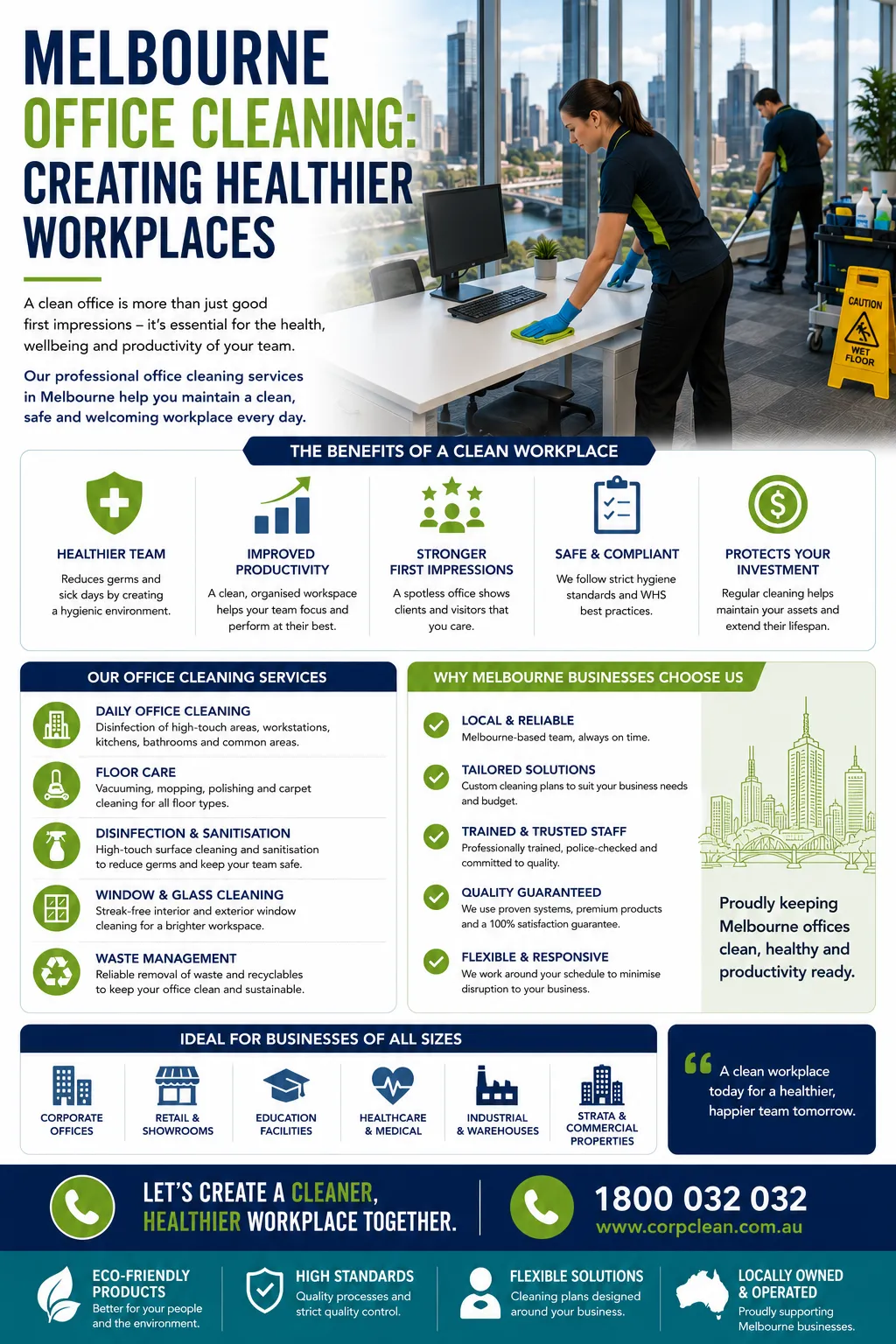
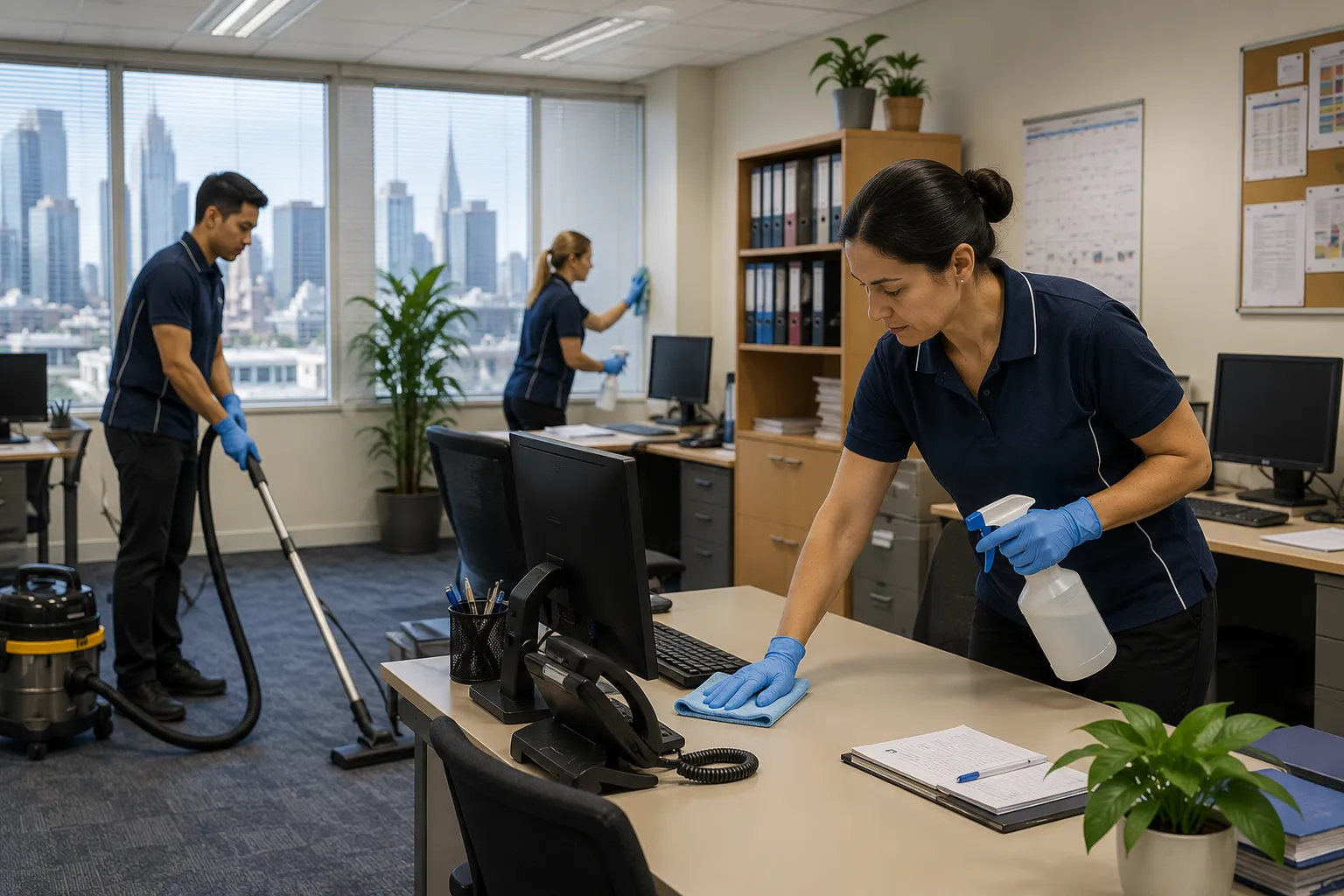
Melbourne Office Cleaning: Creating Healthier Workplaces
27th May 2026
A clean office supports far more than workplace presentation. It contributes to employee comfort, helps control dust and surface contamination and creates an environment where staff, clients and visitors feel confident spending time.
Modern workplaces contain shared desks, meeting rooms, bathrooms, kitchens, lifts, reception areas and office equipment that may be used by dozens or hundreds of people each day. Without a structured cleaning schedule, dirt, rubbish, allergens, food residue and fingerprints can build up quickly.
For Melbourne businesses, professional office cleaning services provide a consistent way to maintain workplace hygiene while allowing employees to focus on their usual responsibilities. This guide explains how regular cleaning supports healthier workplaces, which areas require the most attention and how to choose an appropriate cleaning plan.
Quick Answer
Professional office cleaning helps Melbourne businesses create healthier workplaces by removing dust, allergens, waste, food residue and surface contamination from shared areas. A suitable service usually includes workstation cleaning, vacuuming, floor care, bathroom sanitisation, kitchen cleaning, rubbish removal and high-touch surface cleaning. The correct frequency depends on employee numbers, visitor traffic, office size, shared facilities and operating hours.
Why Office Cleanliness Matters
Employees spend a significant part of the week at work, making the office environment an important part of their daily comfort and wellbeing.
A poorly maintained workplace may develop:
- Dusty workstations
- Unpleasant kitchen odours
- Overflowing rubbish bins
- Stained carpets
- Smudged glass
- Dirty bathrooms
- Surface build-up in shared areas
- Reduced confidence in workplace hygiene
Professional office cleaning helps prevent these issues from becoming accepted workplace conditions.
A consistently maintained office can support:
- Better workplace hygiene
- Improved employee comfort
- More professional presentation
- Reduced dust and allergen build-up
- Cleaner shared facilities
- Easier property maintenance
- Improved first impressions
- More organised working environments
Cleaning should be treated as ongoing preventative maintenance rather than a task completed only when dirt becomes obvious.
How Office Cleaning Supports Employee Wellbeing
A clean workplace cannot guarantee that employees will never become unwell, but it can help reduce avoidable hygiene problems.
Regular cleaning can remove:
- Dust
- Food residue
- Rubbish
- Surface contamination
- Allergens
- Dirt brought in from outdoors
- Moisture build-up in kitchens and bathrooms
Employees may also feel more comfortable and valued when their workplace is maintained to a reliable standard.
A clean office demonstrates that the organisation takes the working environment seriously rather than expecting employees to tolerate poorly maintained shared spaces.
The Relationship Between Cleanliness and Productivity
Workplace productivity is influenced by many factors, including workload, management, equipment, lighting, noise and office design. Cleanliness is one practical factor businesses can control.
A tidy, well-maintained office can help reduce distractions caused by:
- Cluttered common areas
- Full bins
- Dirty floors
- Unpleasant smells
- Food waste
- Dusty surfaces
- Poorly maintained bathrooms
Professional cleaners also reduce the need for employees to interrupt their work to manage rubbish, clean shared kitchens or address spills that have been left unattended.
Common Areas That Require Regular Cleaning
Different parts of an office experience different levels of use and contamination. A professional cleaning plan should reflect how each space is used rather than applying the same frequency throughout the premises.
Workstations and Desk Areas
Desks accumulate dust, crumbs, paper waste, fingerprints and marks from everyday use.
Cleaning tasks may include:
- Dusting accessible desk surfaces
- Wiping agreed work areas
- Cleaning desk partitions
- Emptying individual bins
- Vacuuming around workstations
- Spot-cleaning chairs
- Wiping shared phones or keyboards where agreed
- Removing dust from accessible shelving
The service agreement should specify whether cleaners may move personal items, documents, monitors or confidential materials.
Many businesses ask staff to keep desks reasonably clear so cleaners can access the surfaces included in the cleaning plan.
Reception Areas
Reception areas are often the first part of the workplace seen by clients, applicants, suppliers and visitors.
Professional reception cleaning may include:
- Vacuuming carpets
- Mopping hard floors
- Dusting furniture
- Cleaning reception counters
- Wiping waiting room tables
- Spot-cleaning glass
- Removing fingerprints from doors
- Emptying bins
- Straightening chairs
- Cleaning entrance mats
High-traffic reception areas may require daily cleaning even when quieter parts of the office are cleaned less frequently.
Meeting Rooms
Meeting rooms may be used by employees, clients, contractors and visitors throughout the day.
Cleaning may include:
- Wiping tables
- Dusting furniture
- Cleaning chair arms
- Emptying bins
- Vacuuming or mopping floors
- Spot-cleaning glass partitions
- Cleaning whiteboard surrounds
- Wiping shared controls and equipment where agreed
- Repositioning chairs
Frequently used meeting rooms may need attention every day, particularly when food and drinks are served.
Office Kitchens and Break Rooms
Shared kitchens are among the most challenging office areas to maintain because they are used for food preparation, eating, storage and waste disposal.
A routine kitchen cleaning service may include:
- Wiping benchtops
- Cleaning sinks and taps
- Sanitising tables
- Wiping cupboard fronts
- Cleaning appliance exteriors
- Spot-cleaning microwaves
- Emptying food waste bins
- Mopping floors
- Cleaning splashbacks
- Removing visible food residue
Internal refrigerator, microwave, cupboard and dishwasher cleaning may not be included in a standard service. These tasks should be listed separately when required.
Employees should still be encouraged to wash dishes, store food correctly, wipe spills and discard expired items.
Bathrooms and Washrooms
Bathrooms require consistent cleaning because they are used frequently and strongly influence how staff and visitors judge the overall cleanliness of the workplace.
Washroom cleaning may include:
- Cleaning toilets
- Cleaning urinals
- Sanitising basins
- Polishing mirrors
- Wiping taps
- Disinfecting touchpoints
- Emptying bins
- Mopping floors
- Restocking soap
- Restocking toilet paper
- Restocking hand towels
- Reporting leaks or damaged fixtures
The cleaning plan should clarify who supplies hygiene consumables and how stock levels are monitored.
Corridors, Lifts and Shared Spaces
Common areas may collect dirt more quickly than individual offices because they experience constant movement.
Cleaning tasks may include:
- Vacuuming carpets
- Mopping floors
- Cleaning lift buttons
- Wiping handrails
- Removing fingerprints from doors
- Spot-cleaning walls
- Cleaning skirting boards
- Emptying shared bins
- Cleaning entrance mats
- Dusting ledges
These areas may require more frequent cleaning during wet weather, building work, events or periods of increased visitor traffic.
High-Touch Surface Cleaning
High-touch surfaces are handled repeatedly throughout the day and may accumulate oils, dirt and surface contamination.
Common touchpoints include:
- Door handles
- Light switches
- Lift buttons
- Handrails
- Shared telephones
- Printer touchscreens
- Kitchen appliance handles
- Bathroom fixtures
- Meeting room controls
- Reception counters
- Shared desks
- Access panels
High-touch surface cleaning should be included in the documented checklist rather than assumed to be part of general dusting.
Cleaning Versus Disinfection
Cleaning and disinfection are related but different processes.
Cleaning removes dirt, dust, organic material and residue from a surface. Disinfection uses an appropriate product to reduce microorganisms after the surface has been cleaned.
Disinfectant may not work effectively when applied to a visibly dirty surface. Cleaners should follow the correct sequence and comply with product directions, including any required contact time.
Not every office surface requires constant disinfection. The cleaning plan should prioritise shared touchpoints, bathrooms, kitchens and other higher-use areas according to the workplace’s requirements.
Improving Indoor Air Quality Through Cleaning
Indoor air quality depends on ventilation, air conditioning, building materials, occupancy, moisture and external pollution.
Office cleaning contributes by reducing the dust and debris available to circulate through the workplace.
Useful cleaning practices include:
- Vacuuming carpets regularly
- Using suitable commercial vacuum equipment
- Damp dusting rather than spreading loose dust
- Cleaning accessible vents
- Removing dust from furniture and ledges
- Cleaning entrance mats
- Addressing moisture and spills promptly
- Emptying waste before odours develop
Cleaning should complement, not replace, building ventilation and HVAC maintenance. Air-conditioning filters and ventilation systems should be serviced according to manufacturer recommendations and the property maintenance schedule.
The Role of Carpet Cleaning
Carpet can trap dust, soil, fibres, pollen, food particles and grit.
Routine vacuuming removes loose material, but periodic professional carpet cleaning may be required to address deeper soil, stains and traffic lanes.
Commercial carpet cleaning methods may include:
- Hot water extraction
- Low-moisture cleaning
- Encapsulation cleaning
- Spot treatment
- Stain treatment
- Deodorising
The appropriate method depends on the carpet fibre, backing, installation, condition and available drying time.
Busy offices may benefit from a planned carpet maintenance program rather than waiting until the carpet becomes heavily soiled.
Hard Floor Cleaning and Maintenance
Hard floors require regular cleaning to remove grit and spills that may scratch or stain the surface.
Routine care may include:
- Sweeping
- Dust mopping
- Damp mopping
- Spot cleaning
- Machine scrubbing where appropriate
Periodic maintenance may include:
- Buffing
- Burnishing
- Polishing
- Stripping and resealing
- Grout cleaning
- Protective coating maintenance
The correct method depends on whether the floor is vinyl, tile, stone, concrete, timber, laminate or another material. Using unsuitable chemicals or equipment can dull the finish or cause permanent damage.
Window and Glass Cleaning
Dirty windows, partitions and glass doors can affect natural light and workplace presentation.
Professional window cleaning may cover:
- Internal windows
- External windows
- Entry doors
- Glass partitions
- Meeting room glass
- Reception glass
- Window frames
- Window tracks where included
Fingerprints on internal glass may require frequent spot-cleaning, while external windows may be cleaned on a monthly, quarterly or seasonal schedule.
Flexible Cleaning Schedules for Melbourne Offices
Professional office cleaning companies commonly provide:
- Daily cleaning
- Several visits per week
- Weekly cleaning
- Fortnightly cleaning
- Early-morning cleaning
- After-hours cleaning
- Overnight cleaning
- Weekend cleaning
- Event cleaning
- Emergency cleaning
The schedule should suit the office’s operating hours and minimise disruption.
Cleaning after hours may be convenient, but the business must provide clear instructions covering keys, alarms, access cards, restricted areas and emergency contacts.
How Often Should an Office Be Cleaned?
The appropriate frequency depends on:
- Number of employees
- Number of visitors
- Property size
- Office layout
- Number of bathrooms
- Shared kitchen use
- Waste volume
- Flooring type
- Operating hours
- Building location
- Seasonal conditions
- Employee work patterns
| Office Type | Common Cleaning Frequency | Priority Areas |
|---|---|---|
| Small, low-traffic office | Once or twice per week | Bathrooms, kitchen, bins and floors |
| Medium office | Two to five times per week | Workstations, meeting rooms and shared facilities |
| Large corporate office | Daily | High-traffic areas, amenities and shared spaces |
| Busy customer-facing office | Daily | Reception, meeting rooms, glass and bathrooms |
| Shared or flexible workspace | Daily or several times per day for selected areas | Shared desks, kitchens, bathrooms and touchpoints |
| Medical administration office | Daily or according to site requirements | Waiting areas, bathrooms and shared surfaces |
| Multi-level office building | Daily with task frequencies by area | Lifts, entrances, shared amenities and high-use floors |
These examples are general. An on-site assessment provides a more reliable basis for determining cleaning frequency.
Hybrid Work and Office Cleaning
Hybrid working has changed how some Melbourne offices are used.
A workplace may have fewer employees on Mondays and Fridays but be heavily occupied in the middle of the week. Cleaning schedules should reflect actual use rather than relying on historical attendance patterns.
Businesses should consider:
- Peak attendance days
- Shared desk usage
- Meeting room bookings
- Kitchen demand
- Visitor numbers
- Event schedules
- Reduced-use floors
- End-of-trip facilities
A flexible cleaning plan may provide better value than applying the same level of service every day.
Day Cleaning Versus After-Hours Cleaning
| Cleaning Schedule | Potential Benefits | Potential Challenges |
|---|---|---|
| Day cleaning | Immediate spill response, visible cleaning presence, easier communication and ongoing facility checks | Noise, equipment around employees and temporary floor restrictions |
| After-hours cleaning | Minimal disruption, easier access to work areas and offices ready for the next day | Key management, alarm procedures, limited employee contact and security considerations |
| Combined schedule | Daytime attention to high-use areas with detailed cleaning after hours | Requires clear task allocation and communication between teams |
Some businesses use a combination of daytime porter services and after-hours general cleaning.
Eco-Friendly Office Cleaning
Many Melbourne businesses are working to reduce waste, chemical use and environmental impact.
Environmentally responsible cleaning may involve:
- Concentrated cleaning products
- Refillable chemical systems
- Reusable microfibre cloths
- Accurate dilution controls
- Water-efficient equipment
- Low-toxicity products where suitable
- Reduced single-use plastic
- Responsible waste separation
- Energy-efficient machinery
- Correct product dosing
A product being labelled environmentally friendly does not automatically make it suitable for every task.
Products should still be selected according to:
- Surface type
- Manufacturer instructions
- Safety data
- Hygiene requirements
- Required contact time
- Compatibility with building materials
Waste and Recycling Support
Office cleaners may support waste management by emptying bins and moving separated materials to designated collection points.
The business should clearly label:
- General waste
- Mixed recycling
- Paper recycling
- Food waste
- Confidential documents
- E-waste
- Batteries
Cleaners should not be expected to determine whether incorrectly sorted items can be recycled. Clear signage and employee participation are necessary for the system to work effectively.
Additional Office Cleaning Services
Routine commercial cleaning may be supported by periodic specialist services such as:
- Carpet cleaning
- Upholstery cleaning
- Internal window cleaning
- External window cleaning
- Hard floor maintenance
- Tile and grout cleaning
- High-level dusting
- Pressure cleaning
- Graffiti removal
- Post-construction cleaning
- End-of-lease cleaning
- Detailed kitchen cleaning
- Consumable management
These services can be included in an annual commercial property maintenance schedule.
Post-Construction Office Cleaning
Office renovations and fit-outs can leave behind:
- Fine dust
- Adhesive residue
- Packaging
- Paint marks
- Plaster dust
- Construction debris
- Dust inside cabinets
- Marks on glass
- Dirty floor edges
Post-construction cleaning should be completed before employees return or the workplace reopens.
Projects involving hazardous construction dust may require specialist controls, equipment and cleaning methods. They should not automatically be treated as routine office cleaning.
End-of-Lease Office Cleaning
Businesses leaving a tenancy may require a detailed clean based on the lease and property manager’s expectations.
Tasks may include:
- Carpet cleaning
- Floor cleaning
- Bathroom cleaning
- Kitchen cleaning
- Internal glass cleaning
- Window track cleaning
- Cupboard cleaning
- Wall and skirting board cleaning
- Fixture cleaning
- Rubbish removal
The scope should be agreed in writing before work begins.
Benefits of Professional Office Cleaning
Healthier Shared Environments
Professional cleaning helps remove dirt, dust, allergens, food waste and surface residue from shared spaces.
This supports general workplace hygiene and makes it easier for employees to maintain good habits.
Better Employee Morale
A well-maintained workplace can demonstrate that the business values its employees and their working conditions.
Staff may also feel more comfortable using clean kitchens, bathrooms and meeting areas.
Improved Productivity
Employees can focus on their usual responsibilities instead of managing routine workplace cleaning.
Clean, organised areas may also reduce distractions and make shared spaces easier to use.
Stronger Business Presentation
Clean entrances, meeting rooms, bathrooms and reception areas support a professional image.
This is particularly important for workplaces that regularly host clients, job applicants, suppliers and business partners.
Longer-Lasting Office Assets
Regular cleaning can help protect:
- Carpets
- Flooring
- Upholstery
- Furniture
- Glass
- Fixtures
- Entrance mats
Dirt and grit can gradually damage these surfaces when they are not removed.
Consistent Cleaning Standards
Professional cleaners work from documented schedules, task lists and quality checks.
This generally produces more consistent results than relying on employees to clean shared areas when they have time.
Reduced Management Burden
Outsourcing office cleaning can reduce the need for internal managers to:
- Purchase cleaning chemicals
- Store machinery
- Allocate cleaning duties
- Manage consumables
- Arrange deep cleaning
- Handle employee complaints about cleanliness
A responsive provider should manage the agreed service and report problems clearly.
Long-Term Cost Control
Preventative cleaning may help reduce:
- Premature carpet replacement
- Floor restoration costs
- Corrective deep cleaning
- Emergency stain removal
- Damage caused by unsuitable cleaning products
- Replacement of neglected furniture
Regular maintenance is generally easier to budget than emergency cleaning and unexpected repairs.
Choosing the Right Office Cleaning Company
A suitable provider should understand your workplace rather than offer only a generic package.
Look for Commercial Cleaning Experience
Ask whether the company has experience with:
- Small offices
- Corporate workplaces
- Shared offices
- Multi-level buildings
- Medical administration areas
- Government offices
- Education facilities
- Property management offices
- Customer-facing workplaces
Relevant experience helps a provider understand typical access, hygiene, scheduling and security requirements.
Request an On-Site Assessment
A site inspection allows the provider to assess:
- Floor area
- Surface types
- Bathrooms
- Kitchens
- Waste volumes
- Workstation layout
- High-traffic areas
- Security arrangements
- Equipment storage
- Access limitations
- Specialist cleaning needs
Quotes provided without enough site information may not allocate sufficient labour.
Ask for a Detailed Cleaning Scope
The written scope should identify:
- Areas included
- Tasks in each area
- Cleaning frequency
- Rotational tasks
- Excluded services
- Consumable responsibilities
- Periodic cleaning
- Access arrangements
- Quality inspection procedures
Avoid relying solely on vague terms such as “full office clean”.
Confirm Insurance and Safety Procedures
Ask for evidence of appropriate insurance and information about:
- Chemical handling
- Safety data sheets
- Equipment use
- Personal protective equipment
- Wet floor controls
- Manual handling
- Incident reporting
- Hazard reporting
Higher-risk tasks may require specific procedures or documentation.
Review Staff Training and Supervision
Cleaning staff should be trained in:
- Correct chemical use
- Surface compatibility
- Colour-coded systems
- Cross-contamination prevention
- Equipment operation
- Site security
- Waste handling
- Workplace safety
Ask how staff are supervised and how replacement cleaners are briefed.
Look for Quality Assurance
Quality assurance may include:
- Cleaning checklists
- Supervisor inspections
- Digital reporting
- Client review meetings
- Corrective action records
- Site audits
- Dedicated account management
Ask how often inspections occur and how service issues are followed up.
Assess Communication
A cleaning company should make it easy to:
- Report missed tasks
- Request extra cleaning
- Update access details
- Change the schedule
- Add or remove areas
- Arrange specialist services
- Escalate recurring issues
Poor communication during the quotation process may indicate future service problems.
Signs Your Office Needs More Frequent Cleaning
Your cleaning schedule may need to be increased if you notice:
- Bins filling before the next visit
- Dust returning quickly
- Persistent kitchen odours
- Bathrooms becoming untidy during the day
- Visible fingerprints on shared surfaces
- High-traffic marks on floors
- Regular employee complaints
- Meeting rooms remaining dirty after use
- Food waste accumulating
- Carpet stains not being addressed promptly
The solution may not always be more full-site cleaning. Some offices benefit from increasing attention to selected areas such as bathrooms, kitchens, entrances and waste stations.
Common Office Cleaning Mistakes to Avoid
Using the Same Frequency for Every Area
Why it happens: A single schedule is easier to manage.
Potential consequence: Quiet offices may be over-cleaned while kitchens, bathrooms and entrances receive insufficient attention.
How to avoid it: Set task frequencies according to actual use.
Relying on Employees for Routine Cleaning
Why it happens: Businesses try to reduce cleaning costs.
Potential consequence: Standards become inconsistent, tasks are missed and employees may feel cleaning is outside their role.
How to avoid it: Use professional cleaners for routine tasks and ask employees only to maintain reasonable personal and shared-space habits.
Ignoring High-Touch Surfaces
Why it happens: Cleaners focus on floors, bins and visible dust.
Potential consequence: Frequently handled surfaces remain dirty despite the office appearing tidy.
How to avoid it: Include touchpoints in the documented cleaning checklist.
Delaying Carpet and Floor Maintenance
Why it happens: Routine vacuuming and mopping keep surfaces looking acceptable.
Potential consequence: Embedded soil, stains, scratches and worn finishes become harder to correct.
How to avoid it: Include periodic carpet cleaning and hard floor maintenance in the annual schedule.
Using Unsuitable Cleaning Products
Why it happens: One general-purpose product is used across several surfaces.
Potential consequence: Discolouration, residue, damaged coatings or dull finishes.
How to avoid it: Use products suited to each surface and follow manufacturer instructions.
Failing to Review Hybrid Work Patterns
Why it happens: The cleaning schedule was created before office attendance changed.
Potential consequence: Cleaning resources are not aligned with peak occupancy days.
How to avoid it: Review attendance, meeting room use and shared desk demand regularly.
Accepting a Vague Service Agreement
Why it happens: The quote appears straightforward.
Potential consequence: Disagreements arise over appliances, internal glass, consumables, desks and periodic cleaning.
How to avoid it: Use a detailed scope with clear inclusions and exclusions.
Maintenance Tips Between Professional Cleaning Visits
Employees can help maintain office cleanliness without taking over the cleaner’s role.
Encourage staff to:
- Dispose of rubbish correctly
- Clean spills immediately
- Keep food in sealed containers
- Wash or load dishes after use
- Wipe kitchen benches
- Keep desks accessible
- Report leaks
- Report stains promptly
- Avoid leaving food waste overnight
- Use recycling stations correctly
- Keep corridors free from clutter
Businesses should also:
- Maintain entrance mats
- Service ventilation systems
- Replace filters as recommended
- Provide enough bins
- Keep cleaning storage accessible
- Maintain suitable lighting
- Repair leaking taps and toilets
- Review the cleaning schedule regularly
Why Work with a Local Melbourne Cleaning Provider?
A local provider may offer:
- Faster site assessments
- More responsive support
- Familiarity with local business districts
- Flexible scheduling
- Easier access to supervisors
- Faster attendance for additional services
- Support for multi-site Melbourne businesses
Local presence should be considered alongside experience, insurance, training, pricing, communication and quality assurance.
A nearby provider is not automatically the best choice, but local resources may support more responsive service.
Questions to Ask Before Hiring
- What tasks are included?
- Which areas are excluded?
- How often will each task be completed?
- How many labour hours are included?
- Who supplies equipment and chemicals?
- Who supplies hygiene consumables?
- How are staff trained?
- How are cleaners supervised?
- What insurance does the company hold?
- How are replacement staff managed?
- How are quality inspections completed?
- Who will manage the account?
- How are complaints handled?
- Can the schedule be changed?
- What periodic services are available?
- What are the contract and cancellation terms?
Clear answers make it easier to compare providers fairly.
Final Thoughts
Professional office cleaning helps Melbourne businesses create healthier, more comfortable and more professional working environments. Its value goes beyond tidy desks and vacuumed floors. A well-designed program addresses bathrooms, kitchens, high-touch surfaces, waste, dust, flooring, glass and customer-facing areas according to how the workplace is actually used.
The best cleaning schedule is tailored to the office’s size, attendance patterns, visitor traffic, operating hours, surfaces and shared facilities. It should also include periodic services such as carpet cleaning, hard floor maintenance, upholstery cleaning and window cleaning where required.
By selecting an experienced provider, documenting expectations clearly and reviewing the service as workplace needs change, businesses can maintain consistent workplace hygiene without placing unnecessary cleaning responsibilities on employees.
Corporate Cleaning Services® provides tailored cleaning programs for offices and other commercial properties. To discuss your Melbourne workplace, arrange a site assessment or request a customised office cleaning quote.
Frequently Asked Questions
What does Melbourne office cleaning usually include?
Office cleaning commonly includes vacuuming, mopping, dusting, rubbish removal, bathroom cleaning, kitchen cleaning, reception cleaning and wiping high-touch surfaces. The exact tasks depend on the agreed scope.
How often should an office be professionally cleaned?
Frequency depends on office size, staff numbers, visitor traffic, bathroom use, kitchen use, waste levels and operating hours. Busy offices may require daily cleaning, while smaller workplaces may need one or two visits per week.
Can office cleaners work after business hours?
Yes. Many providers offer early-morning, evening, overnight and weekend cleaning. Access, keys, alarms and restricted areas should be documented clearly.
Does office cleaning improve indoor air quality?
Routine vacuuming and dust removal can reduce the amount of loose dust and allergens available to circulate through the office. Cleaning should be supported by appropriate ventilation and HVAC maintenance.
Are high-touch surfaces included in office cleaning?
They can be, but this should be listed in the cleaning scope. Common touchpoints include door handles, switches, lift buttons, kitchen handles, bathroom fixtures and shared equipment.
How often should office carpets be professionally cleaned?
The frequency depends on foot traffic, carpet type, colour, spills and building conditions. Many offices schedule periodic cleaning once or twice per year, while high-traffic areas may require more frequent treatment.
Are environmentally responsible cleaning products available?
Many providers offer lower-toxicity, concentrated, refillable or biodegradable products where suitable. Product selection should still consider hygiene requirements, safety information and surface compatibility.
Can office cleaning be customised for hybrid workplaces?
Yes. Cleaning frequency can be adjusted around peak attendance days, shared desk use, meeting room bookings and reduced-use areas.
What should I look for in an office cleaning company?
Look for commercial experience, trained staff, appropriate insurance, a detailed scope, transparent pricing, responsive communication, flexible scheduling and reliable quality assurance.
What specialist cleaning services may be useful for an office?
Useful periodic services may include carpet cleaning, window cleaning, upholstery cleaning, hard floor maintenance, tile and grout cleaning, pressure cleaning, post-construction cleaning and end-of-lease cleaning.