
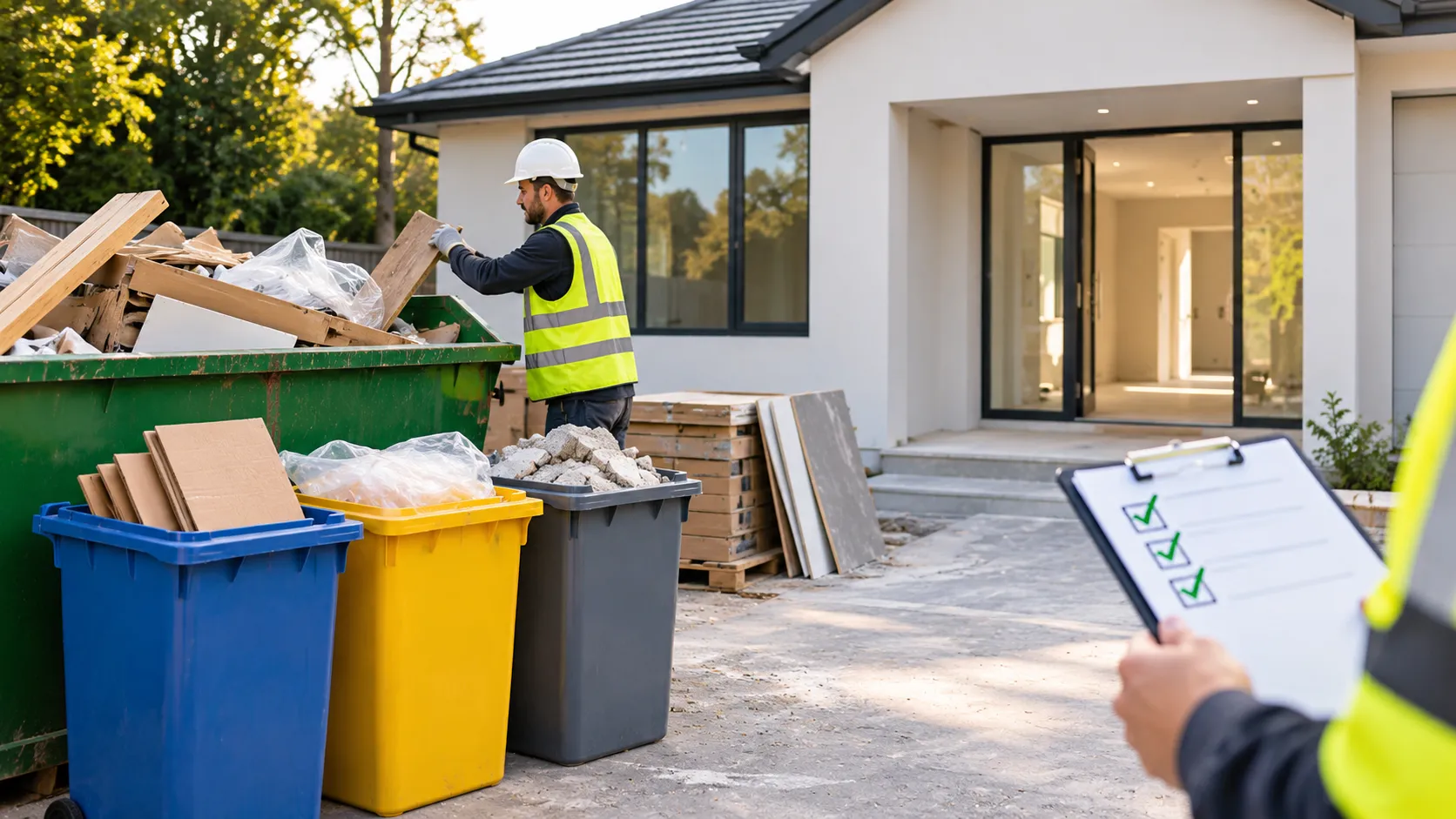
Quick Answer: How Do You Manage Builders Waste Before Final Handover?
The most effective way to manage builders waste before final handover is to remove construction debris progressively, separate recyclable and hazardous materials, arrange appropriate waste collection, and complete a professional builder's clean followed by a final handover clean.
Bulk waste should be removed before defect inspections and final cleaning. Any additional debris generated during remedial work should then be cleared before the property is presented to the client.
A structured waste management and cleaning programme helps reduce handover delays, improve workplace safety, protect finished surfaces and prepare the building for occupancy.
Completing a construction or renovation project involves more than finishing building work and obtaining the necessary approvals. Before a property is handed over to its owner, tenant or facility manager, construction debris, packaging, leftover materials and accumulated dust must also be addressed.
Builders waste can quickly become a significant obstacle during the final stages of a project. Even when construction work is substantially complete, leftover rubble, timber offcuts, plasterboard, protective coverings and discarded materials can interfere with inspections, restrict access and compromise the appearance of newly completed spaces.
For Australian construction companies, commercial developers, builders and project managers, coordinating waste removal with professional construction cleaning services is an important part of delivering a well-presented property that is ready for its intended use.
Why Managing Builders Waste Before Handover Is Important
The final stages of a construction project often involve multiple contractors completing outstanding tasks within a limited timeframe. Electricians, plumbers, painters, flooring installers and fit-out specialists may all generate additional waste shortly before practical completion.
Without a structured clearance programme, waste can accumulate faster than it is removed, creating unnecessary pressure on site supervisors and cleaning contractors.
Key Benefits of Effective Construction Waste Management
| Benefit | Impact on Construction Projects |
|---|---|
| Improved Workplace Safety | Reduces trip hazards, obstructed access routes and exposure to discarded materials. |
| Faster Final Inspections | Allows inspectors and project managers to access completed areas more easily. |
| Reduced Rework | Minimises the risk of debris damaging finished floors, walls and fixtures. |
| Better Cleaning Efficiency | Allows cleaning teams to concentrate on detailed cleaning rather than moving bulky waste. |
| Improved Waste Recovery | Supports recycling and reuse through effective material segregation. |
| Lower Risk of Delays | Reduces dependence on last-minute waste collection arrangements. |
| Professional Presentation | Creates a positive impression during client inspections and handover meetings. |
| Environmental Responsibility | Helps minimise unnecessary landfill disposal where recycling options are available. |
Effective waste management should therefore be incorporated into the construction programme from the beginning rather than treated as a separate activity at the end of the project.
What Is Considered Builders Waste?
Builders waste, also known as construction and demolition waste or C&D waste, refers to unwanted materials generated during building, demolition, renovation, refurbishment and fit-out activities.
The type and quantity of waste depend on the size of the development, construction methods, materials used and the number of contractors operating on-site.
| Waste Type | Common Examples | Recommended Management Approach |
|---|---|---|
| Concrete and Masonry | Concrete, bricks, blocks, mortar and rubble | Separate for suitable construction waste recovery or disposal. |
| Timber Waste | Offcuts, pallets, framing and damaged boards | Identify reusable materials and separate treated timber where required. |
| Plasterboard | Gypsum sheets and plasterboard offcuts | Arrange separate recycling or disposal where available. |
| Metal Waste | Steel, aluminium, copper, pipes and fixings | Separate for metal recycling where practical. |
| Packaging Materials | Cardboard, plastic wrapping and protective packaging | Segregate clean recyclable materials from contaminated waste. |
| Glass | Broken windows, glazing offcuts and glass panels | Use appropriate containers and confirm acceptance requirements. |
| Flooring Waste | Carpet, vinyl, tiles and flooring offcuts | Investigate material-specific recovery or disposal options. |
| Fixtures and Fittings | Cabinets, doors, sinks and damaged fittings | Assess for reuse, salvage or appropriate disposal. |
| Electrical Waste | Cables, lighting equipment and electronic components | Arrange suitable electrical waste collection where required. |
| General Site Waste | Mixed non-hazardous rubbish and disposable materials | Use approved waste containers and collection services. |
| Hazardous Waste | Asbestos-containing materials, solvents, chemicals and contaminated products | Arrange specialist assessment, handling and authorised disposal. |
Waste acceptance and classification requirements can vary between Australian states, territories and waste facilities. Contractors should confirm the appropriate disposal arrangements before placing materials into general construction waste containers.
1. Develop a Construction Waste Management Plan Before Practical Completion
A construction waste management plan provides a clear approach to identifying, collecting, separating and removing waste throughout the project.
Although the final handover may be several weeks or months away, establishing waste management responsibilities early helps prevent unnecessary accumulation and reduces the risk of expensive last-minute clearances.
What Should a Construction Waste Management Plan Include?
- Expected types and quantities of construction waste.
- Designated waste storage and collection areas.
- Material segregation and recycling arrangements.
- Approved waste collection providers.
- Hazardous material identification and escalation procedures.
- Collection schedules and project clearance milestones.
- Responsibilities for individual trades and subcontractors.
- Site access requirements for waste collection vehicles.
- Required disposal and recycling documentation.
- Builder's cleaning and final handover cleaning schedules.
For larger commercial developments, waste management requirements should be reviewed as the project progresses. Changes to construction schedules, material deliveries and fit-out activities can significantly affect the amount of waste generated.
2. Schedule Waste Removal Around Construction Milestones
Leaving all construction waste on-site until the final week can create unnecessary congestion and increase the likelihood of collection delays.
Progressive waste removal allows contractors to maintain more organised work areas while reducing the volume of material that must be cleared immediately before handover.
Suggested Construction Waste Clearance Schedule
| Project Stage | Recommended Waste Management Activity | Expected Outcome |
|---|---|---|
| Pre-Construction | Establish collection areas, waste streams and contractor responsibilities. | Organised waste management from the beginning. |
| Active Construction | Arrange progressive collections and regularly clear access routes. | Reduced waste accumulation and safer movement. |
| Services Installation | Remove electrical, plumbing and mechanical installation waste. | Clear plant rooms and service areas. |
| Fit-Out Stage | Remove packaging, flooring offcuts and redundant materials. | Protection of newly installed finishes. |
| Major Works Completed | Arrange bulk clearance of remaining construction debris. | Improved access for inspections and cleaning. |
| Pre-Defect Inspection | Clear rooms and undertake an initial builder's clean. | Better visibility of completed surfaces and defects. |
| Remedial Works Completed | Remove additional materials generated during repairs. | Prevention of repeat cleaning requirements. |
| Final Cleaning | Complete detailed post-construction cleaning. | Clean and presentable internal spaces. |
| Final Handover | Inspect cleared areas and confirm outstanding waste has been addressed. | Property prepared for client acceptance. |
The timing of each stage should be adjusted according to the project size, access restrictions, availability of waste contractors and agreed handover deadline.
3. Separate Construction Waste at the Source
Separating construction waste where it is generated can make recycling, collection and disposal more efficient.
When recyclable materials are mixed with general rubbish, contamination can reduce recovery opportunities and may result in additional sorting or disposal charges.
Designated and clearly labelled waste containers help tradespeople understand where different materials should be placed.
Apply the Waste Management Hierarchy
| Priority | Waste Management Method | Construction Example |
|---|---|---|
| 1 | Avoid | Order appropriate material quantities to reduce surplus stock. |
| 2 | Reduce | Plan material cutting and installation to minimise offcuts. |
| 3 | Reuse | Retain suitable unused bricks, tiles, timber and fittings. |
| 4 | Recycle | Separate accepted metals, cardboard, concrete and other recyclable materials. |
| 5 | Recover | Use suitable material recovery services where available. |
| 6 | Dispose | Send remaining waste to an appropriately authorised facility. |
Prioritising waste avoidance and material recovery can support sustainability objectives while reducing unnecessary disposal requirements.
However, materials should only be reused when they remain suitable for their intended purpose and meet relevant project specifications.
4. Choose the Right Builders Waste Collection Method
Different construction projects require different waste collection arrangements. A small commercial refurbishment may generate relatively modest amounts of waste, while a major development may require multiple containers and scheduled collections.
Consider waste volume, material weight, available storage space, vehicle access and collection frequency before selecting a waste removal provider.
| Collection Method | Suitable Applications | Important Considerations |
|---|---|---|
| Skip Bin Hire | Renovations, fit-outs and general construction projects | Check weight limits, accepted materials and placement requirements. |
| Dedicated Recycling Containers | Projects generating large quantities of specific recyclable materials | Requires effective segregation by site personnel. |
| Tipper Truck Collection | Bulk rubble and approved loose construction materials | Requires suitable loading arrangements and vehicle access. |
| Waste Collection Crew | Smaller clearances and sites with limited container space | Confirm labour requirements, collection scope and accepted materials. |
| Scheduled Waste Collection | Large developments and long-duration construction projects | Coordinate collection frequency with waste generation. |
| Specialist Waste Collection | Hazardous, contaminated or regulated materials | Requires appropriately qualified or authorised providers. |
Always confirm whether local council approval is required when placing skip bins or waste containers on public roads, footpaths or other public land.
Containers should not obstruct emergency routes, pedestrian access, loading zones or areas required by other construction contractors.
5. Keep Construction Site Access Routes Clear
Waste accumulation can create significant access and safety issues, particularly when multiple trades are completing work simultaneously.
Packaging, trailing cables, offcuts, protruding fixings and broken materials can create trip hazards and obstruct movement through the building.
Site supervisors should ensure that waste is not allowed to accumulate in:
- Emergency exits and evacuation routes.
- Stairwells and corridors.
- Lift entrances and loading areas.
- Plant rooms and electrical service areas.
- Accessible entrances and pathways.
- Fire equipment access points.
- Vehicle entry and exit routes.
- Completed tenancy spaces.
- Areas scheduled for final inspection.
Clear access routes also allow professional cleaning teams to move equipment through the building without unnecessary interruptions.
6. Identify Hazardous and Restricted Construction Waste
Not all construction waste can be placed into standard skip bins or general waste containers. Certain materials may create serious health, environmental or safety risks if handled incorrectly.
| Potentially Hazardous Material | Primary Concern | Required Action |
|---|---|---|
| Asbestos-Containing Materials | Exposure to hazardous airborne fibres | Stop work in the affected area and arrange assessment by appropriately qualified professionals. |
| Paints and Solvents | Chemical exposure and environmental contamination | Follow product safety information and appropriate disposal requirements. |
| Contaminated Soil | Potential chemical or environmental hazards | Arrange assessment and suitable waste classification. |
| Batteries | Fire risk and chemical leakage | Use suitable battery recovery or disposal services. |
| Fluorescent Lighting | Potential mercury contamination | Arrange appropriate collection and recycling. |
| Silica-Containing Construction Dust | Respiratory exposure to crystalline silica | Use suitable dust controls and appropriately trained personnel. |
| Chemical Containers | Residual hazardous substances | Confirm classification and disposal instructions before collection. |
Suspected asbestos-containing materials should not be disturbed, swept, vacuumed with ordinary equipment or placed into general waste containers.
Similarly, construction dust that may contain respirable crystalline silica requires appropriate risk assessment and exposure controls. Dry sweeping and compressed-air cleaning can redistribute hazardous dust and should not be used where they create exposure risks.
Builders and site managers should follow applicable state or territory workplace safety and environmental requirements and engage qualified specialists when necessary.
When coordinating professional cleaning, discuss site-specific hazards, access restrictions and risk assessments with the cleaning contractor. Learn more about Corporate Cleaning Services®' ISO 9001 quality management, workplace safety and risk assessment practices.
7. Coordinate Waste Clearance With Defect Inspections
Defect inspections, sometimes referred to as snagging inspections, involve identifying incomplete work, damaged finishes and other issues that need to be addressed before handover.
Large quantities of waste can conceal defects and prevent inspectors from properly accessing walls, flooring, fixtures and equipment.
For example, discarded cardboard can conceal damaged flooring, protective coverings may hide unfinished surfaces, and accumulated dust can make it difficult to assess paintwork or glazing.
Recommended Pre-Handover Work Sequence
| Step | Activity | Purpose |
|---|---|---|
| 1 | Complete Major Construction Works | Finish activities generating substantial waste. |
| 2 | Bulk Waste Clearance | Remove rubble, surplus materials and unwanted packaging. |
| 3 | Initial Builder's Clean | Improve visibility and access to finished surfaces. |
| 4 | Defect Inspection | Identify damaged, incomplete or unacceptable work. |
| 5 | Remedial Works | Address outstanding construction defects. |
| 6 | Final Waste Clearance | Remove debris generated during defect rectification. |
| 7 | Final Handover Clean | Prepare completed spaces for client presentation. |
| 8 | Final Inspection and Handover | Confirm agreed completion and presentation requirements. |
This sequence helps prevent unnecessary repeat cleaning and reduces the risk of contractors damaging areas that have already been prepared for handover.
8. Protect Newly Completed Surfaces During Waste Removal
Construction waste removal can damage completed surfaces if materials and collection equipment are moved carelessly through finished areas.
Heavy debris may scratch flooring, metal offcuts can damage joinery, and bulky items can mark walls, door frames or glass partitions.
| Finished Surface | Potential Damage | Preventive Measure |
|---|---|---|
| Timber Flooring | Scratches, dents and scuff marks | Use suitable temporary floor protection during clearance. |
| Polished Concrete | Abrasive scratching and staining | Prevent direct contact with sharp debris and contaminants. |
| Glass Partitions | Scratches and impact damage | Keep bulky materials away from glazing. |
| Painted Walls | Impact marks, chips and scuffs | Maintain sufficient clearance when transporting materials. |
| Carpet | Embedded dust, debris and staining | Restrict unnecessary waste movement across completed carpeted areas. |
| Joinery and Cabinetry | Scratches and edge damage | Retain appropriate protective coverings until clearance is complete. |
| Tiles and Stone | Chipping and surface scratching | Avoid dragging construction materials across finished surfaces. |
Site managers should coordinate the removal of temporary protective coverings so that finished surfaces remain protected during outstanding construction activities but are accessible for final cleaning and inspection.
9. Understand the Difference Between Builders Waste Removal and Construction Cleaning
Builders waste removal and construction cleaning are closely related but serve different purposes.
Waste removal focuses primarily on collecting and transporting unwanted construction materials. Construction cleaning focuses on preparing the building's surfaces, fixtures and internal spaces for inspection, presentation and occupancy.
Both activities must be coordinated to achieve an effective handover.
| Task | Builders Waste Removal | Construction Cleaning |
|---|---|---|
| Bulk Rubble Collection | Primary Responsibility | Usually Excluded |
| Removal of Timber and Large Offcuts | Primary Responsibility | Subject to Agreed Scope |
| Packaging and Light Debris | Included | May Be Included |
| Fine Construction Dust | Generally Not Included | Primary Responsibility, Subject to Hazard Controls |
| Detailed Floor Cleaning | Not Included | Included Where Specified |
| Windows and Glass Cleaning | Not Included | Included Where Specified |
| Bathroom and Amenity Cleaning | Not Included | Included Where Specified |
| Surface Detailing | Not Included | Included Where Specified |
| Hazardous Material Remediation | Specialist Service Required | Not Part of Standard Cleaning |
| Handover Presentation | Supports Site Clearance | Supports Final Property Presentation |
The exact scope should be agreed with each contractor before work begins to prevent duplication, incomplete tasks and unexpected additional charges.
10. Schedule Professional Builder's Cleaning and Final Handover Cleaning
Even after construction waste has been removed, completed buildings often contain fine dust, surface marks, packaging residue, fingerprints and debris in corners, cupboards and service areas.
Depending on site conditions, a construction project may require several stages of professional cleaning rather than a single visit.
Different Types of Construction Cleaning
| Cleaning Stage | When It Is Performed | Typical Purpose |
|---|---|---|
| Pre-Build Clean | Before Construction Begins | Prepare existing spaces, amenities and access areas. |
| Maintenance or Staged Clean | During Construction | Manage dust, light debris and site presentation as works progress. |
| Builder's Clean | During the Later Stages of Construction | Remove agreed debris, dust and construction residue. |
| Final Handover Clean | After Major Works and Defect Rectification | Detail completed areas for client inspection and occupancy. |
| Touch-Up Clean | Shortly Before Handover, If Required | Address minor dust, footprints or marks created after the final clean. |
| Ongoing Commercial Cleaning | After Occupancy | Maintain workplace cleanliness and presentation during operations. |
Corporate Cleaning Services® provides construction cleaning options suited to different project stages, helping builders coordinate cleaning with completion milestones, inspection dates and access requirements.
Typical Final Handover Cleaning Requirements
- Removal of accessible, non-hazardous construction dust.
- Cleaning of floors and skirting boards.
- Cleaning of door frames, doors and handles.
- Cleaning of accessible window frames and glass.
- Cleaning of cupboards, shelving and joinery.
- Bathroom and toilet cleaning.
- Kitchen and staff amenity cleaning.
- Removal of suitable labels and adhesive residue where agreed.
- Cleaning of reception areas and common spaces.
- Final detailing of accessible fixtures and fittings.
Newly installed glazing can also accumulate dust, fingerprints and installation residue. Professional window cleaning services can be included in the handover cleaning plan where appropriate.
11. Do Not Overlook External Areas and Car Parks
While internal spaces typically receive considerable attention during final cleaning, external areas can also affect property presentation and safety.
Waste can remain around loading docks, landscaping areas, site compound locations, access roads and car parks after construction teams have completed their work.
| External Area | Common Problems | Recommended Action |
|---|---|---|
| Car Parks | Dust, gravel, packaging and small construction debris | Clear loose materials and arrange appropriate surface cleaning. |
| Driveways | Mud, dirt and construction residue | Remove debris and clean suitable surfaces. |
| Loading Docks | Pallets, wrapping and discarded materials | Clear delivery and vehicle manoeuvring areas. |
| Landscaping Areas | Offcuts, packaging and buried debris | Inspect and remove unwanted materials safely. |
| Building Entrances | Dust, footprints and surface marks | Complete entrance detailing before inspection. |
| Balconies and Terraces | Packaging, fixings and construction dust | Clear debris and clean accessible surfaces. |
| Service Yards | Waste containers and surplus materials | Remove temporary equipment and unused materials. |
| Stormwater Drain Areas | Sediment and loose construction debris | Arrange appropriate clearance without allowing waste to enter drains. |
Depending on the property's condition, specialist car park cleaning and professional pressure cleaning services may help improve the presentation of suitable external surfaces.
Pressure cleaning should only be undertaken after assessing surface compatibility, contamination risks and appropriate wastewater management arrangements.
12. Assign Clear Waste Management Responsibilities
One of the most common causes of incomplete construction waste clearance is uncertainty about who is responsible for individual tasks.
Subcontractors may assume the main builder will remove their waste, while builders may expect cleaning contractors to handle materials that are outside the agreed cleaning scope.
Establishing responsibilities before practical completion helps prevent misunderstandings.
| Responsible Party | Typical Responsibilities |
|---|---|
| Project Manager | Coordinate waste management milestones, budgets and handover schedules. |
| Site Supervisor | Monitor waste accumulation, site access and daily housekeeping. |
| Main Contractor | Coordinate overall site clearance and contracted waste removal arrangements. |
| Subcontractors | Manage waste generated by their work according to contractual requirements. |
| Waste Collection Provider | Collect, transport and manage accepted waste under applicable requirements. |
| Specialist Waste Contractor | Manage regulated or hazardous waste within their authorised scope. |
| Construction Cleaning Contractor | Complete agreed builder's cleaning and final cleaning activities. |
| Facility Manager | Coordinate post-handover cleaning and ongoing property maintenance. |
Written scopes of work should identify who is responsible for bulk debris, general rubbish, recyclable materials, protective coverings and final surface cleaning.
13. Verify Waste Contractors and Maintain Disposal Records
Responsible construction waste management extends beyond removing materials from the building site.
Builders and project managers should confirm that waste contractors are suitable for the materials they are collecting and that waste is directed to appropriate recovery or disposal facilities.
Waste Contractor Verification Checklist
- Confirm the provider accepts the relevant waste streams.
- Check applicable licences, registrations or authorisations.
- Confirm appropriate insurance coverage.
- Review collection capacity and vehicle access requirements.
- Confirm prohibited materials and contamination restrictions.
- Check whether recycling or material recovery services are available.
- Request disposal receipts or weighbridge records where appropriate.
- Retain waste tracking documentation where legally or contractually required.
Documentation requirements vary according to the location, waste classification and nature of the construction project.
Maintaining suitable records can support environmental reporting, sustainability commitments and project close-out requirements.
14. Understand What Affects Builders Waste Removal and Cleaning Costs
The cost of preparing a construction site for handover depends on more than the floor area of the building.
Waste volume, material type, access restrictions, cleaning requirements and the condition of completed spaces can all influence the resources needed.
| Cost Factor | Why It Matters | How to Manage It |
|---|---|---|
| Waste Volume | Larger quantities may require additional collections. | Monitor waste generation throughout the project. |
| Material Weight | Heavy masonry and concrete can affect transport and disposal costs. | Select suitable containers and collection methods. |
| Waste Contamination | Mixed materials may increase sorting or disposal requirements. | Separate waste at the source. |
| Site Accessibility | Restricted loading areas may increase labour and collection time. | Plan access arrangements in advance. |
| Hazardous Materials | Specialist assessment and disposal may be required. | Identify hazardous waste early. |
| Final Cleaning Scope | Detailed cleaning requirements vary by surface type and building use. | Agree on a site-specific cleaning specification. |
| Construction Delays | Outstanding work may create repeat cleaning requirements. | Coordinate cleaning with confirmed completion milestones. |
| Urgent Scheduling | Last-minute changes may affect contractor availability and labour requirements. | Book waste removal and cleaning services early. |
Requesting separate, clearly defined quotations for waste collection and construction cleaning can help project managers understand inclusions and avoid unexpected expenses.
15. Avoid Common Builders Waste Management Mistakes
Even experienced construction teams can encounter preventable waste management problems during the pressure of project completion.
| Common Mistake | Potential Consequence | Recommended Solution |
|---|---|---|
| Leaving Waste Until Handover Day | Collection delays and incomplete site clearance. | Schedule progressive waste removal. |
| Mixing All Waste Types | Reduced recycling opportunities and additional disposal requirements. | Establish clearly labelled collection areas. |
| Cleaning Before Bulk Clearance | Repeat cleaning and unnecessary labour. | Remove bulky waste before detailed cleaning. |
| Ignoring Remedial Work Waste | New debris appearing after the builder's clean. | Schedule a final clearance after defect rectification. |
| Overlooking External Spaces | Poor presentation and potential safety hazards. | Inspect the entire project boundary. |
| Unclear Contractor Responsibilities | Waste left behind or disputes over scope. | Document responsibilities in advance. |
| Incorrect Hazardous Waste Disposal | Health, environmental and regulatory risks. | Engage appropriately qualified specialists. |
| Removing Surface Protection Too Early | Damage to newly completed finishes. | Coordinate protection removal with final trade activities. |
| Allowing Trades Back Into Cleaned Areas | Dust contamination and additional cleaning. | Control access to completed and cleaned zones. |
16. Complete a Pre-Handover Builders Waste Checklist
Before the final client walkthrough, conduct a dedicated inspection covering internal areas, external spaces, storage locations, waste management documentation and agreed cleaning requirements.
The checklist should be assigned to a responsible person who can confirm completion and arrange corrective action if required.
| Inspection Item | Responsible Party | Complete |
|---|---|---|
| Bulk construction debris removed | Builder / Waste Contractor | ? |
| Unused materials removed or formally retained | Site Supervisor | ? |
| Recyclable materials appropriately separated | Site Supervisor | ? |
| Hazardous waste appropriately managed | Qualified Specialist / Site Manager | ? |
| Internal corridors and stairs clear | Site Supervisor | ? |
| Emergency access routes unobstructed | Site Supervisor | ? |
| Plant rooms and storage areas inspected | Project Team | ? |
| Waste from defect rectification removed | Subcontractors / Builder | ? |
| Temporary surface protection removed where agreed | Assigned Contractor | ? |
| Loading docks and external areas cleared | Builder / Waste Contractor | ? |
| Car parks and access paths inspected | Site Supervisor | ? |
| Builder's cleaning completed | Cleaning Contractor | ? |
| Final handover cleaning completed | Cleaning Contractor | ? |
| Waste documentation retained where required | Project Manager | ? |
| Final presentation inspection completed | Project Manager | ? |
Photographic records of completed areas may also be useful for documenting clearance and cleaning outcomes before client handover.
17. Prepare the Property for Ongoing Occupancy
Once construction waste has been cleared and final cleaning is complete, attention shifts towards maintaining the property during its operational life.
New commercial buildings, offices, retail premises, warehouses and other facilities can benefit from an ongoing cleaning programme that protects presentation standards established during handover.
Facility managers should consider cleaning frequencies, floor maintenance requirements, washroom hygiene, waste collection arrangements and high-traffic areas before occupants move into the building.
Arranging ongoing commercial cleaning services before occupancy can help provide a smoother transition from construction completion to everyday facility operations.
How Professional Construction Cleaning Supports a Successful Handover
Managing builders waste is only one component of delivering a completed construction project. Once unwanted materials have been removed and the site has been assessed as suitable for cleaning, professional construction cleaners can help bring finished spaces to the required presentation standard.
Corporate Cleaning Services® works with construction companies, builders, project managers and commercial property managers to coordinate cleaning requirements throughout the construction process.
Cleaning programmes can be tailored to suit:
- Commercial office developments.
- Retail and shopping centre fit-outs.
- Industrial and warehouse developments.
- Building refurbishments.
- Multi-stage construction projects.
- Commercial renovation works.
- New commercial property handovers.
Our approach combines project-specific cleaning scopes, coordinated scheduling and attention to site safety requirements, helping reduce unnecessary interruptions during the final stages of construction.
Discuss your construction programme, anticipated completion date and cleaning requirements with our team to establish a suitable scope before handover.
Prepare Your Construction Project for a Professional Handover
Need professional builder's cleaning or final handover cleaning for your construction project?
Corporate Cleaning Services® provides tailored construction cleaning solutions designed around your site requirements, project milestones and completion schedule.
From staged construction cleaning to final presentation cleaning, our team can help prepare your completed commercial property for its next chapter.
Request a Free Cleaning QuoteCall us today on 1800 032 032
Frequently Asked Questions About Builders Waste and Final Handover
When should builders waste be removed before final handover?
Builders waste should be removed progressively throughout the construction project. The main clearance should take place before defect inspections and detailed cleaning, followed by another clearance if remedial works generate additional debris. Avoid relying on a single collection on handover day.
What is included in builders waste?
Builders waste includes unwanted materials generated during construction, demolition, renovation and fit-out activities. Common examples include concrete, bricks, timber, plasterboard, metal, packaging, flooring offcuts, damaged fixtures and general construction debris.
Can all builders waste go into the same skip bin?
No. Skip bin providers have different material acceptance requirements. Concrete, soil, plasterboard, treated timber and other materials may require separate containers or collection arrangements. Hazardous and regulated waste must be handled according to applicable disposal requirements.
Who is responsible for removing construction waste?
Responsibility depends on the construction contract and agreed scope of work. The main contractor usually coordinates overall site clearance, while subcontractors may be responsible for waste generated by their own activities. Responsibilities should be established before construction begins.
Is builders waste removal the same as a builder's clean?
No. Builders waste removal primarily involves collecting and transporting unwanted construction materials. A builder's clean focuses on removing agreed light debris, dust and construction residue from surfaces and preparing the property for further inspections or final cleaning.
What is the difference between a builder's clean and a final handover clean?
A builder's clean usually takes place during the later stages of construction to remove accumulated dust, light debris and residue. A final handover clean focuses on detailed presentation after major construction and remedial works are complete.
How can construction companies reduce builders waste?
Construction companies can reduce waste by accurately estimating material requirements, improving storage practices, reusing suitable materials, separating recyclable waste and coordinating material deliveries with construction schedules.
Can construction materials be recycled?
Yes. Many construction materials, including concrete, bricks, metal, clean cardboard and certain timber products, may be suitable for recycling. Availability depends on material condition, contamination levels and local recovery facilities.
How much does builders waste removal cost in Australia?
Builders waste removal costs vary depending on waste volume, material weight, waste classification, collection method, location and site accessibility. Specialist or contaminated waste may involve additional assessment and disposal costs. Request a project-specific quotation for accurate pricing.
What happens if builders waste is not removed before handover?
Remaining construction waste may obstruct access, conceal defects, create safety hazards and prevent detailed cleaning from being completed effectively. Depending on contractual requirements, it may also result in additional work, cleaning expenses or handover delays.
How should hazardous construction waste be managed?
Potentially hazardous waste should be identified and assessed before it is disturbed or removed. Materials such as asbestos, certain chemicals and contaminated products may require specialist handling and authorised disposal. Contractors should follow applicable workplace safety and environmental requirements.
Should construction cleaning be completed before or after defect inspections?
An initial builder's clean before defect inspections can improve visibility and access. Detailed final cleaning should generally occur after defect rectification and other dust-generating works have been completed.
How long does a final construction clean take?
The duration depends on the building size, surface types, amount of construction residue, access conditions and cleaning scope. Larger developments may require multiple cleaning teams or staged cleaning across several areas. A site assessment can help establish a suitable timeframe.
Does construction cleaning include external areas?
External cleaning can be included where agreed in the cleaning specification. Depending on the project, this may involve entrances, accessible glazing, car parks and suitable external hard surfaces. Confirm external cleaning requirements when arranging a quotation.
Can construction cleaning be scheduled in stages?
Yes. Staged cleaning is particularly useful for large commercial developments and projects where sections of a building are completed at different times. It allows completed areas to be cleaned without waiting for the entire project to finish.
Does Corporate Cleaning Services® provide final handover cleaning?
Yes. Corporate Cleaning Services® provides construction cleaning, including builder's cleans, staged cleaning and final handover cleaning tailored to project requirements. Bulk construction waste removal and specialist hazardous waste services should be arranged separately unless specifically included in the agreed scope.
Final Thoughts
Managing builders waste before final handover requires careful planning, clear contractor responsibilities and coordination between construction, waste collection and cleaning teams.
By removing waste progressively, separating materials where practical, addressing hazardous waste appropriately and scheduling professional construction cleaning after major works are complete, builders can reduce avoidable delays and improve the presentation of completed properties.
A well-managed handover is not simply about removing rubbish. It is about delivering a completed building that is clean, accessible and prepared for its intended use.
Contact Corporate Cleaning Services® on 1800 032 032 to discuss professional construction cleaning for your next project.