Proven Tips to Maintain a Spotless Office Every Day
10th November 2025
Maintaining a consistently spotless office in the busy work environment can be a challenge, with dust and the demands of shared spaces often contributing to mess. However, the benefits for Australian businesses are significant, including improved employee health and productivity, positive client impressions, a more pleasant atmosphere, and the overall impact of effective office cleaning. The key to achieving this lies in establishing proactive daily habits that prevent dirt and clutter from accumulating.
This article will outline proven and easy-to-implement daily tips that Australian businesses can adopt to ensure a consistently spotless and thriving office environment. By focusing on small, regular actions, workplaces can foster a healthier, more productive, and more welcoming space for both employees and visitors, ultimately contributing to greater success.
Establishing a Daily Cleaning Mindset in Your Workplace
Creating a consistently clean office environment begins with more than just checklists and supplies—it requires a workplace culture where cleanliness is valued, encouraged, and integrated into everyday behaviour. By fostering a shared mindset of responsibility, Australian businesses can maintain a tidy office effortlessly and sustainably.
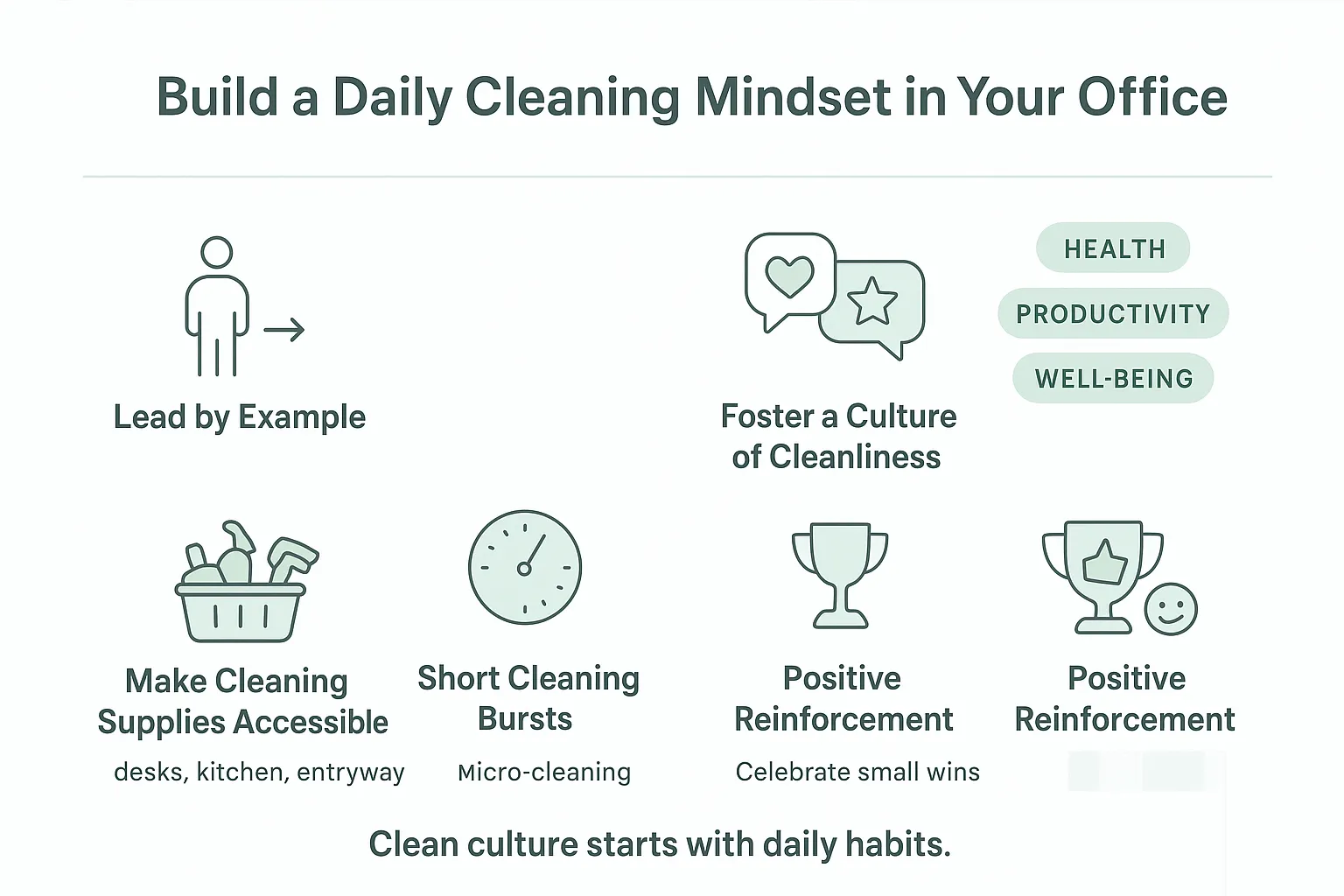
1. Lead by Example
A strong daily cleaning mindset starts with leadership. When managers, supervisors, and business owners model good cleaning habits—such as keeping their own workspaces tidy or wiping down shared areas after use—it communicates that cleanliness isn’t optional, but an important part of the workplace culture. This visible leadership sets clear expectations and often motivates employees to follow suit, reinforcing the idea that keeping the office clean is a team effort, not just the job of cleaners or support staff.
2. Foster a Culture of Cleanliness
Encourage open communication about why cleanliness matters. Australian employees respond well when they understand the tangible benefits:
- Healthier work environments with fewer allergens and germs
- Reduced sick days and improved well-being
- Higher productivity and greater focus
- A professional atmosphere that welcomes clients and visitors
Discussing these advantages in team meetings, onboarding sessions, or internal newsletters helps embed cleaning responsibilities into the workplace culture. For businesses using professional commercial cleaning services, this commitment further reinforces high hygiene standards and demonstrates that cleanliness is a valued part of daily operations.
3. Make It Easy and Accessible
Employees are far more likely to maintain daily cleaning habits when the tools they need are within easy reach. Ensure your office is well-stocked with accessible supplies such as:
- Disinfectant wipes and sprays
- Hand sanitiser stations
- Paper towels
- Microfibre cloths
- Mini rubbish and recycling bins
Strategically placing these in high-traffic areas—kitchens, meeting rooms, desks, and photocopier zones—removes barriers and encourages quick clean-ups throughout the day.
4. Allocate Time (Even Short Bursts)
Developing a cleaning mindset doesn’t require long periods of time. Encourage staff to take short, regular “reset moments” during the day. Even 2–3 minutes can be enough to tidy desks, empty small bins, or wipe down a shared space after use. These micro-habits prevent build-up and reduce the need for end-of-week cleanup marathons, helping employees stay organised and focused.
5. Positive Reinforcement
Recognition is a powerful motivator. When employees actively contribute to maintaining a clean workspace, acknowledge their efforts—whether through verbal appreciation, team shout-outs, or small incentives. This kind of positive reinforcement builds morale and reinforces a shared sense of ownership. Over time, these habits become ingrained, making your Australian workplace naturally cleaner, more collaborative, and more pleasant for everyone.
Top Proven Daily Cleaning Tips for Offices
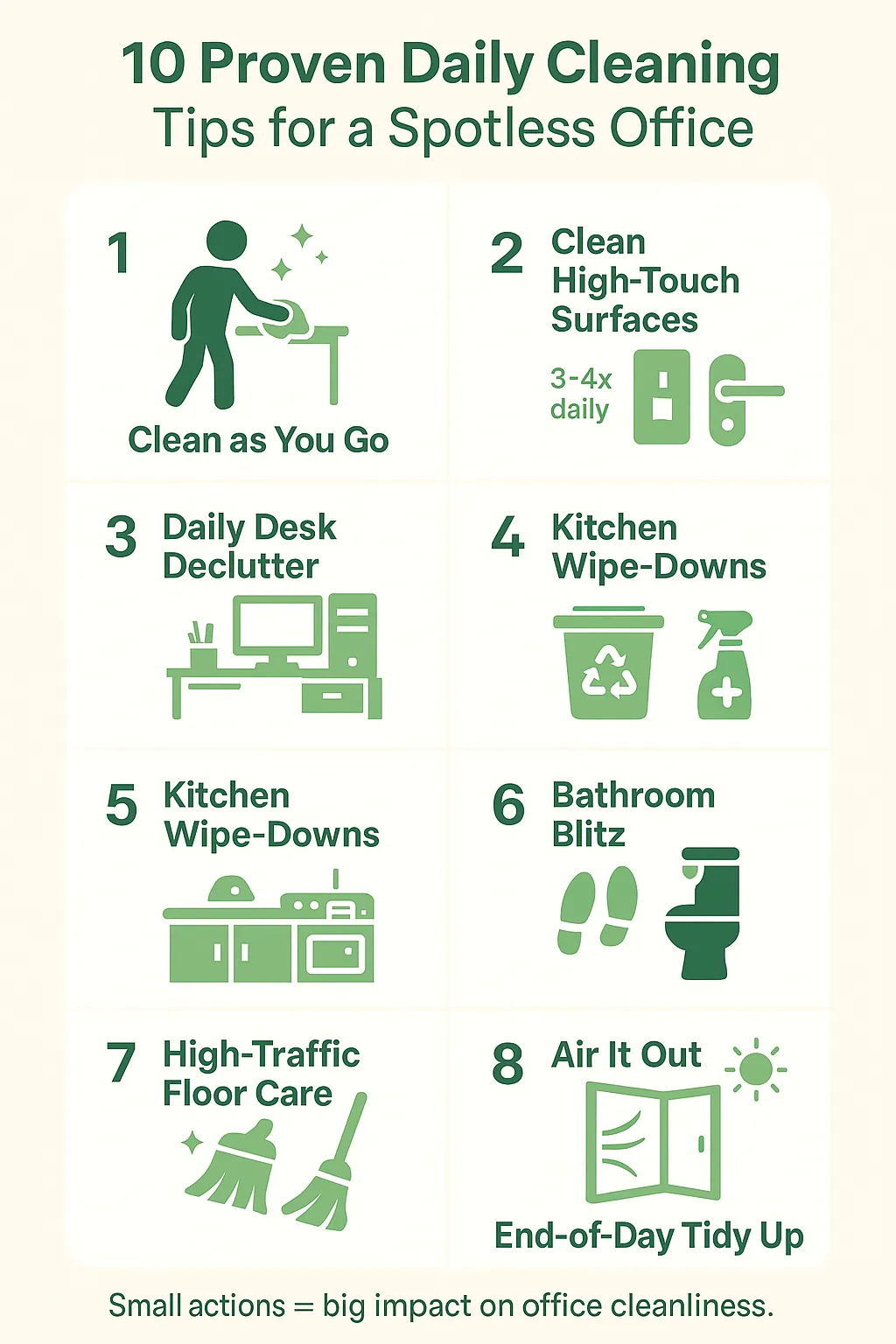
1. The “Clean as You Go” Rule
A “Clean as You Go” mindset prevents small messes from spiralling into major cleaning jobs. It keeps the office consistently tidy throughout the day rather than relying on a single big clean-up.
Ways to strengthen this habit:
- Encourage staff to immediately wipe spills—whether coffee on a desk, water on the floor, or crumbs near their keyboard—to prevent stains, stickiness, or pest attraction.
- Place surface wipes and microfibre cloths in visible, accessible locations to make quick cleaning effortless.
- Remind team members to put stationery, folders, and personal belongings back in designated places once they’re finished.
- Introduce small signage near shared areas such as kitchens, printers, and meeting rooms to prompt “Clean as You Go” behaviour.
- Incorporate this rule into onboarding, so new employees understand tidiness expectations from day one.
A team that practices this consistently will always maintain a clean environment without feeling burdened.
2. Tackle High-Touch Surfaces Regularly
High-touch surfaces are the biggest germ hotspots in any Australian office, especially in open-plan, hot-desking, or hybrid workplaces.
Examples of high-touch surfaces to clean multiple times per day:
- Door handles and push panels
- Light switches
- Shared computer peripherals (keyboards, mice, touchpads)
- Photocopier, scanner, and printer screens
- Elevator buttons (if applicable)
- Kitchen knobs—microwave door, fridge handle, dishwasher buttons
- Meeting room table surfaces
- Shared phones, headsets, and tablets
Why this matters:
These areas are touched by dozens of people daily, making them prime locations for bacteria and viruses to spread. Regular wiping reduces transmission of flu, colds, gastro, and other illnesses—ultimately lowering employee sick leave and improving team health.
Pro tip:
Assign “high-touch champions” in each area to ensure these spots get a quick wipe-down periodically throughout the day.
3. Desk De-Cluttering Ritual
A tidy desk is more than just visually appealing—it directly improves productivity, mental clarity, and professionalism.
Steps for an effective daily desk ritual:
- Sort paperwork into three piles: file, action, recycle.
- Place all loose documents in trays or drawers instead of letting them pile on the desk.
- Remove used food containers, coffee cups, and snack wrappers.
- Give the desk a quick wipe to remove dust, fingerprints, and crumbs.
- Organise cables using clips to reduce clutter and tripping hazards.
- Personal items should be minimal but meaningful—avoid excessive décor that becomes dust traps.
Benefits:
Employees stay more focused, retrieval of documents is faster, and desks look client-ready at all times—important for Australian offices with open floor plans.
4. Empty Bins Daily
Bins fill faster than expected, especially in shared kitchen spaces or large teams.
Daily bin cleaning improves office hygiene by:
- Preventing unpleasant smells that linger overnight.
- Reducing the risk of pests such as ants, flies, or cockroaches.
- Encouraging correct recycling habits aligned with Australian municipal guidelines.
- Keeping floors clean by avoiding overflowing rubbish.
How to strengthen this habit:
- Provide colour-coded, clearly labelled bins for general waste, paper, and recycling.
- Encourage employees to empty personal desk bins into the main bin before leaving.
- Use bin liners in every bin to make the process faster and more hygienic.
- Post recycling rules from your local council so staff dispose correctly.
A clean waste system leads to a cleaner, greener office overall.
5. Quick Kitchen & Break Room Wipe-Downs
The kitchen is the most frequently used shared zone and also the quickest to get dirty.
Daily tasks that keep kitchen areas spotless:
- Wipe down kitchen counters after preparing food or drinks.
- Clean crumbs and spills around the toaster, kettle, and coffee machine.
- Clean microwave spills immediately—don’t leave splatters to harden.
- Empty and rinse sink strainers daily.
- Throw out spoiled food left in the fridge.
- Keep sponges, dish brushes, and tea towels clean and replaced regularly.
Benefits:
A clean kitchen improves employee morale, reduces cross-contamination, and ensures the office meets basic hygiene expectations—especially important in Australian climates where heat can intensify odours quickly.
6. Bathroom Blitz
A clean bathroom speaks volumes about a company’s standards. Even small daily efforts can keep them fresh between professional deep cleans.
Daily bathroom maintenance essentials:
- Quickly wipe mirrors, sinks, and splash marks on counters.
- Clean toilet seats, flush buttons, and cubicle locks to reduce germs.
- Check and top up soap, toilet paper, and paper towel supplies.
- Dispose of sanitary waste and empty bathroom bins.
- Immediately address spills, water puddles, or unusual odours.
Extra touches:
Add an air freshener, keep hand dryers clean, and ensure tiles are dry to reduce slip hazards.
Clean restrooms significantly improve employee comfort and overall satisfaction.
7. Floor Focus (Especially in High-Traffic Areas)
High-traffic pathways—entryways, hallways, reception areas—quickly accumulate dust and dirt brought in from outdoors.
Daily floor cleaning must include:
- Sweeping or vacuuming entry mats and main walkways.
- Spot-cleaning spills on hard floors to prevent accidents.
- Using a microfibre mop on tiles or vinyl flooring to remove marks.
- Cleaning carpet pathways to prevent dirt build-up and extend carpet life.
Australian-specific considerations:
- Offices near beaches, construction, or busy city centres experience heavier dirt and debris.
- Wet weather can drag mud into buildings—extra matting and more frequent floor checks help keep floors safe and clean.
8. Air It Out
Good air quality supports better health, fresher-smelling spaces, and improved concentration.
How to maximise fresh airflow:
- Open windows briefly in the morning or late afternoon when outdoor temperatures are mild.
- Let natural airflow refresh meeting rooms after long sessions.
- Combine natural ventilation with office air purifiers if needed.
- Check local pollen counts—particularly during Australian hay fever season—to avoid triggering allergies.
- Keep air-conditioning vents clean and unobstructed.
Fresh air circulation reduces stuffiness and creates a more energising workspace.
9. End-of-Day Tidy Up
This simple routine sets the tone for productivity the next morning.
A good end-of-day reset includes:
- Clearing all desks of clutter, rubbish, and personal items.
- Returning shared equipment—meeting room remotes, whiteboard markers, cables—to their storage spots.
- Tidying communal areas like lounges, breakout zones, and printer stations.
- Ensuring all food items are removed or stored properly to avoid attracting pests.
- Switching off lights, appliances, and equipment where appropriate.
The payoff:
Staff walk into a clean, organised, calm environment the next day—boosting motivation and making mornings smoother.
Making It a Routine: Integrating These Tips into the Workday
Creating a consistently clean office isn’t just about having the right checklist—it’s about making these habits part of the daily workflow. By embedding cleanliness into everyday routines, businesses can transform occasional tidying into a sustainable cultural norm. Here’s how to make these habits stick:
1. Visual Reminders That Reinforce Good Habits
Visual cues are one of the most effective ways to nudge employees toward maintaining cleanliness without constant verbal reminders.
How to use visual reminders effectively:
- Place clear signage above sinks, in break rooms, near printers, and inside meeting rooms reminding staff to wipe surfaces after use.
- Display the “Ultimate Daily Office Cleaning Checklist” in prominent communal areas—kitchens, notice boards, entryways, or inside utility rooms.
- Use icons and colour-coded reminders to grab attention quickly and make instructions easy to follow even at a glance.
- Include quick cleaning tips near high-touch points, such as “Please wipe after use” stickers on microwave doors or by coffee machines.
These simple reminders help employees take immediate action and eliminate excuses like forgetting or not knowing what to do.
2. Team Involvement Through Rotating Responsibilities
Shared responsibility is essential for preventing cleaning duties from defaulting to a few people. Instead, create a collaborative system that encourages participation from everyone.
Best practices for team involvement:
- Assign rotating daily or weekly roles—for example, “kitchen captain,” “meeting room checker,” or “printer area supervisor.”
- Use a roster or digital schedule to track who is responsible each day.
- Keep tasks small and manageable to avoid overwhelming staff and maintain positive morale.
- Encourage voluntary swaps if someone is away or too busy, so tasks are always covered.
This approach fosters teamwork, spreads responsibility equally, and promotes accountability across all departments.
3. Short, Regular Cleaning Bursts (5–10 Minutes)
Instead of relying on one major tidy-up at the end of the day, encourage micro-cleaning moments that fit naturally into the flow of the workday.
Examples of effective micro-cleaning moments:
- A 5-minute cleanup before morning tea or lunch.
- A quick desk tidy before starting a meeting.
- A kitchen wipe-down after making coffee.
- A high-touch surface check at the end of a break.
- A brief clean sweep at the end of the day to prepare for tomorrow.
Why this works:
Short bursts feel manageable, don’t disrupt workflow, and cumulatively have a massive impact on maintaining overall cleanliness. Australian offices particularly benefit from this approach as hybrid schedules often mean staggered usage of spaces throughout the day.
4. Lead By Example (Yes, Again!)
Leadership behaviour sets the tone for the entire workplace. Employees take cleanliness more seriously when they see decision-makers practicing it themselves.
What leading by example looks like:
- Managers wiping their desks regularly.
- Team leads cleaning up after meetings.
- Executives ensuring shared areas are left clean after use.
- Leadership participating in the rotating cleaning roster.
When staff see that cleanliness isn’t “beneath” management, they are far more likely to follow suit. It shows that tidiness is not merely a rule—it’s a shared organisational value.
5. Consistency Is Key to Creating Lasting Habits
The real transformation happens when cleaning tips aren’t just followed occasionally but become part of the everyday rhythm.
Ways to build consistency:
- Send gentle reminders via internal communication channels—Slack, Teams, email, or internal newsletters.
- Give shout-outs during team meetings to individuals or groups who consistently keep shared areas clean.
- Introduce friendly challenges like “Clean Desk Friday” or “Tidy Ten Minutes” to build momentum.
- Ensure cleaning supplies are always stocked so employees never struggle to comply.
- Encourage managers to reinforce expectations during onboarding and regular check-ins.
Over time, these repeated actions form strong habits, creating a workplace where cleanliness is second nature—not an obligation.
The Role of Professional Cleaning Services in Maintaining a Spotless Office
It's crucial to understand that while these proven daily cleaning tips are highly effective for maintaining surface-level tidiness and preventing the buildup of everyday mess, they are designed to complement, and not replace, the comprehensive deep cleaning services provided by professional commercial cleaning companies like CorpClean and other reputable providers across Australia. Professional cleaners have the expertise, specialised equipment, and industrial-strength cleaning products necessary to tackle more demanding tasks that daily efforts may not address.
A consistently maintained office, where daily tidying is a regular habit among employees, actually makes the job of professional cleaners more efficient when they come for scheduled visits. By reducing the amount of surface-level dirt, dust, and clutter, professional cleaners can focus their time and resources on more intensive tasks such as deep carpet cleaning, thorough bathroom sanitization, window washing, and detailed cleaning of less frequently accessed areas. This increased efficiency can potentially optimise cleaning schedules and associated costs for Australian businesses in the long run.
The most effective and sustainable strategy for maintaining a truly spotless, healthy, and presentable Australian office involves a synergistic approach: diligent daily efforts by everyone in the workplace combined with regularly scheduled, thorough cleaning performed by experienced professionals. This combination ensures both ongoing tidiness and a deep level of cleanliness that addresses more ingrained dirt, allergens, and pathogens, ultimately contributing to a thriving and welcoming workplace environment for all.
Conclusion
Maintaining a spotless office through consistent daily habits yields significant benefits for Australian businesses, fostering improved employee health and well-being, enhanced productivity and focus, and a more positive and professional workplace atmosphere for all.
We encourage you to adopt these proven tips and actively integrate them into your daily routines. By making small, consistent efforts a part of the Australian workday, you can create a cleaner and more organised environment for yourself and your colleagues.
Let's empower every Australian office to become a cleaner, healthier, and more productive space, one day at a time. By embracing these simple yet effective daily habits, you can cultivate a workplace where everyone can thrive in a consistently spotless environment.