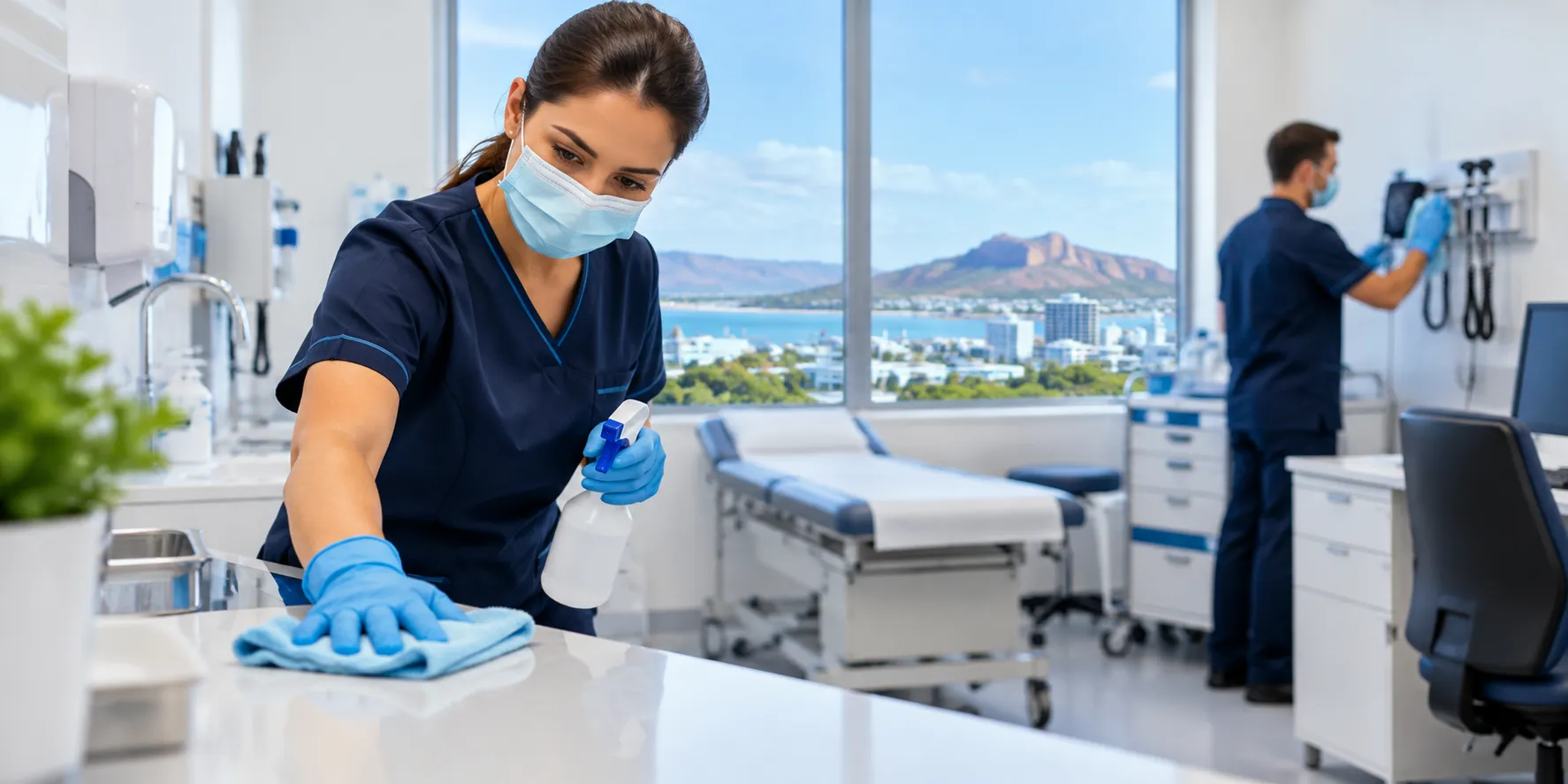
Infection Control Cleaning for Medical Clinics in Townsville
1st July 2026
Medical clinics are environments where cleaning requires more than maintaining a neat and professional appearance. Patients, healthcare workers and visitors regularly interact with shared spaces and frequently touched surfaces, making carefully planned cleaning and hygiene procedures particularly important.
From reception desks and waiting rooms to consultation spaces, treatment rooms and staff amenities, different areas of a medical clinic can have different cleaning requirements.
For healthcare providers in Townsville, an effective infection control cleaning program should consider the type of clinic, patient traffic, clinical activities, high-touch surfaces, cleaning frequencies and applicable infection prevention procedures.
Quick Answer: What Is Infection Control Cleaning for Medical Clinics?
Infection control cleaning in a medical clinic is a structured approach to environmental cleaning designed to remove dirt and reduce contamination on surfaces. It typically involves routine cleaning of clinical and non-clinical areas, additional attention to frequently touched surfaces, appropriate use of cleaning and disinfecting products, and procedures designed around the risks associated with different areas of the facility.
Medical clinics should establish cleaning protocols that align with applicable Australian healthcare infection prevention guidance and their own clinical risk assessments.
For local cleaning support, Townsville healthcare businesses can explore commercial cleaning services in Townsville.
Why Infection Control Cleaning Matters in Medical Clinics
Medical clinics receive people with a wide range of health conditions throughout the day.
Patients and staff may repeatedly touch door handles, counters, chairs, taps, switches and other shared surfaces. Treatment and consultation areas can have additional cleaning requirements depending on the clinical activities performed.
This makes a systematic cleaning program important.
Instead of treating every room identically, medical clinics can establish cleaning procedures according to factors such as:
- How an area is used
- Frequency of patient contact
- Types of surfaces present
- Clinical activities undertaken
- Patient and staff traffic
- Likelihood of environmental contamination
- Frequency with which surfaces are touched
- Clinic-specific infection prevention requirements
A documented approach also helps cleaning personnel understand what needs to be cleaned, when it should be cleaned and which procedures should be followed.
Cleaning and Disinfection: Understanding the Difference
Cleaning and disinfection are related, but they are not necessarily the same process.
Cleaning involves removing dirt, organic matter and other material from surfaces.
Disinfection involves using an appropriate process or product to reduce microorganisms on a surface.
Depending on the situation and applicable procedures, a surface may need to be cleaned before a disinfectant is applied. Cleaning staff should follow product instructions, required contact times and the clinic's established infection control procedures.
Medical facilities should avoid assuming that simply applying more disinfectant automatically produces a better result.
Correct procedures, appropriate products and staff training are important parts of the process.
1. Reception Area Cleaning
The reception area is often the first point of contact for patients entering a clinic.
Reception counters, payment terminals and other shared surfaces may receive frequent contact throughout the day.
A cleaning plan may consider:
- Reception counters
- Door handles
- Frequently touched surfaces
- Floors
- Chairs
- Shared fixtures
- Glass and partitions
- Other agreed surfaces
The frequency required should reflect patient traffic and the clinic's risk assessment.
2. Waiting Room Cleaning
Waiting rooms can have a steady flow of patients, carers and visitors.
Unlike private offices, seating and shared surfaces may be used by many different people during a single day.
A waiting-area cleaning program can include:
- Chairs
- Armrests
- Tables
- Door handles
- Frequently touched surfaces
- Floors
- Bins
- Other shared fixtures
Cleaning frequency may need to be adjusted during particularly busy periods or in response to specific infection prevention requirements.
3. Consultation Room Cleaning
Consultation rooms can require a more structured cleaning approach than general administrative areas.
The exact requirements depend on what takes place within the room.
Cleaning may include appropriate attention to:
- Examination surfaces
- Chairs
- Benchtops
- Frequently touched surfaces
- Door handles
- Floors
- Sinks where applicable
- Other agreed environmental surfaces
The clinic should clearly establish responsibilities between clinical staff and contracted cleaners, particularly for clinical equipment and specialised surfaces.
4. Treatment Room Cleaning
Treatment rooms may present different risks depending on the procedures undertaken.
For that reason, they should not automatically be cleaned according to the same checklist as a waiting room or office.
The cleaning scope should clearly identify:
- Environmental surfaces requiring cleaning
- Appropriate cleaning frequency
- High-touch surfaces
- Required products and procedures
- Responsibilities for clinical equipment
- Waste responsibilities
- Areas outside the contractor's scope
Clinical management should determine infection prevention requirements according to the activities performed within the room.
5. High-Touch Surface Cleaning
Some surfaces receive considerably more hand contact than others.
Examples within a medical clinic can include:
- Door handles
- Light switches
- Handrails
- Reception counters
- Chair arms
- Taps
- Shared touchpoints
These surfaces can be specifically identified in the clinic's cleaning schedule.
Rather than relying on cleaners to determine which surfaces appear important, a documented high-touch cleaning checklist can create greater consistency between shifts and cleaning personnel.
6. Floors and General Environmental Cleaning
Floors may not receive the same type of hand contact as door handles or counters, but they remain an important part of overall environmental cleanliness.
Cleaning procedures should reflect the type of flooring and area.
A medical clinic might contain:
- Vinyl
- Tiles
- Carpet
- Other resilient flooring
Different materials can require different cleaning methods.
Entrances and waiting areas may also accumulate more visible dirt because of higher foot traffic, while clinical spaces may have their own cleaning requirements.
CorpClean's broader commercial cleaning services can be tailored to different facility areas and cleaning schedules.
7. Bathrooms and Patient Amenities
Bathrooms are another important part of a medical clinic's cleaning program.
Depending on the facility, cleaning may cover:
- Toilets
- Basins
- Taps
- Mirrors
- Floors
- Door handles
- Frequently touched surfaces
- Bins
- Agreed consumables
Cleaning frequency should consider how many patients, visitors and staff use the facilities.
A busy clinic may need bathroom servicing at different intervals from a small practice with relatively low daily patient numbers.
8. Staff Kitchens and Break Areas
Infection control planning shouldn't overlook non-clinical areas.
Staff kitchens and break rooms contain shared surfaces and may be used repeatedly throughout the working day.
Routine cleaning can include:
- Benchtops
- Tables
- Sinks
- Floors
- Bins
- External appliance surfaces
- Frequently touched surfaces
Defining whether cleaners or clinic staff are responsible for particular tasks can prevent gaps in the cleaning program.
9. Administrative and Office Areas
Medical clinics frequently contain offices and administrative workspaces that are separate from patient-facing areas.
These spaces may require more conventional commercial cleaning, such as:
- Vacuuming
- Mopping
- Bin removal
- Cleaning agreed surfaces
- Kitchen cleaning
- Bathroom cleaning
The key is to avoid automatically applying the same procedures and frequency to every part of the premises.
Dividing a clinic into risk-based cleaning zones can make the cleaning plan easier to manage.
Using Cleaning Zones in a Medical Clinic
One way to structure a clinic cleaning program is to divide the facility according to how spaces are used.
For example:
Zone 1 – Public Areas
Reception, entrances and waiting rooms.
Zone 2 – Clinical Areas
Consultation and treatment rooms.
Zone 3 – Patient Amenities
Bathrooms and other patient facilities.
Zone 4 – Staff Areas
Staff rooms, kitchens and employee amenities.
Zone 5 – Administrative Areas
Offices, meeting spaces and records areas where applicable.
This approach allows the clinic to establish different tasks and frequencies for each area instead of using one generic checklist throughout the premises.
Why Medical Cleaning Checklists Matter
Consistency is particularly important in healthcare environments.
A documented checklist can specify:
- Which rooms are included
- Surfaces requiring attention
- Cleaning frequency
- High-touch surfaces
- Products or procedures required
- Responsibilities of cleaners
- Responsibilities of clinic staff
- Areas excluded from the contractor's scope
- Reporting procedures
This reduces ambiguity and makes it easier to monitor whether the agreed cleaning program is being completed.
Preventing Cross-Contamination During Cleaning
Cleaning itself needs to be performed in a way that avoids unnecessarily transferring contamination between areas.
Depending on the clinic's procedures, considerations may include:
- Appropriate hand hygiene
- Use of suitable PPE
- Correct use of cleaning cloths and equipment
- Separating equipment where required
- Cleaning from cleaner areas toward dirtier areas where appropriate
- Correct handling of cleaning solutions
- Appropriate disposal or processing of used cleaning materials
Cleaning personnel should receive clear instructions and training relevant to the environment in which they work.
Choosing Appropriate Cleaning Products
Not every cleaning or disinfecting product is suitable for every surface or situation.
Healthcare facilities should select products according to their infection prevention procedures and applicable Australian guidance.
Staff using these products should understand:
- Correct dilution where applicable
- Application method
- Required contact time
- Surface compatibility
- Storage requirements
- Safety precautions
- Manufacturer instructions
Using a product incorrectly can undermine an otherwise well-designed cleaning program.
Cleaning Equipment and Colour Coding
Some facilities use colour-coded cloths, buckets or other equipment to distinguish between cleaning areas.
For example, equipment used in bathrooms may be separated from equipment used in other spaces.
Where a colour-coding system is adopted, it should be clearly documented and cleaners should be trained to follow it consistently.
The specific system is less important than ensuring that everyone understands and applies the clinic's established procedures.
Waste Management Responsibilities
Medical clinics can generate different categories of waste.
It is therefore important to establish which waste streams fall within the cleaning contractor's responsibilities.
General rubbish and specialised clinical waste should not automatically be treated in the same manner.
The clinic should define:
- What cleaners are authorised to handle
- Which bins they are responsible for
- Procedures for handling waste
- Where waste should be transferred
- What should be escalated to clinical staff
Clinical or otherwise regulated waste should be managed according to applicable requirements and the clinic's established procedures.
Cleaning After Spills or Contamination Events
Routine cleaning procedures may not be appropriate for every spill or contamination event.
Medical clinics should have procedures for responding to incidents involving blood, body substances or other potentially infectious material.
These procedures should establish:
- Who is responsible for responding
- Appropriate PPE
- Required cleaning and disinfection procedures
- Waste handling
- Incident reporting
- When an area can be returned to normal use
Cleaning contractors should understand which incidents they are trained and authorised to manage and which require escalation to clinical personnel.
Cleaning Around Clinic Operating Hours
Cleaning schedules should fit the way the medical practice operates.
Some tasks may be performed before or after patients are present, while others may need attention during the day.
A clinic can consider:
- Opening and closing times
- Peak appointment periods
- Treatment schedules
- Patient traffic
- Staff working hours
- Areas requiring more frequent servicing
- Appropriate access to clinical rooms
A combination of scheduled cleaning and defined higher-frequency tasks can often be more appropriate than relying solely on a single end-of-day clean.
Training Cleaning Personnel for Healthcare Environments
Healthcare cleaning requires cleaners to understand more than basic commercial cleaning techniques.
Depending on their responsibilities, training may need to cover:
- Clinic-specific procedures
- Infection prevention principles relevant to their role
- Hand hygiene
- PPE
- Product use
- High-touch surface cleaning
- Cleaning sequences
- Cross-contamination controls
- Waste responsibilities
- Incident reporting
- Site access and security
Training should also be updated when the clinic changes its procedures or cleaning requirements.
Reviewing the Cleaning Program
A medical clinic's requirements can change over time.
Patient numbers may increase, new treatment services may be introduced, rooms may change purpose or infection prevention procedures may be updated.
The cleaning program should therefore be reviewed periodically.
A review can consider:
- Whether current cleaning frequencies remain appropriate
- Recurring cleanliness concerns
- Changes in patient traffic
- New clinical activities
- Changes to rooms or surfaces
- Feedback from staff
- Updates to relevant infection control guidance
This helps ensure that the cleaning plan continues to reflect the clinic's actual operating environment.
What Should Townsville Clinics Look for in a Cleaning Provider?
Medical practices considering an external cleaning contractor should look beyond a basic price comparison.
Useful questions include:
- Does the provider understand healthcare environments?
- Can the cleaning scope be tailored to the clinic?
- How are cleaners trained?
- How is cleaning quality monitored?
- Can cleaning be scheduled around clinic hours?
- Are site-specific checklists used?
- How are issues reported and escalated?
- Are appropriate insurance and business documentation available?
A site assessment can also help identify cleaning requirements before the service begins.
Townsville practices can learn more about local cleaning support through Corporate Cleaning Services® in Townsville.
Frequently Asked Questions About Medical Clinic Cleaning
What is infection control cleaning in a medical clinic?
It is a structured approach to environmental cleaning that considers contamination risks, frequently touched surfaces, clinical activities, appropriate cleaning and disinfection procedures, and the different requirements of individual areas within the clinic.
How often should a medical clinic be cleaned?
There is no single frequency suitable for every area. Cleaning schedules should consider patient traffic, how rooms are used, the surfaces involved and the clinic's infection prevention requirements. Some high-touch surfaces and busy amenities may require attention more frequently than low-use administrative spaces.
Are cleaning and disinfection the same thing?
No. Cleaning removes dirt and organic material from a surface, while disinfection is a process used to reduce microorganisms. The required process depends on the surface, situation, product instructions and the clinic's procedures.
Which surfaces need particular attention?
Frequently touched surfaces such as door handles, taps, counters, chair arms, switches and other shared touchpoints may require specific attention within the cleaning program.
Can the same cleaning equipment be used throughout a clinic?
Healthcare facilities should have procedures designed to minimise cross-contamination. Depending on the clinic's system, this may involve separating or colour-coding equipment for different areas and correctly processing reusable cleaning materials.
Can professional cleaners work around clinic opening hours?
Yes. A cleaning schedule can be developed around the clinic's operating hours and access requirements. Different tasks may be scheduled at different times depending on patient activity and room availability.
Why should medical clinics use a documented cleaning checklist?
A checklist clearly establishes what needs to be cleaned, how frequently tasks are performed and who is responsible. It also provides a basis for monitoring cleaning consistency.
Building a More Effective Cleaning Program for Townsville Medical Clinics
Effective infection control cleaning is not achieved by simply disinfecting every visible surface as frequently as possible.
A stronger approach begins by understanding the clinic itself: how patients move through the facility, which surfaces receive frequent contact, what clinical activities occur in each room and what infection prevention requirements apply.
From there, cleaning tasks can be divided by area, risk and frequency, with clear responsibilities established between clinic personnel and cleaning contractors.
For Townsville medical clinics reviewing their environmental cleaning arrangements, a site-specific cleaning assessment can help identify high-traffic areas, cleaning frequencies and operational requirements.
Learn more about commercial cleaning services in Townsville or visit Corporate Cleaning Services® for more information.