How to Maintain a Spotless Hotel Lobby (Daily & Weekly Guide)
2nd March 2026
Your hotel lobby is more than just an entry point—it’s your brand’s first impression and a reflection of your operational standards. Within seconds of entering, guests form an opinion about cleanliness, professionalism, and overall quality.
A spotless lobby communicates trust, comfort, and attention to detail. A neglected one—dusty surfaces, dirty floors, or unpleasant odors—can immediately damage your reputation and influence negative reviews.
This comprehensive guide outlines daily, weekly, and strategic cleaning practices to help you maintain a consistently pristine, guest-ready lobby.
Why Lobby Cleanliness Matters (Beyond Appearance)
The lobby is one of the most visible and heavily used areas in a hotel. Its cleanliness directly impacts multiple aspects of your business.
Key Business Impacts
1. Guest Psychology & First Impressions
Guests subconsciously associate lobby cleanliness with:
- Room cleanliness
- Safety and hygiene standards
- Service quality
? Insight: Studies in hospitality behavior show guests form opinions within the first 5–10 seconds of entering a space.
2. Online Reviews & Ratings
Cleanliness is one of the top factors mentioned in hotel reviews. A poorly maintained lobby can lead to:
- Lower star ratings
- Negative cleanliness comments
- Reduced booking conversions
3. Brand Positioning
A spotless lobby reinforces:
- Professionalism
- Attention to detail
- Premium or high-value perception
4. Hygiene & Safety Compliance
Regular cleaning helps:
- Reduce germs and bacteria
- Improve indoor air quality
- Meet local health regulations
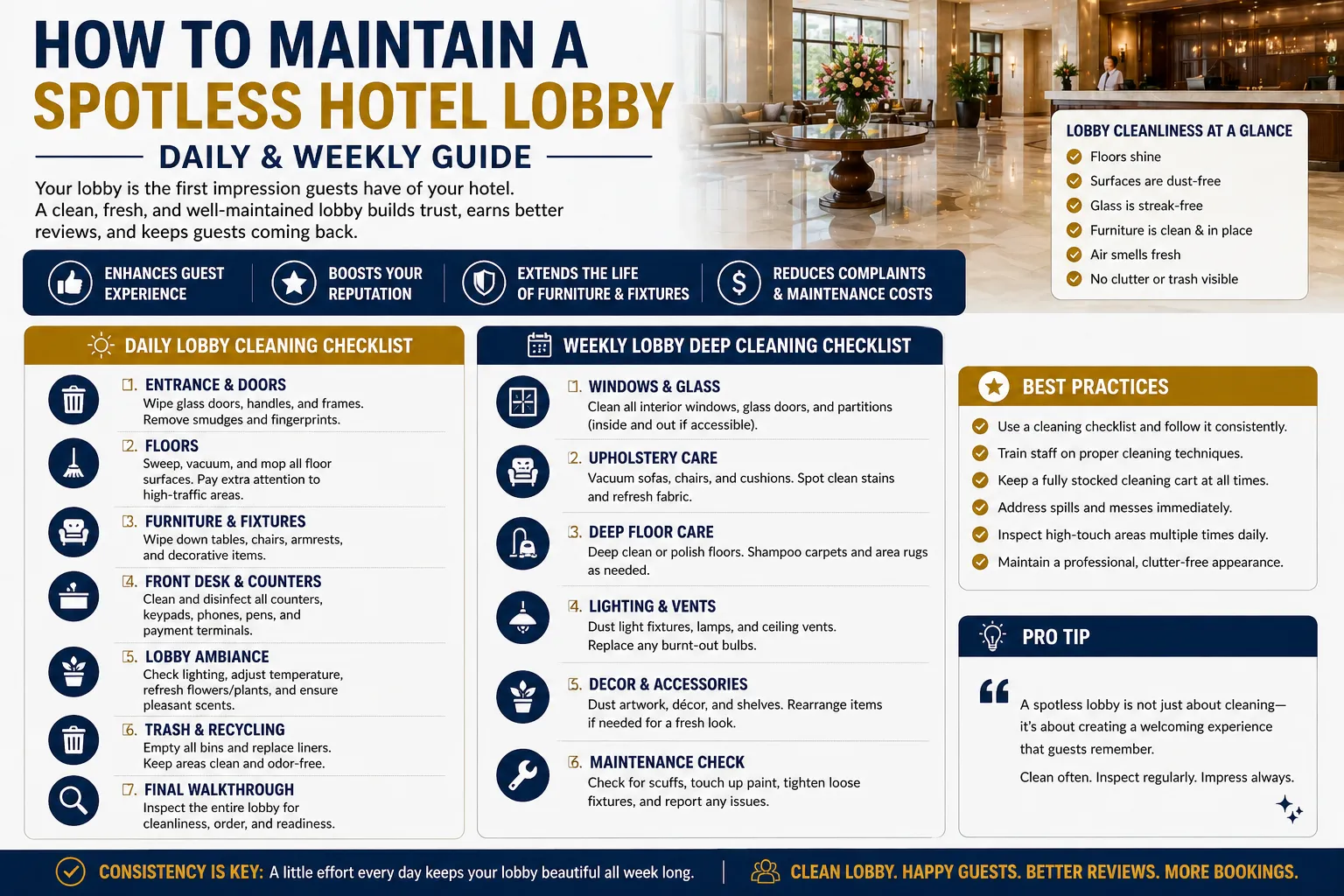
Daily Hotel Lobby Cleaning Checklist (Detailed Workflow)
Consistency is key. A structured daily routine ensures your lobby stays clean throughout all operating hours.
Morning Cleaning (Pre-Opening Standard)
This is your most critical cleaning window—setting the tone for the entire day.
Tasks & Best Practices
| Task | How to Do It Properly | Why It Matters |
|---|---|---|
| Vacuum carpets & rugs | Use slow, overlapping strokes | Removes embedded dirt |
| Mop hard floors | Use disinfectant + clean water | Prevents streaks and bacteria |
| Dust all surfaces | Use microfiber cloths | Avoids spreading dust |
| Clean glass surfaces | Use streak-free cleaner | Enhances visual clarity |
| Sanitize high-touch areas | Follow dwell time instructions | Ensures proper disinfection |
Continuous Cleaning (During Operating Hours)
A lobby is never “done”—it requires ongoing maintenance.
High-Frequency Tasks
- Spot clean spills immediately (within minutes)
- Remove visible debris and litter
- Wipe fingerprints from:
- Glass doors
- Metal frames
- Elevator panels
- Monitor and refresh restrooms nearby
- Realign furniture and cushions
- Check scent and air freshness
? Pro Tip: Assign a “lobby attendant” during peak hours for real-time cleaning.
End-of-Day Reset Cleaning
Prepare the lobby for the next day with a full reset.
Key Tasks
| Task | Impact |
|---|---|
| Deep vacuuming | Prevents long-term carpet wear |
| Full disinfection | Eliminates accumulated germs |
| Trash removal | Prevents odors overnight |
| Supply restocking | Ensures readiness for morning |
| Maintenance check | Identifies issues early |
Weekly Deep Cleaning (Preventive Maintenance)
Weekly cleaning tackles areas often missed during daily routines and helps maintain long-term asset quality.
Weekly Deep Cleaning Checklist
| Area | Deep Cleaning Task | Benefit |
|---|---|---|
| Carpets | Shampoo or extract | Removes deep stains and odors |
| Hard floors | Machine polish or scrub | Restores shine and durability |
| Upholstery | Steam clean or vacuum | Improves hygiene and appearance |
| Vents & ceilings | Dust and clean | Improves air quality |
| Walls & baseboards | Remove scuffs and marks | Maintains visual cleanliness |
| Furniture | Move and clean underneath | Eliminates hidden dirt |
| Entry mats | Wash and dry thoroughly | Reduces dirt tracking |
Strategic Deep Cleaning Tip
Schedule deep cleaning during:
- Low occupancy periods
- Mid-week (lower traffic days)
- Night shifts to avoid guest disruption
Essential Cleaning Supplies & Equipment
Using professional-grade cleaning supplies and equipment helps hotel teams clean faster, achieve better results, and maintain a consistently polished lobby throughout the day. Because the lobby is a high-traffic area, standard household products are often not enough. Hotels need durable tools, commercial-strength products, and organized systems that support daily cleaning and weekly deep maintenance.
Core Cleaning Supplies for Hotel Lobbies
| Category | Recommended Items | Why They Matter |
|---|---|---|
| Surface cleaning | All-purpose cleaners, disinfectants | Keeps reception counters, tables, shelves, and seating areas clean and hygienic |
| Glass care | Streak-free glass cleaners | Removes fingerprints, smudges, and marks from doors, windows, mirrors, and display panels |
| Dusting | Microfiber cloths, extendable dusters | Captures dust without spreading it and helps reach vents, light fixtures, and high corners |
| Floor care | Mops, buckets, scrubbers | Maintains tile, vinyl, marble, laminate, and other hard flooring surfaces |
| Carpet care | Commercial vacuums, carpet extractors | Removes dirt, allergens, stains, and odors from rugs and carpeted areas |
| Odor control | Odor neutralizers, air fresheners | Helps maintain a fresh, welcoming atmosphere without overpowering guests |
1. Surface Cleaning Supplies
Reception desks, coffee tables, side tables, luggage areas, and waiting furniture collect dust, fingerprints, spills, and germs throughout the day. All-purpose cleaners are useful for routine wiping, while disinfectants should be used on high-touch surfaces such as counters, handles, elevator buttons, handrails, and payment terminals.
For best results, staff should follow product instructions carefully, especially contact time for disinfectants. Wiping too quickly may reduce effectiveness.
2. Glass and Mirror Cleaning Products
Glass doors and lobby windows are highly visible. Fingerprints, streaks, and smudges can make the entire space feel poorly maintained. A streak-free glass cleaner paired with microfiber cloths helps keep entrance doors, mirrors, display cases, and glass partitions clear and polished.
3. Dusting Tools
Dust can build up quickly on décor, lamps, shelving, plants, signage, skirting boards, vents, and ceiling corners. Microfiber cloths are ideal because they trap dust rather than pushing it around. Extendable dusters are especially useful for high ceilings, light fixtures, air vents, and hard-to-reach corners.
4. Floor and Carpet Care Supplies
Lobby floors handle constant foot traffic, luggage wheels, outdoor dirt, and spills. Hard floors need mops, scrubbers, and surface-safe floor cleaners. Carpets and rugs require commercial vacuums, stain removers, and periodic extraction cleaning to remove embedded dirt and odors.
5. Odor Control Products
A fresh-smelling lobby helps create a positive first impression. Odor neutralizers are often better than heavy perfumes because they target the source of unpleasant smells rather than simply masking them. Air fresheners should be subtle, consistent, and suitable for hospitality environments.
Equipment That Improves Cleaning Efficiency
The right equipment helps staff complete tasks faster while maintaining a higher standard of cleanliness.
| Equipment | Best Used For | Key Benefit |
|---|---|---|
| Commercial HEPA vacuum cleaner | Carpets, rugs, entry mats, upholstery | Removes fine dust, dirt, and allergens |
| Auto scrubber | Large hard-floor areas | Cleans wide spaces faster and more evenly |
| Steam cleaner | Deep sanitization, grout, upholstery | Helps loosen grime and sanitize without excessive chemicals |
| Housekeeping cart | Transporting supplies and tools | Reduces wasted trips and improves organization |
Commercial HEPA Vacuum Cleaners
A commercial HEPA vacuum is one of the most important tools for lobby maintenance. It helps remove dust, dirt, hair, debris, and allergens from carpets, rugs, entrance mats, and upholstery. Compared with basic vacuums, commercial units are built for frequent use and larger spaces.
Auto Scrubbers for Large Floors
For hotels with large tiled, marble, vinyl, or concrete lobby floors, auto scrubbers can improve efficiency. They scrub and collect dirty water in one pass, helping reduce manual labor and improving floor consistency.
Steam Cleaners for Sanitization
Steam cleaners are useful for deep cleaning grout lines, upholstery, high-use seating areas, and hard-to-reach surfaces. They can help lift dirt and reduce reliance on harsh chemicals when used correctly.
Housekeeping Carts
Housekeeping carts keep cleaning products, microfiber cloths, trash bags, PPE, and restocking items in one place. This reduces time wasted walking back and forth to storage rooms and helps staff respond quickly to spills or guest-area messes.
Staff Training & Cleaning Protocols
Even the best cleaning products will not deliver consistent results without proper staff training. A spotless lobby depends on clear procedures, accountability, and regular quality checks.
? Best Practices for Housekeeping Teams
| Best Practice | Why It Matters |
|---|---|
| Use standardized cleaning checklists | Ensures every task is completed consistently |
| Train on high-touch disinfection | Reduces hygiene risks in busy guest areas |
| Use color-coded cleaning systems | Prevents cross-contamination between surfaces |
| Conduct routine inspections | Helps identify missed areas before guests notice |
| Track performance metrics | Improves staffing, productivity, and quality control |
Standardized Cleaning Checklists
Checklists help staff follow the same process every day. A lobby cleaning checklist should include floors, glass, reception counters, seating, bins, restrooms, high-touch surfaces, décor, and maintenance checks.
High-Touch Disinfection Training
Staff should know which surfaces require frequent disinfection. These include:
- Entrance door handles
- Elevator buttons
- Reception counters
- Payment terminals
- Pens and keycard holders
- Handrails
- Seating armrests
- Light switches
- Luggage carts
Color-Coded Cleaning Systems
Color-coded cloths and mop heads help prevent cross-contamination. For example:
- Blue for glass and mirrors
- Green for general surfaces
- Red for restroom areas
- Yellow for high-touch disinfection
This simple system makes cleaning safer and easier to manage.
Performance Metrics to Monitor
Tracking cleaning performance helps hotel managers identify what is working and where improvements are needed.
| Metric | What It Measures | Why It Helps |
|---|---|---|
| Time per cleaning cycle | How long lobby cleaning takes | Helps improve scheduling and staffing |
| Guest cleanliness complaints | Number of cleanliness-related issues | Shows where standards may be slipping |
| Inspection pass rates | Percentage of completed checks that meet standards | Improves accountability |
| Staff productivity | Tasks completed per shift | Helps balance workload fairly |
Managers should review these metrics regularly to make sure cleaning standards remain consistent during both quiet and peak periods.
Pro Tips to Keep Your Lobby Spotless All Day
Keeping a lobby clean requires more than scheduled cleaning. It also requires prevention, smart design, and quick-response routines.
Practical Tips
- Install high-quality entry mats to trap dirt and moisture before it spreads through the lobby.
- Use real-time cleaning during peak check-in and check-out hours.
- Choose stain-resistant, easy-to-clean furniture fabrics.
- Maintain a subtle and consistent scent throughout the lobby.
- Place trash bins near seating areas, entrances, elevators, and reception zones.
- Use natural lighting to make the lobby feel bright, clean, and welcoming.
- Keep microfiber cloths and disinfectant wipes nearby for quick touch-ups.
- Inspect glass doors and reception counters several times per day.
- Schedule floor maintenance around low-traffic hours to avoid guest disruption.
Guest-Facing Cleanliness Tips
Small visible details can have a big impact. Staff should regularly check:
- Smudges on glass doors
- Overflowing bins
- Dust on tables and décor
- Dirty entrance mats
- Crooked cushions or furniture
- Spills near seating areas
- Fingerprints on elevator panels
Common Mistakes That Hurt Lobby Cleanliness
Avoiding common mistakes is just as important as following best practices.
| Mistake | Why It’s a Problem | Better Approach |
|---|---|---|
| Ignoring high-touch surfaces | Allows germs and fingerprints to build up | Disinfect several times daily |
| Skipping deep cleaning | Dirt and odors accumulate over time | Schedule weekly and monthly deep cleans |
| Using incorrect chemicals | Can damage floors, glass, stone, or furniture | Match products to surface type |
| Poor staff training | Leads to inconsistent results | Use checklists and regular training |
| Inconsistent schedules | Creates visible cleanliness gaps | Set morning, daytime, and evening routines |
| Overusing strong fragrances | Can irritate guests or mask deeper issues | Use subtle odor neutralizers |
Key Insight
Guests often notice what staff overlook, especially corners, edges, glass surfaces, entry mats, and reception counters. A lobby may look clean at first glance, but small missed details can quickly affect guest perception. A strong cleaning system focuses on both visible presentation and hidden problem areas.
Final Thoughts
Maintaining a spotless hotel lobby requires more than occasional cleaning—it demands structured routines, trained staff, and the right tools.
By combining daily maintenance, weekly deep cleaning, and efficient processes, hotels can:
- Improve guest satisfaction
- Increase positive reviews
- Strengthen brand perception
- Extend the lifespan of assets
- Maintain compliance with hygiene standards
A clean lobby isn’t just about appearance—it’s a strategic advantage.
Frequently Asked Questions
How often should a hotel lobby be cleaned?
Hotel lobbies should be cleaned continuously throughout the day, with full cleaning in the morning and deep cleaning performed weekly.
What is the most important area to clean in a lobby?
High-touch surfaces such as door handles, reception desks, and elevator buttons are the most critical for hygiene.
How do hotels keep lobbies smelling fresh?
Hotels use a combination of regular cleaning, ventilation systems, and odor-neutralizing products to maintain a fresh scent.
What equipment is best for lobby cleaning?
Commercial vacuum cleaners, floor scrubbers, microfiber systems, and carpet extractors are essential for efficient and high-quality cleaning.
Professional Motel & Hotel Cleaning Services
Keeping your hotel lobby consistently spotless can be challenging—especially in high-traffic environments where cleanliness must be maintained throughout the day. Professional cleaning services can help ensure your property always meets the highest standards.
For expert support, explore motel cleaning and accommodation maintenance services, click here!