Quick Answer: How Does Operating Theatre Cleaning Differ from General Medical Cleaning?
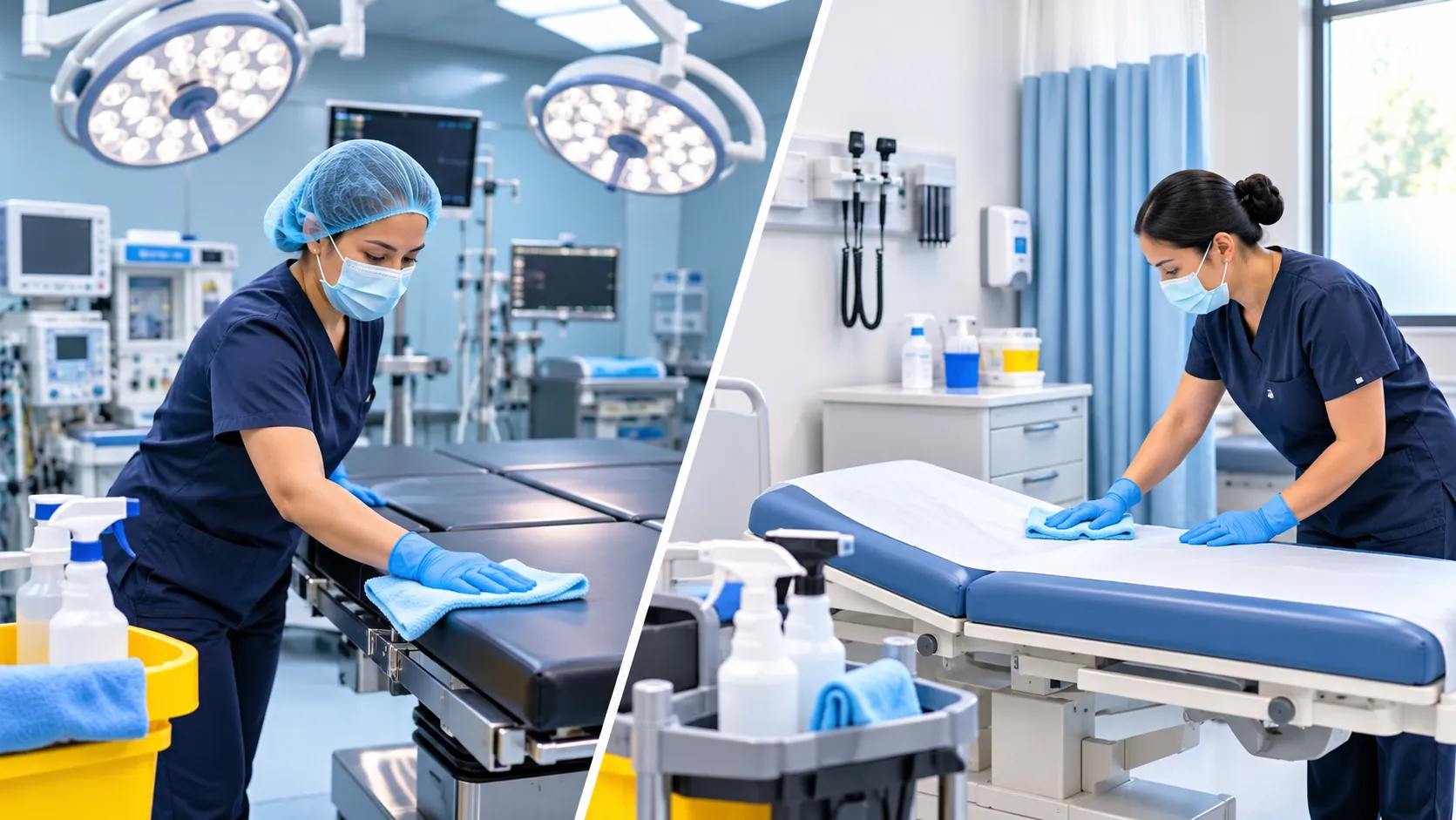
Operating theatre cleaning differs from general medical cleaning because it follows procedure-specific infection prevention protocols designed to manage the environmental contamination risks associated with invasive surgical procedures.
Unlike routine cleaning in reception areas, consulting rooms and administrative spaces, operating theatre cleaning is closely integrated with surgical schedules and typically includes:
- Environmental preparation before the first surgical procedure.
- Defined between-case cleaning and disinfection.
- Comprehensive end-of-session or terminal cleaning.
- Management of blood and body-fluid contamination.
- Dedicated or appropriately controlled cleaning equipment.
- Targeted cleaning of surgical equipment exteriors and high-touch surfaces.
- Task-specific personal protective equipment (PPE).
- Theatre-specific staff training and competency assessment.
- Documented cleaning procedures and quality assurance checks.
General medical cleaning also follows infection prevention principles, but its frequency, methods and controls vary according to the clinical activities and contamination risks associated with each area.
Healthcare facilities depend on effective environmental cleaning to support patient safety, infection prevention and operational efficiency. However, not every healthcare environment presents the same level or type of risk.
An operating theatre is a controlled clinical environment where invasive procedures expose patients to infection risks that differ from those encountered in waiting rooms, administrative offices and many routine consulting areas.
The distinction is not simply that operating theatres require more intensive cleaning. Theatre cleaning must be coordinated with surgical activity, clinical responsibilities, equipment requirements, contamination risks and established infection prevention protocols.
Professional medical and healthcare cleaning services can support healthcare organisations through structured environmental cleaning programmes tailored to the requirements of different clinical and non-clinical spaces.
Operating Theatre Cleaning vs General Medical Cleaning: Key Differences
| Cleaning Factor | Operating Theatre Cleaning | General Medical Cleaning |
|---|---|---|
| Primary Objective | Maintain an appropriate controlled surgical environment. | Maintain environmental hygiene appropriate to each healthcare area. |
| Contamination Risk | Very high or extreme due to invasive procedures. | Variable according to clinical activity and patient population. |
| Cleaning Frequency | Defined stages throughout the surgical schedule. | Risk-based daily, periodic and situation-specific cleaning. |
| Between-Patient Cleaning | Structured between-case procedures. | Depends on room type and patient-contact activities. |
| Terminal Cleaning | Comprehensive cleaning under theatre-specific procedures. | Performed where required by clinical circumstances. |
| Blood and Body-Fluid Exposure | Anticipated as part of surgical risk management. | Varies according to the healthcare environment. |
| Medical Equipment | Complex equipment with clearly assigned cleaning responsibilities. | Varies from basic examination furniture to specialised devices. |
| Disinfection Requirements | Defined by procedure-specific infection-control requirements. | Determined according to environmental and clinical risks. |
| Cleaning Equipment | Dedicated or controlled equipment arrangements. | Equipment separated according to healthcare cleaning zones. |
| Staff Training | Healthcare and theatre-specific competency. | Training appropriate to assigned healthcare cleaning tasks. |
| Scheduling | Closely integrated with surgical lists and patient turnover. | Coordinated around appointments and facility operations. |
| Documentation | Detailed procedure-related cleaning and verification records. | Records determined by facility policy and risk. |
| Access Control | Controlled access according to theatre procedures. | Varies according to the clinical environment. |
| Quality Assurance | Theatre-specific monitoring and competency requirements. | Routine environmental cleaning audits appropriate to risk. |
Both cleaning programmes are important. However, the risks associated with invasive procedures require operating theatre cleaning to be managed through more specifically defined workflows and responsibilities.
1. Why Operating Theatres Require Specialised Environmental Cleaning
Operating theatres contain a combination of patients, surgical personnel, specialised equipment, consumables and materials that may become contaminated during procedures.
Unlike many general medical areas, operating theatres routinely accommodate activities involving open surgical sites and invasive medical devices.
| Risk Factor | Environmental Cleaning Consideration |
|---|---|
| Invasive Procedures | Environmental contamination must be managed within the broader surgical infection prevention programme. |
| Blood and Body Fluids | Requires defined contamination and spill-response procedures. |
| Patient Vulnerability | Cleaning controls should reflect the consequences of potential infection. |
| Medical Equipment | Requires compatible products and clearly assigned cleaning responsibilities. |
| Multiple Surgical Cases | Requires structured environmental preparation between patients. |
| Healthcare Personnel Movement | Requires controlled access and appropriate cross-contamination prevention. |
| Surgical Waste | Requires approved segregation, handling and removal procedures. |
| High-Touch Surfaces | Requires attention to equipment controls, handles and procedure-related contact points. |
Environmental cleaning supports surgical infection prevention but cannot replace sterile technique, hand hygiene, instrument reprocessing, ventilation management or other clinical controls.
2. Australian Operating Theatre Cleaning Standards and Guidelines
Australian healthcare organisations should establish environmental cleaning programmes consistent with applicable national standards, jurisdictional requirements, clinical policies and equipment manufacturer instructions.
| Standard or Guidance | Relevance to Healthcare Cleaning |
|---|---|
| National Safety and Quality Health Service (NSQHS) Standards | Supports organisational systems for healthcare safety and quality. |
| Preventing and Controlling Infections Standard | Addresses environmental hygiene, workforce training, infection risks and monitoring. |
| Australian Guidelines for the Prevention and Control of Infection in Healthcare | Provides evidence-based guidance for infection prevention and environmental cleaning. |
| Facility Infection Prevention Policies | Define local cleaning frequencies, products, procedures and responsibilities. |
| Work Health and Safety Requirements | Address occupational exposure, chemical safety and workplace hazards. |
| Therapeutic Goods Administration (TGA) Requirements | Relevant to the regulatory status and intended-use claims of applicable disinfectant products. |
| Medical Device Manufacturer Instructions | Determine compatible cleaning and reprocessing methods for medical equipment. |
| ISO 9001 Quality Management Systems | Supports documented procedures, service monitoring and continuous improvement. |
The Australian Commission on Safety and Quality in Health Care's Preventing and Controlling Infections Standard provides an important framework for environmental hygiene and infection prevention in applicable healthcare organisations.
Corporate Cleaning Services® maintains an ISO 9001-accredited quality management system that supports structured service delivery, documented processes and continuous improvement.
Important: ISO 9001 certification is a quality management credential rather than an operating theatre-specific clinical certification. Theatre cleaning requirements must be established and approved by the healthcare organisation.
3. Understanding Risk-Based Cleaning Across Healthcare Facilities
General medical cleaning is not a single cleaning specification that can be applied to every room within a hospital or clinic.
Healthcare cleaning programmes should consider the likelihood of contamination, patient vulnerability, environmental exposure and clinical activities.
| Healthcare Area | Indicative Risk | Cleaning Focus |
|---|---|---|
| Operating Theatres | Very High / Extreme | Procedure-specific cleaning and disinfection. |
| Day Procedure Rooms | Very High / Extreme | Environmental preparation between procedures. |
| Intensive Care Units | Very High / Extreme | Patient-related environmental surfaces and infection prevention. |
| Emergency Departments | Very High / Extreme | Rapid response to contamination and patient turnover. |
| General Hospital Wards | High | Patient surroundings, shared facilities and high-touch surfaces. |
| Treatment Rooms | High or Procedure Dependent | Patient-contact surfaces and clinical contamination. |
| Consulting Rooms | Moderate or Activity Dependent | Examination surfaces, furniture and high-touch points. |
| Waiting Rooms | Variable | Shared seating, touchpoints and floors. |
| Reception Areas | Variable | Counters, shared surfaces and environmental cleanliness. |
| Administrative Offices | Generally Lower Clinical Risk | Routine workplace cleaning and shared surfaces. |
These classifications are indicative. Additional precautions may be required in any healthcare area depending on the patients, procedures and infectious agents involved.
Healthcare organisations can integrate clinical cleaning arrangements with broader commercial cleaning services for appropriate non-clinical and administrative areas.
4. Cleaning, Disinfection and Sterilisation Are Different Processes
One of the most important distinctions in operating theatre hygiene is understanding where environmental cleaning ends and medical device reprocessing begins.
| Process | Purpose | Typical Application |
|---|---|---|
| Cleaning | Physically removes dirt, organic material and contamination. | Environmental surfaces and approved equipment exteriors. |
| Disinfection | Inactivates relevant microorganisms under specified conditions. | Designated healthcare surfaces and equipment. |
| Sterilisation | Uses a validated process intended to render an item free from viable microorganisms. | Appropriate reusable surgical instruments and medical devices. |
| Medical Device Reprocessing | Applies device-specific cleaning, disinfection or sterilisation procedures. | Reusable medical devices handled by authorised personnel. |
| Terminal Cleaning | Provides comprehensive environmental cleaning and required disinfection under a defined protocol. | Operating theatres and selected clinical environments. |
Operating theatre floors, walls and furniture are generally managed through environmental cleaning and appropriate disinfection. They are not routinely sterilised.
Reusable surgical instruments require separate validated reprocessing procedures performed by appropriately trained personnel.
5. The Main Stages of Operating Theatre Cleaning
Operating theatre cleaning is closely connected to the surgical schedule rather than relying exclusively on a conventional daily cleaning routine.
| Cleaning Stage | When It Occurs | Main Objective |
|---|---|---|
| Pre-Procedure Cleaning | Before the first scheduled surgical case, according to facility policy. | Confirm environmental readiness and address designated surfaces. |
| Between-Case Cleaning | After a surgical procedure and before the next patient. | Address procedure-related contamination and prepare the theatre for reuse. |
| Immediate Contamination Response | Following spills or identified contamination. | Manage environmental and occupational exposure risks. |
| End-of-Session Cleaning | Following completion of a surgical list or session. | Complete a broader environmental cleaning scope. |
| Terminal Cleaning | At times specified by the theatre's approved protocol. | Complete comprehensive cleaning and required disinfection. |
| Periodic Cleaning | At documented scheduled intervals. | Maintain additional surfaces and areas outside routine cleaning tasks. |
| Enhanced Cleaning | When required by infection risks or specific clinical circumstances. | Address additional contamination or infectious disease concerns. |
Terminology and the exact scope of each cleaning stage may vary between hospitals, private surgical centres and day procedure facilities.
6. Preparing an Operating Theatre Before the First Surgical Procedure
Before the first surgical case, theatre personnel may need to confirm that scheduled cleaning has been completed and that designated environmental surfaces are ready for use.
Pre-procedure cleaning addresses potential dust accumulation, visible contamination and surfaces identified in the facility's theatre preparation protocol.
| Area or Surface | Pre-Procedure Consideration |
|---|---|
| Operating Table | Verification and cleaning of approved surfaces as required. |
| Procedure Furniture | Inspection of designated horizontal surfaces. |
| Surgical Lights | Cleaning of approved accessible surfaces where specified. |
| Equipment Controls | Cleaning according to assigned responsibilities. |
| Work Surfaces | Ensure cleanliness before relevant clinical preparation. |
| Door Handles | Include in required high-touch cleaning. |
| Floors | Inspect for visible contamination and outstanding cleaning needs. |
| Waste Containers | Verify readiness according to facility procedures. |
| Cleaning Records | Confirm completion of required previous cleaning activities. |
Clinical personnel remain responsible for confirming surgical readiness according to the organisation's theatre procedures.
7. Cleaning Between Surgical Cases
Between-case cleaning is one of the clearest differences between operating theatre cleaning and routine medical facility cleaning.
After each surgical procedure, the theatre must undergo its approved environmental cleaning and disinfection process before it is released for the next patient.
Typical Between-Case Cleaning Responsibilities
| Cleaning Area | Typical Requirement |
|---|---|
| Procedure-Related Waste | Remove authorised waste streams according to facility policy. |
| Operating Table | Clean and disinfect designated surfaces under approved procedures. |
| Procedure Furniture | Address relevant contaminated and frequently touched surfaces. |
| Equipment Exteriors | Clean approved surfaces using compatible products. |
| High-Touch Points | Address handles, controls and other identified contact surfaces. |
| Blood and Body-Fluid Contamination | Apply the approved contamination-response protocol. |
| Floor Surfaces | Clean and disinfect affected areas and any additional surfaces required by local policy. |
| Waste Container Liners | Replace according to waste-management procedures. |
| Cleaning Equipment | Replace or reprocess used materials as required. |
| Documentation | Record completion and any outstanding environmental concerns. |
Between-case cleaning must allow sufficient time for all required tasks, including disinfectant contact times. Surgical turnover targets should not override approved infection prevention procedures.
8. End-of-Session and Terminal Cleaning
Following the completion of scheduled surgical procedures, operating theatres generally receive more comprehensive environmental cleaning than the routine between-case process.
Depending on facility terminology and protocols, this may be described as end-of-session, end-of-day or terminal cleaning.
| Cleaning Factor | Between-Case Cleaning | Terminal or End-of-Session Cleaning |
|---|---|---|
| Timing | Between surgical procedures. | After scheduled activity or when otherwise required. |
| Primary Focus | Procedure-related contamination. | Comprehensive environmental cleaning. |
| Operating Table | Designated patient and procedure-contact surfaces. | Broader approved cleaning scope. |
| Equipment Exteriors | Relevant surfaces as assigned. | Additional approved surfaces under the theatre protocol. |
| Floor Cleaning | Defined areas based on the between-case procedure. | Comprehensive floor cleaning according to policy. |
| Walls and Other Surfaces | When contaminated or otherwise required. | Additional scheduled surfaces within the cleaning scope. |
| High-Touch Surfaces | Procedure-specific contact points. | All identified surfaces within the approved scope. |
| Cleaning Verification | Between-case completion requirements. | Detailed checklist and additional verification as required. |
Terminal cleaning should be performed according to a documented theatre-specific procedure rather than an ordinary commercial deep-cleaning checklist.
9. High-Touch Surface Cleaning in Operating Theatres
Operating theatre personnel frequently interact with equipment, furniture, controls and environmental surfaces throughout surgical procedures.
Cleaning programmes should identify these contact points and clearly assign responsibility for their maintenance.
| High-Touch Surface | Cleaning Consideration |
|---|---|
| Operating Table Controls | Frequent handling during patient positioning. |
| Door Handles | Contact by personnel entering and leaving the theatre. |
| Surgical Light Handles | Cleaning responsibilities must distinguish sterile and non-sterile components. |
| Equipment Control Panels | Require device-compatible cleaning methods. |
| Computer Keyboards | Repeated contact during clinical documentation. |
| Touchscreens | Require compatible products and approved procedures. |
| Trolley Handles | Frequent handling during equipment movement. |
| Worktops | Cleaning requirements depend on their clinical use. |
| Storage Handles | Repeated contact during access to supplies. |
| Chairs and Stools | Designated frequently touched and contaminated surfaces. |
| Communication Controls | Shared contact by theatre personnel. |
Some surfaces must be managed by clinical personnel rather than environmental cleaners. These responsibilities should be clearly documented to prevent missed or inappropriate cleaning.
10. Managing Blood and Body-Fluid Contamination
Operating theatres are more likely than many general medical areas to encounter procedure-related blood and body-fluid contamination.
Healthcare facilities should maintain approved spill-response procedures that define responsibilities, protective equipment, cleaning products, waste arrangements and incident escalation.
| Contamination Event | Required Management Consideration |
|---|---|
| Blood on Environmental Surfaces | Follow the approved blood and body-fluid contamination procedure. |
| Body Fluids on Floors | Manage exposure and slip risks using the designated protocol. |
| Contaminated Equipment | Refer to device-specific cleaning responsibilities and manufacturer instructions. |
| Loose Sharps | Escalate immediately to authorised personnel under the sharps safety procedure. |
| Surgical Waste Spillage | Apply the facility's approved waste incident procedure. |
| Chemical Spillage | Follow relevant safety data sheets and workplace emergency procedures. |
| Unknown Contamination | Restrict unauthorised handling and seek guidance from designated personnel. |
Only appropriately trained and authorised personnel should undertake contamination-response activities. Procedures must account for the nature of the spill and the associated occupational and infection risks.
11. Selecting Suitable Operating Theatre Cleaning Products
Effective theatre cleaning depends on selecting products appropriate to the intended application rather than simply choosing stronger chemicals or using larger quantities of disinfectant.
| Product Selection Factor | Why It Matters |
|---|---|
| Intended Use | The product must be suitable for the environmental surface or equipment. |
| Antimicrobial Claims | Disinfectant claims must be appropriate to the microorganisms of concern. |
| Regulatory Status | Products must meet applicable Australian regulatory requirements. |
| Contact Time | The product must remain in contact with the surface for the required period. |
| Dilution | Correct concentration supports intended performance and safe use. |
| Surface Compatibility | Prevents damage to medical equipment, finishes and environmental surfaces. |
| Organic Material | Visible contamination may interfere with disinfectant performance. |
| Application Method | Must be compatible with the product, equipment and clinical environment. |
| Worker Safety | Requires appropriate consideration of exposure, ventilation and PPE. |
| Storage | Products must be correctly labelled and securely stored. |
Facilities should maintain an approved product register and ensure personnel have access to relevant instructions and safety documentation.
12. Why Disinfectant Contact Time Matters
Applying disinfectant to a surface does not necessarily mean that disinfection has been completed.
Many products require a defined contact time to achieve their labelled antimicrobial performance. Depending on the product, the treated surface may need to remain wet throughout that period.
| Common Disinfection Error | Potential Consequence |
|---|---|
| Removing Disinfectant Too Early | May prevent the product from achieving its intended performance. |
| Incorrect Dilution | May reduce effectiveness or create chemical safety concerns. |
| Applying to Visibly Soiled Surfaces | Organic material may interfere with some disinfectants. |
| Using an Unsuitable Product | May fail to address relevant microorganisms. |
| Inadequate Surface Coverage | May leave areas untreated. |
| Using Incompatible Chemicals | May damage sensitive medical equipment or create safety hazards. |
Staff should follow approved product instructions rather than assuming that visible cleanliness, fragrance or rapid drying confirms effective disinfection.
13. Preventing Cross-Contamination Between Operating Theatres
Cleaning activities should reduce environmental contamination without transferring materials between operating theatres, general wards, bathrooms, administrative areas and other healthcare spaces.
| Cross-Contamination Control | Purpose |
|---|---|
| Dedicated Cleaning Equipment | Helps prevent contamination transfer between designated areas. |
| Equipment Zoning | Maintains separation between different cleaning environments. |
| Defined Cleaning Sequences | Supports controlled progression through approved cleaning tasks. |
| Cloth Replacement | Prevents continued use of contaminated cleaning materials. |
| Mop Management | Controls contamination transfer through floor-cleaning equipment. |
| Hand Hygiene | Reduces transfer between tasks and environments. |
| PPE Management | Supports worker protection and contamination control. |
| Waste Segregation | Maintains appropriate separation of waste streams. |
| Controlled Equipment Storage | Prevents clean supplies from contacting used materials. |
| Access Management | Controls movement through designated theatre areas. |
Cleaning personnel should follow the facility's approved cleaning sequence and equipment management system, including any specific clean-to-dirty workflow requirements.
14. Cleaning Sensitive Surgical and Medical Equipment
Operating theatres contain complex equipment that may be sensitive to moisture, incompatible chemicals or inappropriate handling.
Environmental cleaning staff should only clean equipment surfaces specifically included in their authorised responsibilities.
| Equipment | Cleaning Consideration | Responsibility |
|---|---|---|
| Operating Tables | Approved surfaces and compatible products. | As defined by the facility. |
| Surgical Lights | Accessible exterior surfaces and specified components. | Environmental or clinical staff as assigned. |
| Patient Monitors | Manufacturer-compatible cleaning. | Authorised personnel. |
| Anaesthetic Machines | Device-specific environmental cleaning and reprocessing requirements. | Designated clinical personnel or authorised staff. |
| Infusion Pumps | Compatible products and device instructions. | As assigned by the healthcare organisation. |
| Medical Imaging Equipment | Equipment-specific cleaning precautions. | Designated trained personnel. |
| Medical Computers | Surface-compatible cleaning procedures. | As defined by facility policy. |
| Surgical Trolleys | Approved environmental surfaces. | According to theatre responsibilities. |
| Surgical Instruments | Validated medical device reprocessing procedures. | Authorised reprocessing personnel. |
| Specialised Equipment Interiors | Manufacturer-specific servicing or reprocessing. | Qualified technical or clinical personnel. |
General environmental cleaning personnel should not dismantle medical devices, disconnect clinical equipment or clean internal components unless specifically trained and authorised.
15. Operating Theatre Floor Cleaning Requirements
Operating theatre floors are exposed to personnel movement, medical equipment, waste handling and potential contamination during surgical procedures.
Although floors cover a large surface area, cleaning priorities should also account for frequently touched and procedure-related surfaces.
| Floor Cleaning Situation | Cleaning Consideration |
|---|---|
| Routine Environmental Cleaning | Complete according to the approved theatre schedule. |
| Between Surgical Cases | Address required floor areas under the between-case procedure. |
| Visible Blood or Body Fluids | Follow the facility's contamination-response protocol. |
| End of Surgical Session | Complete the required comprehensive floor-cleaning scope. |
| Equipment Movement Areas | Assess contamination and complete approved cleaning tasks. |
| Under Movable Equipment | Clean when accessible and authorised under theatre procedures. |
| Damaged Flooring | Report cracks, defects and other maintenance concerns. |
Cleaning techniques should be appropriate for the flooring material and should avoid unnecessarily dispersing dust or contamination.
16. Cleaning Walls, Ceilings and Low-Touch Surfaces
Not every operating theatre surface requires the same cleaning frequency.
Walls, ceilings and high-level surfaces are generally managed through scheduled cleaning and contamination-related cleaning procedures.
| Surface | Typical Cleaning Consideration |
|---|---|
| Walls | Clean according to scheduled requirements and when contaminated. |
| Ceilings | Maintain under approved periodic procedures where applicable. |
| Skirting Boards | Include in appropriate scheduled environmental cleaning. |
| Doors and Frames | Address both frequently touched and scheduled surfaces. |
| Cabinet Exteriors | Clean according to frequency of contact and clinical use. |
| High-Level Surfaces | Complete under authorised periodic cleaning arrangements. |
| Accessible Vent Exteriors | Clean only within the approved environmental cleaning scope. |
| Fixed Light Fittings | Follow approved access, electrical safety and maintenance procedures. |
Internal ventilation systems, filters and engineering components should be managed by appropriately qualified maintenance personnel rather than routine environmental cleaners.
17. Personal Protective Equipment for Theatre Cleaning Personnel
Personal protective equipment requirements should reflect the cleaning activity, identified hazards, transmission precautions and facility-specific theatre policies.
| Protective Equipment | Typical Purpose |
|---|---|
| Protective Gloves | Protection against identified biological or chemical exposure. |
| Protective Clothing | Protection of skin and clothing where required. |
| Eye Protection | Protection against potential splashes. |
| Face Protection | Used where exposure risks require additional protection. |
| Masks or Respirators | Selected according to applicable precautions. |
| Protective Footwear | Supports occupational safety and task-specific protection. |
| Theatre Attire | Required according to designated theatre access policies. |
Personnel must understand the appropriate selection, use, removal and disposal of PPE. Gloves and other protective equipment do not replace hand hygiene.
The Australian Commission on Safety and Quality in Health Care provides guidance on standard and transmission-based precautions applicable to healthcare environments.
18. Managing Surgical and Clinical Waste
Operating theatres may generate several different waste streams that require specific collection, segregation and disposal arrangements.
| Waste Stream | Examples | Management Consideration |
|---|---|---|
| General Waste | Approved uncontaminated packaging and ordinary rubbish. | Use the designated general waste system. |
| Recyclable Waste | Approved recyclable packaging and materials. | Follow facility recycling procedures. |
| Clinical Waste | Materials classified as clinical waste. | Use designated containers and authorised handling procedures. |
| Sharps Waste | Needles, blades and designated sharp items. | Follow approved sharps management arrangements. |
| Anatomical Waste | Relevant surgical tissue and materials. | Refer to authorised clinical waste procedures. |
| Pharmaceutical Waste | Discarded or unused medications. | Manage through approved pharmaceutical waste procedures. |
| Contaminated PPE | Used protective equipment requiring specific disposal. | Classify and dispose of according to facility policy. |
| Chemical Waste | Materials requiring specialised chemical disposal. | Follow applicable workplace and environmental requirements. |
Waste classification and disposal requirements can vary between Australian states and territories. Cleaning staff should not independently classify unknown materials or manually handle loose surgical sharps.
19. The Importance of Theatre Access and Workflow Controls
Operating theatre cleaning must be coordinated with clinical activity, equipment preparation and patient movement.
Unlike many routine medical cleaning tasks, theatre cleaning may require specific permission before personnel enter or begin work.
| Operational Control | Cleaning Consideration |
|---|---|
| Theatre Access | Enter only according to approved access arrangements. |
| Surgical Scheduling | Coordinate cleaning with the clinical theatre team. |
| Patient Transfers | Avoid interference with clinical movement and patient care. |
| Sterile Supply Areas | Respect designated boundaries and handling restrictions. |
| Equipment Movement | Move equipment only when authorised. |
| Ventilation Controls | Follow theatre door-management and environmental procedures. |
| Cleaning Trolleys | Use approved equipment and designated access arrangements. |
| Room Release | Complete environmental cleaning verification before clinical release. |
Operating theatre cleaners should not independently adjust air pressure systems, ventilation controls or clinical equipment settings. Engineering and clinical controls remain the responsibility of designated personnel.
20. Staff Training and Competency Requirements
Experience in routine commercial cleaning alone does not necessarily demonstrate competency in operating theatre environmental cleaning.
Healthcare cleaning personnel require training appropriate to the clinical environments and tasks assigned to them.
| Training Area | Purpose |
|---|---|
| Healthcare Infection Prevention | Understanding environmental contamination risks. |
| Theatre-Specific Procedures | Understanding approved cleaning stages and responsibilities. |
| Between-Case Cleaning | Performing assigned tasks within surgical turnover arrangements. |
| Terminal Cleaning | Completing the approved comprehensive cleaning scope. |
| Hand Hygiene | Reducing contamination transfer. |
| PPE | Correct selection and management of protective equipment. |
| Disinfectant Contact Time | Supporting correct product application. |
| Chemical Safety | Managing occupational exposure and safe storage. |
| Blood and Body-Fluid Management | Understanding approved response procedures. |
| Sharps Safety | Recognising and escalating sharps hazards. |
| Medical Equipment Limitations | Understanding which equipment surfaces staff are authorised to clean. |
| Waste Segregation | Following designated waste-handling procedures. |
| Documentation | Maintaining accurate completion records. |
| Incident Reporting | Escalating hazards, contamination and procedural concerns. |
Competency should be assessed and maintained through appropriate supervision, refresher training and reviews when procedures or responsibilities change.
21. Operating Theatre Cleaning Checklist
The following checklist illustrates how cleaning responsibilities may differ between surgical cases and comprehensive end-of-session cleaning.
| Cleaning Requirement | Between Cases | End of Session |
|---|---|---|
| Remove Authorised Waste | ? | ? |
| Address Visible Contamination | ? | ? |
| Clean Designated Operating Table Surfaces | ? | ? |
| Clean Required Procedure Furniture | ? | ? |
| Clean Identified High-Touch Surfaces | ? | ? |
| Clean Approved Equipment Exteriors | ? | ? |
| Address Blood and Body-Fluid Contamination | As Required | As Required |
| Clean Required Floor Areas | ? | ? |
| Complete Broader Floor Cleaning | According to Protocol | ? |
| Clean Additional Low-Touch Surfaces | As Required | According to Schedule |
| Clean Areas Under Movable Equipment | As Required and Authorised | According to Protocol |
| Replace Waste Liners | As Required | As Required |
| Manage Used Cleaning Equipment | ? | ? |
| Follow Required Disinfection Contact Times | ? | ? |
| Complete Cleaning Records | ? | ? |
| Report Outstanding Hazards | ? | ? |
| Complete Required Verification | ? | ? |
Note: This checklist is an illustrative planning resource. It must not replace a healthcare organisation's approved theatre cleaning procedure, clinical instructions or infection prevention requirements.
22. General Medical Facility Cleaning Checklist
General healthcare cleaning may cover a combination of clinical and non-clinical environments with different cleaning requirements.
| Healthcare Area | Typical Cleaning Tasks | Cleaning Frequency Consideration |
|---|---|---|
| Reception | Counters, seating, handles and floors. | Routine and according to usage. |
| Waiting Rooms | Shared seating, tables and high-touch surfaces. | Risk-based throughout operating hours. |
| Consulting Rooms | Approved examination surfaces, furniture and touchpoints. | According to patient activity and assigned responsibilities. |
| Treatment Rooms | Designated patient-contact and procedure-related surfaces. | According to clinical procedures. |
| Bathrooms | Toilets, taps, basins, handles and floors. | Based on occupancy and contamination risk. |
| Corridors | Floors, handrails and frequently touched surfaces. | According to traffic and environmental risks. |
| Staff Rooms | Tables, shared surfaces and amenities. | Routine scheduled cleaning. |
| Administrative Offices | Furniture, floors and shared workplace surfaces. | According to occupancy and service schedule. |
| Storage Rooms | Approved accessible surfaces and floors. | According to storage and contamination requirements. |
| Waste Holding Areas | Approved environmental surfaces and waste-related cleaning. | According to waste-management procedures. |
Routine medical cleaning schedules should be reviewed when clinical activities, patient populations or environmental risks change.
23. Cleaning Documentation and Traceability
Documenting environmental cleaning activities helps healthcare organisations monitor whether required tasks have been completed and identify opportunities for improvement.
| Cleaning Record | Purpose |
|---|---|
| Theatre Identification | Identifies the specific environment cleaned. |
| Date and Time | Records when the cleaning activity occurred. |
| Cleaning Type | Distinguishes between-case, terminal and other cleaning activities. |
| Assigned Personnel | Establishes responsibility and accountability. |
| Completed Tasks | Provides a record of the approved cleaning scope. |
| Products Used | Supports traceability where required. |
| Contamination Incidents | Documents relevant environmental events. |
| Equipment Concerns | Identifies defects or issues requiring escalation. |
| Corrective Actions | Records responses to identified cleaning deficiencies. |
| Supervisor Verification | Supports oversight where specified. |
| Environmental Cleaning Completion | Supports the theatre team's room-release process. |
Cleaning records should be accurate, accessible to authorised personnel and managed in accordance with organisational documentation policies.
24. Operating Theatre Cleaning Audits and Quality Assurance
Quality assurance programmes help healthcare organisations evaluate cleaning practices rather than relying solely on visual appearance or reported task completion.
| Quality Assurance Method | What It Evaluates | Important Limitation |
|---|---|---|
| Visual Inspection | Visible soil, dust, residue and presentation. | Cannot establish microbiological safety. |
| Cleaning Checklist Reviews | Documented completion of assigned tasks. | Does not independently verify cleaning effectiveness. |
| Direct Observation | Staff adherence to approved cleaning procedures. | Reflects the activities observed. |
| Fluorescent Marker Audits | Whether marked surfaces have been physically addressed. | Does not directly establish microbial contamination levels. |
| ATP Monitoring | Residual biological material on tested surfaces. | Does not specifically identify pathogens or establish sterility. |
| Microbiological Testing | Selected contamination measures where clinically indicated. | Requires appropriate sampling and specialist interpretation. |
| Staff Competency Reviews | Understanding and performance of assigned procedures. | Requires ongoing assessment. |
| Corrective Action Reviews | Resolution of identified cleaning deficiencies. | Depends on accurate reporting and follow-up. |
Healthcare organisations should select monitoring methods appropriate to their risk profile, infection prevention programme and applicable requirements.
25. Enhanced Cleaning Following Infectious Disease Concerns
Operating theatres and other healthcare areas may require additional environmental cleaning when specific infectious agents, contamination incidents or transmission risks are identified.
| Cleaning Control | Routine Procedures | Enhanced Procedures |
|---|---|---|
| Cleaning Frequency | Established theatre schedule. | Additional cleaning as directed. |
| Disinfectant Selection | Approved routine products. | Products appropriate to the infectious agent and intended use. |
| Personal Protective Equipment | Routine task-specific requirements. | Additional precautions according to exposure risks. |
| Equipment Separation | Established cleaning zones. | Additional dedicated equipment where required. |
| Environmental Cleaning Scope | Defined routine tasks. | Additional surfaces and areas as directed. |
| Waste Management | Approved routine procedures. | Additional controls where specified. |
| Room Access | Routine theatre arrangements. | Additional restrictions as clinically indicated. |
| Documentation | Standard completion records. | Enhanced reporting and verification requirements. |
Additional precautions should be determined by the healthcare organisation's designated infection prevention and clinical teams.
26. Common Operating Theatre Cleaning Mistakes to Avoid
| Common Mistake | Potential Consequence | Recommended Improvement |
|---|---|---|
| Treating Theatres Like Ordinary Medical Rooms | Procedure-specific requirements may be overlooked. | Follow approved theatre procedures. |
| Rushing Between-Case Cleaning | Required tasks or disinfectant contact times may be missed. | Coordinate realistic cleaning and surgical schedules. |
| Focusing Only on Floors | Important patient-contact and high-touch surfaces may be overlooked. | Follow a complete surface-based cleaning checklist. |
| Using Shared Equipment Without Controls | Increased cross-contamination risk. | Maintain approved equipment separation. |
| Incorrect Chemical Dilution | Reduced effectiveness or chemical safety concerns. | Follow approved product instructions. |
| Insufficient Disinfectant Contact Time | Disinfection may not achieve intended performance. | Observe manufacturer requirements. |
| Cleaning Unauthorised Medical Equipment | Equipment damage or clinical safety concerns. | Follow defined responsibilities. |
| Improper PPE Management | Potential contamination transfer or worker exposure. | Maintain task-specific PPE competency. |
| Inadequate Waste Segregation | Occupational and environmental safety risks. | Follow approved waste procedures. |
| Assuming Visual Cleanliness Is Sufficient | False confidence in environmental hygiene. | Use appropriate cleaning verification methods. |
| Incomplete Documentation | Reduced accountability and traceability. | Maintain accurate cleaning records. |
| Unclear Clinical and Cleaning Responsibilities | Essential tasks may be missed or duplicated. | Establish documented task ownership. |
27. What Determines the Cost of Operating Theatre Cleaning?
Operating theatre cleaning costs are influenced by factors beyond the physical size of a surgical facility.
Clinical risk, surgical schedules, staff competency requirements and the scope of environmental cleaning can significantly affect service specifications.
| Cost Factor | Impact on Service Requirements |
|---|---|
| Number of Operating Theatres | Determines the scale of environmental cleaning activities. |
| Surgical Case Volume | Influences the number of between-case cleaning activities. |
| Operating Hours | Affects workforce scheduling and service availability. |
| Emergency Surgical Activity | May require responsive cleaning arrangements. |
| Cleaning Scope | Determines assigned environmental surfaces and cleaning tasks. |
| Terminal Cleaning Frequency | Influences comprehensive cleaning labour requirements. |
| Staff Training | Requires appropriate healthcare and site-specific competencies. |
| Cleaning Products and PPE | Depends on approved products and exposure requirements. |
| Dedicated Equipment | May increase equipment and consumable requirements. |
| Quality Assurance | Includes supervision, inspections and reporting. |
| Additional Clinical Areas | May extend the overall healthcare cleaning service scope. |
| Enhanced Cleaning Requirements | May require additional resources in specific circumstances. |
Healthcare organisations should obtain a customised quotation based on an assessment of the facility's approved cleaning specifications, operational requirements and contractor responsibilities.
28. How to Choose a Professional Healthcare Cleaning Provider
Selecting a cleaning contractor for a healthcare facility requires careful consideration of its ability to work within established clinical infection prevention systems.
For operating theatre environments, healthcare organisations should verify theatre-specific experience, staff competency and the contractor's ability to meet the approved scope before awarding a contract.
| Selection Criteria | What to Verify |
|---|---|
| Healthcare Cleaning Experience | Relevant experience in healthcare environments. |
| Theatre-Specific Competency | Documented competency for operating theatre tasks included in the contract. |
| Site-Specific Induction | Understanding of facility procedures and access requirements. |
| Infection Prevention Procedures | Ability to follow approved clinical environmental cleaning protocols. |
| Product Management | Use of approved products and appropriate safety documentation. |
| Cross-Contamination Controls | Equipment separation and controlled cleaning workflows. |
| Staff Screening | Appropriate screening and credential requirements. |
| Service Availability | Ability to support agreed healthcare operating schedules. |
| Quality Management | Documented procedures, monitoring and corrective actions. |
| Cleaning Documentation | Accurate records and reporting arrangements. |
| Incident Management | Established escalation and communication procedures. |
| Insurance | Appropriate coverage for contracted activities. |
| Clinical Coordination | Ability to work within the healthcare organisation's established responsibilities. |
A professional healthcare cleaning provider should work collaboratively with facility managers, clinical personnel and infection prevention teams to develop an appropriate service specification.
Professional Healthcare Cleaning With Corporate Cleaning Services®
Corporate Cleaning Services® provides tailored medical and healthcare cleaning services across Australia, supporting hospitals, medical centres, consulting rooms, aged care facilities and other healthcare environments.
Our approach focuses on structured service delivery, environmental hygiene, quality management and cleaning programmes tailored to the requirements of each facility.
Healthcare cleaning service arrangements can include:
- Customised healthcare cleaning schedules.
- Trained and vetted cleaning personnel.
- Infection prevention-focused environmental cleaning.
- Healthcare-appropriate cleaning and disinfection products.
- Targeted high-touch surface cleaning.
- Controlled cleaning equipment arrangements.
- Flexible scheduling around healthcare operations.
- Documented cleaning procedures.
- Quality monitoring and service inspections.
- ISO 9001 quality management processes.
For facilities requiring operating theatre or specialised procedural-area cleaning, contact our team to discuss the approved cleaning scope, clinical protocols, workforce competency requirements and service availability.
Maintain a Cleaner and Safer Healthcare Environment
Support patient safety, infection prevention and consistent environmental hygiene with professional healthcare cleaning solutions tailored to your facility.
Contact Corporate Cleaning Services® to discuss your hospital, day surgery centre or medical facility cleaning requirements.
Request a Free Cleaning QuoteCall us today on 1800 032 032
Frequently Asked Questions About Operating Theatre Cleaning
What is the difference between operating theatre cleaning and general medical cleaning?
Operating theatre cleaning follows procedure-specific infection prevention protocols, including between-case cleaning, terminal cleaning, contamination management and controlled equipment use. General medical cleaning is also risk-based, but its frequency and procedures vary according to the healthcare environment.
How often should an operating theatre be cleaned?
Operating theatres typically require environmental cleaning at defined stages, including preparation before surgical activity, between procedures and after scheduled surgical sessions. Additional cleaning is required when contamination occurs or clinical circumstances warrant it.
What is between-case operating theatre cleaning?
Between-case cleaning is performed after one surgical procedure and before the next patient enters. It addresses designated procedure-related surfaces, environmental contamination, waste and required cleaning and disinfection tasks.
What is terminal cleaning in an operating theatre?
Terminal cleaning is a comprehensive environmental cleaning process that includes required disinfection and is completed at times defined by the healthcare organisation. It generally covers a broader range of surfaces than between-case cleaning.
Are operating theatres sterilised after every operation?
No. Operating theatre environmental surfaces are managed through approved cleaning and disinfection procedures. Sterilisation is a separate validated process used for appropriate reusable surgical instruments and medical devices.
What Australian standards apply to operating theatre cleaning?
Relevant frameworks include the NSQHS Preventing and Controlling Infections Standard, the Australian Guidelines for the Prevention and Control of Infection in Healthcare, applicable workplace safety requirements and healthcare facility-specific procedures.
Are operating theatre floors disinfected after every procedure?
Floor cleaning and disinfection requirements should follow the theatre's approved between-case procedure. Areas affected by blood, body fluids or other contamination require appropriate attention, with broader floor-cleaning requirements determined by facility policy.
What disinfectants are used in operating theatres?
Healthcare organisations should select products appropriate to the intended surface, microorganisms of concern, regulatory requirements and manufacturer instructions. Correct concentration, application and contact time are essential considerations.
Why is disinfectant contact time important?
Disinfectants require specified conditions to achieve their intended antimicrobial performance. Removing a product too early or failing to maintain required contact time may reduce its effectiveness.
Can general commercial cleaners clean operating theatres?
Operating theatre cleaning should be performed by personnel who have appropriate healthcare and theatre-specific training, demonstrated competency and authorisation for their assigned tasks. General commercial cleaning experience alone is insufficient.
Who is responsible for cleaning surgical equipment?
Responsibilities should be defined by the healthcare organisation. Environmental cleaners may clean approved equipment exteriors, while specialised components, reusable medical devices and surgical instruments require appropriately trained clinical, technical or reprocessing personnel.
How are blood and body-fluid spills managed in operating theatres?
Spills must be managed according to the healthcare facility's approved procedures by appropriately trained and authorised personnel. Requirements depend on the contamination, exposure risks, approved products and waste-management arrangements.
How can cross-contamination be prevented during theatre cleaning?
Cross-contamination controls include dedicated or appropriately separated cleaning equipment, approved cleaning sequences, hand hygiene, replacement of used cleaning materials, appropriate PPE and controlled waste handling.
What surfaces require the most attention in operating theatres?
Designated patient-contact surfaces, procedure-related surfaces, equipment controls, handles and other high-touch areas require particular attention. Cleaning priorities should reflect the approved theatre risk assessment and procedural requirements.
Should operating theatre walls and ceilings be cleaned every day?
Cleaning frequency depends on the surface, contamination risk and facility-specific schedule. Low-touch surfaces such as walls and ceilings may be managed through periodic cleaning and additional cleaning when contaminated.
Why are operating theatre cleaning records important?
Cleaning records support accountability, task verification, service monitoring, incident investigations and quality improvement. They can also help healthcare organisations identify recurring cleaning deficiencies.
How is operating theatre cleaning effectiveness assessed?
Healthcare organisations may use visual inspections, cleaning checklist reviews, direct observation, fluorescent marker audits and other appropriate assessment methods. No single visual or surface-monitoring method independently establishes sterility.
Does operating theatre cleaning prevent surgical site infections?