How Often Should You Clean These Office Areas?
15th December 2025
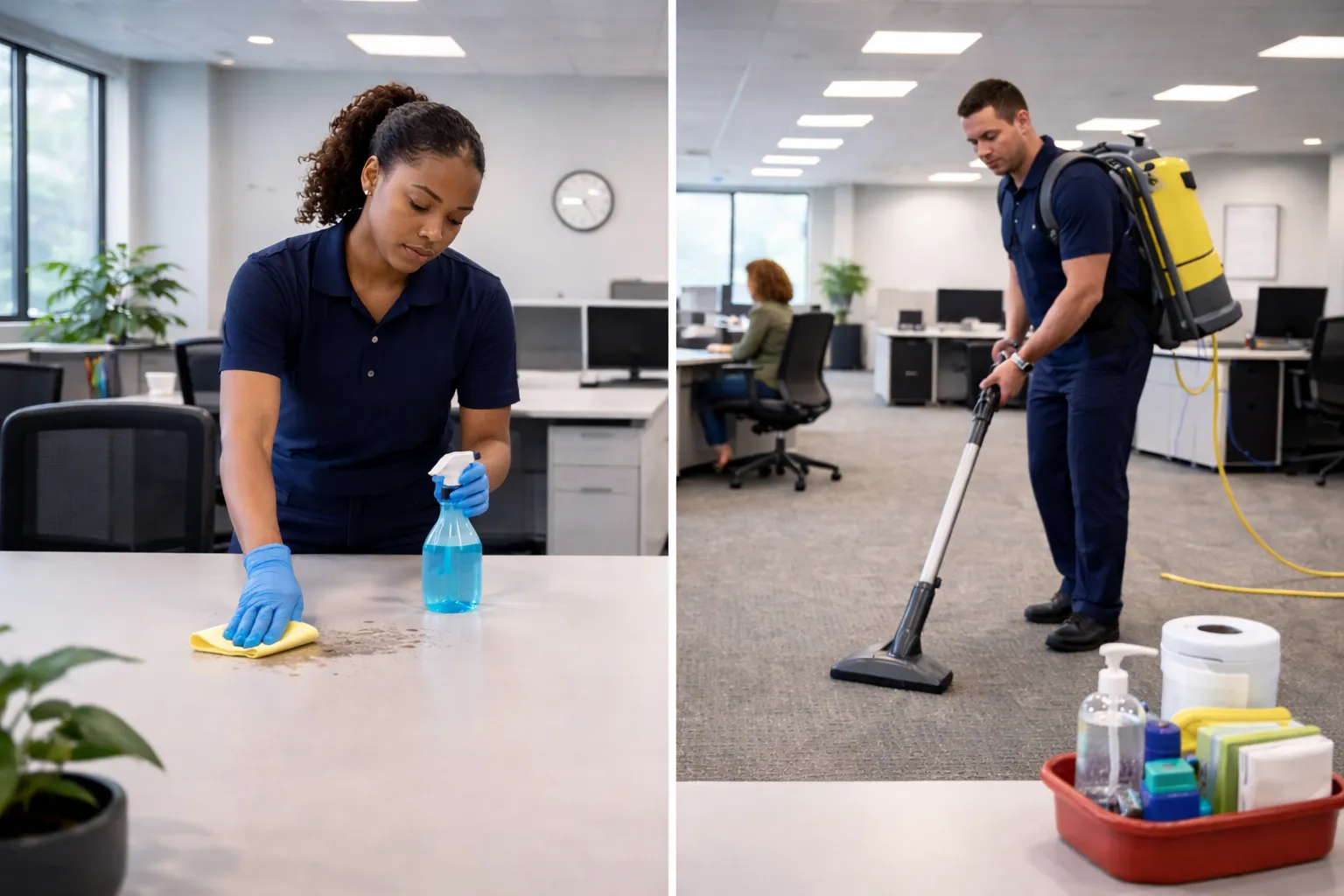
Office cleanliness plays a major role in employee health, productivity, and professional appearance. But one of the most common questions facilities managers and business owners ask is: how often should different areas of the office actually be cleaned?
Overcleaning wastes resources, while under-cleaning leads to germ buildup, odors, and faster wear on surfaces and flooring. The key is having a structured, area-by-area cleaning schedule based on usage, foot traffic, and hygiene risk.
This guide breaks down how often you should clean common office areas—and why those frequencies matter.
Why Cleaning Frequency Matters in Offices
Not all office spaces are used the same way—and they shouldn’t be cleaned the same way either. Different areas serve different functions, experience varying levels of foot traffic, and come into contact with people at different frequencies. As a result, they collect dirt, bacteria, and allergens at very different rates.
High-touch and high-traffic zones require frequent, consistent cleaning to reduce health risks, while low-use or restricted areas can follow lighter schedules without compromising hygiene standards. Matching cleaning frequency to actual usage is key to maintaining both cleanliness and cost efficiency.
How Proper Cleaning Frequency Protects the Workplace
Reduces Sick Days and Illness Transmission
Frequently touched surfaces—such as door handles, shared desks, restrooms, break rooms, and elevators—can quickly become transmission points for germs. Regular cleaning and disinfection interrupt this cycle, helping prevent the spread of colds, flu, and other viruses throughout the office.
Maintains Indoor Air Quality
Dust, pollen, and airborne contaminants accumulate faster in busy areas and carpeted spaces. Consistent vacuuming, surface cleaning, and HVAC maintenance reduce the buildup of allergens and particulates, creating healthier air for employees to breathe.
Extends the Life of Carpets, Furniture, and Flooring
Dirt and grit act like abrasives when ground into carpets and hard floors. Proper cleaning frequency prevents premature wear, discoloration, and damage, helping organizations protect their investment in office interiors and reduce replacement costs over time.
Creates a Consistently Professional Environment
A workplace that is cleaned at the right frequency looks and feels professional every day—not just after occasional deep cleans. This consistency supports employee morale and makes a positive impression on clients, partners, and visitors.
Aligning Cleaning Frequency with Office Usage
Effective cleaning schedules are not one-size-fits-all. They should be based on:
-
Foot traffic levels
-
Number of shared touchpoints
-
Type of work performed
-
Occupancy patterns (hybrid vs. full-time offices)
When cleaning frequency aligns with how spaces are actually used, offices remain healthier, more productive, and more welcoming—without unnecessary overspending.
Office Cleaning Frequency by Area
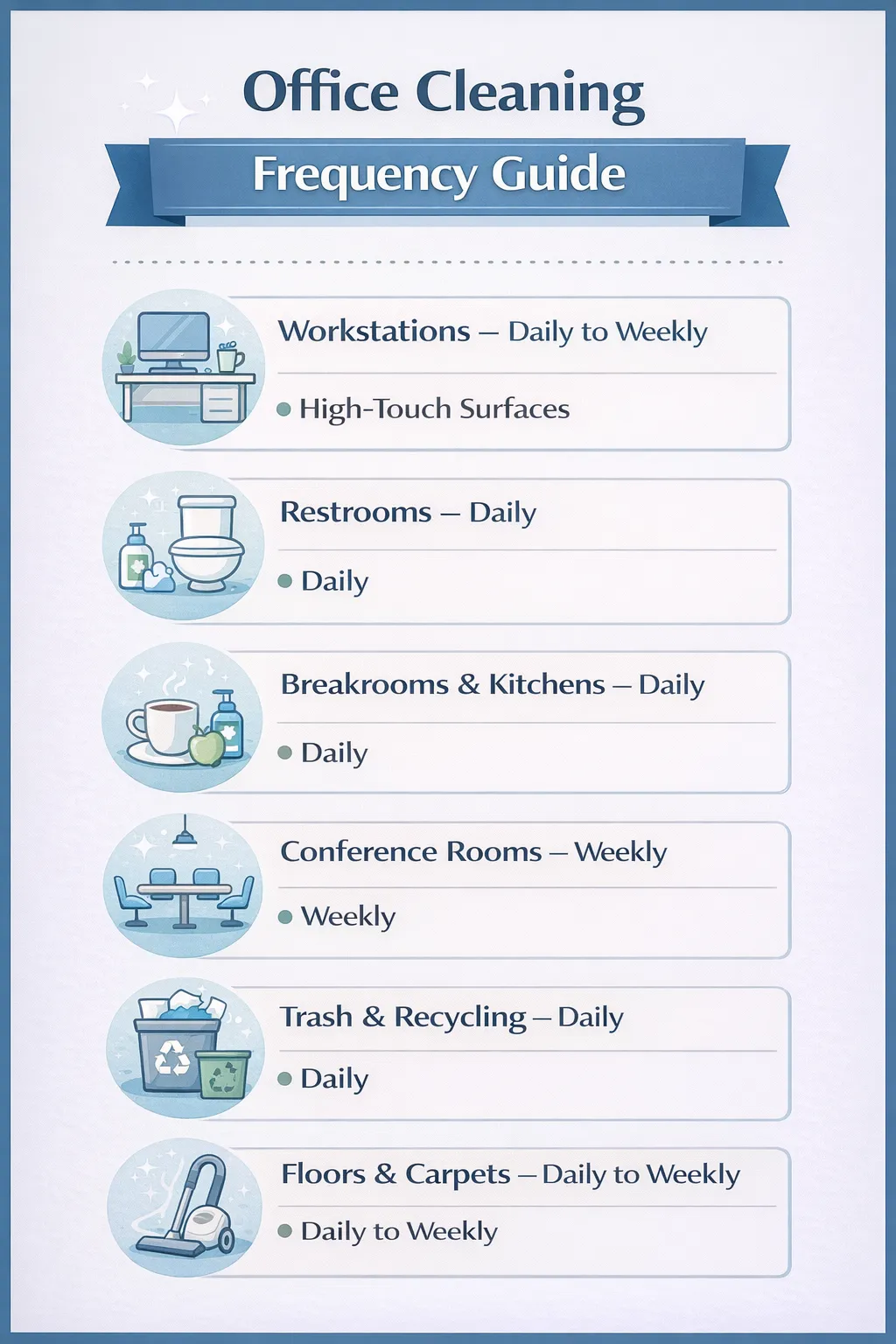
Different office areas experience different levels of use, contact, and contamination. Establishing the right cleaning frequency for each zone helps reduce illness transmission, protect assets, and maintain a consistently professional environment.
Reception Areas and Entrances
Reception areas create the first impression of your workplace and experience constant foot traffic from employees, clients, and visitors. Dirt, moisture, and germs accumulate quickly in these spaces.
Recommended Frequency:
-
Surface cleaning: Daily
-
Vacuuming/mopping: Daily
-
Glass and door handles: Daily
-
Deep carpet cleaning: Every 3–6 months
| Task | Frequency |
|---|---|
| Floor cleaning | Daily |
| Door handles & counters | Daily |
| Furniture wipe-down | 2–3 times per week |
| Deep carpet cleaning | Every 3–6 months |
Workstations and Desks
Desks are high-touch environments and can harbor more bacteria than shared restrooms if not cleaned regularly—especially in shared or hybrid workspaces.
Recommended Frequency:
-
Light surface cleaning: Daily
-
Disinfection of shared desks: Daily
-
Deep cleaning: Weekly
| Task | Frequency |
|---|---|
| Desk surface wipe-down | Daily |
| Phones & keyboards | Daily |
| Chair arms | 2–3 times per week |
| Deep workstation cleaning | Weekly |
Conference and Meeting Rooms
Meeting rooms are used by multiple employees and visitors, often in close proximity, making them key areas for germ transmission.
Recommended Frequency:
-
Surface disinfection: After use or daily
-
Floor cleaning: 2–3 times per week
-
Upholstery cleaning: Quarterly
| Task | Frequency |
|---|---|
| Table & chair wipe-down | Daily |
| Shared equipment (remotes, screens) | Daily |
| Floor cleaning | 2–3 times per week |
| Upholstery cleaning | Quarterly |
Restrooms
Restrooms are the highest hygiene-risk areas in any office and require strict, non-negotiable cleaning protocols.
Recommended Frequency:
-
High-traffic offices: Multiple times per day
-
Low-traffic offices: At least once daily
| Task | Frequency |
|---|---|
| Toilet & urinal cleaning | Daily (or more) |
| Sink & faucet disinfection | Daily |
| Floor cleaning | Daily |
| Supply restocking | Daily |
| Deep sanitation | Weekly |
Break Rooms and Kitchens
Shared food preparation and eating areas are highly prone to bacteria growth if cleaning is inconsistent.
Recommended Frequency:
-
Surface cleaning: Daily
-
Appliance cleaning: Daily
-
Refrigerator cleanout: Weekly
| Task | Frequency |
|---|---|
| Countertops & tables | Daily |
| Microwaves & refrigerators (exterior) | Daily |
| Trash removal | Daily |
| Refrigerator cleanout | Weekly |
Carpets and Flooring
Carpets and floors trap dust, allergens, and pollutants—especially in high-traffic areas—making regular maintenance essential.
Recommended Frequency:
-
Vacuuming: Daily in busy areas
-
Spot cleaning: As needed
-
Deep carpet cleaning: Every 3–6 months
| Area | Frequency |
|---|---|
| High-traffic vacuuming | Daily |
| Low-traffic vacuuming | 2–3 times per week |
| Spot stain removal | Immediate |
| Deep carpet cleaning | Every 3–6 months |
Elevators, Stairwells, and Hallways
These transitional spaces experience constant movement and frequent hand contact, making them high-priority cleaning zones.
Recommended Frequency:
-
Handrails and buttons: Daily
-
Floor cleaning: Daily
| Task | Frequency |
|---|---|
| Elevator buttons | Daily |
| Handrails | Daily |
| Floor cleaning | Daily |
| Wall spot cleaning | Weekly |
Adjusting Cleaning Frequency Based on Office Type
Not all offices have the same hygiene needs. Cleaning frequency should be increased if your workplace:
-
Has high foot traffic or frequent visitors
-
Operates multiple shifts
-
Uses hot-desking or shared workstations
-
Operates in healthcare, finance, legal, or client-facing industries
Facilities managers should review cleaning schedules quarterly and adjust them as office usage, occupancy, or business needs change.
ISO & Health and Safety Standards for Office Cleaning and Hygiene
While there is no single global ISO standard dedicated only to office cleaning, several ISO and occupational health & safety standards directly influence how office hygiene programs should be structured, documented, and audited.
Key ISO Standards Relevant to Office Cleaning
ISO 45001 – Occupational Health & Safety Management Systems
What it covers:
ISO 45001 focuses on protecting employee health and preventing work-related illness or injury.
How it applies to office cleaning:
-
Identifies hygiene risks (germs, allergens, chemical exposure)
-
Requires documented cleaning and sanitation procedures
-
Emphasizes prevention of illness through risk control
Practical office hygiene alignment:
-
Defined cleaning frequencies by area
-
Safe chemical usage and storage
-
PPE usage for cleaning staff
-
Incident reporting for hygiene-related issues
ISO 14001 – Environmental Management Systems
What it covers:
Managing environmental impact, including waste, water, and chemical use.
How it applies to office cleaning:
-
Encourages use of eco-friendly cleaning products
-
Controls chemical disposal and wastewater
-
Promotes sustainable cleaning practices
Practical office hygiene alignment:
-
Low-toxicity, biodegradable cleaning agents
-
Controlled chemical dilution systems
-
Proper waste segregation and recycling
ISO 9001 – Quality Management Systems
What it covers:
Consistency, accountability, and continuous improvement.
How it applies to office cleaning:
-
Standardized cleaning procedures
-
Documented checklists and logs
-
Regular inspections and audits
Practical office hygiene alignment:
-
Area-specific cleaning SOPs
-
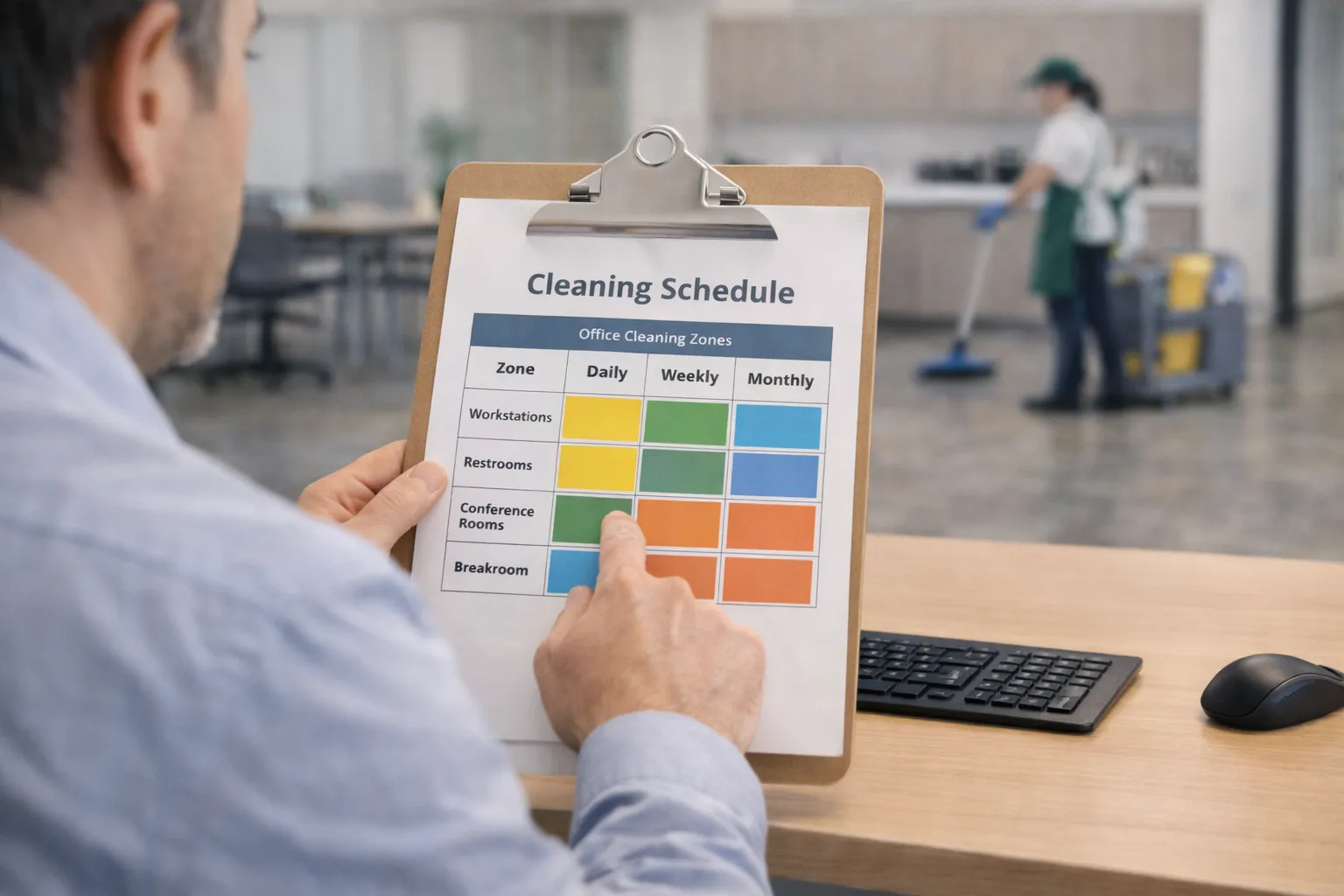
Daily, weekly, and monthly cleaning logs
-
Performance reviews and corrective actions
Health & Safety Regulations That Influence Office Cleaning
Workplace Health & Safety (General Principles)
Across most regions (OSHA, HSE, local labor authorities), employers are required to:
-
Provide a clean and sanitary workplace
-
Control exposure to biological hazards
-
Maintain safe restroom and handwashing facilities
COSHH / Hazardous Substance Control (UK & EU)
Focus: Safe handling of cleaning chemicals.
Office cleaning requirements include:
-
Risk assessments for cleaning products
-
Proper labeling and storage
-
Staff training on chemical exposure
Indoor Air Quality (IAQ) Guidelines
Poor air quality can be a health hazard.
Standards emphasize:
-
Regular HVAC maintenance
-
Dust and allergen control
-
Proper ventilation
Office hygiene impact:
-
Scheduled carpet cleaning
-
Upholstery maintenance
-
Filter inspections and replacements
Aligning Cleaning Frequency With ISO & Safety Expectations
To align with ISO and health & safety standards, offices should ensure:
1. Risk-Based Cleaning Schedules
-
High-risk areas (restrooms, break rooms) cleaned more frequently
-
Low-risk areas cleaned appropriately
2. Documented Procedures
-
Cleaning checklists by area
-
Defined products and methods
-
Clear responsibility assignments
3. Monitoring & Auditing
-
Routine inspections
-
Complaint tracking
-
Corrective actions
4. Training & Competency
-
Staff trained in hygiene protocols
-
Safe chemical handling
-
Proper use of PPE
Example: ISO-Aligned Office Cleaning Framework
Daily
-
High-touch surface disinfection
-
Restroom sanitation
-
Waste removal
Weekly
-
Deep restroom cleaning
-
Equipment and electronics wipe-down
-
Floor maintenance
Monthly / Quarterly
-
HVAC inspections
-
Carpet and upholstery cleaning
-
Hygiene protocol review
This structure demonstrates risk control, consistency, and continuous improvement—core ISO principles.
Why ISO Alignment Matters for Offices
ISO-aligned hygiene programs:
-
Reduce illness-related absences
-
Improve employee trust and morale
-
Support compliance audits
-
Strengthen organizational credibility
Even without formal certification, following ISO principles signals professionalism and duty of care.
Ready to Create a Smarter Office Cleaning Schedule?
A well-maintained office requires more than guesswork—it requires a cleaning plan that matches how your space is actually used. CorpClean provides tailored office cleaning solutions designed around foot traffic, hygiene risk, and business operations.
From daily office cleaning to deep carpet maintenance and high-touch surface disinfection, CorpClean helps businesses maintain healthier, more professional workplaces.
? Explore CorpClean’s professional office cleaning services at
https://www.corpclean.com.au/