Quick Answer: How Does Gum Removal Improve Commercial Property Appearance?
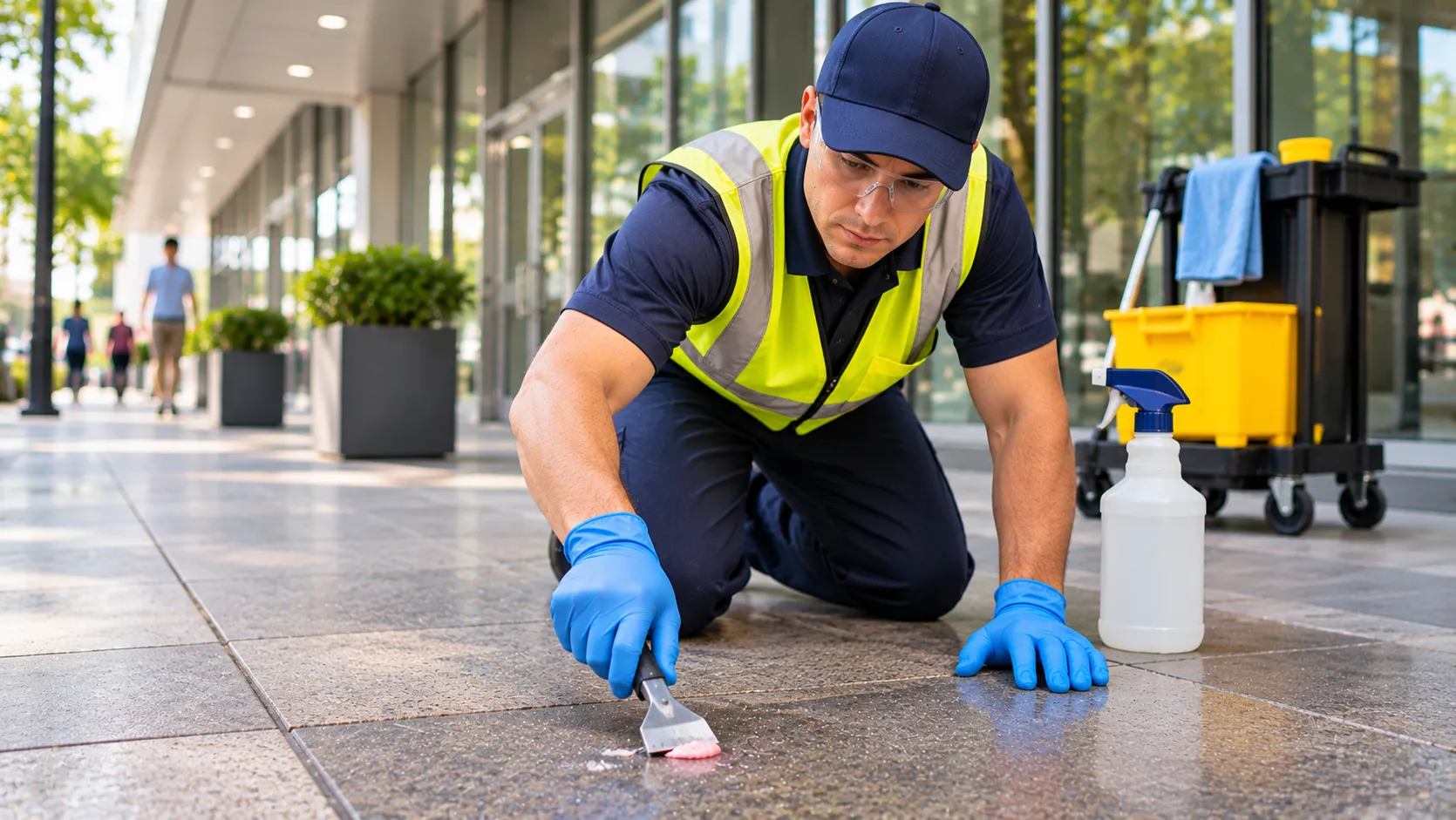
Professional chewing gum removal improves commercial property appearance by eliminating sticky deposits, dark pavement marks and accumulated surface contamination that make entrances, footpaths and outdoor areas look neglected.
Regular gum removal helps commercial properties:
- Create a cleaner and more welcoming first impression.
- Restore the visual consistency of concrete and paved surfaces.
- Maintain professional customer-facing environments.
- Reduce adhesive contamination transferred onto internal flooring.
- Protect surfaces from inappropriate scraping and aggressive cleaning.
- Reduce the accumulation of dirt around discarded chewing gum.
- Support preventative property maintenance.
- Maintain consistent presentation standards in high-traffic areas.
Depending on the surface material and age of the contamination, effective gum removal may involve targeted steam treatment, hot water pressure cleaning, compatible cleaning solutions or controlled mechanical removal.
Commercial property appearance plays an important role in shaping how customers, employees, visitors and tenants perceive a business. While building facades, landscaping and signage often receive considerable attention, the condition of pavements and pedestrian areas can be equally important.
Discarded chewing gum is one of the most persistent forms of contamination affecting commercial exterior surfaces. Once compressed into concrete, paving or other flooring materials, chewing gum can become increasingly difficult to remove through routine sweeping and washing.
Over time, accumulated gum deposits create dark, irregular marks that make otherwise attractive commercial properties appear poorly maintained.
Shopping centres, office buildings, hotels, restaurants, educational facilities and public spaces can particularly benefit from targeted gum removal incorporated into a broader professional pressure cleaning program.
Why Chewing Gum Is Difficult to Remove from Commercial Surfaces
Modern chewing gum contains an elastic gum base that does not readily dissolve in water. When discarded onto a pavement, it can adhere to the surface and become compressed by repeated pedestrian movement.
Outdoor temperatures, moisture, dust and prolonged weather exposure can further change the condition of gum deposits.
| Contributing Factor | Effect on the Surface | Cleaning Challenge |
|---|---|---|
| Adhesive Gum Base | Bonds to hard surfaces | Ordinary sweeping is ineffective |
| Repeated Foot Traffic | Compresses gum into surface irregularities | Deposits become harder to remove |
| Surface Porosity | Retains adhesive residue | Requires compatible specialist treatment |
| Temperature Changes | Changes gum softness and hardness | Removal methods must suit existing conditions |
| Dirt Accumulation | Creates dark, visible patches | Surrounding grime may also require cleaning |
| Prolonged Weathering | Contributes to persistent discolouration | Complete colour restoration may be difficult |
Attempting to remove established gum deposits with unsuitable chemicals, sharp tools or excessive water pressure may damage the underlying surface.
How Chewing Gum Affects Commercial Property Appearance
A single chewing gum deposit may seem insignificant. However, hundreds of deposits scattered across an entrance or pedestrian walkway can substantially affect the overall appearance of a property.
Dark gum marks interrupt the uniform colour and texture of paving, creating an impression of inadequate maintenance even when other areas are regularly cleaned.
| Appearance Issue | Visual Impact | Potential Business Concern |
|---|---|---|
| Dark Gum Spots | Uneven pavement appearance | Reduced property presentation |
| Sticky Surface Deposits | Visible dirt accumulation | Additional cleaning requirements |
| Gum Near Entrances | Unwelcoming arrival areas | Negative first impressions |
| Accumulated Gum Around Seating | Neglected-looking shared spaces | Potential customer complaints |
| Transferred Gum Indoors | Contaminated carpets and hard floors | Increased internal maintenance |
| Improper Removal Marks | Scratches and uneven finishes | Potential surface restoration expenses |
Key Benefits of Professional Commercial Gum Removal
1. Creates a Better First Impression
Customers and visitors begin forming impressions of a business before entering its premises. Clean entrances and well-maintained pedestrian areas contribute to a professional and welcoming environment.
Removing visible chewing gum helps prevent exterior surfaces from distracting from the property's architectural features, landscaping and branding.
2. Improves Customer-Facing Areas
Retail entrances, outdoor dining spaces and public seating areas are particularly vulnerable to discarded gum. Regular treatment helps maintain environments where visitors can shop, dine and gather comfortably.
3. Supports Commercial Property Maintenance
Prompt removal prevents gum deposits from accumulating over extended periods. This may reduce the need for more intensive corrective cleaning and help property managers establish predictable maintenance requirements.
4. Protects Surface Finishes
Professional cleaning methods can reduce the risks associated with inappropriate scraping, excessive pressure and incompatible chemicals.
This is particularly important for decorative concrete, natural stone, sealed paving and premium architectural finishes.
5. Reduces Contamination Transfer Indoors
Fresh chewing gum can attach to footwear and mobility equipment before being transferred onto carpets, entrance mats and internal flooring.
Maintaining exterior entrances helps reduce the likelihood of adhesive contamination spreading throughout the building.
6. Supports Tenant and Visitor Satisfaction
Well-maintained common areas demonstrate attention to property management. Consistent exterior cleaning can help address presentation concerns raised by commercial tenants, customers and building occupants.
7. Preserves the Appearance of Property Assets
Commercial paving, decorative stone and exterior flooring represent significant property investments. Suitable cleaning helps maintain their appearance without unnecessarily exposing materials to aggressive removal methods.
Commercial Properties That Benefit from Gum Removal
Chewing gum contamination can occur wherever people gather, eat, wait or move between commercial facilities.
| Property Type | Common Gum Hotspots | Primary Benefit |
|---|---|---|
| Shopping Centres | Entrances, food courts and plazas | Improved customer experience |
| Office Buildings | Forecourts, pathways and smoking areas | Professional corporate appearance |
| Retail Stores | Shopfronts and pedestrian entrances | Cleaner customer arrival areas |
| Restaurants and Cafes | Outdoor dining and waiting areas | Improved hospitality presentation |
| Hotels and Resorts | Guest entrances and courtyards | More welcoming guest environments |
| Schools and Universities | Courtyards and recreational spaces | Cleaner shared facilities |
| Government Buildings | Public entrances and walkways | Consistent public-facing presentation |
| Transport Facilities | Waiting areas and access pathways | Improved public space maintenance |
| Healthcare Facilities | Visitor entrances and external paths | Well-maintained facility surroundings |
| Entertainment Venues | Queues, concourses and gathering spaces | Improved event presentation |
| Commercial Car Parks | Lift entrances and pedestrian routes | Consistent property-wide cleanliness |
The Most Common Chewing Gum Accumulation Hotspots
Identifying recurring contamination hotspots allows property managers to allocate cleaning resources more efficiently rather than treating every exterior area at the same frequency.
| Location | Reason for Accumulation | Suggested Cleaning Priority |
|---|---|---|
| Main Entrances | High pedestrian movement | High |
| Food Court Entrances | Frequent food consumption | High |
| Outdoor Seating | Extended visitor dwell times | High |
| Smoking Areas | Repeated gathering in designated locations | High |
| Public Transport Stops | Regular passenger activity | High |
| Waste Disposal Stations | Incorrect waste disposal | Medium to High |
| Car Park Walkways | Movement between vehicles and buildings | Medium |
| Lift and Stairwell Entrances | Concentrated pedestrian traffic | Medium |
| Low-Traffic Perimeter Paths | Occasional pedestrian use | Condition-Based |
Professional Gum Removal vs Routine Cleaning
Routine sweeping, mopping and pavement washing remain essential components of commercial cleaning. However, these activities may not remove gum that has become firmly bonded to a surface.
| Cleaning Method | Primary Application | Effectiveness Against Established Gum |
|---|---|---|
| Manual Sweeping | Loose litter and dust | Generally ineffective |
| Routine Mopping | General floor contamination | Limited |
| Cold Water Washing | Loose exterior dirt | Variable |
| Mechanical Floor Scrubbing | Compatible hard floor cleaning | May assist with residual contamination |
| Controlled Scraping | Isolated gum deposits | Effective on selected surfaces |
| Targeted Steam Cleaning | Heat-compatible surfaces | Often effective |
| Hot Water Pressure Cleaning | Durable exterior surfaces | Can assist with established deposits |
| Specialist Gum Removal Products | Adhesive residues | Dependent on product compatibility |
| Combined Specialist Treatment | Persistent deposits and surrounding grime | Site-dependent |
Professional Chewing Gum Removal Methods
The appropriate removal method depends on the material being cleaned, the age of the gum, existing protective coatings and the surrounding environment.
Steam-Based Gum Removal
Targeted steam equipment can soften chewing gum, helping release it from compatible surfaces. This method may be particularly useful for treating individual deposits where broad-area washing is unnecessary.
Heat sensitivity, equipment operating requirements and pedestrian protection must be considered before treatment.
Hot Water Pressure Cleaning
Hot water pressure cleaning can assist with removing chewing gum and surrounding contamination from suitable durable exterior surfaces.
It may be appropriate when gum removal forms part of a broader concrete, pavement or commercial exterior cleaning project.
Specialist Gum Removal Solutions
Compatible cleaning solutions may help loosen adhesive residues remaining on the surface. Products must be selected according to material compatibility, manufacturer instructions and applicable chemical handling requirements.
Controlled Mechanical Removal
Surface-compatible scraping tools may help remove isolated deposits. However, excessive force and unsuitable metal tools can scratch decorative surfaces or damage protective coatings.
Cold Treatment Methods
Some specialist products harden gum to support controlled removal from compatible interior flooring and carpet fibres. Treatment must follow the flooring manufacturer's recommendations.
Steam Gum Removal vs Pressure Washing
Steam cleaning and pressure washing serve different purposes. Selecting an appropriate method helps avoid unnecessary water exposure, surface damage and business disruption.
| Comparison | Targeted Steam Treatment | Pressure Washing |
|---|---|---|
| Primary Purpose | Individual gum deposits | Broader surface contamination |
| Cleaning Coverage | Localised treatment | Large surface areas |
| Water Consumption | May be lower for isolated deposits | Depends on equipment and duration |
| Material Compatibility | Requires heat-compatible surfaces | Requires pressure-compatible surfaces |
| General Grime Removal | Limited to treated locations | Suitable for broader cleaning |
| Public Access Restrictions | Potentially smaller work zones | May require wider exclusion areas |
| Wastewater Management | Depends on the system used | May require extensive runoff control |
| Best Application | Recurring spot treatment | Periodic exterior deep cleaning |
Where both established chewing gum and general pavement contamination are present, combining compatible treatment methods may produce a more consistent finish.
Gum Removal from Different Commercial Surface Materials
Not all commercial flooring and paving materials can tolerate the same cleaning methods. A surface assessment is essential before selecting equipment, chemicals, temperature and pressure settings.
| Surface Material | Cleaning Consideration | Potential Risk |
|---|---|---|
| Unsealed Concrete | Controlled treatment suited to porosity | Erosion and residual staining |
| Sealed Concrete | Follow coating specifications | Sealer deterioration |
| Concrete Pavers | Protect joints and surface finishes | Joint material displacement |
| Brick Paving | Assess brick and mortar condition | Surface erosion |
| Granite | Consider texture and polish | Loss of finish |
| Sandstone | Use conservative cleaning methods | Material erosion and absorption |
| Marble | Use stone-compatible treatment | Etching and scratching |
| Ceramic Tiles | Protect glaze and grout | Scratching or grout damage |
| Asphalt | Avoid incompatible solvents and heat | Binder deterioration |
| Timber Decking | Follow timber and coating specifications | Fibre damage and swelling |
| Vinyl Flooring | Use approved flooring products | Softening or scratching |
| Epoxy Flooring | Confirm coating compatibility | Loss of gloss or coating damage |
| Commercial Carpet | Use fibre-compatible treatment | Fibre damage and adhesive residue |
Important: Excessive pressure, heat or chemical strength does not necessarily improve gum removal. A discreet test area can help establish an appropriate treatment method before wider cleaning begins.
Removing Chewing Gum from Concrete Footpaths
Concrete footpaths are widely used across Australian commercial properties because of their durability, practicality and relatively straightforward maintenance requirements.
However, the texture and porosity of concrete can allow gum residues and surrounding dirt to become difficult to remove.
Before cleaning concrete footpaths, assess the following:
- Whether the concrete is sealed or unsealed.
- The age and condition of the surface.
- Existing cracks and damaged areas.
- Decorative treatments and painted markings.
- The concentration of chewing gum deposits.
- Nearby landscaping and electrical fixtures.
- Drainage and wastewater recovery requirements.
- Pedestrian access and business operating hours.
Following targeted gum removal, broader compatible surface cleaning may help reduce differences in appearance between previously contaminated and surrounding areas.
Why Gum Removal Is Important for Shopping Centres
Shopping centres experience continuous pedestrian movement, food consumption and customer activity. These conditions can lead to recurring chewing gum accumulation in highly visible public areas.
Food courts, outdoor dining precincts and entrances may require more frequent inspections than quieter service areas.
| Shopping Centre Area | Typical Contamination | Maintenance Objective |
|---|---|---|
| Main Entrances | Gum and tracked dirt | Professional customer arrival experience |
| Food Courts | Gum, food residues and spills | Well-presented dining environments |
| Outdoor Retail Areas | Gum and environmental grime | Consistent shopfront appearance |
| Public Seating | Adhesive deposits and litter | Cleaner shared facilities |
| Car Park Connections | Gum and pedestrian contamination | Improved property-wide presentation |
| Lift and Escalator Approaches | Concentrated foot traffic marks | Clean access areas |
Targeted gum removal can be scheduled alongside general cleaning activities to maintain consistent presentation throughout busy retail environments.
Gum Removal for Offices and Corporate Buildings
Corporate property owners often invest heavily in architectural finishes, landscaping, signage and reception facilities. Chewing gum contamination on entrance paving can undermine these investments.
Regular exterior inspections should focus on:
- Main office building entrances.
- Executive arrival areas.
- Shared commercial forecourts.
- Employee outdoor break areas.
- Designated smoking locations.
- Visitor pathways.
- Outdoor meeting and seating areas.
A consistent cleaning schedule helps ensure that exterior maintenance standards complement the appearance of internal office facilities.
Gum Removal for Restaurants, Cafes and Hotels
Hospitality businesses depend on clean, welcoming environments. Outdoor dining areas and customer entrances can influence how visitors perceive the overall maintenance standard of a venue.
Chewing gum deposits may accumulate beneath seating, around waiting areas and along neighbouring pedestrian pathways.
Cleaning activities should be coordinated with food service operations, protecting food, dining equipment and customers from cleaning-related contamination.
| Hospitality Location | Cleaning Concern | Suggested Approach |
|---|---|---|
| Restaurant Entrances | Visible pavement deposits | Regular inspection and spot treatment |
| Outdoor Dining Areas | Gum beneath tables and seating | Cleaning outside service periods |
| Hotel Forecourts | Contamination along guest pathways | Scheduled exterior maintenance |
| Cafe Footpaths | Gum and beverage stains | Combined compatible surface cleaning |
| Event Venue Entrances | High contamination after gatherings | Post-event cleaning inspections |
How Gum Removal Supports Preventative Property Maintenance
Allowing chewing gum to accumulate over extended periods can increase cleaning complexity. Older deposits may be more difficult to release and can leave visible residue or differences in surface colour.
A preventative maintenance program focuses on identifying and addressing contamination before extensive corrective work becomes necessary.
| Maintenance Activity | Potential Benefit |
|---|---|
| Prompt Gum Removal | Limits the accumulation of established deposits |
| Routine Hotspot Inspections | Identifies recurring contamination patterns |
| Scheduled Specialist Treatment | Maintains more consistent property presentation |
| Surface-Compatible Cleaning | Reduces avoidable material damage |
| Periodic Pavement Washing | Addresses surrounding dirt and grime |
| Waste Management Improvements | Encourages responsible gum disposal |
| Maintenance Reporting | Supports informed cleaning budget decisions |
Can Gum Removal Help Extend the Life of Commercial Surfaces?
Chewing gum removal primarily improves cleanliness and appearance. However, selecting appropriate removal methods can also help protect the condition of commercial surfaces.
Repeated aggressive scraping, excessive pressure and incompatible chemical use may damage protective coatings, decorative finishes and paving materials.
Professional maintenance helps limit these avoidable risks by selecting cleaning techniques based on the condition and characteristics of each surface.
Actual surface lifespan depends on material quality, installation, environmental exposure, traffic, maintenance practices and other operating conditions.
Before and After Professional Gum Removal
Property managers can use before-and-after inspections to assess the effectiveness of gum removal and identify areas requiring additional maintenance.
| Before Cleaning | Potential Improvement After Cleaning |
|---|---|
| Numerous visible gum deposits | Cleaner and more consistent pavement appearance |
| Sticky surface contamination | Removal of accessible adhesive residues |
| Dark patches of accumulated grime | Improved local surface cleanliness |
| Neglected-looking entrances | More welcoming customer arrival areas |
| Uneven pavement presentation | Improved visual consistency |
| Established weathered gum marks | Improved appearance with possible residual discolouration |
Older deposits may leave lighter or darker outlines because the protected area beneath the gum has weathered differently from the surrounding pavement.
Additional compatible cleaning may improve these differences, although complete colour restoration cannot always be achieved.
Does Gum Removal Improve Commercial Property Safety?
Removing sticky deposits and associated debris supports general commercial housekeeping. Nevertheless, chewing gum removal alone does not establish that a pedestrian surface is safe or compliant with applicable slip resistance requirements.
A comprehensive exterior cleaning program should also address:
- Oil and grease contamination.
- Algae and organic growth.
- Wet and slippery pavements.
- Loose debris and litter.
- Blocked pedestrian pathways.
- Damaged paving and uneven flooring.
- Inadequate drainage.
Property managers should assess these hazards separately and implement appropriate controls according to their workplace and public access responsibilities.
Environmental Considerations for Commercial Gum Removal
Professional exterior cleaning involves more than removing visible contamination. Water consumption, cleaning products, detached gum and wastewater must also be managed responsibly.
| Environmental Consideration | Recommended Management Practice |
|---|---|
| Water Consumption | Select methods appropriate to the treatment area |
| Detached Gum | Collect and dispose of solid residues appropriately |
| Cleaning Chemicals | Follow product instructions and safety requirements |
| Stormwater Drains | Prevent contaminated cleaning water from entering drains |
| Wastewater Recovery | Establish approved collection and disposal arrangements |
| Landscaping | Protect vegetation from incompatible chemicals and runoff |
| Energy Consumption | Use heat-assisted equipment where appropriate |
| Repeated Cleaning | Target actual contamination rather than unnecessary broad-area treatment |
Australian wastewater discharge and trade waste requirements vary by jurisdiction and local water authority. Commercial cleaning activities should account for the applicable conditions before work begins.
Environmental reminder: A biodegradable cleaning product does not automatically make contaminated wastewater suitable for stormwater discharge. Gum residues, detergents, oils and other surface contaminants must still be appropriately managed.
Work Health and Safety During Commercial Gum Removal
Gum removal may involve heated equipment, high-pressure water, chemicals, electrical equipment and work near active pedestrian areas.
Cleaning activities should be supported by suitable risk assessments and controls.
| Potential Hazard | Recommended Control |
|---|---|
| Hot Water and Steam | Use trained personnel and equipment-specific procedures |
| Pressurised Water | Maintain appropriate exclusion zones |
| Wet Surfaces | Restrict pedestrian access until safe to reopen |
| Cleaning Chemicals | Follow Safety Data Sheets and product instructions |
| Electrical Equipment | Prevent incompatible water exposure |
| Hoses and Cables | Keep active pedestrian routes clear |
| Moving Vehicles | Separate cleaning operations from traffic |
| Public Access | Provide suitable barriers and alternative access |
| Manual Handling | Assess equipment handling requirements |
| Noise Exposure | Implement appropriate noise controls |
How to Remove Gum Without Interrupting Business Operations
Busy commercial properties often require cleaning to take place without unnecessarily restricting customer access or tenant operations.
Effective scheduling and work area management can help minimise disruption.
- Identify and document affected areas before cleaning.
- Assess pedestrian traffic patterns and operating hours.
- Prioritise entrances and highly visible locations.
- Divide larger areas into manageable sections.
- Schedule cleaning during suitable low-traffic periods.
- Establish temporary barriers and alternative access routes.
- Select treatment methods suited to the surface.
- Collect detached gum and contaminated wastewater.
- Inspect surfaces before removing access restrictions.
- Record recurring contamination and adjust future schedules.
| Cleaning Schedule | Suitable Application |
|---|---|
| Early Morning | Retail entrances before opening |
| After Business Hours | Office buildings and commercial forecourts |
| Overnight | Selected shopping centres and transport facilities |
| Between Service Periods | Restaurants and outdoor dining areas |
| Weekends | Office properties with reduced occupancy |
| After Major Events | Entertainment venues and public gathering areas |
How Often Should Commercial Properties Remove Chewing Gum?
There is no universal gum removal frequency suitable for every property. Cleaning schedules should reflect pedestrian volume, contamination levels, property presentation requirements and available maintenance resources.
| Property Area | Suggested Inspection Frequency | Recommended Treatment |
|---|---|---|
| Shopping Centre Entrances | Daily | Prompt spot treatment |
| Food Court Surroundings | Daily | Recurring hotspot cleaning |
| Outdoor Dining Areas | Daily | Treatment as contamination is identified |
| Public Transport Areas | Daily to weekly | Scheduled specialist cleaning |
| Office Entrances | Weekly | Condition-based removal |
| Hotel Arrival Areas | Daily to weekly | Targeted presentation maintenance |
| Educational Facilities | Weekly | Cleaning around occupancy |
| Commercial Car Park Walkways | Weekly to monthly | Scheduled exterior maintenance |
| Low-Traffic Pedestrian Paths | Monthly | Treatment as required |
| Event Precincts | Before and after major events | Event-based cleaning |
These frequencies are illustrative planning recommendations rather than mandatory cleaning intervals.
Example Commercial Gum Removal Maintenance Program
| Maintenance Interval | Recommended Activity | Objective |
|---|---|---|
| Daily | Inspect entrances and customer-facing areas | Identify fresh deposits |
| Weekly | Review and treat recurring hotspots | Limit established contamination |
| Monthly | Inspect broader exterior surfaces | Maintain consistent presentation |
| Quarterly | Review periodic deep cleaning requirements | Adjust maintenance resources |
| Every Six Months | Inspect protective finishes and coatings | Identify surface maintenance needs |
| Annually | Review cleaning performance and service scope | Update maintenance schedules and budgets |
How to Prevent Chewing Gum Accumulation
Although property managers cannot completely prevent irresponsible gum disposal, practical waste management and maintenance strategies can help reduce recurring contamination.
| Prevention Strategy | Potential Benefit |
|---|---|
| Accessible Waste Bins | Provides convenient disposal options |
| Dedicated Gum Disposal Facilities | Encourages appropriate gum disposal |
| Clear Disposal Signage | Reminds visitors to use waste facilities |
| Routine Hotspot Inspections | Identifies recurring problem areas |
| Prompt Spot Treatment | Limits long-term gum accumulation |
| Tenant Communication | Encourages shared responsibility |
| Post-Event Cleaning | Addresses increased visitor contamination |
| Compatible Protective Coatings | May simplify future surface cleaning |
| Waste Bin Placement Reviews | Aligns disposal facilities with pedestrian activity |
Can Protective Coatings Make Gum Easier to Remove?
Suitable surface sealers may reduce contamination penetration into porous materials, potentially simplifying future cleaning.
However, protective coatings do not necessarily prevent gum from adhering to the surface.
Before selecting a protective coating, property managers should consider:
- Compatibility with existing surface materials.
- Potential changes to slip resistance.
- Changes in colour, texture or gloss.
- Weather and ultraviolet exposure.
- Compatibility with future cleaning methods.
- Maintenance and reapplication requirements.
- Manufacturer warranty conditions.
A protective coating should form part of an assessed surface maintenance strategy rather than being considered a guaranteed gum prevention solution.
Combining Gum Removal with Other Exterior Cleaning Activities
Chewing gum is rarely the only contamination affecting commercial exterior surfaces. Combining targeted removal with complementary cleaning activities can improve overall property presentation.
| Cleaning Activity | Contamination Addressed | Expected Presentation Benefit |
|---|---|---|
| Pressure Cleaning | Surface dirt and environmental grime | Cleaner pavement appearance |
| Graffiti Removal | Unauthorised paint and markings | Improved building presentation |
| Car Park Cleaning | Vehicle-related dirt and debris | Cleaner visitor parking areas |
| Oil and Grease Removal | Vehicle leaks and oily residues | Improved affected surfaces |
| Exterior Building Washing | Atmospheric deposits and weather-related grime | More consistent facade appearance |
| Mechanical Floor Scrubbing | General hard floor contamination | Improved flooring presentation |
| Litter Collection | Loose waste and discarded materials | Cleaner shared spaces |
Common Mistakes When Removing Chewing Gum
Inappropriate cleaning methods can leave surfaces looking worse than before treatment. Avoiding these common mistakes helps protect commercial property finishes.
| Common Mistake | Potential Consequence | Better Approach |
|---|---|---|
| Using sharp metal tools | Surface scratching | Select material-compatible tools |
| Applying excessive pressure | Erosion and coating damage | Use assessed pressure settings |
| Using incompatible solvents | Staining and material deterioration | Use approved cleaning products |
| Ignoring established deposits | More complex future cleaning | Introduce regular inspections |
| Cleaning during peak traffic | Public disruption | Schedule suitable cleaning windows |
| Leaving detached gum behind | Secondary contamination | Collect removed residues |
| Ignoring contaminated wastewater | Potential environmental pollution | Use appropriate recovery controls |
| Using one method on every surface | Damage to sensitive materials | Assess individual surface requirements |
| Ignoring surrounding grime | Uneven visual appearance | Consider broader compatible cleaning |
| Reopening wet areas too early | Potential slip hazards | Inspect before restoring access |
Measuring the Effectiveness of a Gum Removal Program
Property managers can evaluate cleaning performance by monitoring visible contamination, surface condition and the recurrence of gum deposits.
| Performance Indicator | What to Monitor |
|---|---|
| Visible Gum Deposits | Number of deposits within inspected areas |
| Recurring Hotspots | Locations repeatedly affected by contamination |
| Cleaning Completion | Completion of scheduled maintenance activities |
| Residual Marks | Remaining adhesive residue or discolouration |
| Surface Condition | Changes to protective coatings or finishes |
| Tenant Feedback | Concerns relating to exterior presentation |
| Cleaning Duration | Time required to complete treatment |
| Operational Disruption | Duration of temporary access restrictions |
| Water and Waste Management | Resource consumption and disposal arrangements |
Example: Identifying High-Priority Gum Removal Areas
Gum deposit density can help compare contamination levels across commercial property areas of different sizes.
Gum deposit density = Number of visible deposits divided by surveyed area in square metres.
| Property Area | Surveyed Area | Visible Deposits | Deposits per Square Metre |
|---|---|---|---|
| Retail Entrance | 100 m² | 150 | 1.50 |
| Outdoor Dining Area | 80 m² | 96 | 1.20 |
| Office Forecourt | 200 m² | 60 | 0.30 |
| Car Park Walkway | 150 m² | 30 | 0.20 |
In this hypothetical example, the retail entrance has the highest concentration of gum deposits and may require greater maintenance attention.
These figures are illustrative and do not represent actual client results or industry benchmarks.
How Much Does Professional Commercial Gum Removal Cost?
Commercial gum removal costs depend on the extent of contamination, surface materials, access requirements and selected cleaning methods.
Pricing based solely on square metre coverage may not reflect the amount of work required to remove individual gum deposits.
| Cost Factor | Impact on Cleaning Requirements |
|---|---|
| Number of Gum Deposits | Higher concentrations may increase treatment time |
| Age of Contamination | Established deposits may require additional treatment |
| Surface Material | Sensitive materials may require specialist methods |
| Property Size | Influences inspection and cleaning coverage |
| Protective Coatings | May require compatibility testing |
| Equipment Requirements | Depends on the selected removal technique |
| Public Access Restrictions | May increase operational coordination |
| After-Hours Cleaning | May affect service and staffing costs |
| Wastewater Recovery | Influences containment and disposal requirements |
| Additional Exterior Cleaning | Increases the overall scope of service</ td> |
| Recurring Maintenance | Determines ongoing service requirements |
A site-specific cleaning assessment provides a more reliable basis for determining appropriate treatment methods and costs.
One-Off Gum Removal vs Scheduled Maintenance
| Comparison | One-Off Gum Removal | Scheduled Gum Removal |
|---|---|---|
| Primary Objective | Remove existing accumulation | Maintain ongoing presentation |
| Suitable Application | Heavily contaminated or occasionally affected areas | Regularly affected commercial properties |
| Cleaning Frequency | As required | According to an agreed schedule |
| Maintenance Approach | Corrective | Preventative and corrective |
| Budget Planning | Individual project expenditure | Recurring maintenance expenditure |
| Operational Coordination | Project-specific arrangements | Established cleaning windows |
| Presentation Outcome | Improvement following successful treatment | Supports consistent appearance over time |
Properties with extensive gum contamination may benefit from initial corrective cleaning followed by a targeted ongoing maintenance program.
Commercial Gum Removal Inspection Checklist
Facility managers can use the following checklist when planning and reviewing commercial gum removal activities.
| Inspection Requirement | Completed |
|---|---|
| Identify affected pedestrian areas. | ? |
| Record recurring gum accumulation hotspots. | ? |
| Identify surface materials. | ? |
| Assess protective coatings. | ? |
| Document existing surface damage. | ? |
| Select suitable cleaning methods. | ? |
| Complete test treatment where appropriate. | ? |
| Confirm cleaning product compatibility. | ? |
| Review relevant Safety Data Sheets. | ? |
| Confirm equipment suitability. | ? |
| Coordinate cleaning schedules with tenants. | ? |
| Establish pedestrian exclusion areas. | ? |
| Maintain approved alternative access routes. | ? |
| Protect nearby fixtures and landscaping. | ? |
| Confirm wastewater recovery arrangements. | ? |
| Collect detached gum residues. | ? |
| Inspect remaining adhesive contamination. | ? |
| Review surrounding pavement cleanliness. | ? |
| Inspect surface condition after treatment. | ? |
| Confirm the area is suitable for reopening. | ? |
| Document cleaning results. | ? |
| Review future maintenance frequency. | ? |
Choosing a Professional Exterior Cleaning Contractor
Commercial property managers should select a cleaning contractor based on its ability to assess contamination, protect surface materials, minimise operational disruption and deliver consistent maintenance outcomes.
| Selection Criteria | What to Verify |
|---|---|
| Industry Experience | Experience with comparable commercial properties |
| Gum Removal Capabilities | Availability of suitable specialist treatment methods |
| Surface Knowledge | Understanding of paving, concrete and protective finishes |
| Equipment Suitability | Appropriate equipment for identified contamination |
| Worker Training | Relevant cleaning and safety competencies |
| Risk Management | Site-specific procedures and public access controls |
| Environmental Management | Wastewater recovery and residue disposal arrangements |
| Flexible Scheduling | Ability to coordinate around business operations |
| Quality Assurance | Inspection and corrective action procedures |
| Insurance Coverage | Appropriate coverage for the proposed work |
| Ongoing Maintenance | Ability to manage recurring contamination |
Professional Exterior Cleaning with Corporate Cleaning Services®
Maintaining a commercial property's exterior requires a cleaning program that considers surface materials, environmental exposure, pedestrian movement and business operating requirements.
Corporate Cleaning Services® provides commercial pressure cleaning and exterior maintenance solutions for businesses, industrial properties and public facilities across Australia.
Available pressure cleaning and exterior maintenance services include:
- Commercial pressure cleaning.
- Concrete and paved surface cleaning.
- Footpath and walkway cleaning.
- Building exterior washing.
- Commercial car park cleaning.
- Graffiti removal.
- Oil and grease removal.
- Environmental grime removal.
- Scheduled exterior maintenance.
- Customised cleaning programs.
Property managers can discuss chewing gum contamination as part of a customised exterior cleaning assessment to determine suitable treatment options and service requirements.
Restore Your Commercial Property's Appearance
Persistent chewing gum deposits, stained pavements and accumulated exterior grime can undermine the appearance of your commercial property.
Corporate Cleaning Services® can assess your exterior cleaning requirements and develop a cleaning solution suited to your property's surfaces, maintenance objectives and operating schedule.
Request a Free Cleaning QuoteCall 1800 032 032 to discuss your commercial cleaning requirements.
Frequently Asked Questions About Commercial Gum Removal
Why is chewing gum difficult to remove from pavements?
Chewing gum contains an adhesive gum base that does not readily dissolve in water. Repeated foot traffic can compress the material into surface irregularities, making ordinary cleaning methods ineffective.
What is the best way to remove chewing gum from concrete?
Suitable methods may include targeted steam treatment, hot water pressure cleaning and compatible specialist products. The appropriate method depends on the condition and finish of the concrete.
Can pressure washing remove chewing gum?
Pressure washing can assist with removing gum from suitable durable surfaces. Established deposits may require additional heat-assisted or specialist treatment.
Is steam cleaning effective for gum removal?
Steam treatment can soften chewing gum and help release it from compatible surfaces. Equipment requirements and material temperature limitations must be considered.
Can chewing gum be removed without chemicals?
Some deposits can be removed using compatible heat-assisted or controlled mechanical methods without additional chemical products. Persistent residues may require specialist solutions.
Does professional gum removal damage concrete?
Appropriate treatment can reduce the risk of damage. Excessive pressure, sharp tools and incompatible chemicals may damage concrete and protective finishes.
Can chewing gum be removed from sandstone?
Yes, subject to the condition and compatibility of the stone. Sandstone generally requires conservative cleaning methods because of its porosity and potential sensitivity to aggressive treatment.
Can gum removal damage asphalt?
Unsuitable solvents, excessive heat and aggressive pressure can damage asphalt. A surface-specific assessment is recommended before treatment.
Can chewing gum be removed from commercial carpets?
Compatible specialist treatments may remove gum from carpet fibres. The selected method should follow carpet manufacturer recommendations.
Why are dark marks still visible after gum removal?
Remaining marks may result from adhesive residue, trapped dirt or differences in weathering between covered and exposed areas. Additional cleaning may improve the appearance, but complete restoration cannot always be guaranteed.
How often should shopping centres remove chewing gum?
Busy shopping centres may benefit from daily inspections of high-traffic areas and regular targeted treatment. Actual frequency depends on contamination levels and agreed presentation standards.
Does gum removal improve commercial property appearance?
Yes. Removing visible deposits helps restore pavement consistency and creates cleaner entrances, walkways and customer-facing environments.
Does gum removal reduce slip hazards?
Removing sticky contamination supports general housekeeping. However, slip resistance and other pedestrian safety hazards must be assessed separately.
Can commercial gum removal be completed after hours?
After-hours, early morning and other low-traffic service arrangements may help minimise disruption, depending on contractor availability and site requirements.
How long does commercial gum removal take?
Treatment time depends on deposit quantity, surface condition, cleaning method and access arrangements. Heavily contaminated properties may require multiple cleaning stages.
How much does commercial gum removal cost?
Costs vary according to contamination density, surface materials, equipment, labour and wastewater management requirements. A site assessment provides a more accurate basis for pricing.
Are environmentally responsible gum removal methods available?
Appropriate equipment selection, targeted treatment, responsible product use and effective wastewater management can help reduce unnecessary environmental impacts.
Can gum removal wastewater enter stormwater drains?
Contaminated cleaning water should not be discharged into stormwater drains. Collection and disposal arrangements must comply with applicable local requirements.
Can gum removal be combined with pressure cleaning?
Yes. Combining suitable targeted gum removal with broader pressure cleaning can address surrounding grime and improve visual consistency on compatible surfaces.
How can businesses prevent chewing gum accumulation?
Accessible waste bins, dedicated gum disposal facilities, appropriate signage and routine inspections may help reduce recurring contamination.
Can protective coatings prevent chewing gum from sticking?
Some compatible coatings may simplify future cleaning, but they do not necessarily prevent gum adhesion. Product suitability must be assessed for the particular surface.
Should fresh chewing gum be removed promptly?
Prompt treatment may reduce additional dirt accumulation and compression into the surface. An appropriate removal method should still be selected.
Can old chewing gum stains be completely removed?
Many established deposits can be substantially improved through suitable treatment. Permanent discolouration, previous damage and weathering differences may prevent complete restoration.
Is regular gum removal better than occasional deep cleaning?
Regular targeted maintenance may be more suitable for properties experiencing recurring contamination. Occasionally affected areas may only require condition-based cleaning.
Can gum removal be included in a commercial cleaning contract?
Yes, subject to agreement with the cleaning provider. The service scope should identify treatment areas, cleaning frequency, available methods and expected presentation outcomes.
Maintain a Cleaner, More Professional Commercial Property
Chewing gum contamination may appear to be a minor maintenance concern, but accumulated deposits can significantly affect the presentation of commercial entrances, footpaths, outdoor dining areas and shared public spaces.
Professional removal helps improve visual consistency while reducing the risks associated with aggressive scraping, unsuitable chemicals and excessive cleaning pressure.
By combining targeted gum removal, preventative maintenance, routine inspections and compatible exterior cleaning techniques, property managers can address persistent contamination while protecting the appearance of valuable commercial surfaces.
Contact Corporate Cleaning Services® on 1800 032 032 to discuss your property's exterior cleaning requirements and develop a customised maintenance solution.