Hotel Deep Cleaning Procedures: When and How to Do It Right
9th February 2026
Daily housekeeping keeps hotel rooms looking clean, but hotel deep cleaning is what protects long-term hygiene, improves guest satisfaction, and helps preserve furniture, fixtures, and finishes. Unlike routine cleaning, deep cleaning targets hidden dirt, bacteria, stains, and buildup in areas that are easy to miss during day-to-day service.
For hotels, resorts, and other lodging properties, a consistent deep cleaning schedule is essential for maintaining brand standards, supporting health and safety, and extending the life of guest room assets.
What Is Deep Cleaning in Hotels?
Deep cleaning in hotels is a detailed cleaning process that goes beyond standard housekeeping tasks. It focuses on hard-to-reach, high-touch, and often-overlooked areas throughout guest rooms and public spaces.
Hotel deep cleaning typically includes:
- Removing built-up dirt, dust, grime, and stains
- Sanitizing high-risk and high-touch surfaces
- Cleaning behind, under, and inside furniture and fixtures
- Restoring surfaces, finishes, carpets, and upholstery
In short, deep cleaning helps hotels maintain a higher standard of cleanliness than routine daily room cleaning alone.
When Should Hotels Perform Deep Cleaning?
Hotels should perform deep cleaning on a regular schedule rather than waiting until problems appear. A preventive approach helps reduce wear, improve room condition, and create a cleaner guest experience.
Recommended hotel deep cleaning schedule
- Monthly: High-traffic guest rooms and common areas
- Quarterly: Guest rooms on a rotating basis
- Biannually: Carpets, upholstery, and curtains
- Annually: Full property deep clean
Hotels should also schedule deep cleaning:
- After long-stay guests check out
- During low-occupancy periods
- Before peak travel seasons
- After renovations or maintenance work
Why Hotel Deep Cleaning Matters
A strong hotel deep cleaning program does more than improve appearance. It supports cleanliness standards, reduces odors, helps control bacteria and allergens, and protects room assets from premature wear.
Key benefits of hotel deep cleaning include:
- Better guest perceptions and reviews
- Improved hygiene and sanitation
- Longer life for carpets, upholstery, and fixtures
- Better readiness for inspections and brand audits
- Reduced long-term maintenance costs
Key Areas in a Hotel That Require Deep Cleaning
A successful hotel deep cleaning program should focus on the areas where dirt, dust, moisture, and bacteria build up over time. These spaces often look clean at first glance but still require periodic intensive cleaning to maintain hygiene and presentation standards.
Guest Rooms
Guest rooms need routine deep cleaning to remove hidden dust, allergens, stains, and buildup that standard housekeeping can miss.
Key guest room deep cleaning tasks include:
- Cleaning mattresses and bed bases
- Cleaning behind and under furniture
- Washing curtains, blinds, and upholstered furniture
- Dusting and cleaning air vents and filters
Bathrooms
Hotel bathrooms are high-moisture, high-touch spaces that require detailed sanitizing and descaling to prevent grime, mold, and mineral buildup.
Key bathroom deep cleaning tasks include:
- Scrubbing grout and tile
- Descaling showerheads and metal fittings
- Cleaning exhaust fans
- Deep sanitizing all bathroom surfaces
Carpets and Flooring
Hotel floors collect dirt, stains, odors, and debris quickly, especially in high-traffic areas. Deep cleaning helps restore appearance and prolong flooring life.
Key flooring deep cleaning tasks include:
- Steam cleaning carpets
- Polishing hard floors
- Removing stains and odors
Common Areas
Public spaces shape first impressions and should be included in every hotel deep cleaning plan. These areas experience constant foot traffic and frequent surface contact.
Key common area deep cleaning tasks include:
- Cleaning lobbies and reception areas
- Deep cleaning elevators and hallways
- Sanitizing furniture and decorative elements
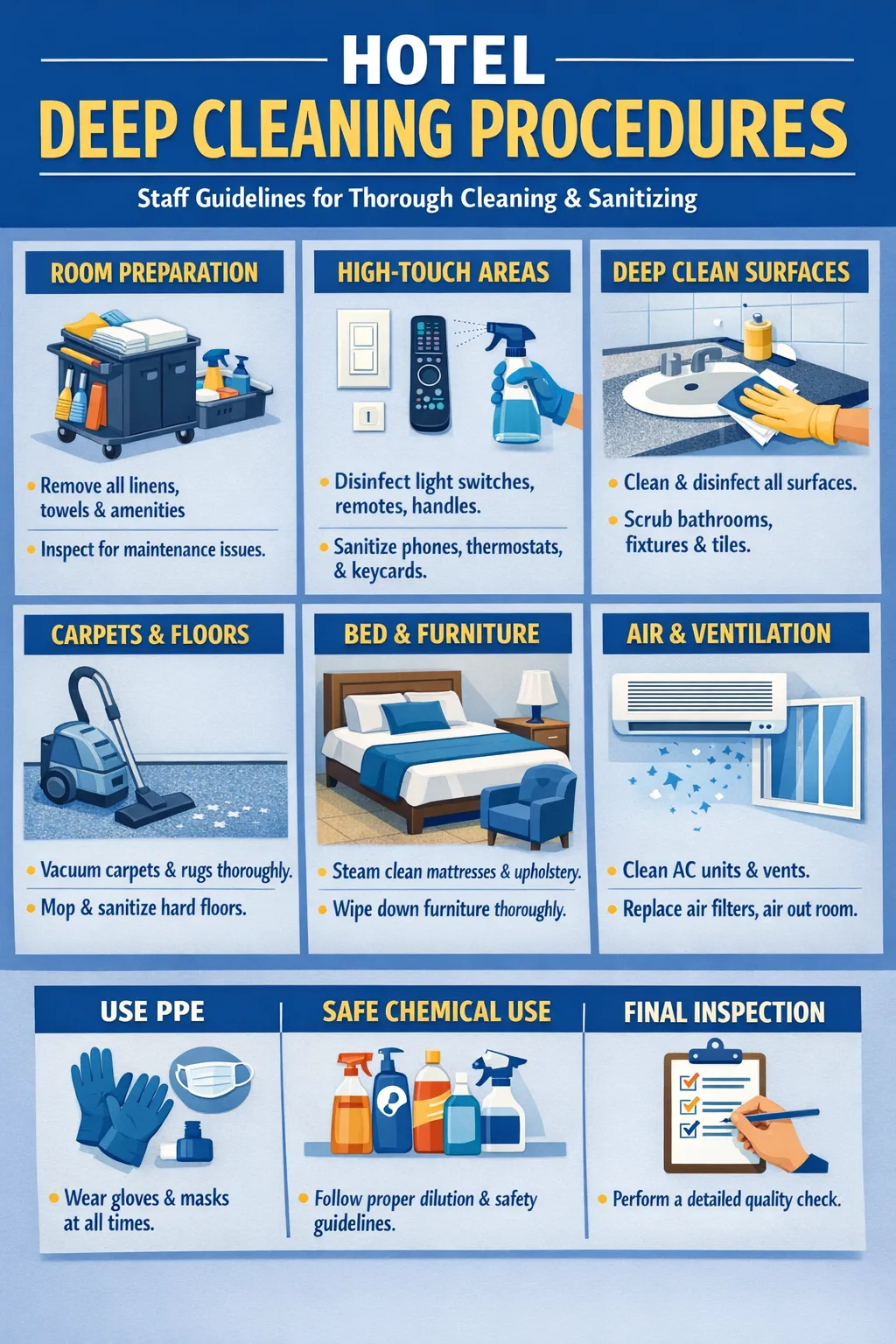
Step-by-Step Hotel Deep Cleaning Procedure
Following a structured hotel deep cleaning procedure helps staff work efficiently, maintain consistency, and avoid missing critical areas.
1. Preparation
Start by planning the cleaning process carefully. Proper preparation improves efficiency and minimizes disruption to guests and operations.
Preparation steps include:
- Scheduling deep cleaning during low-occupancy periods
- Assigning trained staff or outside specialists
- Gathering equipment such as steam cleaners, scrubbers, and disinfectants
- Removing, protecting, or covering furniture and other items
2. Declutter and Strip the Area
Before cleaning begins, remove anything that could block access to surfaces, fixtures, and hidden buildup zones.
This step may include:
- Removing linens, curtains, and other removable items
- Clearing countertops, shelves, and work surfaces
- Moving furniture to access hidden areas
3. Clean High Areas First
Always work from top to bottom so dust and debris do not fall onto surfaces that have already been cleaned.
High-level cleaning tasks include:
- Cleaning ceilings and light fixtures
- Dusting vents and air conditioning units
- Wiping walls, corners, and edges
4. Deep Clean Hard Surfaces
Once the upper areas are clean, focus on scrubbing and disinfecting all hard surfaces throughout the space.
This step includes:
- Scrubbing tile, grout, and bathroom fixtures
- Disinfecting all hard surfaces thoroughly
- Polishing mirrors, glass, and metal fittings
5. Clean Soft Furnishings
Soft surfaces can trap dust, odors, allergens, and stains, so they should be treated with the appropriate deep cleaning methods.
Tasks include:
- Steam cleaning carpets and rugs
- Shampooing upholstery
- Washing curtains and other fabric items
6. Treat the Floors
Floor care is one of the final major steps in hotel deep cleaning because it removes any remaining dirt that has fallen during earlier stages.
Floor treatment may include:
- Vacuuming thoroughly
- Steam cleaning or mopping with disinfectant
- Polishing when needed
7. Perform Final Sanitization
After deep cleaning is complete, sanitize high-touch points one more time to support hygiene standards and guest safety.
Focus on areas such as:
- Door handles
- Light switches
- Remote controls
- Faucet handles
- Phones and other shared-touch surfaces
8. Inspect and Reset the Room
The final step is quality control. Inspect the space carefully, correct any missed areas, and return the room or area to guest-ready condition.
Final steps include:
- Checking for missed spots or residue
- Replacing linens and removed items
- Resetting the room to hotel standards
Tools and Equipment for Hotel Deep Cleaning
Using the right hotel cleaning equipment ensures more effective results, faster turnaround times, and better surface protection. Professional-grade tools are essential for thorough deep cleaning.
Key equipment includes:
- Steam cleaners for sanitizing and removing embedded dirt
- Industrial vacuum cleaners for deep dust and debris removal
- Floor scrubbing machines for hard surfaces
- Microfibre cloths (colour-coded) to prevent cross-contamination
- Disinfectants and specialized cleaning products for different surfaces
Best Practices for Effective Hotel Deep Cleaning
To achieve consistent and high-quality results, hotels should follow proven deep cleaning best practices.
Plan Ahead
Schedule hotel deep cleaning during off-peak periods to minimize disruption to guests and operations.
Train Staff Properly
Ensure housekeeping teams are trained in deep cleaning techniques, equipment use, and safety procedures.
Use the Right Cleaning Products
Different materials require specific cleaning solutions. Using the wrong product can damage surfaces or reduce effectiveness.
Follow a Standardized Checklist
A hotel deep cleaning checklist helps ensure no area is missed and maintains consistency across rooms and departments.
Document and Track Cleaning
Keep records of deep cleaning schedules for each room or area. This supports accountability, compliance, and operational planning.
Common Hotel Deep Cleaning Mistakes to Avoid
Avoiding these common mistakes can significantly improve cleaning outcomes and efficiency:
- Skipping hidden areas like under beds and behind furniture
- Using incorrect or overly harsh cleaning products
- Rushing the cleaning process
- Not allowing sufficient drying time
- Overlooking ventilation systems and air filters
Benefits of Regular Hotel Deep Cleaning
A consistent hotel deep cleaning program delivers both operational and guest experience benefits.
Key advantages include:
- Improved hygiene and sanitation standards
- Extended lifespan of furniture, carpets, and fixtures
- Better guest reviews and higher satisfaction scores
- Reduced long-term maintenance and replacement costs
- Compliance with health and safety regulations
Final Thoughts
Hotel deep cleaning is not just an occasional task—it’s a core part of maintaining property standards and delivering a high-quality guest experience. By following a structured cleaning schedule and using the right tools and processes, hotels can improve cleanliness, protect their assets, and create a healthier environment for both guests and staff.
When done properly, deep cleaning doesn’t just improve appearance—it enhances overall hotel performance.
Need Professional Hotel Deep Cleaning Services?
If you’re looking to maintain high hygiene standards without overloading your staff, working with a professional cleaning provider can make all the difference. From scheduled deep cleans to specialised sanitation services, expert teams ensure every area of your property is cleaned thoroughly and efficiently.
? Learn more about professional hotel cleaning services here:
https://www.corpclean.com.au/