
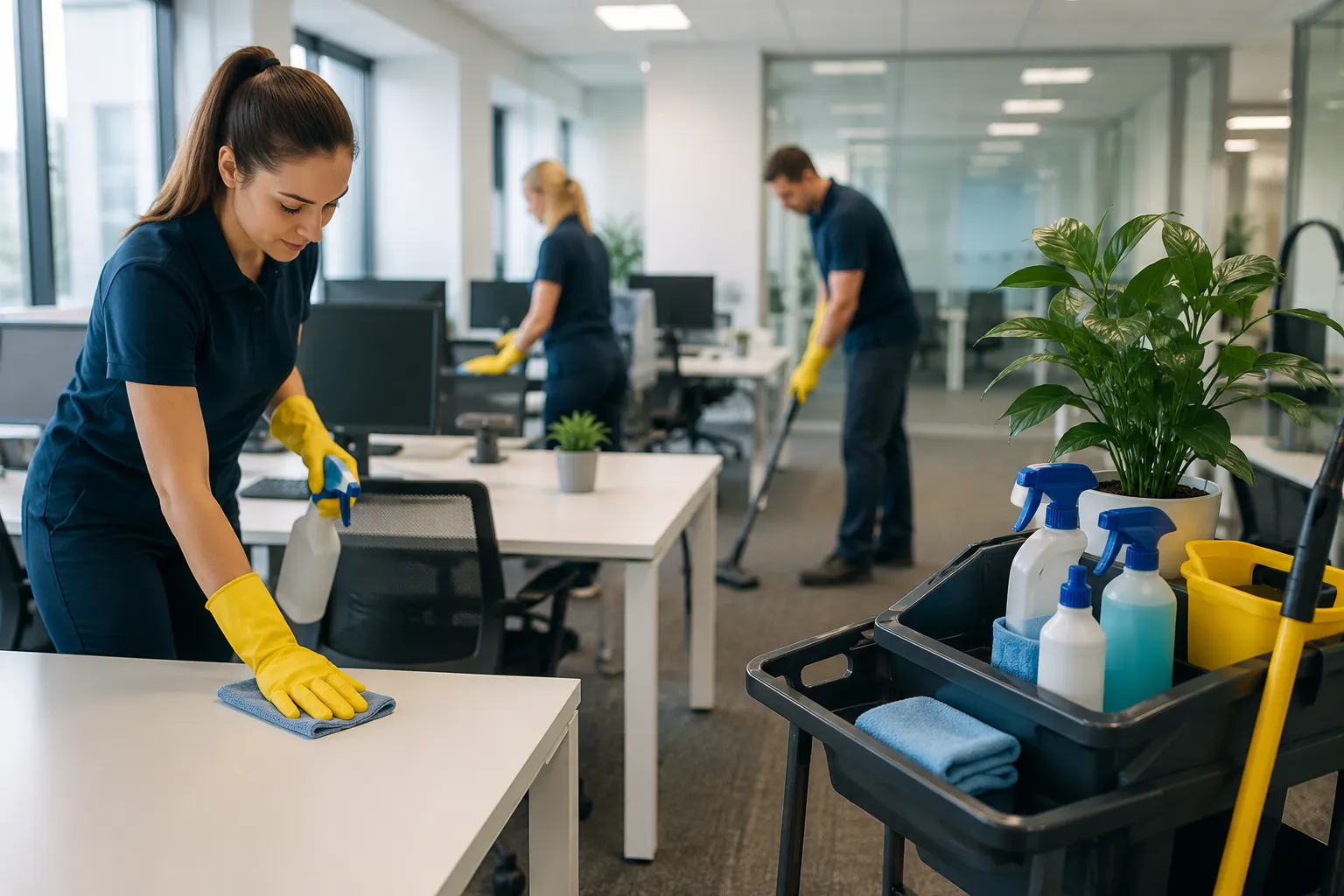
Creating an Effective Commercial Office Cleaning Schedule
23rd March 2026
A well-structured commercial office cleaning schedule helps businesses maintain a cleaner, healthier, and more productive workplace. Rather than cleaning only when problems arise, a planned schedule ensures every area of the office is cleaned at the right frequency to reduce germs, improve employee wellbeing, protect workplace assets, and create a professional environment for staff and visitors.
Whether you manage a small office, corporate headquarters, medical office, or coworking space, an organized cleaning program helps maintain consistent hygiene standards while minimizing disruption to daily operations. Professional office cleaning services can also help businesses implement and maintain structured cleaning programs that evolve as workplace needs change.
What Is a Commercial Office Cleaning Schedule?
A commercial office cleaning schedule is a planned timetable that outlines which cleaning tasks are completed daily, weekly, monthly, quarterly, and annually. It helps businesses ensure that routine maintenance, deep cleaning, and high-touch surface disinfection are performed consistently.
An effective schedule should be tailored to factors such as:
-
Office size
-
Number of employees
-
Visitor traffic
-
Industry requirements
-
Building layout
-
Operating hours
-
Seasonal cleaning needs
Working with an experienced provider of commercial cleaning services makes it easier to develop a schedule that aligns with your workplace's unique operational needs.
Why Is a Commercial Office Cleaning Schedule Important?
A structured cleaning schedule provides benefits that go beyond appearance. Consistent cleaning contributes to workplace health, operational efficiency, and long-term cost savings.
| Benefit | Why It Matters |
|---|---|
| Healthier workplace | Reduces dust, allergens, bacteria, and viruses that contribute to employee illness. |
| Improved productivity | Employees work more comfortably in a clean, organized environment. |
| Better first impressions | Clients, customers, and visitors immediately notice a well-maintained workplace. |
| Lower maintenance costs | Regular cleaning extends the life of carpets, flooring, furniture, and office equipment. |
| Workplace compliance | Supports hygiene and workplace safety requirements across many industries. |
| Reduced deep-cleaning expenses | Preventive cleaning helps avoid costly restoration and emergency cleaning services. |
Instead of reacting to spills, dust buildup, or sanitation issues, businesses can follow a proactive cleaning plan that keeps the workplace consistently clean throughout the year. Regularly scheduled services such as high-pressure cleaning, window cleaning, and periodic deep cleaning can also be incorporated into the schedule to maintain both indoor and outdoor areas.
For offices with carpeted workspaces, scheduling professional deep carpet cleaning every few months can improve indoor air quality, remove embedded dirt, and extend the life of flooring in high-traffic areas. Likewise, daily desk sanitation and regular disinfection of shared equipment such as keyboards, phones, and meeting tables help reduce the spread of germs and support a healthier workplace.
A consistent cleaning schedule isn't simply about appearance—it creates a workplace that is healthier, more productive, and easier to maintain over the long term. Research and industry best practices consistently show that structured cleaning programs improve hygiene outcomes, reduce disruptions, and help businesses maintain professional standards year-round.
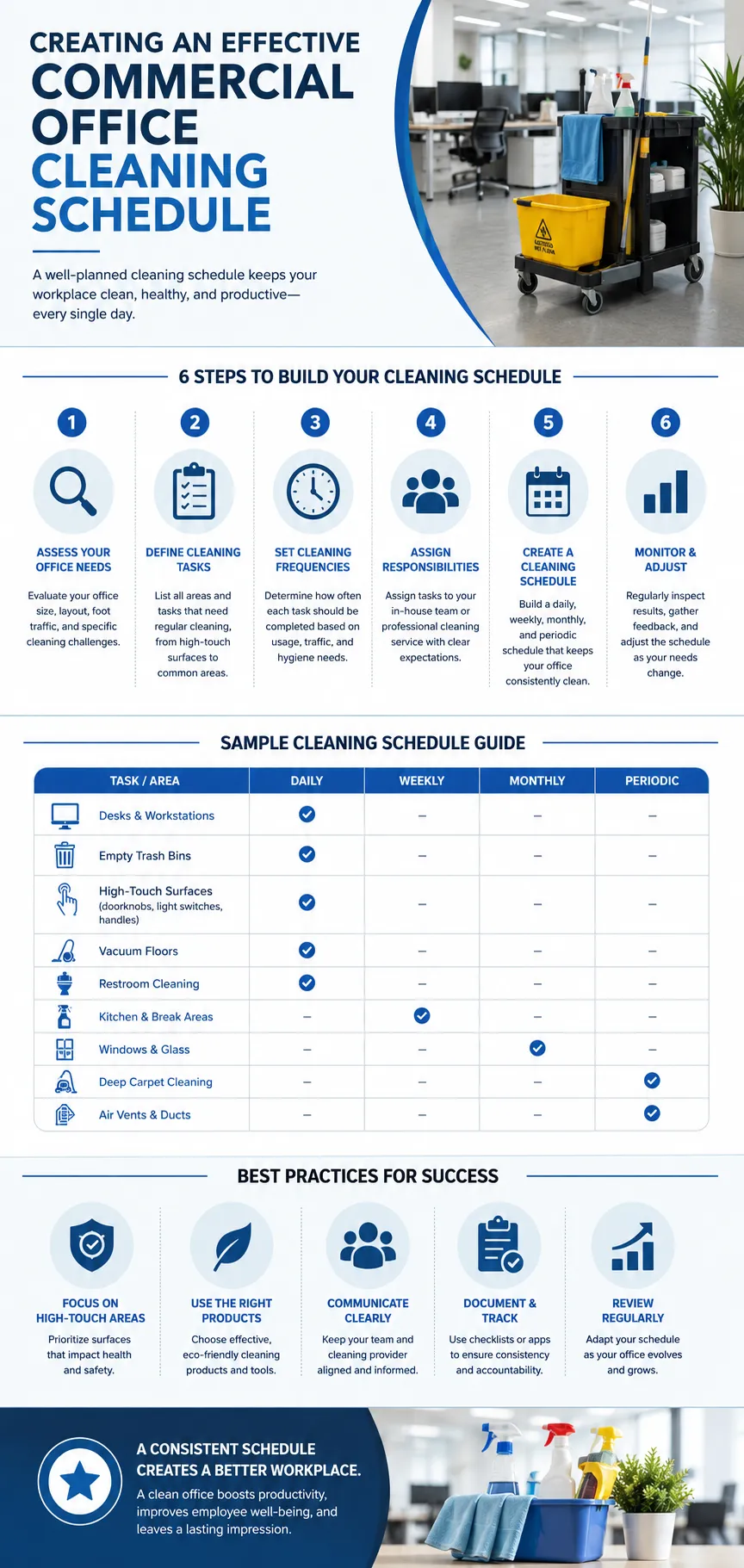
Assess Your Office Cleaning Needs
Before creating your cleaning schedule, evaluate how your workplace operates. Consider factors such as office size, employee numbers, visitor traffic, industry regulations, shared facilities, and seasonal changes that may affect cleaning frequency.
For example, a small office with 15 employees may only require vacuuming several times each week, while a multi-level corporate office with hundreds of staff may benefit from multiple cleaning rounds throughout the day.
Organise Cleaning Tasks by Frequency
One of the easiest ways to maintain a consistently clean workplace is to divide cleaning responsibilities into daily, weekly, monthly, and seasonal tasks.
Daily Office Cleaning Tasks
Daily cleaning focuses on hygiene, presentation, and high-touch surfaces that employees and visitors use throughout the day.
- Empty rubbish and recycling bins
- Vacuum carpets and entrance areas
- Sweep and mop hard floors
- Wipe and sanitise desks (where permitted)
- Clean reception counters
- Disinfect door handles, lift buttons, and light switches
- Clean kitchens and break rooms
- Empty dishwashers or wash dishes (if included)
- Clean and disinfect toilets
- Refill soap, paper towels, and toilet paper
- Spot-clean glass doors and entrance windows
Daily disinfection of high-touch surfaces is one of the most effective ways to reduce the spread of germs. The CorpClean article on Office Hygiene Protocols for Employee Wellness provides additional practical guidance for maintaining healthier workplaces.
Weekly Office Cleaning Tasks
Weekly cleaning targets areas that accumulate dust and dirt over time.
- Dust window sills and ledges
- Vacuum upholstered furniture
- Deep clean kitchen appliances
- Wipe skirting boards
- Polish office furniture
- Clean interior glass partitions
- Remove fingerprints from doors and walls
- Dust monitors, telephones, and office equipment
- Vacuum beneath accessible furniture
Monthly Office Cleaning Tasks
Monthly cleaning helps preserve the appearance and condition of the workplace while preventing long-term buildup.
- Machine scrub hard floors
- Buff and polish flooring
- Dust air vents
- Wash interior windows
- Clean walls in high-traffic areas
- Deep clean meeting rooms
- Sanitise office telephones
- Remove cobwebs
- Clean behind office furniture
Quarterly or Seasonal Deep Cleaning
Some cleaning tasks only need to be completed several times each year but play an important role in maintaining the building.
- Carpet steam cleaning
- Exterior window cleaning
- High dusting ceilings and light fixtures
- High Pressure Cleaning for entrances and external walkways
- Deep upholstery cleaning
- Strip and reseal hard floors
- Clean blinds and curtains
- Air-conditioning vent cleaning
- Warehouse or storage room cleaning
Professional Window Cleaning also helps maintain the appearance of commercial buildings while improving natural light throughout the workplace.
Create Standardised Cleaning Checklists
Detailed cleaning checklists help maintain consistency across different cleaning teams, shifts, and locations. They also simplify inspections, improve accountability, and reduce the risk of important tasks being overlooked.
Many businesses now use digital checklists to streamline reporting and verify that cleaning tasks have been completed on schedule.
Schedule Cleaning Around Business Hours
Cleaning should support business operations rather than interrupt them. Early morning, evening, overnight, and weekend cleaning schedules allow businesses to maintain high standards without disrupting employees or visitors.
Review Your Cleaning Schedule Regularly
Business needs change over time, and your office cleaning schedule should evolve accordingly.
Regular reviews should consider:
- Changes in employee numbers
- Office expansions or renovations
- Increased visitor traffic
- Seasonal illness trends
- New equipment or shared workspaces
- Employee feedback
Businesses may also benefit from periodic specialist Commercial Cleaning Services as workplace requirements evolve.
Benefits of Hiring a Professional Commercial Cleaning Company
Many businesses partner with professional commercial cleaners to maintain consistently high cleaning standards while reducing the administrative burden of managing cleaning internally.
Professional cleaning companies typically provide:
- Experienced cleaning staff
- Commercial-grade equipment
- Professional cleaning products
- Flexible service hours
- Quality assurance inspections
- Workplace hygiene compliance
- Tailored cleaning schedules
For additional workplace cleaning advice and maintenance best practices, visit the CorpClean News & Tips resource centre.
Keep Your Office Clean with Corporate Cleaning Services®
A well-planned cleaning schedule is only as effective as the team carrying it out. Corporate Cleaning Services® has over 35 years of experience delivering reliable cleaning programs for offices, medical centres, educational facilities, and commercial workplaces across Australia.
Learn more about our Commercial Cleaning Services or request a free quote to discuss a customised office cleaning schedule for your business.
Frequently Asked Questions
How often should an office be professionally cleaned?
The ideal cleaning frequency depends on your office size, employee numbers, visitor traffic, and industry requirements. Most workplaces benefit from daily cleaning of common areas, with deep-cleaning services scheduled weekly, monthly, or quarterly.
What areas should be cleaned every day?
Reception areas, kitchens, bathrooms, shared workstations, floors, door handles, lift buttons, light switches, and other high-touch surfaces should generally be cleaned and sanitised every day.
What's the difference between routine cleaning and deep cleaning?
Routine cleaning focuses on everyday maintenance such as vacuuming, emptying bins, disinfecting surfaces, and restroom cleaning. Deep cleaning involves more intensive services like carpet steam cleaning, upholstery cleaning, floor restoration, high dusting, and detailed sanitisation of hard-to-reach areas.
Can a commercial office cleaning schedule be customised?
Yes. Every business has unique cleaning requirements based on its workplace size, operating hours, employee numbers, visitor traffic, building layout, and industry-specific hygiene standards. A customised cleaning schedule helps ensure every area receives the appropriate level of attention.