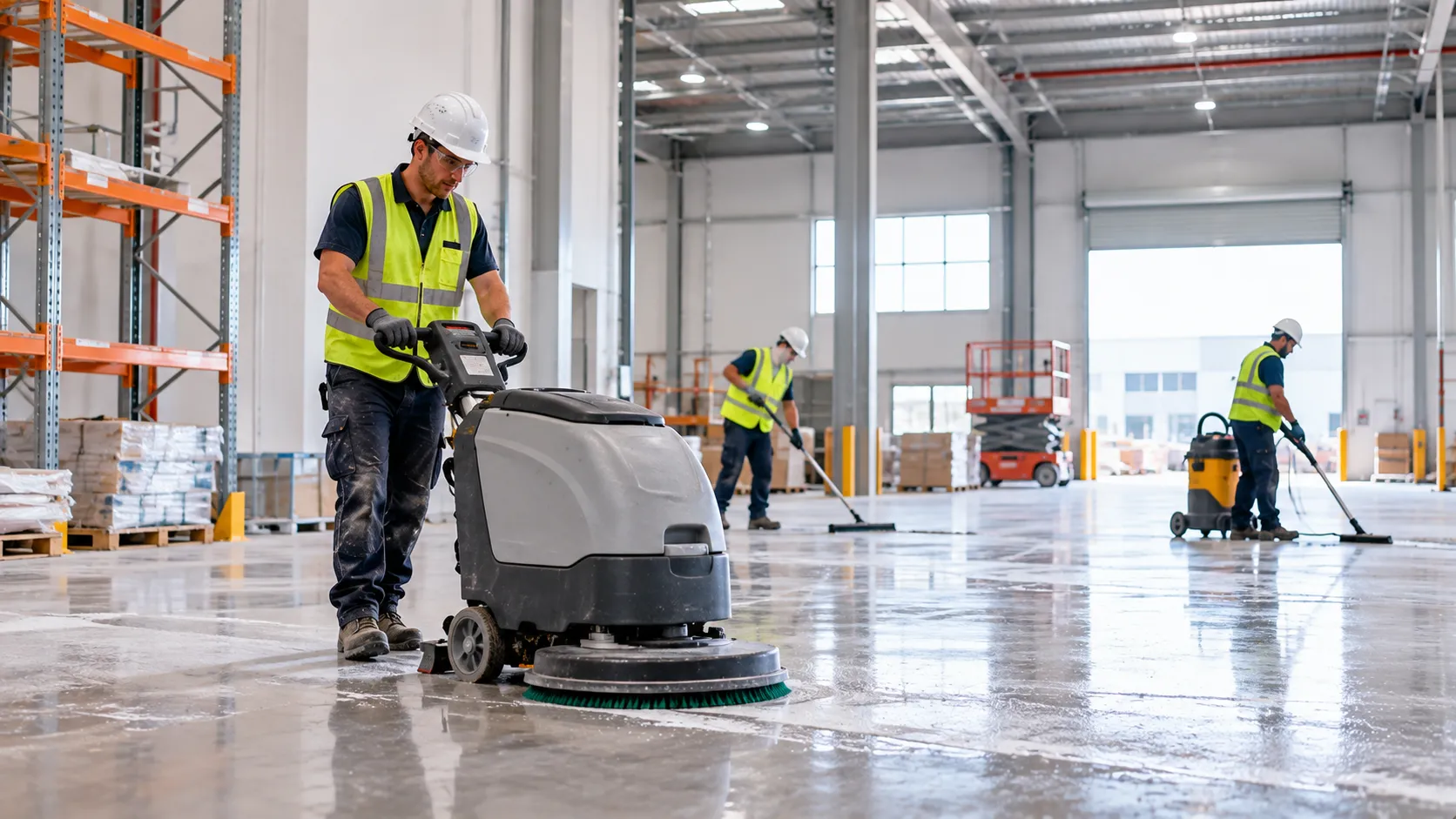
Cleaning Requirements After a Commercial Warehouse Fit-Out
4th August 2026
areas and equipment. Drilling, cutting, electrical work, painting, flooring and general construction can create fine dust, packaging waste, adhesive residue and debris throughout the facility.
Before employees move in, inventory arrives or operations begin, the warehouse should undergo a thorough post-fit-out clean. This goes beyond basic sweeping. Floors, racking, high-level surfaces, amenities, loading areas and frequently overlooked spaces may all need attention.
Quick Answer: What Cleaning Is Required After a Warehouse Fit-Out?
Post-fit-out warehouse cleaning typically includes removing construction debris, controlling fine dust, cleaning floors, wiping newly installed surfaces, cleaning racking and shelving, removing labels and adhesive residue, cleaning amenities and checking high-level areas where dust has settled.
The exact requirements depend on the work completed, the warehouse size and what the facility will be used for. Warehouses handling food, pharmaceuticals or other controlled products may have additional hygiene or regulatory requirements before operations can begin.
Why Post-Fit-Out Cleaning Is Important
A fit-out can affect almost every part of a warehouse, even areas where contractors did not directly work.
Fine construction dust can travel through open spaces and settle on racking, beams, equipment and floors. Packaging and offcuts can remain behind after installation, while newly fitted doors, windows and fixtures may still carry protective film, fingerprints or adhesive residue.
A final clean helps prepare the facility for its intended use.
|
Reason for Cleaning |
Why It Matters |
|
Remove construction dust |
Helps prevent dust from spreading once operations begin |
|
Clear debris |
Leaves floors and work areas ready for use |
|
Prepare storage areas |
Prevents new stock being placed onto dusty shelving |
|
Improve presentation |
Creates a professional handover condition |
|
Identify defects |
Clean surfaces make damage and unfinished work easier to spot |
|
Prepare work areas |
Gives employees a cleaner environment from day one |
|
Protect equipment |
Reduces loose dust and debris around newly installed assets |
Professional construction cleaning services can help businesses address dust, debris and surface residue before the final handover. The cleaning scope should reflect the work completed and the condition required before occupation.
What Does a Warehouse Fit-Out Clean Include?
Post-fit-out cleaning should be matched to the type and extent of work completed.
A warehouse that has only had new racking installed may need considerably less cleaning than one that has undergone new flooring, partitioning, electrical installation, painting and office construction.
A typical scope may include:
- Removal of loose construction debris
- Dust removal from accessible surfaces
- Floor sweeping, vacuuming and cleaning
- Racking and shelving cleaning
- Window and glass cleaning
- Door and frame cleaning
- Removal of stickers and protective films
- Cleaning of office areas
- Kitchen and staff amenity cleaning
- Bathroom cleaning
- Loading dock cleaning
- High-level dust removal where required
- Spot cleaning of walls and fixtures
- Removal of packaging material
A walkthrough before cleaning begins can help establish which services are actually required.
Construction Dust Removal
Dust is often one of the biggest challenges following a warehouse fit-out.
Drilling, cutting, sanding and construction activities can generate fine particles that travel beyond the immediate work area.
Dust may settle on:
|
Area |
What to Check |
|
Floors |
Fine dust, footprints and construction debris |
|
Racking |
Shelves, uprights and horizontal surfaces |
|
Beams |
High-level accumulated dust |
|
Pipes and conduits |
Dust on exposed services |
|
Light fittings |
Surface dust and construction residue |
|
Doors |
Frames, tracks and hardware |
|
Equipment |
External surfaces and surrounding areas |
|
Window ledges |
Fine dust and debris |
|
Office furniture |
Dust from nearby construction work |
Simply sweeping may redistribute fine dust into the air. Appropriate commercial vacuuming and controlled dust-removal methods can be more suitable depending on the type of contamination.
Professional industrial cleaning services can support site-specific cleaning requirements in warehouses and other industrial facilities. Where construction work has generated hazardous dust, the cleaning approach must also include appropriate exposure controls and specialist procedures.
Warehouse Floor Cleaning
Warehouse floors often require significant attention after a fit-out because they become the main working surface for contractors and installers.
Common contaminants include:
- Construction dust
- Packaging fragments
- Footprints
- Tyre marks
- Adhesive residue
- Paint spots
- Plaster or building residue
- Labels and tape
- General dirt tracked into the facility
The cleaning method should match the flooring material.
|
Floor Type |
Typical Cleaning Considerations |
|
Sealed concrete |
Dust, marks and construction residue |
|
Polished concrete |
Use methods suitable for the finished surface |
|
Epoxy flooring |
Avoid products that could affect the coating |
|
Vinyl |
Remove dust and residue without damaging the finish |
|
Tiled areas |
Clean tiles and check grout for construction residue |
|
Carpeted offices |
Vacuum thoroughly and spot clean where necessary |
Heavy scraping or inappropriate chemicals should be avoided where they could damage newly installed flooring.
Cleaning New Warehouse Racking and Shelving
New racking may look clean when installed, but installation can leave behind metal dust, packaging residue, fingerprints and general construction dust.
Before stock is loaded, inspect and clean:
- Shelves
- Beams
- Uprights
- Base plates
- Accessible framework
- Picking areas
- Workbenches
- Storage bins
- Newly installed cabinets
Cleaning before inventory arrives is considerably easier than attempting to clean around stocked shelves later.
High-Level Cleaning After a Fit-Out
Warehouses frequently have ceilings and structural areas much higher than those found in standard commercial properties.
Dust may settle on high-level surfaces during construction, particularly when extensive cutting, drilling or installation has taken place.
Areas that may require attention include:
- Structural beams
- Pipes
- Ducting
- Cable trays
- Exposed services
- Light fittings
- High-level ledges
- Tops of partitions
- Accessible ventilation surfaces
Whether high-level cleaning is required should be established during the initial site inspection.
Work at height also introduces additional safety requirements, so appropriate access equipment and procedures may be necessary.
Windows, Glass and Doors
Newly installed glass, doors and partitions can retain marks from construction and installation.
Cleaning may involve removing:
- Fingerprints
- Dust
- Stickers
- Protective film
- Adhesive residue
- Installation marks
- General grime
Particular attention should be given to glass entrances and office partitions because these areas are highly visible during a final handover.
Professional commercial window cleaning services can help businesses maintain internal and external glazing. Specialist tasks such as adhesive removal should be confirmed within the agreed cleaning scope.
Office and Administrative Areas
Many warehouse fit-outs include attached offices, reception areas, meeting rooms or dispatch spaces.
These sections require a different cleaning approach from the main warehouse floor.
|
Office Area |
Cleaning Requirements |
|
Desks and workstations |
Remove dust and wipe surfaces |
|
Floors |
Vacuum, mop or clean according to flooring type |
|
Glass partitions |
Remove fingerprints and installation marks |
|
Cabinets |
Wipe internal and external surfaces where required |
|
Doors |
Clean handles, frames and surfaces |
|
Skirting |
Remove construction dust |
|
Window ledges |
Wipe accumulated dust |
|
Meeting rooms |
Clean tables, floors and fixtures |
These areas should be ready for employees to use rather than requiring additional cleaning after handover.
Once operations begin, ongoing office cleaning services can help maintain administrative spaces, meeting rooms and shared work areas.
Staff Kitchens, Bathrooms and Amenities
Amenities should also be included in the final cleaning scope, particularly if they were newly constructed or renovated during the fit-out.
Kitchen cleaning may include:
- Benchtops
- Sinks
- Cupboards
- Splashbacks
- Floors
- Fixtures
- External appliance surfaces
Bathroom cleaning may include:
- Toilets
- Basins
- Mirrors
- Partitions
- Floors
- Taps and fixtures
- Doors and handles
Where these spaces are newly installed, construction dust may be present even if they have not yet been used.
Loading Docks and Entry Areas
Loading docks can accumulate significant dirt during a fit-out because contractors, equipment and materials frequently move through these areas.
A final clean may cover:
- Loading dock floors
- Roller door areas
- Pedestrian entrances
- Ramps
- Dock surrounds
- External approaches
- Waste collection points
These areas should be checked before deliveries begin so loose debris does not interfere with normal warehouse traffic.
Removing Stickers, Tape and Adhesive Residue
Fit-outs often leave behind temporary labels, tape, protective films and adhesive residue.
These may be found on:
- Windows
- Doors
- Racking
- Flooring
- Appliances
- Fixtures
- Glass partitions
- Cabinets
- Equipment
Removal should be carried out carefully because aggressive scraping or inappropriate solvents may damage newly installed finishes.
Post-Fit-Out Warehouse Cleaning Checklist
A structured checklist helps ensure less obvious areas are not overlooked.
|
Area |
Typical Tasks |
Check |
|
Warehouse floor |
Vacuum/sweep and clean residue |
? |
|
Racking |
Remove dust and installation debris |
? |
|
High-level surfaces |
Remove accumulated dust where required |
? |
|
Windows |
Clean glass, frames and ledges |
? |
|
Doors |
Clean surfaces, tracks and handles |
? |
|
Offices |
Dust and clean floors and fixtures |
? |
|
Bathrooms |
Clean and prepare for use |
? |
|
Kitchen |
Clean surfaces, sink and cupboards |
? |
|
Loading dock |
Remove debris and surface dirt |
? |
|
Stickers and film |
Remove where required |
? |
|
Waste |
Remove agreed construction waste |
? |
|
Final inspection |
Check cleaned areas before handover |
? |
The checklist should be adjusted to reflect the actual fit-out and agreed cleaning scope.
Builders Clean vs Final Clean: What's the Difference?
These terms are sometimes used differently between contractors, so the required scope should always be confirmed.
Generally, they can be understood as:
|
Builders Clean |
Final/Sparkle Clean |
|
Focuses on construction-related mess |
Focuses on final presentation |
|
Removes substantial dust and debris |
Removes remaining fine dust and marks |
|
May include construction residue |
Includes detailed surface cleaning |
|
Prepares the site for finishing stages |
Prepares the facility for handover or occupation |
|
Usually completed earlier |
Usually completed near project completion |
Some warehouse projects may require both stages, particularly where several trades continue working after the initial clean.
Where multiple cleaning stages are required, the scope and timing of construction cleaning should be coordinated with the fit-out contractor to avoid cleaning areas that will become contaminated again.
When Should Post-Fit-Out Cleaning Take Place?
Timing matters.
Cleaning too early can result in newly cleaned areas becoming dirty again when trades return to finish work.
Ideally, the main post-fit-out clean should occur after dust-generating and major construction activities are complete but before:
- Inventory is delivered
- Shelving is fully stocked
- Employees occupy work areas
- Customers or visitors enter the premises
- Normal warehouse operations begin
If trades still need to complete minor work, a final touch-up or sparkle clean may be necessary before handover.
Cleaning Before Stock Arrives
Where possible, complete the warehouse clean before stock is moved into the facility.
An empty warehouse provides much better access to floors, shelving and work areas.
|
Cleaning Before Stock Arrives |
Cleaning After Stock Arrives |
|
Easier access to racking |
Stock can obstruct shelves |
|
Open floor areas |
Pallets restrict floor cleaning |
|
Faster dust removal |
Products may need protection |
|
Easier inspection |
Hidden surfaces are harder to inspect |
|
Less risk of contaminating inventory |
Dust may settle on stored products |
Coordinating cleaning with the fit-out and move-in schedule can therefore save considerable time.
Special Cleaning Requirements for Different Warehouses
Not every warehouse can follow the same cleaning specification.
Facilities storing particular goods may need more stringent requirements.
Food Warehouses
Food storage and distribution facilities may require specific hygiene controls, approved cleaning procedures and attention to potential contamination.
Pharmaceutical and Healthcare Warehouses
Facilities handling medicines, healthcare products or sensitive goods may operate under stricter cleanliness and quality requirements.
Manufacturing Warehouses
Manufacturing environments may need additional cleaning around machinery, production zones or areas exposed to industrial residue.
General Storage and Distribution
Standard distribution warehouses may focus primarily on dust removal, floor cleanliness, racking and preparation for incoming inventory.
The operational requirements of the facility should therefore be confirmed before the cleaning scope is finalised.
Who Is Responsible for Cleaning After a Warehouse Fit-Out?
Responsibility depends on the project contract.
The builder or fit-out contractor may include some cleaning within their scope, while the tenant, property manager or business owner may arrange a separate professional clean before occupation.
Before booking additional cleaning, confirm:
- What the builder is required to clean
- What waste they are responsible for removing
- Whether high-level cleaning is included
- Whether windows are included
- Whether racking needs cleaning
- Whether offices and amenities are included
- The required handover standard
Clarifying these responsibilities helps prevent duplicated services or areas being overlooked.
When Is Professional Warehouse Cleaning Worth Considering?
Professional cleaning may be appropriate when:
- The warehouse is large
- Significant construction dust remains
- High-level surfaces need cleaning
- Specialist floor-cleaning equipment is required
- The facility must be operational by a specific date
- New racking needs cleaning before stock arrives
- Multiple offices and amenities were included in the fit-out
- The property has strict hygiene requirements
- Internal staff do not have suitable equipment or training
A professional cleaning scope can also be coordinated with the handover and move-in schedule to reduce disruption.
Once the warehouse becomes operational, scheduled commercial cleaning services can help businesses maintain the cleanliness of work areas, amenities and shared facilities. The ongoing cleaning program should reflect warehouse traffic, operational requirements and the surfaces being maintained.
Final Inspection Before Handover
Once cleaning is complete, conduct a final walkthrough before the warehouse becomes operational.
Check that:
- Floors are free from loose debris
- Racking is ready for stock
- Windows and glass are clean
- Construction dust has been removed
- Amenities are ready for employees
- Labels and protective film have been removed where required
- Loading areas are clear
- Waste has been removed according to the agreed scope
- No obvious areas have been missed
This is also a useful time to identify fit-out defects that may have been hidden by dust or construction materials.
Prepare Your Warehouse for Operations
A commercial warehouse fit-out is not truly finished when the last shelf, partition or electrical fitting is installed. The facility also needs to be clean, accessible and ready for its intended use.
A thorough post-fit-out clean removes construction dust and debris, prepares racking for stock, restores floors and surfaces, and gets offices and amenities ready for employees.
Planning the clean before inventory arrives and coordinating it with the final project handover can make the transition from construction site to operational warehouse much smoother.
Corporate Cleaning Services® provides commercial and industrial cleaning solutions for business premises across Australia. Whether you're preparing a newly fitted warehouse for handover or arranging an ongoing cleaning program, you can request a commercial cleaning quote to discuss your facility's requirements.
Frequently Asked Questions
What is included in a warehouse post-fit-out clean?
A typical clean can include construction dust removal, floor cleaning, racking and shelving cleaning, window cleaning, office and amenity cleaning, sticker removal, loading area cleaning and waste removal. The exact scope should be agreed before work begins.
Should warehouse racking be cleaned before stock is loaded?
Yes, particularly if construction or installation has generated dust. Cleaning empty racking is easier and prevents new inventory from being placed directly onto dusty surfaces.
When should a warehouse be cleaned after a fit-out?
The main clean should generally take place once major construction and dust-generating work is complete and before inventory, employees and normal operations move into the facility.
Is sweeping enough after a warehouse fit-out?
Not always. Fine construction dust can settle across floors, shelving, beams and fixtures and may become airborne again when disturbed. Depending on the site, commercial vacuuming and more detailed surface cleaning may be required.
Do high-level warehouse surfaces need cleaning?
They may, especially when construction activities have generated significant airborne dust. Beams, pipes, ducting, cable trays and light fittings should be assessed during the site inspection to determine whether high-level cleaning is necessary.
Who pays for cleaning after a commercial fit-out?
That depends on the construction or fit-out agreement. Some builders include a builders clean, while tenants or property managers arrange a separate final clean. Check the contract and handover requirements before booking additional services.
How long does post-fit-out warehouse cleaning take?
It depends on warehouse size, the extent of the fit-out, contamination levels, access, floor condition and the required cleaning standard. A site inspection is usually the best way to determine labour and timing requirements.
Should cleaning be completed before warehouse inventory arrives?
Where possible, yes. Cleaning an empty warehouse provides easier access to floors and racking, reduces the need to work around pallets and helps prevent construction dust from settling on newly delivered stock.