4. Food-Related Retail Environments
For grocery stores, food courts, and specialty food retailers, sanitation standards are typically higher due to increased contamination risk and spill frequency. Hygiene attention often includes:
-
Surface sanitisation in food preparation and service areas
-
Frequent waste disposal to reduce odours, pests, and contamination risk
-
Refrigeration and cold-room area cleaning (including spill control and floor hygiene)
-
Targeted cleaning around high-risk zones such as deli counters, bakery areas, and drink stations
-
Compliance with applicable food safety requirements and local health authority expectations
Food retailers should align cleaning practices with their operational setup, store layout, and any relevant regulations or centre requirements.
Cleaning Frequency & Scheduling
Retail sanitation standards are not only about what is cleaned — but how often. In high-contact environments, hygiene standards can degrade quickly during trade, especially in entry zones, checkouts, fitting rooms, and bathrooms.
Cleaning frequency typically depends on:
-
Customer traffic levels and peak periods
-
Store size and layout
-
Product type (general retail vs food-related retail)
-
Operating hours and access windows
-
Seasonal demand (sales events, holidays, promotions, wet weather)
High-traffic stores often require multiple cleaning cycles per day, particularly for high-touch points, floors, and amenities.
Documented Cleaning Procedures
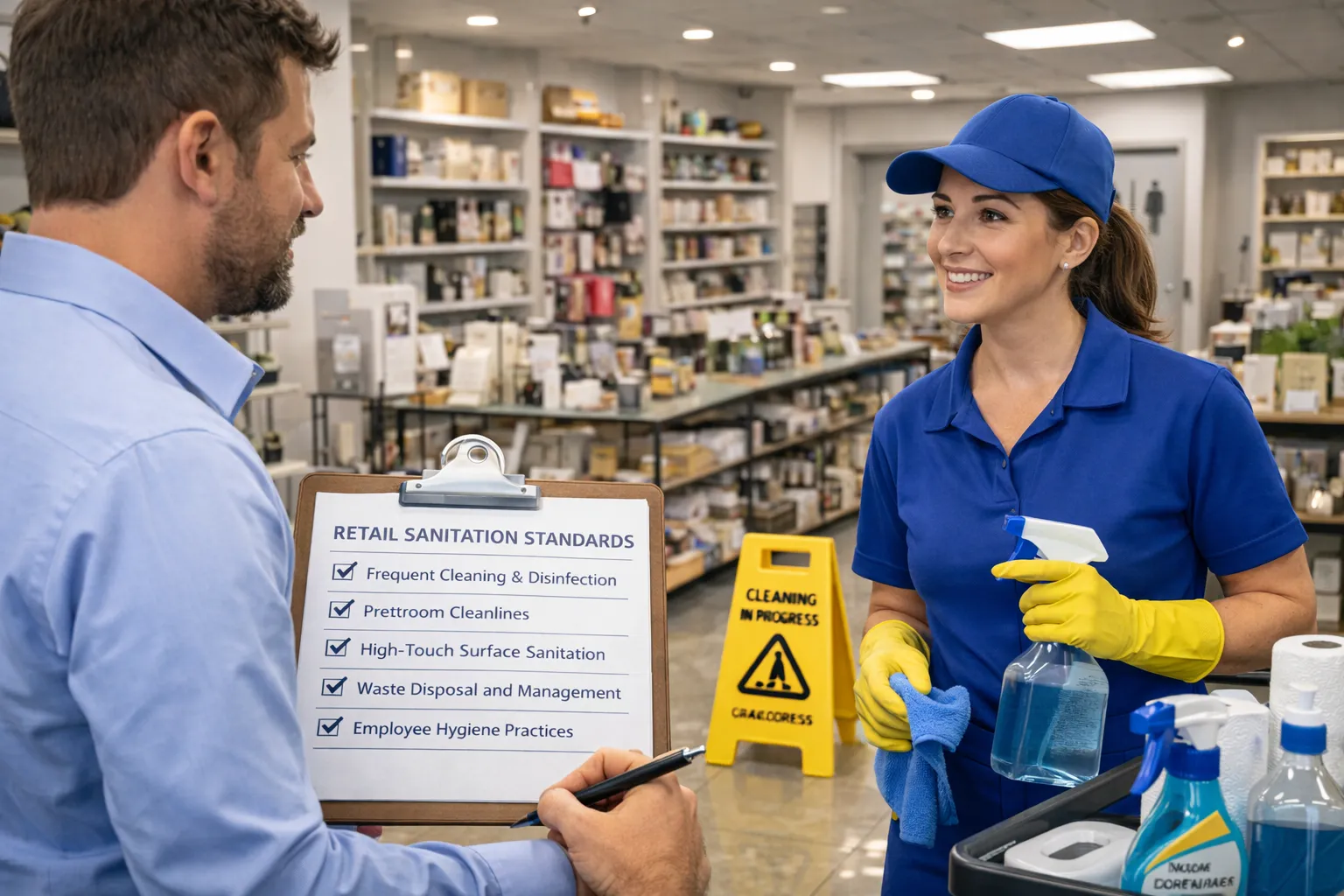
Structured sanitation programs often include documented processes to support consistency, accountability, and compliance awareness — especially for multi-site retailers or shopping centre tenancies.
Common documentation includes:
-
Daily cleaning checklists (opening, mid-shift, closing)
-
Weekly and periodic maintenance schedules
-
Spill response procedures and signage requirements
-
Incident documentation for hazards and corrective action
-
Supervisory inspections and quality checks
-
Clear responsibilities for staff vs cleaning contractors
Documented procedures help maintain consistent standards, reduce missed tasks, and demonstrate due diligence across single-site or multi-site retail operations.
Compliance & OH&S Considerations
Retailers have a responsibility to provide a safe environment for both customers and employees. Maintaining sanitation standards supports broader workplace health and safety obligations by helping reduce preventable hazards and supporting safer day-to-day operations.
A structured retail cleaning program should align with:
-
Occupational Health & Safety (OH&S) requirements to help reduce slip, trip, and hygiene-related risks
-
Site-specific risk management procedures, including spill response, hazard reporting, and access controls
-
Environmental cleaning practices, such as appropriate product use and responsible handling of chemicals and equipment
-
Waste management guidelines, including bin hygiene, waste segregation, and back-of-house waste area upkeep
When cleaning is delivered consistently and documented appropriately, it supports stronger operational discipline and reduces the likelihood of avoidable incidents.
When to Engage Professional Retail Cleaning
Many store owners manage daily cleaning internally, but professional cleaning services can provide added consistency, oversight, and capacity — especially in high-traffic environments where sanitation standards can decline quickly throughout the day.
Professional retail cleaning is particularly beneficial for:
-
High-volume retail environments where floors, touchpoints, and amenities require multiple cleaning cycles daily
-
Multi-site operations that need standardised outcomes and consistent brand presentation across locations
-
Shopping centre tenancies with strict presentation expectations and centre requirements
-
Extended trading hours where cleaning access is limited and downtime is minimal
-
Periodic deep cleaning needs such as floor scrubbing, carpet extraction, glass cleaning, and detailed fixture cleaning
Structured professional programs help maintain consistent sanitation standards, support compliance awareness, and reduce operational risk.
Support Retail Sanitation Standards with Professional Cleaning
Corporate Cleaning Services® provides structured retail cleaning programs across 25+ locations, supporting store owners with hygiene-focused cleaning aligned to operational requirements.
? Request a Free Quote
? Call 1800 032 032