Boost Productivity Through Better Office Hygiene
7th January 2026
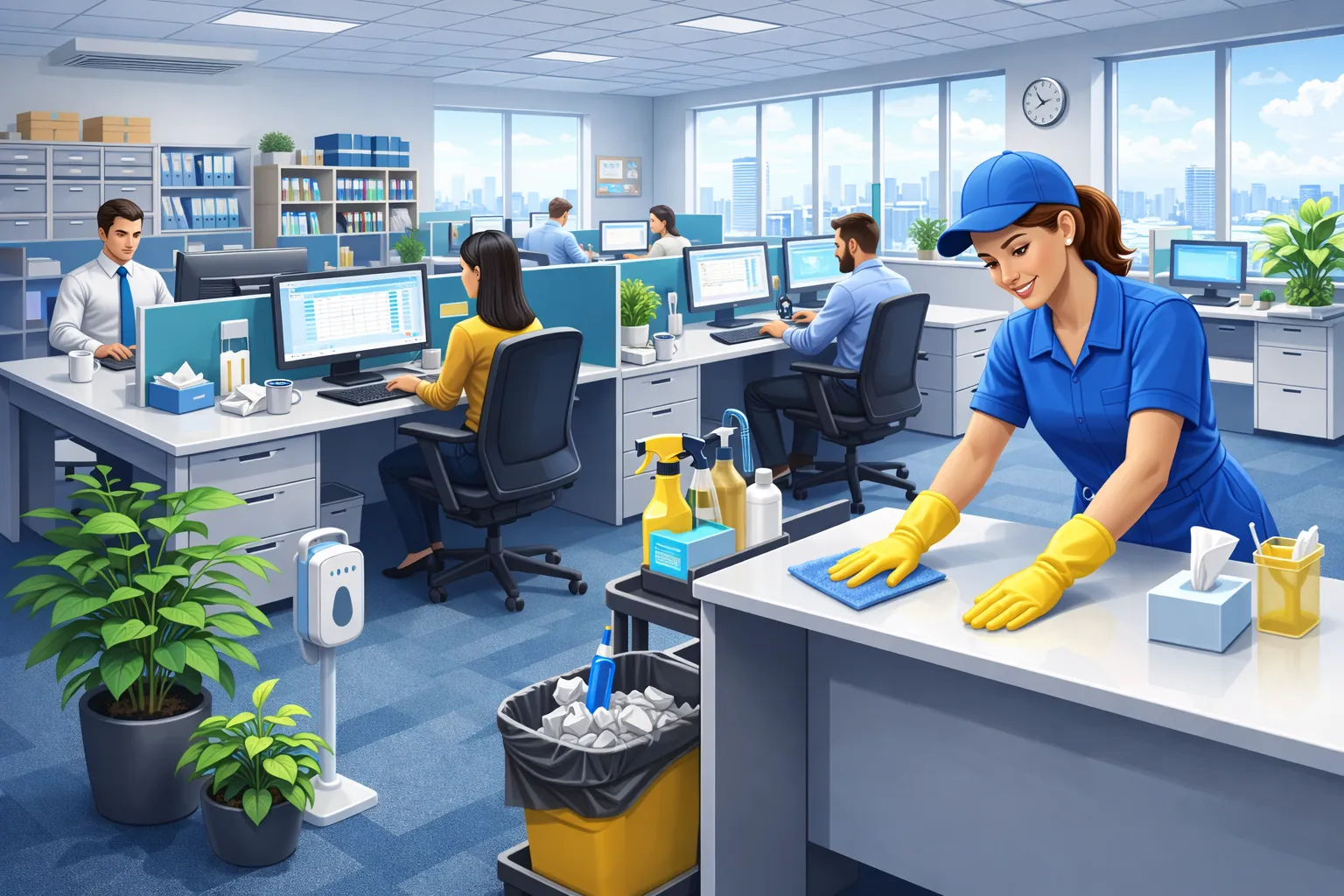
Office hygiene directly impacts employee wellbeing, concentration, and overall workplace productivity. A clean, well-maintained office environment helps reduce illness risks, minimise distractions, and create a professional, motivating space where teams can perform at their best.
For businesses across Australia, maintaining structured office hygiene is not just about appearance — it’s a practical operational strategy that supports performance, continuity, and workplace standards.
1. Reducing Workplace Illness & Absenteeism
Shared office environments naturally accumulate germs on high-touch surfaces such as:
-
Desks and shared workstations
-
Door handles and lift buttons
-
Kitchen counters, appliances, and breakout areas
-
Meeting room tables and shared equipment
-
Bathroom and amenity facilities
Without regular cleaning and sanitisation, bacteria and viruses can spread quickly between employees — particularly in open-plan offices and high-traffic environments.
A structured office cleaning program helps:
-
Reduce cross-contamination risks
-
Maintain hygienic shared spaces
-
Support healthier day-to-day operations
-
Lower the likelihood of preventable illness outbreaks
Fewer sick days mean greater operational continuity, improved team reliability, and sustained productivity.
2. Improving Focus & Employee Morale
Cluttered, dusty, or poorly maintained workspaces can negatively impact concentration and motivation. Visual clutter and untidy environments create unnecessary distractions that reduce efficiency and mental clarity.
A clean office environment supports:
-
Better focus and reduced cognitive overload
-
A more organised and structured workspace
-
Higher employee satisfaction and comfort
-
Greater pride in the workplace
When staff feel their environment is well-maintained, it reinforces a culture of professionalism, accountability, and respect. This can positively influence morale, engagement, and collaboration.
3. Enhancing Indoor Air Quality
Dust and airborne particles can accumulate in carpets, upholstery, vents, and on surfaces — particularly in high-traffic office environments. Poor indoor air quality may contribute to:
-
Headaches and fatigue
-
Respiratory irritation
-
Allergies and discomfort
-
Reduced overall workplace comfort
Regular vacuuming with appropriate filtration, surface cleaning, and hygiene-focused maintenance help reduce dust buildup and support a fresher indoor environment.
Improved air quality contributes to greater comfort, sustained concentration, and a healthier workspace overall.
4. Supporting Professional Presentation
Clients, visitors, and partners form impressions quickly — often within the first few moments of entering your workplace. Clean, well-presented spaces signal organisation, professionalism, and attention to detail.
A structured office hygiene program helps maintain high standards across customer-facing areas such as:
-
Reception counters, seating, and entryways
-
Meeting rooms, boardrooms, and presentation spaces
-
Kitchens, staff rooms, and shared break areas
-
Bathrooms and amenities
-
Internal glass, partitions, and touchpoints
When these areas are consistently clean and hygienic, your office reinforces trust and credibility — and your brand benefits from a workplace that looks and feels professionally managed.
5. Protecting Office Assets & Equipment
Office cleaning isn’t only about hygiene — it also helps protect the long-term condition of your workplace assets. Dirt, dust, and debris can accelerate wear on surfaces and equipment, especially in high-traffic areas.
Routine cleaning helps protect:
-
Flooring finishes and carpets
-
Office furniture and upholstery
-
Shared equipment and touchpoints
-
Glass partitions, doors, and internal glazing
-
Kitchen and amenity facilities
By preventing buildup and reducing abrasion caused by dirt and foot traffic, businesses can extend the lifespan of assets, reduce repair frequency, and lower long-term maintenance costs.
Creating a Structured Office Hygiene Plan
Office hygiene is most effective when delivered through a consistent, structured cleaning program — not reactive, ad-hoc cleans. The right frequency and scope should align with:
-
Office occupancy levels and staff headcount
-
Shared workspace usage (hot-desking, meeting rooms, kitchens)
-
Operating hours and access requirements
-
Industry requirements and hygiene expectations
-
Traffic levels in reception, amenities, and breakout areas
High-traffic offices often benefit from daily cleaning, while smaller workplaces may operate effectively with scheduled weekly or fortnightly programs, supported by targeted hygiene attention in high-touch areas.
A structured plan ensures cleaning tasks are completed consistently, hygiene risks are reduced, and your office remains presentation-ready every day.
Support Productivity with Professional Office Cleaning
If you’re looking to improve office hygiene and create a more productive working environment, Corporate Cleaning Services® provides structured office cleaning programs tailored to your business needs.
We operate across 25+ locations and deliver ISO 9001:2015-certified cleaning systems designed to support workplace hygiene, consistency, and professional standards.
? Request a Free Quote
? Call 1800 032 032