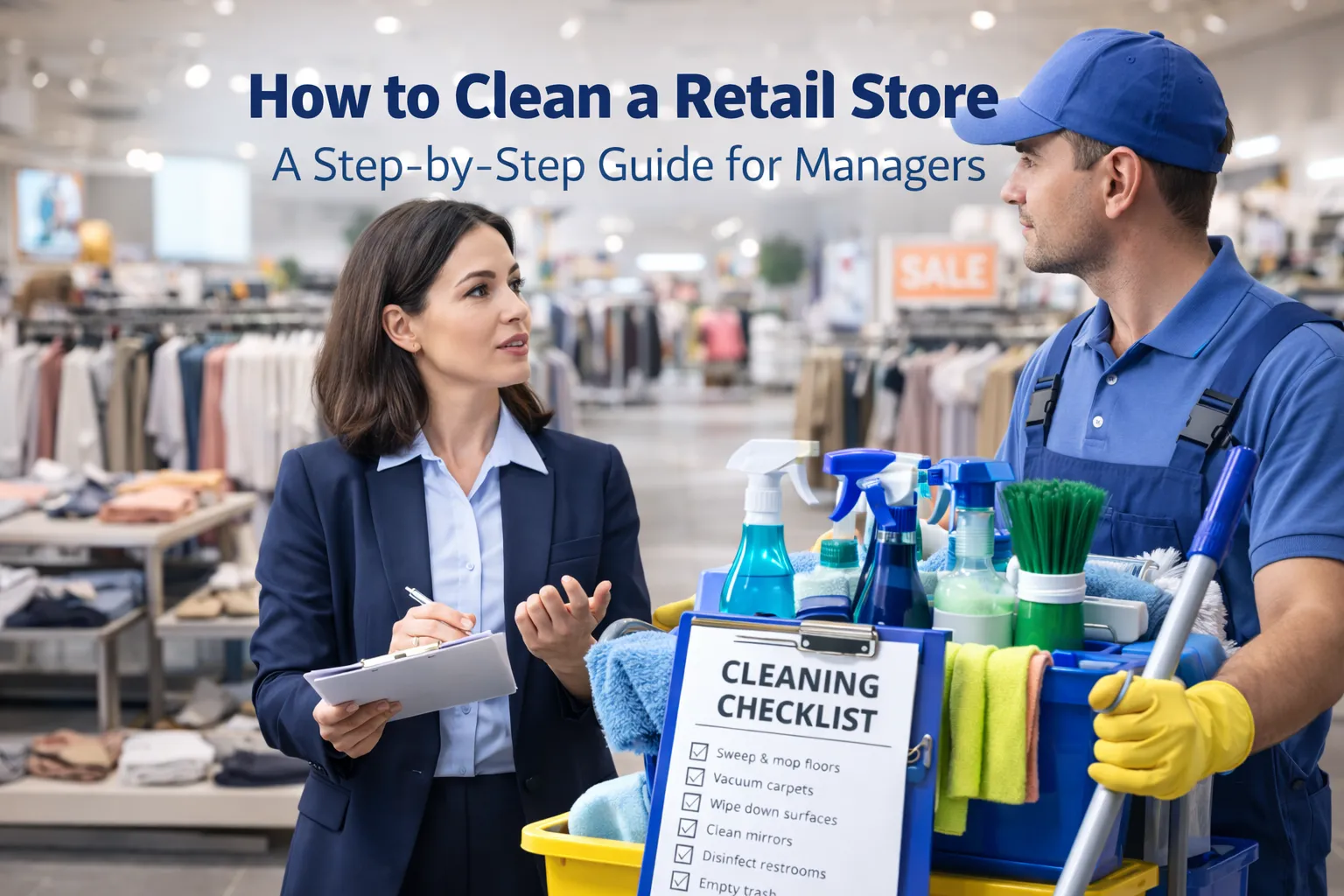
Retail cleanliness directly affects customer perception, staff safety, and overall store performance. For managers, maintaining a structured cleaning process helps keep the store hygienic, compliant, and presentation-ready throughout trading hours.
This step-by-step guide outlines how to clean a retail store effectively — from pre-opening preparation to end-of-day procedures — with practical checks managers can use to maintain consistency.
Step 1: Start With a Pre-Opening Clean
Before customers enter the store, complete a full visual inspection and cleaning pass. The goal is to ensure the store looks polished, smells fresh, and is safe to walk through.
Focus Areas
-
Sweep or vacuum all floor areas
-
Mop hard surfaces where required (especially entryways and service zones)
-
Clean entrance mats and remove trapped debris
-
Clean glass doors, handles, and entry glazing
-
Wipe down checkout counters and service desks
-
Disinfect POS equipment and high-touch points
-
Remove visible dust from shelves, ledges, and display units
-
Check and service restrooms (if applicable)
Manager Check (Quick Verification)
-
? Floors are clean and dry (no slip risk)
-
? Entry is streak-free and welcoming
-
? Checkout looks hygienic and uncluttered
-
? Store smells neutral/clean (no bin or bathroom odours)
-
? Bathrooms are stocked and presentable
A clean opening sets the tone for the entire trading day and reduces reactive cleaning later.
Step 2: Prioritise High-Touch Surfaces
Retail stores have constant customer interaction, meaning high-touch points accumulate germs quickly. Frequent hygiene attention is especially important during peak trade and promotional periods.
High-Touch Areas to Clean Frequently
-
Door handles and push plates
-
EFTPOS terminals and touchscreens
-
Checkout counters and queue rails
-
Fitting room handles, locks, and hooks
-
Shopping baskets and trolley handles
-
Display counters and shared product touchpoints
-
Handrails and escalator rails (if applicable)
Manager Check (Hygiene Standard)
-
? POS and EFTPOS wiped at set intervals (e.g., every 1–2 hours)
-
? Fitting rooms cleaned between heavy use periods
-
? Baskets/trolleys sanitised daily (or more often in high traffic)
-
? Hand sanitiser stations are stocked (if used)
Regular surface disinfection supports customer hygiene confidence and reduces cross-contamination risks.
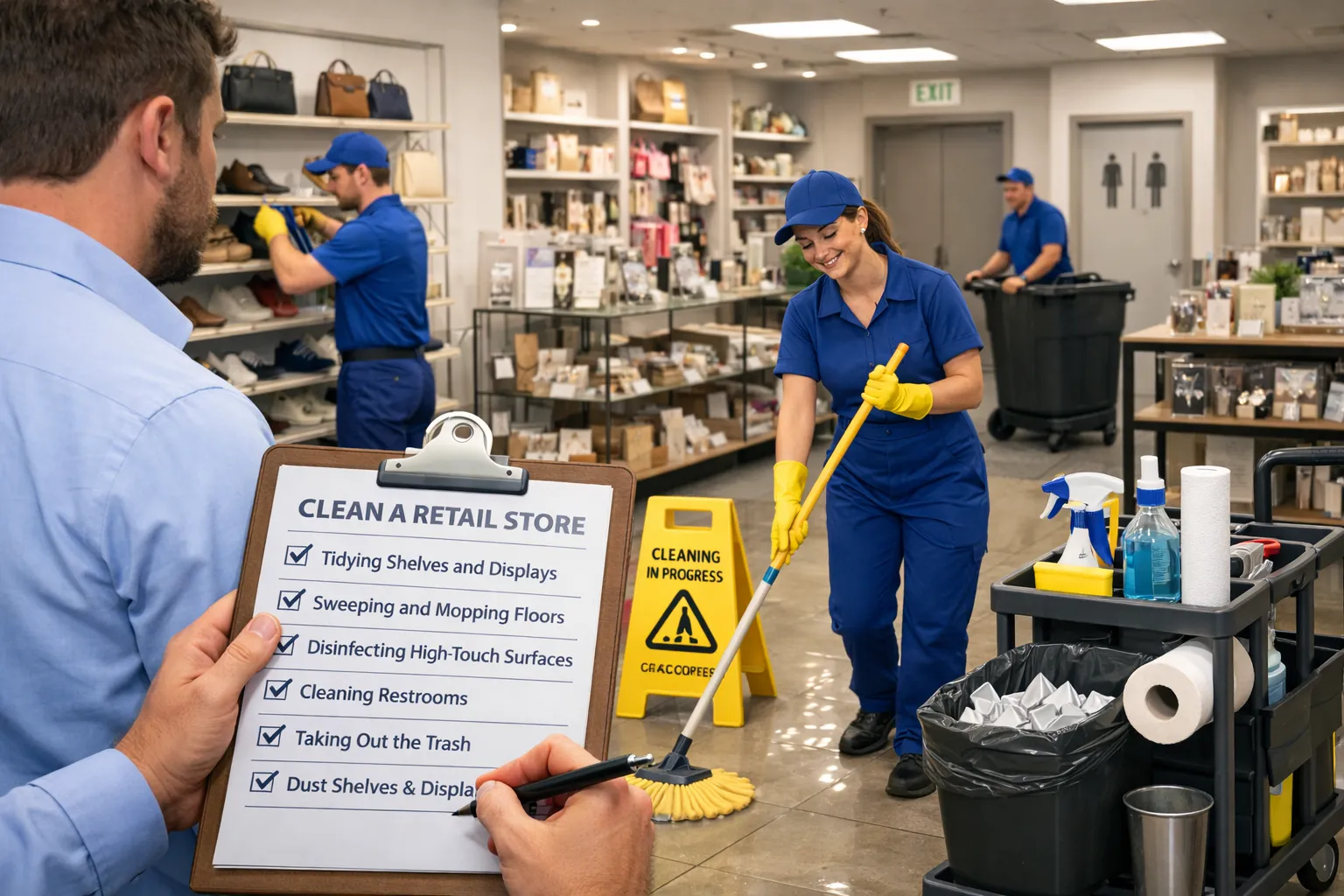
Step 3: Maintain Floors & Walkways
Floors are one of the most visible indicators of cleanliness in retail spaces — and one of the biggest safety risks if spills or clutter are unmanaged.
Managers Should Ensure
-
Immediate spill response (clean and dry promptly)
-
Clear, obstruction-free walkways and aisles
-
Regular spot mopping in high-traffic areas
-
Debris removal from entry areas (leaves, dirt, packaging)
-
Routine vacuuming in high-footfall zones
-
Wet floor signage is used when required
Manager Check (Slip & Trip Prevention)
-
? Entryway is dry and clear (especially in wet weather)
-
? No loose items, boxes, or stock in customer paths
-
? Spills are logged/handled immediately
-
? Mats are laid flat and not curled at edges
-
? Floor condition is consistent (no sticky patches or visible tracks)
Slip prevention is critical in retail environments, particularly around entrances, fridges, food/drink areas, and busy checkout zones.
Step 4: Keep Fitting Rooms & Customer Areas Clean
Fitting rooms and customer seating areas are high-visibility spaces that directly influence comfort, confidence, and conversion. These zones can quickly become messy during busy periods, so frequent checks are essential.
What to Do
-
Remove unwanted garments and hangers promptly
-
Re-hang or return stock to the correct location
-
Wipe down mirrors to remove fingerprints and marks
-
Clean benches, seats, and ledges
-
Check for rubbish, tags, receipts, and packaging
-
Disinfect fitting room handles, locks, hooks, and touchpoints
-
Spot clean walls or doors where scuffs appear
Manager Check (Customer Experience)
-
? Fitting rooms are tidy and ready for use
-
? Mirrors are streak-free
-
? No stock is left on floors or benches
-
? Rubbish removed and bins not overflowing
-
? Handles/hooks wiped during peak periods
These areas should feel clean, private, and well-maintained — especially during high-traffic trading hours.
Step 5: Clean Restrooms & Staff Areas
Amenities are critical hygiene zones. Whether customer-facing or staff-only, they require consistent cleaning to maintain sanitation, reduce odours, and support workplace standards.
Restrooms (Customer/Staff)
-
Clean and disinfect toilets, basins, and taps
-
Wipe dispensers, door handles, locks, and touchpoints
-
Refill soap, paper towel, and toilet paper supplies
-
Empty bins and replace liners
-
Mop floors and spot clean splashes
-
Check odour control and ventilation
Staff Areas (Back-of-House)
-
Wipe down benches, tables, and sinks
-
Clean appliance touchpoints (microwave, fridge handles, kettles)
-
Remove food waste and sanitise bins
-
Sweep/mop floors as required
Manager Check (Hygiene & Stock)
-
? Supplies stocked (soap/paper)
-
? Floors clean and dry
-
? No odours or overflow bins
-
? High-touch points disinfected
-
? Checked multiple times during peak trade
Amenities should be inspected more frequently during busy periods and after high usage.
Step 6: End-of-Day Deep Cleaning
After closing, complete a thorough clean to reset store presentation and hygiene for the next trading day. This reduces morning pressure and keeps standards consistent across the week.
End-of-Day Cleaning Tasks
-
Full floor vacuum or sweep (including under counters where accessible)
-
Mop hard floors and address marks or sticky areas
-
Wipe down shelving edges, counters, and service desks
-
Clean glass, mirrors, and internal partitions
-
Clean shopfront glass/entry doors (inside and out where accessible)
-
Remove all waste and recycling from front and back areas
-
Clean staff areas and amenities
-
Secure waste for collection and tidy waste zones
Manager Check (Close Ready)
-
? Floors clean and dry
-
? Counters disinfected and uncluttered
-
? Glass/mirrors polished
-
? Stockroom and staff areas reset
-
? Waste removed and secured
This prepares the store to open clean, safe, and customer-ready.
Step 7: Schedule Weekly & Periodic Tasks
Daily cleaning manages presentation, but weekly and periodic tasks protect long-term condition, reduce buildup, and support consistent brand standards — especially in high-footfall stores.
Weekly / Fortnightly (Depending on Traffic)
-
Deep carpet cleaning (as required)
-
Floor polishing or machine scrubbing for hard floors
-
High-level dusting (vents, ledges, signage, light fittings)
-
Internal window and glass partition detailing
-
Stockroom cleaning and floor reset
-
Detailed fixture cleaning (skirting boards, corners, display bases)
Monthly / Quarterly (As Required)
-
External window cleaning and façade detailing
-
Deep clean of fitting rooms (including walls, tracks, curtains where applicable)
-
Detailed cleaning around shelving, under fixtures, and hard-to-reach areas
-
Refresh of back-of-house storage zones and waste areas
Manager Check (Planning & Accountability)
-
? Weekly tasks scheduled and assigned
-
? Periodic tasks booked (carpets/windows/floors)
-
? High-traffic seasons accounted for (sales, holidays)
-
? Records kept for consistency across shifts/sites
Periodic cleaning prevents long-term buildup, protects finishes, and maintains the professional presentation customers expect.
When to Consider Professional Retail Cleaning
While many daily cleaning tasks can be handled internally, high-traffic retail environments often require a more structured approach to maintain consistent standards throughout the day and across the week. Professional retail cleaning is worth considering when store presentation, hygiene, and safety outcomes need to be maintained reliably — not just “when time allows.”
High-volume stores especially benefit from professional cleaning support for:
-
Multi-site retail chains needing consistent brand presentation across every location
-
Shopping centre environments with strict cleaning expectations and shared-site requirements
-
High-footfall customer stores where floors, touchpoints, and amenities degrade quickly
-
Extended trading hours where internal staff can’t reasonably cover cleaning between peaks
-
Fitting rooms and customer amenities that require frequent hygiene checks
-
Periodic deep cleaning needs (floors, carpets, glass, and high-level dusting)
Professional cleaning programs help maintain consistency, compliance awareness, and presentation standards — even during busy trade periods, seasonal peaks, and promotional events.
Support Your Retail Store with Professional Cleaning
If you’re looking to maintain consistent cleaning standards across your retail operations, Corporate Cleaning Services® provides structured retail cleaning programs across 25+ locations.
We deliver scheduled cleaning designed to support hygiene, safety, and brand presentation in busy retail environments.
? Request a Free Quote
? Call 1800 032 032